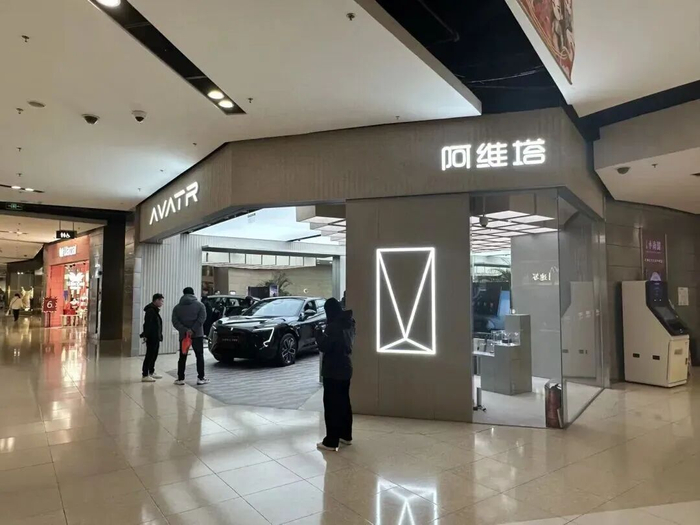
深蓝G318

Search documents
【联合发布】一周新车快讯(2026年3月21日-3月27日)
乘联分会· 2026-03-27 08:44
Core Viewpoint - The article provides an overview of new vehicle models set to be launched in March 2026, detailing specifications, pricing, and market segments for various manufacturers, highlighting the competitive landscape in the automotive industry [2][4][5]. Group 1: New Vehicle Launches - Beijing New Energy will launch the Xiangjie S9 and S9T on March 23, 2026, targeting the C NB and C Wagon segments, respectively, with prices ranging from 31.98 to 37.98 million yuan [10][18]. - Chery New Energy will introduce the Zhijie R7 and S7 on March 23, 2026, in the C SUV and C NB segments, with prices between 23.98 and 31.98 million yuan [26][34]. - Seres Automotive will release the Wenjie M7 and M8 on March 23, 2026, in the C SUV and D SUV segments, with prices from 30.98 to 45.98 million yuan [42][49]. - Dongfeng Citroën will launch the Versailles C5X on March 23, 2026, in the B NB segment, with prices ranging from 14.17 to 18.67 million yuan [57]. - Changan Automobile will introduce the Deep Blue S09 and G318 on March 24 and 25, 2026, respectively, with prices starting at 18.59 million yuan [62][73]. - FAW-Volkswagen will launch the Audi A6L on March 25, 2026, in the C NB segment, with prices ranging from 32.29 to 43.59 million yuan [80]. Group 2: Specifications Overview - The Xiangjie S9 features a length of 5,160 mm, width of 2,005 mm, height of 1,492 mm, and a wheelbase of 3,050 mm, with a pure electric range of 721 to 816 km [10]. - The Zhijie R7 has dimensions of 4,982 mm in length, 1,981 mm in width, and 1,634 mm in height, with a wheelbase of 2,950 mm and a pure electric range of 667 to 802 km [26]. - The Wenjie M7 measures 5,080 mm in length, 1,999 mm in width, and 1,780 mm in height, with a wheelbase of 3,030 mm and a pure electric range of 635 to 710 km [42]. - The Versailles C5X has dimensions of 4,805 mm in length, 1,865 mm in width, and 1,505 mm in height, with a wheelbase of 2,785 mm [57]. - The Deep Blue S09 has a length of 5,205 mm, width of 1,996 mm, height of 1,800 mm, and a wheelbase of 3,105 mm, with a pure electric range of 310 km [62]. - The Audi A6L features a length of 5,142 mm, width of 1,887 mm, height of 1,464 mm, and a wheelbase of 3,066 mm [80].






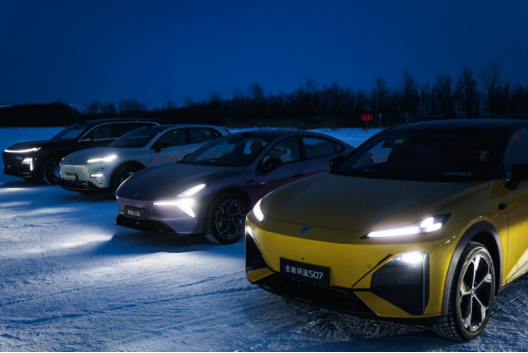
深蓝汽车全系车型参与牙克石冬测,检验零下30度激光雷达性能
Qi Lu Wan Bao· 2026-02-06 04:39
Core Insights - Deep Blue Automotive conducted winter testing in extreme cold conditions in Inner Mongolia, with temperatures reaching -30°C, to evaluate the performance of six vehicle models: S09, S07, S05, L07, L06, and G318 [1] Group 1: Vehicle Performance and Technology - The winter test focused on core scenarios such as complex road handling and safety in extreme environments, with the L06 model showcasing excellent stability through Ferrari-like magnetorheological suspension [3] - The S07 model utilized Dynamic Torque Distribution (DMC) technology to ensure safe driving on icy roads [3] - The S05 model introduced a world-first micro-core high-frequency pulse heating technology, raising battery temperature by 20°C to enhance power output and reduce charging time [5] Group 2: Intelligent Driving Capabilities - The S09 model is equipped with Huawei's Qian Kun ADS 4, enabling precise front vehicle dynamic recognition and navigation assistance, while the L06 features the self-developed DEEPAL AD Max with full-scenario intelligent driving capabilities [6] - Both models demonstrate Deep Blue's technical strength in intelligent driving and its ability to integrate top global resources with in-house development [6] Group 3: Winter Performance and Charging Solutions - The entire range of Deep Blue vehicles addresses winter challenges such as slow charging and reduced range, with the S09 offering a pure electric range of 310 km and a comprehensive range of 1210 km, along with 5C ultra-fast charging that allows 30%-80% charge in just 10 minutes [6] - The L06 and S07 long-range versions utilize end-pulse charging technology and heat pump air conditioning to maximize winter range stability while keeping the cabin warm [6] - Other models like S05, L07, and G318 are equipped with 3C ultra-fast charging technology, ensuring charging from 30%-80% in under 15 minutes, providing reliable energy replenishment for long winter trips [6] Group 4: Company Positioning and Industry Response - Deep Blue Automotive's chairman, Deng Chenghao, addressed industry skepticism regarding winter testing, emphasizing the importance of real performance validation in extreme low-temperature conditions [7] - He highlighted that the testing of vehicle stability, power performance, and safety must be verified through extreme scenarios to ensure user confidence [7]
融资61亿,深蓝汽车与“失血”赛跑
阿尔法工场研究院· 2025-12-29 00:05
Core Viewpoint - The recent 6.122 billion yuan financing for Deep Blue Automotive, backed by state-owned enterprises and banks, highlights the company's urgent need for capital despite its ongoing financial struggles, including significant losses and debt issues [4][11][24]. Financing Overview - Deep Blue Automotive completed a C-round financing of 6.122 billion yuan, with major contributions from Changan Automobile (3.122 billion yuan), Chongqing Yufu Holdings Group (2.5 billion yuan), and Zhaoshang Financial Asset Investment Co. (500 million yuan) [5][7]. - The financing increased Deep Blue's registered capital from approximately 328 million yuan to 466 million yuan, with Changan maintaining a 50.9959% stake [5][7]. - The financing aims to enhance Deep Blue's capabilities in advanced intelligent driving, electric platform development, and global expansion, especially following its recent achievement of obtaining L3-level autonomous driving licenses [7][21]. Financial Challenges - Despite the financing, Deep Blue Automotive has been in a state of insolvency for three consecutive years, with total assets of 31.474 billion yuan and total liabilities of 35.986 billion yuan, resulting in a negative net asset position [9]. - Cumulative losses since its independent operation began in 2022 have reached 8.899 billion yuan, with losses of 3.196 billion yuan in 2022, 3.107 billion yuan in 2023, and 1.571 billion yuan in 2024, alongside a loss of 1.025 billion yuan in the first ten months of 2025 [9][10]. Sales Performance - Deep Blue Automotive has failed to meet its annual sales targets for three consecutive years, with a total of approximately 302,000 units sold by the end of November 2025, falling short of the revised target of 360,000 units by nearly 60,000 units [12][13]. - The best-selling model, the S05, accounted for nearly half of total sales, while higher-end models like the S09 and G318 have underperformed significantly [14][16]. Market Position and Competition - The company faces multiple pressures, including unclear market positioning, insufficient product competitiveness, and internal brand overlap with other Changan brands like Avita and Qiyuan [13][17][18]. - The competitive landscape in the Chinese electric vehicle market has shifted from incremental competition to intense rivalry, with leading brands like BYD and Geely dominating through technological advancements and cost control [16]. Future Outlook - The success of Deep Blue Automotive hinges on its ability to convert the recent financing into market competitiveness and to transition from a "burning cash" model to a self-sustaining one [19][24]. - The financing, while significant, does not directly address the company's insolvency and raises questions about how long the funds will last in supporting operational needs [24].
深蓝汽车一年半亏21.3亿获61亿增资 前11月交付30.2万辆仅完成目标84%
Chang Jiang Shang Bao· 2025-12-28 23:19
Core Viewpoint - Changan Automobile is providing significant financial support to Deep Blue Automotive through a capital increase of approximately 61 billion yuan, despite Deep Blue's ongoing losses and challenges in meeting its sales targets [1][2][4]. Group 1: Financial Performance - Deep Blue Automotive has accumulated losses of 2.125 billion yuan over the past year and a half, with total assets of 26.095 billion yuan and total liabilities of 30.141 billion yuan as of mid-2025, resulting in a debt-to-asset ratio of approximately 116% [1][5]. - For the year 2024, Deep Blue's revenue was 37.225 billion yuan, with a net loss of 1.572 billion yuan. By the end of 2024, total assets reached 34.295 billion yuan, and total liabilities were 37.798 billion yuan, maintaining a debt-to-asset ratio of about 110% [5]. - As of mid-2025, Deep Blue's revenue was 20.654 billion yuan, with a net loss of 553 million yuan, and the company continued to face a debt-to-asset ratio of approximately 116% [5]. Group 2: Capital Increase Details - Changan Automobile announced a capital increase for Deep Blue Automotive, with a total fundraising scale of approximately 61.22 billion yuan, which includes both public and private placements [2][3]. - Changan will contribute 31.22 billion yuan through a combination of cash and intangible assets, including patents and proprietary technologies related to Deep Blue's S05 and G318 models, with an assessed value of 1.043 billion yuan [2][3]. - After the capital increase, Changan's ownership will remain at 50.9959%, while new investors, Chongqing Yufu Holding Group and China Merchants Bank Financial Asset Investment, will hold 12.0934% and 2.4187%, respectively [3]. Group 3: Sales Performance and Targets - Deep Blue's sales target for 2025 is set at 360,000 units, but as of November, the company had delivered 302,100 units, achieving only about 84% of its target [1][7]. - The delivery volume for November saw a month-on-month decline of approximately 10% and a year-on-year decline of about 8% [1][7]. - To meet its sales target for December, Deep Blue would need to deliver 57,900 units, which is considered unrealistic given the recent performance [8].
61亿融资难掩困局,深蓝汽车的“输血”与“失血”赛跑
Sou Hu Cai Jing· 2025-12-26 04:24
Group 1 - The core point of the article highlights that despite the significant financing of 6.122 billion yuan, Deep Blue Automotive is still facing severe financial challenges, including continuous losses and an inability to meet sales targets [2][5][12] - Deep Blue Automotive completed a Series C financing round with contributions from Changan Automobile, Chongqing Yufu Holdings, and China Merchants Bank Financial Asset Investment Co., totaling 6.122 billion yuan, which increased its registered capital from approximately 328 million yuan to 466 million yuan [3][12] - The financing structure includes 3.122 billion yuan from Changan Automobile, which consists of 2.079 billion yuan in cash and 1.043 billion yuan in intangible assets, while Chongqing Yufu and China Merchants contributed 2.5 billion yuan and 500 million yuan in cash, respectively [3][12] Group 2 - Financial data reveals that as of October 31, 2025, Deep Blue Automotive has total assets of 31.474 billion yuan and total liabilities of 35.986 billion yuan, indicating a negative net asset position for three consecutive years [5][12] - Since its independent operation in 2022, Deep Blue has accumulated losses of 8.899 billion yuan, with annual losses of 3.196 billion yuan in 2022, 3.107 billion yuan in 2023, and 1.571 billion yuan in 2024, alongside a loss of 1.025 billion yuan in the first ten months of 2025 [5][12] - Despite achieving a monthly sales volume of around 30,000 units, which is considered the breakeven point, Deep Blue has not managed to stop its financial bleeding, indicating deeper issues in cost structure, product pricing, and operational efficiency [5][12] Group 3 - Deep Blue Automotive has failed to meet its annual sales targets for three consecutive years, with a reported global sales volume of 33,060 units in November 2025, representing an 8.2% year-on-year decline [6][12] - The best-selling model, the Deep Blue S05, accounted for nearly half of the total sales in November, highlighting a reliance on lower-end models rather than the higher-end offerings [6][12] - The performance of higher-end models like the Deep Blue S09 and G318 has been disappointing, with monthly sales below 2,000 units and only a few hundred units, respectively [7][12] Group 4 - Deep Blue Automotive's brand trust has been severely impacted due to consumer dissatisfaction, particularly following an incident involving mandatory full-screen advertisements during vehicle startup [9][12] - The slowdown in sales growth and ongoing losses create a vicious cycle, making it difficult to dilute high R&D and manufacturing costs, while insufficient profits hinder ongoing technological innovation and market expansion [9][12] - The competitive landscape in the domestic new energy vehicle market has shifted from "incremental competition" to "stock competition," with leading brands like BYD and Geely exerting pressure on second-tier players like Deep Blue [9][12] Group 5 - The recent financing is seen as a "timely rain" for Deep Blue, especially following its achievement of obtaining L3-level autonomous driving licenses, marking a significant technological milestone [11][12] - However, the capital market's patience with new energy vehicle companies is waning, and while the financing is substantial, it remains uncertain how long it will sustain Deep Blue's operational needs [12] - The financing will primarily support high-level intelligent driving, electric platform development, and global expansion, but it does not directly address the company's negative financial status [12]
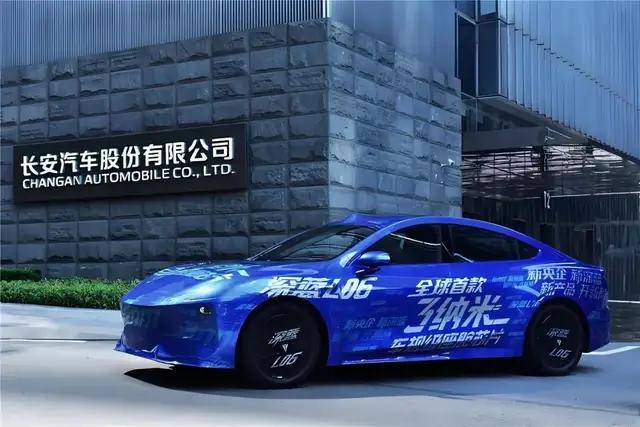
顶着首个L3牌照光环,深蓝汽车增资,渝富招银投资新进,长安汽车把S05、G318车型专利技术评估10.43亿元来入股
Xin Lang Cai Jing· 2025-12-25 12:40
Core Viewpoint - Deep Blue Automotive has completed a capital increase, attracting two external investors, despite holding the first L3 autonomous driving license in China, indicating cautious market sentiment towards investment in the electric vehicle sector [2][11][12]. Group 1: Capital Increase Details - The capital increase involves three parties: Changan Automobile, Chongqing Yufu Holding Group, and China Merchants Bank Financial Asset Investment Co., with contributions of 3.122 billion, 2.5 billion, and 500 million respectively [2][25]. - After the capital increase, Changan Automobile retains a controlling stake of 50.9959%, while the stakes of other original shareholders are diluted to the range of 5%-8% [2][25]. - The total registered capital of Deep Blue Automotive increased from approximately 32.81 billion to 46.62 billion [26]. Group 2: Investment Context - Chongqing Yufu Holding Group, as a local state-owned platform, is likely focused on industrial synergy, while China Merchants Bank's investment may provide financial support, indicating a non-purely financial investment role [10][33]. - The cautious entry of only two investors reflects the intensified competition in the electric vehicle market, alongside subsidy reductions and price wars [11][35]. Group 3: Valuation and Financial Implications - Deep Blue Automotive's valuation is set at 14.55 billion, with the capital increase providing over 5 billion in cash reserves to support ongoing technology investments [14][40]. - The funding is expected to be directed towards the research and development of intelligent driving technology and capacity expansion, crucial for commercializing L3-level vehicles [18][41]. - Changan Automobile's investment strategy includes both cash and technology patents valued at 1.043 billion, ensuring continued R&D progress without burdening the parent company's financials [4][42]. Group 4: Market Position and Future Outlook - The successful acquisition of the L3 license and partnerships with Huawei and CATL provide Deep Blue Automotive with a competitive edge, but long-term success will depend on the speed of technology implementation and market acceptance [10][43]. - The electric vehicle sector's competitive landscape is becoming increasingly challenging, necessitating rapid production scaling for Deep Blue Automotive to keep pace with rivals like Tesla and BYD [18][41][44].
连亏三年,深蓝汽车开启新融资,低于5亿还不要,未来会独立上市吗?
Sou Hu Cai Jing· 2025-12-02 06:28
Core Viewpoint - Changan Automobile is actively pursuing investment opportunities, with Avita submitting a Hong Kong stock application and Deep Blue Automotive Technology Co., Ltd. initiating a capital increase project [2] Group 1: Capital Increase Project - Deep Blue Automotive aims to raise funds through a capital increase project, with the total amount and corresponding shareholding ratio to be determined [3] - Existing shareholders will participate in the capital increase, and employee participation is set at 100% [3] - The new shareholders' stake will not exceed 20%, and the capital raised will be used for new vehicle R&D, core technology innovation in intelligence and electrification, and enhancing global brand strength [3][4] Group 2: Shareholder Structure - Changan Automobile holds a 50.9959% stake in Deep Blue Automotive, making it the largest shareholder, followed by Nanjing Runke Industrial Investment Co., Ltd. with 11.078% [5] - The remaining shareholders are primarily investment funds, including the Jiaoyun Boyu No.1 (Suzhou) Debt-to-Equity Investment Fund [5] Group 3: Financial Performance - Deep Blue Automotive has experienced significant losses, with net losses of 3.196 billion yuan, 3.107 billion yuan, and 1.571 billion yuan from 2022 to 2024 [14] - As of October 31, 2025, the company reported total assets of 314.74 billion yuan and total liabilities of 359.86 billion yuan, resulting in negative equity of 45.12 billion yuan [15] - Despite the losses, the company has seen a narrowing of losses and aims to achieve profitability with monthly sales exceeding 30,000 units [16][17] Group 4: Sales and Production Capacity - In the first ten months of this year, Deep Blue Automotive's cumulative sales reached approximately 269,000 units, with a goal of 360,000 units for the year [18] - The company has committed to investing no less than 10% of its sales revenue in R&D annually, with a total R&D investment exceeding 100 billion yuan by 2030 [18]

增资破局?深蓝汽车销量大增亏损持续
Shen Zhen Shang Bao· 2025-12-01 23:23
Core Insights - Deep Blue Automotive has accumulated over 7.8 billion yuan in financing but continues to face negative net assets and a debt-to-asset ratio of 114.3% [1][3] - The company is seeking to raise funds through a capital increase project, with a target of no more than 20% new shareholder ownership, aimed at enhancing R&D in electric and intelligent vehicle technologies [1][4] - Despite a significant increase in vehicle deliveries, the company has reported substantial financial losses, with cumulative losses exceeding 12.5 billion yuan since its inception [3][4] Financial Performance - In the first ten months of 2025, Deep Blue Automotive reported revenues of 39.8 billion yuan and a net loss of 1.03 billion yuan [3] - Projected revenues for 2022-2024 are 15.68 billion yuan, 26.93 billion yuan, and 37.22 billion yuan, with net losses of 3.2 billion yuan, 3.11 billion yuan, and 1.57 billion yuan respectively, totaling nearly 8 billion yuan in losses over three years [3] Market Position and Competition - The company has seen a year-on-year delivery increase of over 60%, with a target of 360,000 units for the year, but still has about 90,000 units to go to meet this goal [1][2] - Deep Blue Automotive's sales strategy focuses on youth-oriented and cost-effective models, but faces intense competition in the same price range from other new energy vehicles [2][4] - The presence of a competing brand, Avita, which offers higher-end models with advanced technology, highlights the overlapping product positioning within the parent company, Changan Automobile [3][4] Strategic Challenges - The company must address issues of profitability and unclear brand positioning amidst increasing competition in the electric vehicle sector [4] - While the upcoming capital increase may provide temporary financial relief, a sustainable path to profitability is essential for long-term survival in the competitive landscape [4]
【快讯】每日快讯(2025年10月31日)
乘联分会· 2025-10-31 08:39
Domestic News - The Ministry of Industry and Information Technology (MIIT) is promoting the transformation of the entire green industry chain, focusing on the development of new energy vehicles and energy-saving equipment. Key initiatives include green design, building green factories, creating green supply chains, and promoting green industrial parks, with a target for green factory output to reach 40% by 2030 [5]. - The "14th Five-Year" industrial collaboration development initiative for the Beijing-Tianjin-Hebei region has been released, aiming to build a modern industrial system centered on advanced manufacturing and accelerate the development of seven national-level advanced manufacturing clusters [6]. - FAW-Volkswagen plans to achieve Level 3 autonomous driving by 2027-2030, with the introduction of Level 2 driving assistance in 2026 [7]. - FAW Bestune has increased its registered capital to approximately 5.17 billion RMB, marking a 107% increase [8]. - The Guoxuan High-Tech battery factory in Slovakia has officially opened, with plans for trial production in 2026 and a capacity of 20 GWh [10]. - The autonomous driving company "萝卜快跑" has received approval for cross-district testing in Hong Kong, marking its fourth expansion of testing areas this year [11]. - The Deep Blue G318 has been launched in Colombia, indicating the company's expansion into the South American market [12]. - Li Auto has established a new battery company in Zhejiang with a registered capital of 70 million RMB, focusing on battery manufacturing and electric vehicle charging infrastructure [13]. International News - Samsung SDI has partnered with BMW Group and Solid Power to develop a solid-state battery validation project, aiming to enhance battery performance for future vehicles [14]. - Ford is planning to invest approximately 3.7 billion USD in India to produce new engines, with an annual capacity exceeding 200,000 units [15]. - Lucid Motors is set to launch a mid-sized electric vehicle equipped with NVIDIA chips, marking a significant step towards Level 4 autonomous driving technology [16]. - Nissan has confirmed the introduction of the Patrol SUV to the Japanese market in the first half of the 2027 fiscal year, marking its return to this segment [17]. Commercial Vehicles - Suzhou has launched a subsidy program for the scrapping and updating of old commercial vehicles, with an initial fund of 30 million RMB [18]. - SAIC Commercial Vehicle has opened its first nationwide store in Tianjin, marking a strategic integration of its brands [19]. - Hanma Technology has unveiled the first range-extended heavy truck in Southeast Asia, targeting the green logistics market [20]. - The Xiangtan base of Yuan Cheng has received the highest level certification for intelligent manufacturing in the new energy commercial vehicle sector, indicating its advanced capabilities [21][22].



新央企首季报!转型期的长安汽车遭遇盈利压力
Guo Ji Jin Rong Bao· 2025-10-28 12:41
Core Viewpoint - Changan Automobile, recently established as a new central enterprise, reported a mixed performance in its third-quarter results, highlighting both growth and pressure in its operations. Revenue and Sales Growth - In Q3, Changan achieved operating revenue of 42.236 billion yuan, a year-on-year increase of 23.36%; cumulative revenue for the first three quarters reached 114.927 billion yuan, up 3.58% year-on-year [1][5] - The revenue growth was primarily driven by sales, with total sales of 2.0661 million vehicles in the first three quarters, of which over 30% came from new energy vehicles (NEVs), totaling 724,000 units; September alone saw NEV sales surpassing 100,000 units, marking an 87% year-on-year increase [1][3] - By brand, Avita, as a high-end brand, recorded cumulative sales of 90,700 units in the first nine months, while Deep Blue focused on the mid-range market with sales of 232,300 units; Changan Qiyuan delivered 41,000 units in September, exceeding 200,000 units in total for the first three quarters [1] International Market Expansion - Changan's overseas market also became a significant growth driver, with exports reaching 60,000 units in September and a total of 465,000 units in the first three quarters; Southeast Asia and the Middle East markets saw growth rates exceeding 50% [3] - The new energy factory in Rayong, Thailand, commenced production in Q3, with the first localized model, Deep Blue S05, achieving mass delivery, and an expected annual capacity of 150,000 units to further support overseas sales growth [3] Profitability Challenges - Despite the increase in sales and revenue, Changan's profitability did not improve, with a net profit attributable to shareholders of 764 million yuan in Q3, a slight year-on-year increase of 2.13% but a significant quarter-on-quarter decline of 18.6% [5][6] - For the first three quarters, the net profit attributable to shareholders was 3.055 billion yuan, down 14.66% year-on-year, contrasting with a 20.08% increase in the net profit after excluding non-recurring gains and losses [5][6] - The decline in profitability was attributed to a reduction in non-recurring gains, which fell by 45.39% year-on-year, primarily due to a decrease in government subsidies from 1.564 billion yuan in the same period last year to 508 million yuan, a drop of 67.52% [5][6] Cash Flow and Liquidity Issues - Changan's cash flow situation raised concerns, with a net cash flow from operating activities of only 1.555 billion yuan, a significant year-on-year decline of 64.6%; investment activities showed a net cash flow of -7.859 billion yuan, reversing from a positive figure last year [9] - The cash reserves decreased by 8.863 billion yuan, from 63.27 billion yuan at the end of last year to 54.41 billion yuan, compared to a net increase of 5.122 billion yuan in the same period last year [9] - To alleviate supplier financial pressure and ensure supply chain stability, the company shortened payment terms, resulting in a decrease in accounts payable from 43.836 billion yuan to 27.054 billion yuan, a decline of 38.28% [9] Strategic Transformation and Future Outlook - This quarterly report marks Changan's first as a central enterprise, with accelerated transformation efforts, particularly in core technology development, including the completion of solid-state battery prototype verification with an energy density of 400 Wh/kg, expected to be mass-produced by 2026 [10] - The company launched the "Tianshu Intelligent" brand, introducing an intelligent cockpit system based on the Orin-X chip, and established a European R&D center focusing on local adaptation of new energy vehicles [10] - However, the high costs associated with transformation have led to a dilemma between short-term profitability and long-term strategic positioning, prompting analysts to lower the 2025 net profit forecast for Changan to 4.4 billion yuan from the previous estimate of 4.8 billion yuan [12]