
陈皮酸奶

Search documents
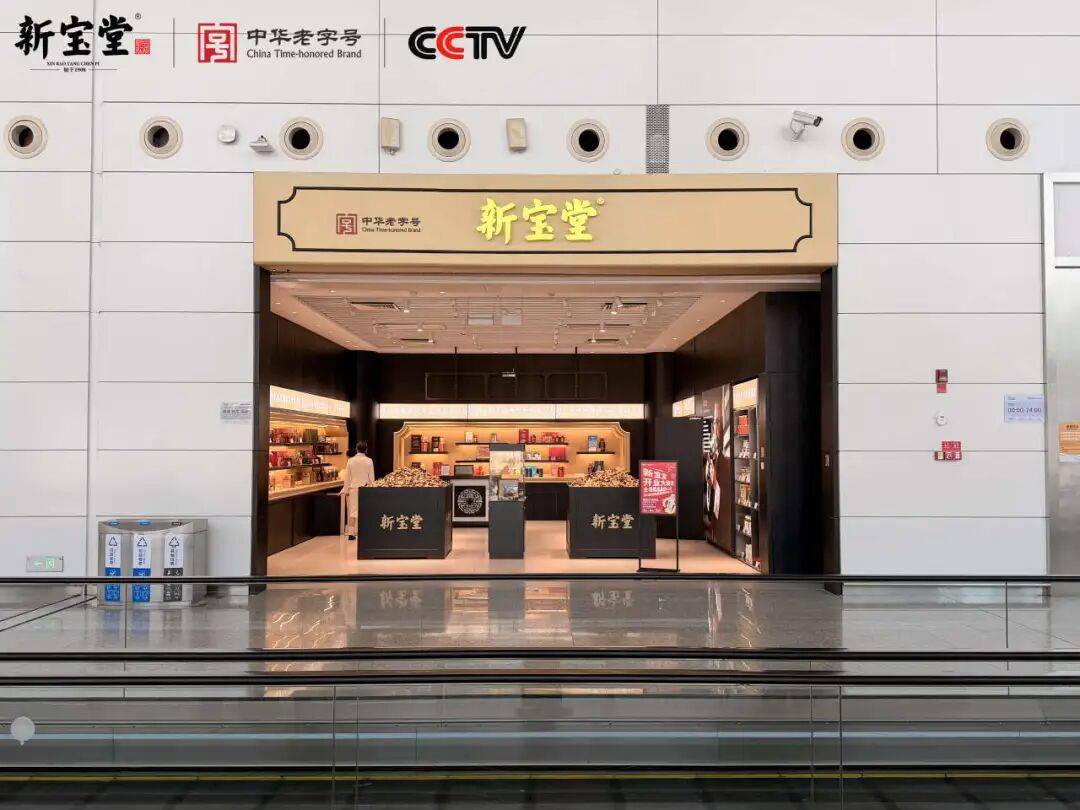
正式开业!江门这家“中华老字号”企业,进驻白云国际机场!
Sou Hu Cai Jing· 2026-01-06 13:31
Core Viewpoint - The opening of the new store by Xinbaotang at Guangzhou Baiyun Airport marks a significant step in promoting the cultural heritage of Xinhui Chenpi and enhancing the international influence of the brand [1][3][5]. Group 1: Store Opening and Market Expansion - Xinbaotang has opened the first brand specialty store for Xinhui Chenpi in an airport, which serves as a crucial point for market expansion and a platform to showcase the intangible cultural heritage to global travelers [3][5]. - The store is strategically located in one of China's major international aviation hubs, which sees an annual passenger throughput of over tens of millions, providing significant brand exposure and international reach [3]. Group 2: Product Offering and Innovation - The specialty store features a core product matrix that includes traditional Xinhui Chenpi raw materials and innovative products such as Chenpi enzyme, Chenpi coffee, and Chenpi yogurt, catering to diverse traveler needs [3][8]. - Xinbaotang has maintained a dual approach of preserving traditional production techniques while actively engaging with universities and research institutions to develop innovative products, including Chenpi enzyme, which has been clinically proven to address issues like insomnia and abnormal blood lipids [8][10]. Group 3: Brand Development and Cultural Promotion - Xinbaotang has established a comprehensive industrial chain that includes Xinhui citrus planting, Chenpi storage and trading, biotechnology, traditional Chinese medicine, and health industries [10]. - The brand has significantly increased its cultural outreach, appearing on major CCTV programs and reaching an audience of 1.05 billion people from January to August 2024, enhancing its brand recognition and reputation [10][12]. - The new airport store is seen as a bridge to the world, helping the century-old brand to rejuvenate on the international stage, with plans to integrate cultural experiences, research bases, production lines, and tourism into its development model [14].

重磅剧透!2025南药食养大会有哪些宝藏南药?
Nan Fang Nong Cun Bao· 2025-11-19 07:01
Core Viewpoint - The 2025 China Southern Medicine and Food Nourishment Conference will be held in Zhaoqing from November 19 to 21, showcasing local medicinal materials and creating a platform for the display of southern medicine and processing products from across the country [2][3][4]. Group 1: Event Overview - The conference aims to connect the entire industry chain and innovative concepts, moving beyond simple product displays [4]. - It will feature high-quality southern medicine resources and deep processing products from provinces such as Guangxi, Yunnan, Hainan, and Fujian, promoting collaborative development in southern medicine [8][11]. Group 2: Exhibitor Highlights - The Chinese Academy of Tropical Agricultural Sciences will present excellent tropical southern medicine varieties and research results, demonstrating the role of national research institutions in the industry chain [10][11]. - Exhibitors from Guangxi will showcase various local medicinal materials and innovative products, highlighting the depth and vitality of the southern medicine industry [14][17]. - Yunnan's exhibitors will focus on the dual-use characteristics of medicinal and edible plants, showcasing products with significant development potential [22][23]. Group 3: Product Innovations - Various innovative products will be presented, such as cinnamon oil, Luo Han Guo tea, and health foods derived from traditional medicinal materials [19][21][28]. - The conference will also feature modern interpretations of traditional southern medicine, including functional foods and beverages that integrate health concepts into daily life [64][72]. Group 4: Regional Contributions - Zhaoqing will present a comprehensive view of the entire industry chain, from raw medicinal materials to deep processing and cultural creativity, reinforcing its position as "China's Southern Medicine and Food Nourishment Capital" [49][50]. - The event will highlight the rich diversity and authenticity of Zhaoqing's southern medicine resources, including live plants and processed products [51][54]. Group 5: Cultural Integration - The conference will include a Traditional Chinese Medicine Health Culture Night Market, allowing the public to engage with southern medicine through experiential products [67][68]. - The integration of southern medicine with modern technology and health concepts will be emphasized, showcasing innovations in functional foods and health services [72][74].

广州地铁添 “地理标志小站”,新会陈皮、英德红茶等地标产品一站买齐
Nan Fang Nong Cun Bao· 2025-07-06 14:03
Core Viewpoint - The introduction of "Geographical Indication Stations" in Guangzhou Metro aims to promote local products and enhance consumer experience through convenient access to regional specialties [2][11][12]. Group 1: Overview of Geographical Indication Stations - The first two "Geographical Indication Stations" were launched with the opening of Guangzhou Metro Line 10, featuring self-service vending machines at Industrial Avenue South Station and Yangji East Station [2][3]. - These stations primarily showcase well-known geographical indication products such as Xinhui Chenpi, Huaqiao Red, Fenghuang Dancong tea, Yingde Black Tea, and Guiling Honey, along with derivative products like Chenpi yogurt and honey water [3][4]. Group 2: Consumer Experience and Accessibility - Passengers can purchase authentic geographical indication products and their derivatives while using the metro, providing a diverse and rich "one-stop" shopping experience [5]. - The initiative leverages high foot traffic and visibility at transportation hubs to make geographical indication products more accessible and recognizable to consumers [11]. Group 3: Future Development and Impact - Guangdong is the first province in the country to establish such "Geographical Indication Stations," with plans to further enhance their construction and integrate these products into urban public spaces [8][14]. - The initiative aims to transform local specialties into cultural symbols, stimulate consumption, and support rural revitalization efforts by linking small stations to larger industries [15][16].
新会陈皮,岭南寄往丝路的风味信笺|行李箱里的广东手信⑤
Nan Fang Nong Cun Bao· 2025-07-02 10:00
Core Viewpoint - The article highlights the cultural and health significance of Xinhui Chenpi, a traditional dried tangerine peel from Guangdong, and its role in promoting Guangdong's culinary heritage as it is introduced to new markets like Xinjiang [1][4][33]. Group 1: Product Overview - Xinhui Chenpi is a specialty product from Xinhui District, Jiangmen City, Guangdong Province, recognized as a national geographical indication product, known for its health benefits and culinary versatility [17][18]. - The production process involves a unique three-slice peeling technique, natural sun drying, and aging for over three years, enhancing its aroma and medicinal properties [19][20]. Group 2: Health Benefits - Chenpi is praised for its warming properties, ability to regulate qi, strengthen the spleen, and alleviate dampness and phlegm, making it a valuable ingredient in various dishes and teas [12][14][15]. - The concept of "food as medicine" is emphasized, showcasing how Chenpi is integrated into daily meals for health benefits [15]. Group 3: Product Innovations - A range of innovative products derived from Chenpi has been developed, including Chenpi Pu-erh tea, Chenpi coffee, and Chenpi enzyme drinks, catering to modern consumer preferences while retaining traditional flavors [24][25][26][27]. - These products not only preserve the health benefits of traditional Chenpi but also offer convenient and enjoyable consumption experiences [31]. Group 4: Market Expansion - From July 4 to 6, Xinhui Chenpi will be showcased in the Xinjiang region, marking a significant cultural exchange and market expansion effort [33]. - The introduction of Xinhui Chenpi to Central Asian merchants symbolizes a blend of culinary traditions and the potential for new market opportunities along the Silk Road [34].