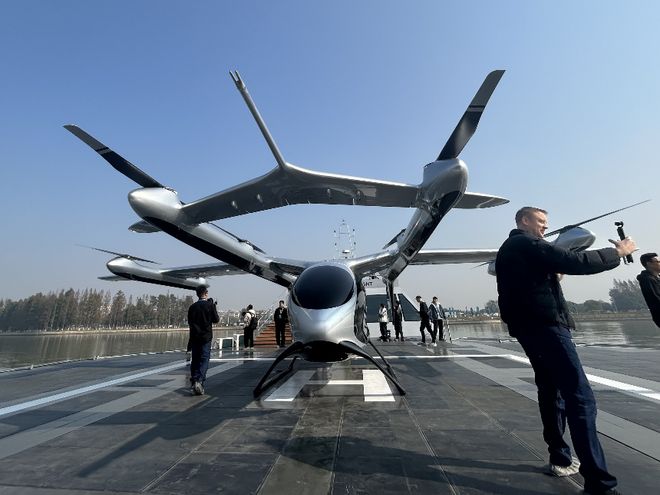
零碳水上机场

Search documents
eVTOL+水上电动无人机场=?
Guan Cha Zhe Wang· 2025-11-25 00:38
Core Insights - The article discusses the launch of the world's first integrated sea-air low-altitude economic solution by Peak Fly Aviation Technology, which combines zero-carbon water airports with eVTOL (electric vertical takeoff and landing) aircraft, aimed at enhancing operational efficiency in the energy maintenance sector [1][3][10] Group 1: Sea-Air Integration - Peak Fly's eVTOL, named "Kairiou," successfully completed a 58-minute delivery flight of fresh fruits and emergency supplies to an offshore oil platform, significantly reducing the transportation time compared to traditional methods that took around 10 hours [3][4] - The eVTOL can carry a maximum load of 500 kg and has a range of 200 km, covering most offshore oil platforms in China's coastal areas [4][10] - The integration of eVTOL with a mobile water airport allows for on-demand deployment, enhancing response times and reducing the need for pre-stored spare parts on platforms [6][9] Group 2: Technological Innovations - The zero-carbon water airport features solar energy collection and smart scheduling, enabling it to operate without relying on shore power, thus improving efficiency and reducing costs [6][9] - The customized battery developed by CATL for the eVTOL has a high energy density of 500 Wh/kg, which is over 40% better than traditional lithium batteries, and is designed to operate in extreme conditions [9][10] - Future developments include a next-generation solid-state battery that could further enhance the eVTOL's range and safety [10][11] Group 3: Market Potential - The offshore oil platform maintenance market in the South China Sea alone is valued at over 10 billion yuan, indicating a stable demand for the services offered by Peak Fly [10][11] - Peak Fly's strategy focuses on binding its technology to specific industry needs, differentiating itself from competitors who are primarily targeting urban commuting and tourism [10][11] - The company has secured 2,000 eVTOL commercial orders, with 300 confirmed orders by the end of 2025, showcasing strong market interest [13]




宁德时代生态企业发布海空一体方案,共筑“全域增量”零碳生态
Jing Ji Wang· 2025-11-24 09:12
Core Insights - CATL's subsidiary, Fei Aviation Technology, launched the world's first "sea and air integrated low-altitude economic solution," combining a "zero-carbon water airport" with eVTOL aircraft, marking a significant advancement in low-altitude infrastructure and applications [1][2] - This solution aims to transition low-altitude economy from pilot demonstrations to large-scale development, opening new pathways for energy transition and industrial upgrading [1][5] Group 1: Solution Overview - The innovative solution consists of a "zero-carbon water airport" and eVTOL aircraft, equipped with energy storage and intelligent scheduling systems, addressing traditional low-altitude infrastructure challenges such as site selection and deployment speed [2][5] - The water-based eVTOL takeoff and landing sites can accommodate industrial-grade aircraft, enhancing efficiency and reducing overall costs [2][5] Group 2: Application Scenarios - The solution is designed to activate resources along coastlines and water bodies, providing rapid low-altitude economic infrastructure for coastal and inland cities [5][6] - Key application scenarios include: - Energy platform operations: Enhancing personnel and spare parts transport efficiency by over ten times [6] - Emergency rescue: Establishing a network for drone search and eVTOL response, reducing response time by 50% [6] - High-frequency commuting: Enabling minute-level commutes between urban areas and islands [6] - Sea and air tourism: Creating new consumption hotspots through "flight+" experiences [6] - Mobile airport clusters: Rapidly networking multiple water airports for distributed, high-throughput operations [6] Group 3: Strategic Vision - The low-altitude economy is positioned as a future industry under the "14th Five-Year Plan," transitioning from pilot projects to systematic and large-scale development [7] - CATL's battery products are expanding from vehicles to low-altitude aviation, fostering a "zero-carbon" transportation ecosystem that integrates land, sea, and air [7] - The company aims to drive high-quality development in the new energy industry, moving from rapid growth to a "full-domain incremental era" through continuous innovation and collaboration with ecosystem partners [7]
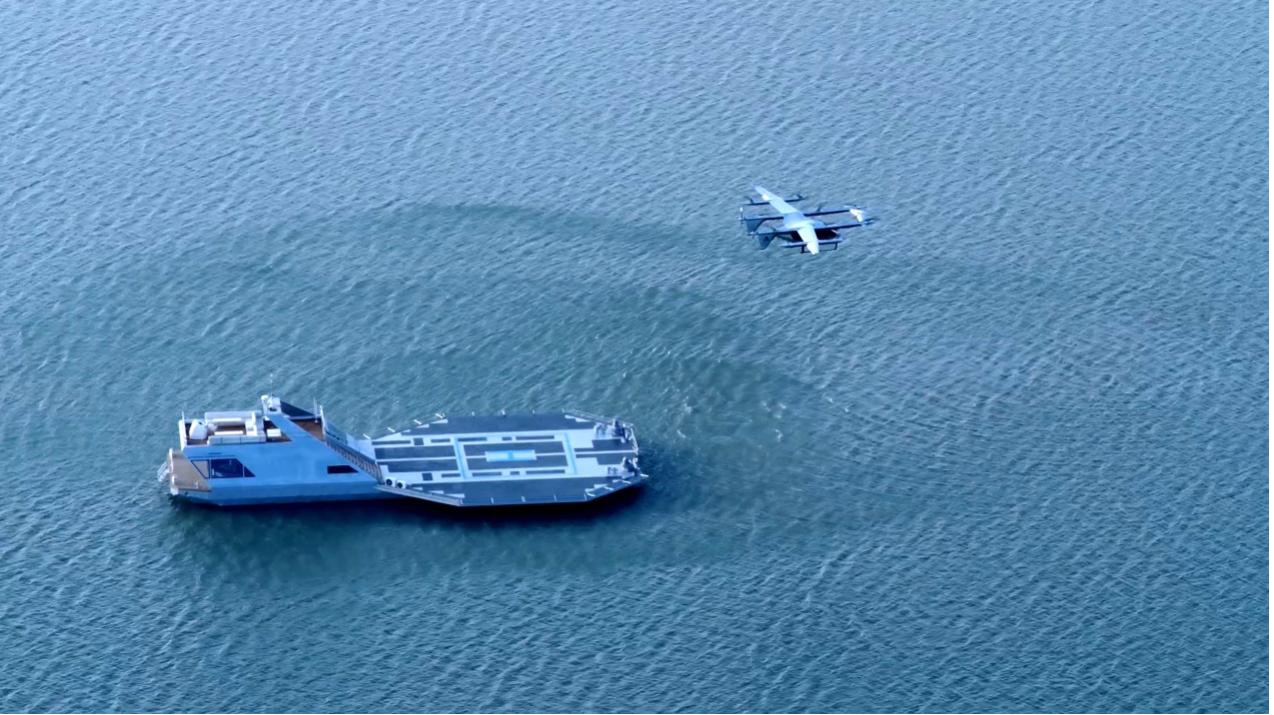
水上打“飞的”出行成真 低空经济迈入“陆海空一体化”新阶段
Zhong Guo Jing Ying Bao· 2025-11-24 07:13
Core Insights - The launch of the "Sea and Air Integrated Low Altitude Economic Solution" by Fengfei Aviation marks a new phase in the low-altitude economy, integrating land, sea, and air operations [1] - The solution features the world's first zero-carbon water airport designed for eVTOL aircraft, addressing challenges such as site selection, deployment speed, and operational complexity [1] Group 1 - Fengfei Aviation's zero-carbon water airport integrates eVTOL takeoff and landing platforms, energy storage, intelligent scheduling systems, and communication support, enabling rapid deployment across various water bodies [1] - The water airport is specifically designed for eVTOL aircraft, utilizing pure electric drive and solar panels, and includes facilities for passenger waiting and maintenance [1] Group 2 - There is a significant gap in eVTOL infrastructure construction, with long construction cycles for takeoff and landing sites; the water-based sites can accommodate multiple eVTOL models, enhancing point-to-point connectivity [2] - Fengfei Aviation has secured 300 confirmed orders for its aircraft, with the manned aircraft "Shengshi Long" having completed its approval plan and entering the compliance verification stage, aiming for commercial operation by 2027 [2]
低空经济“水上突围”!峰飞发布全球首个零碳水上机场
Guo Ji Jin Rong Bao· 2025-11-23 04:13
Core Insights - The launch of the world's first "sea and air integrated low-altitude economic solution" by Peak Fly Aviation Technology aims to address challenges in low-altitude infrastructure deployment and operation, facilitating the scaling of low-altitude economic applications from concept to reality [2] Group 1: Solution Overview - The solution consists of a "zero-carbon water airport" and eVTOL aircraft, designed to extend low-altitude infrastructure to various water bodies, addressing issues such as site selection, slow deployment, and complex operations [2] - The eVTOL zero-carbon water airport integrates an eVTOL takeoff and landing platform, solar energy storage, intelligent scheduling systems, and communication support, allowing for rapid deployment on rivers, lakes, and seas [2] Group 2: Infrastructure and Aircraft Compatibility - The current gap in eVTOL infrastructure is significant, with long construction cycles for takeoff and landing sites; the water-based eVTOL sites can accommodate multiple eVTOL models, including the industrial-grade aircraft "Great White Shark," the 2-ton cargo aircraft "Kerry Gull," and the 6-seat passenger aircraft "Prosperous Dragon" [2] - This integrated solution enables "point-to-point direct" travel in various scenarios, enhancing operational efficiency [4] Group 3: Application Scenarios - The solution can meet diverse application needs such as marine energy platform operations, high-frequency commuting, marine tourism experiences, emergency rescue, and mobile airport cluster operations [4] - In marine operations, the solution can increase the efficiency of transporting personnel and emergency supplies by over ten times; in emergency rescue, it can reduce response times by more than 50% and significantly expand search coverage [4] Group 4: Urban Mobility and Economic Impact - The solution provides rapid air transportation services between urban areas, coastal city clusters, and islands, reducing commuting times from hours to minutes; for instance, deploying an eVTOL water airport on the Huangpu River can facilitate quick travel from Hongqiao to Lujiazui without disrupting existing infrastructure [4] - The integration of "flying" elements into high-end tourism is expected to drive consumption upgrades, positioning the solution as a new economic engine [4] - Multiple mobile water airports can form a high-throughput "distributed airport cluster" in specific water areas, supporting large-scale and multi-task collaborative operations [4]
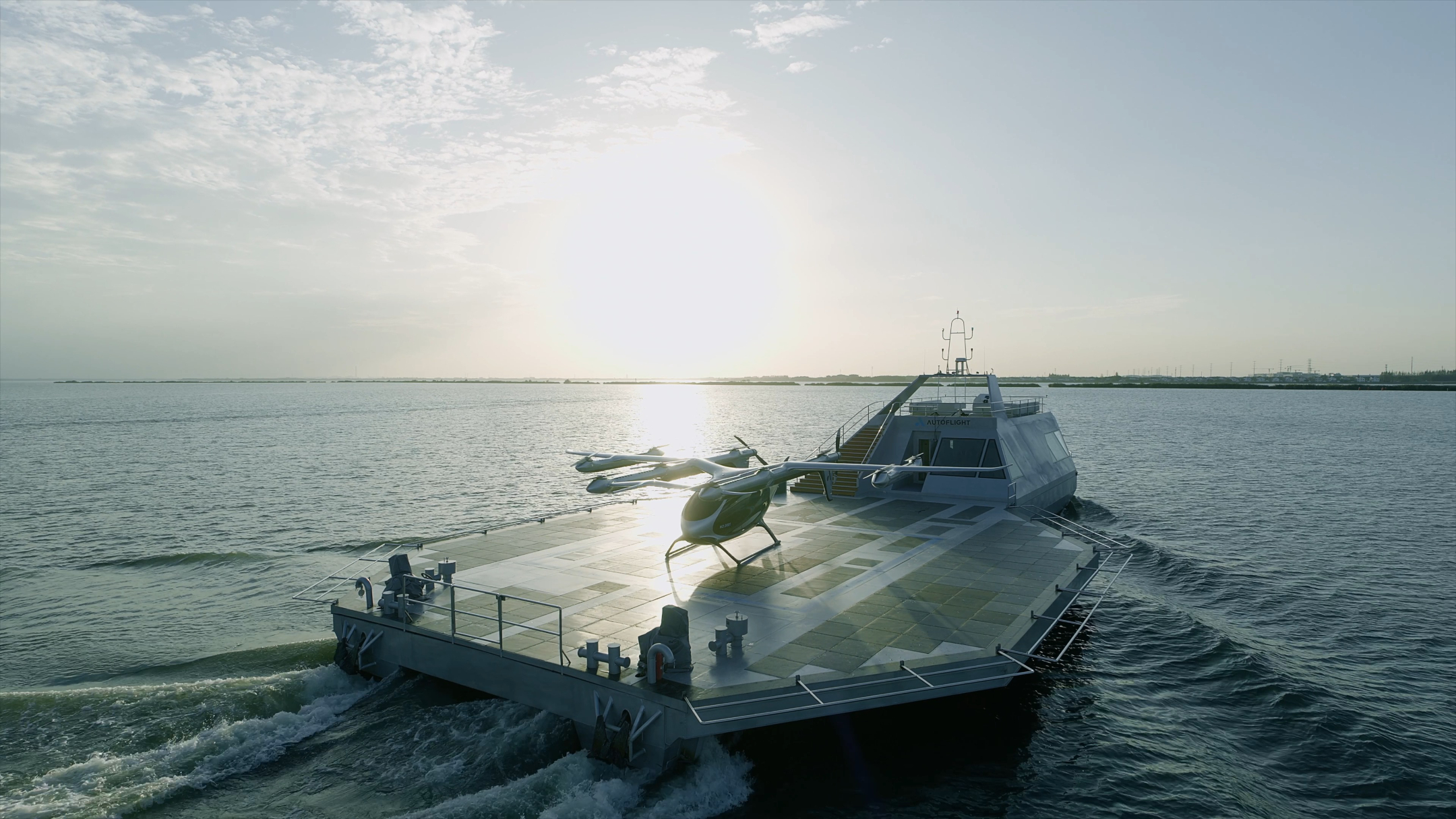
全球首个海空一体低空经济解决方案在昆山发布
Xin Hua Ri Bao· 2025-11-22 21:10
Core Viewpoint - The launch of the world's first integrated sea and air low-altitude economic solution by Peak Fly Aviation Technology marks a significant advancement in low-altitude operations, transitioning from point-to-point transport to a comprehensive "shore-sea-air" network [1] Group 1: Solution Overview - The solution consists of a "zero-carbon water airport" and "eVTOL aircraft," enabling seamless integration of low-altitude infrastructure into aquatic environments [1] - The zero-carbon water airport features an eVTOL takeoff and landing platform, energy storage for power supply, an intelligent scheduling system, and communication support, allowing for rapid deployment in various water bodies [1] Group 2: Advantages of the Solution - The sea and air integrated low-altitude economic solution offers six key advantages: low carbon emissions, intelligent collaboration, rapid response, high safety, flexible deployment, and wide applicability [1] - Potential applications include marine energy platform operations, high-frequency commuting, sea and air tourism experiences, and mobile airport cluster operations [1] Group 3: Market Impact - The introduction of this solution breaks down barriers in low-altitude economic scenarios and activates limitless market possibilities, according to the company's Senior Vice President [1]
eVTOL可实现水上起飞 低空场景向“海空一体”延伸
Nan Fang Du Shi Bao· 2025-11-22 14:23
Core Insights - The company, Peak Fly Aviation Technology, has launched the world's first "sea and air integrated low-altitude economic solution," combining a "zero-carbon water airport" with eVTOL aircraft to address challenges in low-altitude infrastructure deployment and operation [1][3]. Group 1: Solution Overview - The "sea and air integrated" solution includes a zero-carbon water airport that serves as a mobile air hub, featuring eVTOL takeoff platforms, energy storage for charging, intelligent scheduling systems, and communication support, deployable across various water bodies [3]. - The solution aims to enhance the entire transportation infrastructure, providing mobile facilities on water to complement existing land-based infrastructure, facilitating point-to-point travel for passengers [3]. Group 2: Market Potential and Application - The eVTOL aircraft can achieve competitive pricing comparable to ride-hailing services once mass adoption occurs, requiring significant fleet sizes in cities and countries to reach economies of scale [3]. - The current low-altitude economy is growing rapidly, but there is a substantial gap in eVTOL infrastructure, with water-based takeoff sites adaptable for multiple eVTOL models, enabling quick implementation of point-to-point services [3][4]. Group 3: Application Scenarios - The "sea and air integrated" solution can cater to various applications, including marine energy platform operations, high-frequency commuting, marine tourism experiences, emergency rescue, and mobile air port cluster operations, thereby enhancing efficiency and promoting the integration of low-altitude and marine economies [4]. Group 4: Demonstration and Future Outlook - The solution was publicly demonstrated for the first time at Dian Shan Lake, showcasing the collaborative operational capabilities of the zero-carbon airport and eVTOL aircraft through a "water and low-altitude" linkage [6]. - As part of the "14th Five-Year Plan," the low-altitude economy is transitioning from pilot demonstrations to systematic and large-scale development, with the solution expected to activate coastal and inland water resources, providing rapid deployment options for urban areas [6].
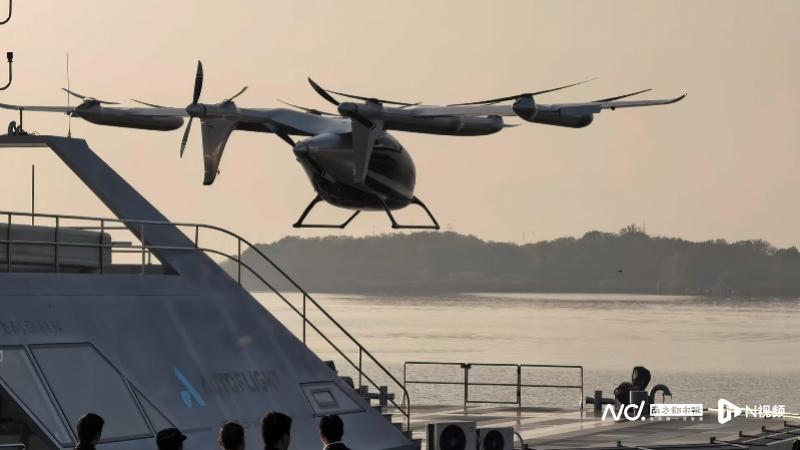
eVTOL能从水上起飞了!低空场景有望实现“点对点直达”
Huan Qiu Wang Zi Xun· 2025-11-22 08:55
Core Viewpoint - The launch of a domestically developed 2-ton eVTOL (electric Vertical Take-Off and Landing aircraft) at a "water airport" marks a significant advancement in low-altitude economy, providing a "sea and air integrated" solution for transportation and logistics [1][2]. Group 1: eVTOL and Water Airport Features - The "water airport" operates on pure electric power, featuring a large deck as a take-off and landing platform, with the cabin serving as a waiting area and maintenance room [2]. - The eVTOL can take off and land precisely within designated areas and withstand wind speeds of up to 7 levels [2]. - The facility is designed as a "zero-carbon water airport," utilizing solar energy stored from photovoltaic panels to meet its daily power needs [2]. Group 2: Industry Applications and Future Prospects - The solution aims to address challenges in low-altitude infrastructure deployment, enhancing the scalability of low-altitude economic applications [5]. - The integration of water-based take-off platforms with land-based operations is expected to create more direct transportation scenarios, significantly reducing travel times from "hour-level" to "minute-level" [5]. - The eVTOL has already demonstrated its capabilities in logistics, completing various missions, including transporting goods over distances of 161 kilometers in about one hour [6]. - Future plans include the potential for large-scale passenger eVTOL operations by 2028 to 2030, allowing users to easily find nearby take-off points through an app [6].