依苏帕格鲁肽α注射液

Search documents
两天两笔重磅交易:GLP-1战场风云突变 巨头加速“买买买”
2 1 Shi Ji Jing Ji Bao Dao· 2026-02-26 08:27
Core Insights - The global metabolic disease drug development sector is experiencing significant activity, highlighted by two major strategic partnerships involving Pfizer and Novo Nordisk, signaling a shift in the GLP-1 market dynamics [1][2][3] Group 1: Strategic Partnerships - Pfizer has secured exclusive commercialization rights for the GLP-1 receptor agonist, Enoglutide, in mainland China through a partnership with Hanzhou Xianweida Biotech, with a total deal value of up to $495 million [1][4] - Novo Nordisk has entered a $2.1 billion collaboration with Vivtex to develop next-generation oral medications for obesity and diabetes, aiming to overcome current delivery technology limitations [2][8] Group 2: Market Dynamics - The GLP-1 market is transitioning from a focus on efficacy to a more complex competition involving technology platforms and commercialization ecosystems [3][11] - The competitive landscape is shifting as local Chinese biotech firms begin to play a more significant role, with partnerships between multinational corporations and local companies becoming a prevalent strategy [10][13] Group 3: Company Strategies - Pfizer's recent strategy reflects a shift from self-research failures to aggressive business development, seeking to quickly fill gaps in its GLP-1 pipeline through partnerships [4][6] - Novo Nordisk's collaboration with Vivtex is seen as a defensive move to maintain its competitive edge in the oral medication space, especially in light of recent clinical trial results showing its current products lagging behind competitors [2][8] Group 4: Financial Implications - The financial stakes are high, with Novo Nordisk's revenue for 2025 reaching approximately $48.9 billion, driven largely by its GLP-1 products, while Eli Lilly's revenue reached $65.2 billion, showcasing the lucrative nature of the GLP-1 market [11][12] - The impending patent expirations and the influx of generic competitors are prompting significant price reductions in the GLP-1 market, indicating a shift towards more accessible pricing for these medications [12][13]


上海生物医药构筑多元增长极 产业迈入创新生态迭代的正向循环
Jie Fang Ri Bao· 2026-01-31 02:13
Core Insights - The global biopharmaceutical industry is still experiencing a "capital winter" in 2025, undergoing deep structural adjustments and facing a critical period of transformation and reconfiguration [1] - Shanghai's biopharmaceutical industry has shown resilience and steady growth, with manufacturing output reaching 209.9 billion yuan, driven by a shift towards innovative and high-quality enterprises [2] Structural Optimization: Full-Chain Innovation Development - The shift from generic drugs to innovative drugs is exemplified by the success of Silver诺药业, which launched the first original human long-acting GLP-1 drug in China, benefiting many patients with type 2 diabetes [3] -艾力斯医药's revenue surged from 530 million yuan in 2021 to 3.56 billion yuan in 2024, with a compound annual growth rate of 88.6% [3] - In 2025, Shanghai approved nine domestic Class 1 innovative drugs, ranking second nationally, and accounted for 33% of business development transactions in the country, leading the nation [3] Policy Support and Innovation Ecosystem - Over the past five years, Shanghai has approved 32 domestic Class 1 innovative drugs, maintaining its position as a leader in the industry [4] - The city has implemented forward-looking policies, such as the drug listing license holder system, to address the challenges of "having technology but no factory" [4] New Growth Areas: Diverse Expansion - Shanghai is emerging as a leader in brain-computer interface technology, with nearly 30 registered companies and significant funding in this sector [5] - The city also leads in cell and gene therapy, with 57% of the country's products launched between 2021 and September 2025 [5] AI-Driven Pharmaceutical Innovation - AI-driven drug development is reshaping research paradigms, with 英矽智能 discovering 27 preclinical candidates, 13 of which have received clinical trial approvals [6] - By the end of 2025, 英矽智能 is expected to become the first AI pharmaceutical company listed on the Hong Kong Stock Exchange, raising a record 2.277 billion HKD [6] Global Value Co-Creation - Shanghai's innovative drugs are increasingly entering global markets, transitioning from a one-time sale model to a co-creation model, enhancing their bargaining power [8] - 和铂医药's licensing transactions exceeded 7 billion USD in 2025, reflecting the growing international recognition of Shanghai's innovative drug development capabilities [8] Globalization of Innovative Medical Devices - 联影医疗 has launched over 140 proprietary products, entering more than 90 countries and regions, showcasing the global reach of Shanghai's innovative medical devices [9] - The city has established supportive policies for innovative drugs and devices that achieve registration and sales in multiple countries, providing up to 10 million yuan in support for qualifying projects [9]
一降再降,减肥药“价格战”下的乱象隐忧
Feng Huang Wang· 2026-01-07 15:25
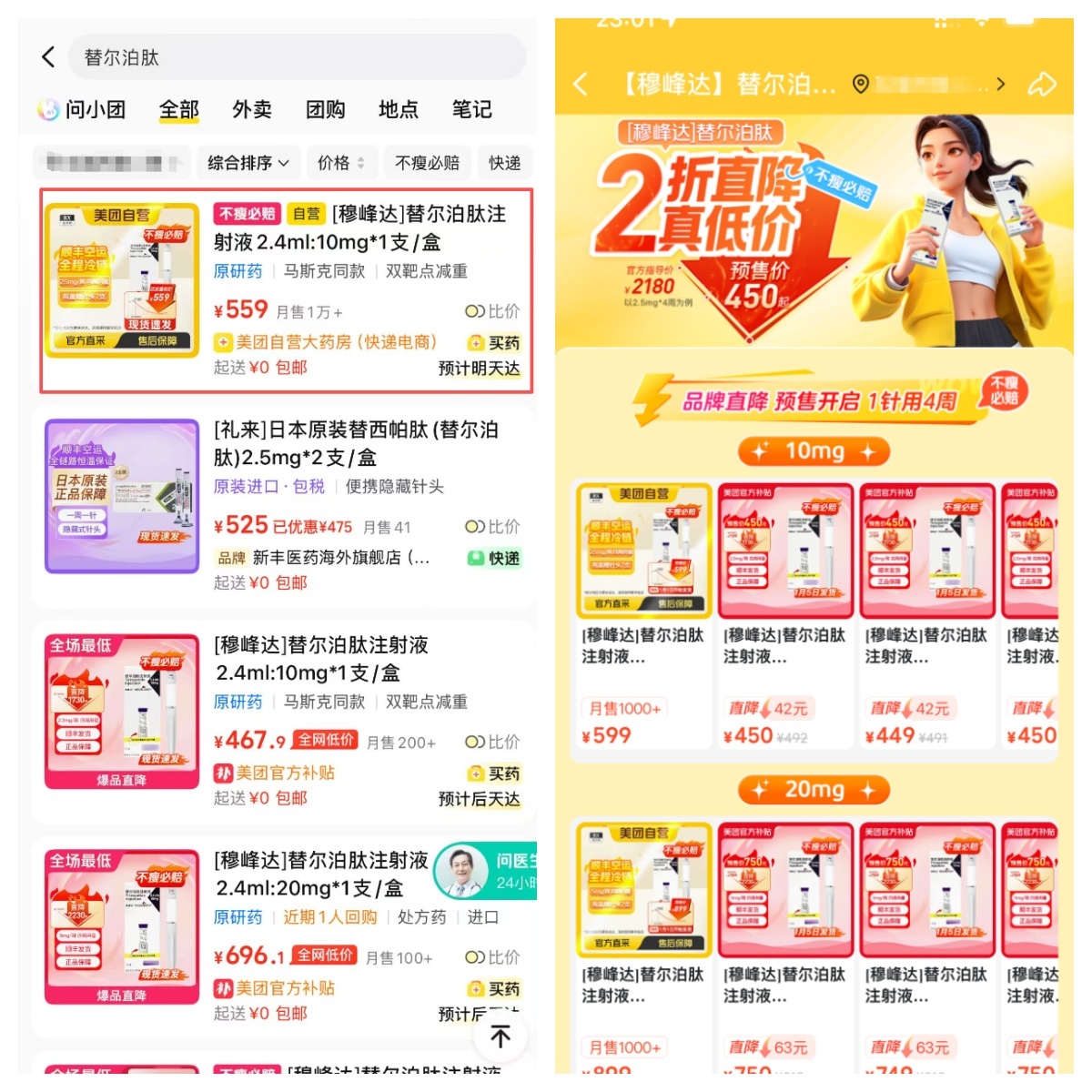
Core Insights - The price of weight loss drugs has significantly decreased within a short period, indicating a price war in the market [1][2][3] - Compliance risks are emerging alongside the price competition, with concerns about misleading marketing and prescription practices [1][7][8] Price Trends - In late December 2022, major weight loss drugs like Semaglutide and Tirzepatide saw substantial price reductions on various e-commerce platforms [2] - Recently, Tirzepatide's price on Meituan dropped by 40 yuan, while Semaglutide's price remains between 300-400 yuan, significantly lower than six months ago [5] - Domestic weight loss drug Masitide from Innovent Biologics has also begun to lower prices, with its 0.5ml:2mg version dropping from 540 yuan to 399 yuan [5][6] Compliance Issues - There are serious compliance concerns regarding the marketing of GLP-1 drugs, which are primarily approved for diabetes treatment but are being promoted for weight loss [7][8] - Marketing phrases like "not losing weight, money back" are being used, which may violate advertising laws [7] - The prescription process for these drugs on e-commerce platforms has been criticized for being too lenient, allowing non-diabetic patients to obtain prescriptions easily [10][11] Regulatory Landscape - The National Medical Products Administration has proposed guidelines for online prescription drug sales, emphasizing the need for compliance in prescription verification and marketing practices [11][13] - There is ongoing discussion about integrating online prescription drugs into the medical insurance payment system, which could enhance accessibility but also poses regulatory challenges [13][15] - Experts suggest that clear regulations are needed to define the responsibilities of platforms, pharmaceutical companies, and medical institutions in the online prescription drug market [15]

“国谈”过评率仅约40% 国家医保局解释了五大原因
Di Yi Cai Jing· 2025-12-10 08:49
Core Insights - The success rate of negotiations for the National Essential Medicines List reached 88% in 2025, a significant increase from 76% the previous year, marking a seven-year high [1] - A total of 114 new drugs were added to the list, including 50 innovative first-class drugs, indicating a record number both in terms of proportion and quantity [2] - Nearly 100 drugs (98) were rejected during the formal review stage, with over 60% failing to pass expert evaluation, reflecting a continuous decline in the approval rate [1][4] Group 1: Negotiation Process and Outcomes - The negotiation process has matured over the past eight years, involving self-application by pharmaceutical companies, expert evaluations, and price negotiations, resulting in 718 submissions and 535 passing the formal review [2] - The expert evaluation phase saw a pass rate of 41.48%, with 129 drugs proceeding to negotiations, of which 112 were successfully included in the National Essential Medicines List [2] - The total number of drugs in the list increased to 3,253, with 1,857 Western medicines and 1,396 traditional Chinese medicines [8] Group 2: Reasons for Rejection - The decline in approval rates for drugs in the expert evaluation phase is attributed to increased clarity in application processes and heightened competition among similar drugs [4] - Several rejected drugs included first-class innovative drugs, with reasons such as lack of significant clinical value compared to existing treatments [5] - Four main reasons for rejection were identified: lack of innovation, high prices, and insufficient clinical necessity [6] Group 3: Support for True Innovation - The focus on "true innovation" emphasizes filling clinical gaps, offering superior alternatives, and providing better cost-effectiveness [7] - Successful new entries into the list included innovative treatments for various cancers and chronic diseases, reflecting a commitment to enhancing healthcare coverage [8] - The National Healthcare Security Administration aims to maintain a dynamic adjustment of the drug list to meet evolving clinical needs [8] Group 4: Value-Based Purchasing - The negotiation process incorporates a systematic value assessment, including expert evaluations and price calculations, to ensure fair pricing [9] - Recent improvements in price calculation methods aim to enhance fairness and scientific rigor in the evaluation process [10] - The emphasis on differentiated innovation requires pharmaceutical companies to provide substantial clinical evidence to support claims of added value [11]
“国谈”过评率仅约40%,国家医保局解释了五大原因
Di Yi Cai Jing· 2025-12-10 08:39
Core Insights - The approval rate for drugs outside the national essential drug list has reached a four-year low during the expert review phase, indicating increasing scrutiny and higher standards for innovation [1][4] - The success rate for negotiations in the upcoming 2025 national essential drug list has improved to 88%, up from 76% the previous year, marking a seven-year high [1] - A total of 114 new drugs will be added to the national essential drug list, including 50 innovative first-class drugs, reflecting a significant increase in both quantity and quality [2][8] Group 1: Approval Rates and Trends - The approval rate for drugs in the expert review phase has declined for two consecutive years, with only 41.48% of drugs passing this stage this year [2][3] - In the past three years, the number of drugs passing the formal review has increased, but the expert review approval rate has decreased from 74.2% to 47.0% [3] - Nearly 60% of drugs outside the essential list failed to pass the expert review, highlighting a trend towards stricter evaluation criteria [1][4] Group 2: Reasons for Non-Approval - Several drugs, including first-class innovative drugs, were not approved due to lack of significant clinical value compared to existing treatments [5][6] - The "Four No Changes" principle (no change in active ingredient, indication, administration route, or clinical value) has been identified as a key reason for low approval rates [6] - High prices and mismatched value with existing treatments have also contributed to the rejection of certain drugs, with examples of significant price discrepancies noted [6] Group 3: Support for True Innovation - The national healthcare authority emphasizes support for "true innovation" and "differentiated innovation," aiming to exclude drugs that do not significantly advance clinical outcomes [5][7] - Successful drugs entering the essential list share common characteristics such as filling therapeutic gaps and offering superior alternatives [7] - The overall speed and quantity of innovative drugs entering the national essential drug list have increased, addressing various medical needs including major diseases and rare conditions [8] Group 4: Value-Based Pricing and Evaluation - The negotiation process for the national essential drug list has evolved to include a more systematic and scientific value assessment, enhancing fairness and rigor in price evaluations [10] - The approach to pricing has shifted to support higher payment thresholds for drugs with greater innovation, reflecting a value-based pricing model [10][11] - The importance of robust clinical evidence in supporting claims of additional benefits for new drugs has been highlighted, particularly in competitive therapeutic areas [11][12]
速递|明年1月1日起,礼来替尔泊肽可使用医保报销!
GLP1减重宝典· 2025-12-08 03:10
Core Viewpoint - The article discusses the significant updates to China's National Medical Insurance Drug List, highlighting the inclusion of innovative drugs, particularly focusing on the GLP-1 receptor agonist, Tirzepatide, for the treatment of type 2 diabetes, which reflects the government's commitment to improving access to innovative therapies [5][7][9]. Summary by Sections National Medical Insurance Drug List Update - On December 7, the National Healthcare Security Administration announced a major update to the National Medical Insurance Drug List, adding 114 new drugs, including 50 innovative drugs [5]. - The success rate for drugs entering the negotiation and bidding process increased to 88%, up from 76% in 2024, indicating a more favorable environment for innovative drug approvals [5]. Inclusion of Tirzepatide - Tirzepatide injection, developed by Eli Lilly, has been officially included in the National Medical Insurance Drug List for adult patients with type 2 diabetes who do not achieve adequate blood sugar control with metformin and/or sulfonylureas [7]. - The new drug list will take effect on January 1, 2026, showcasing the clinical value of Tirzepatide and the government's focus on the accessibility of innovative drugs [7]. Impact on Diabetes Management - China has approximately 148 million adults with type 2 diabetes, with only about 50% achieving target blood sugar levels [9]. - The inclusion of Tirzepatide in the insurance list is expected to significantly enhance treatment access for patients, potentially improving long-term management and health outcomes for diabetes patients [9].
2025国谈结果公布:“药王”进医保 5款百万抗癌药进商保
经济观察报· 2025-12-07 12:13
Core Viewpoint - The recent adjustments to the national basic medical insurance directory and the introduction of the commercial insurance innovative drug directory mark significant steps towards enhancing access to innovative treatments in China, particularly for high-cost therapies like CAR-T drugs [2][6]. Summary by Sections National Basic Medical Insurance Directory Adjustments - A total of 114 new drugs were added to the basic medical insurance directory, including 50 first-class innovative drugs [2]. - The total number of drugs in the basic medical insurance directory has increased to 3,253, comprising 1,857 Western medicines and 1,396 traditional Chinese medicines [3]. - New inclusions cover various fields such as oncology, chronic diseases, mental health, and pediatric medications, with several rare disease treatments also added [3]. Commercial Insurance Innovative Drug Directory - The commercial insurance innovative drug directory aims to include high-innovation drugs that exceed the basic insurance scope but offer significant clinical value and patient benefits [6]. - A total of 121 drugs underwent formal review for the commercial insurance directory, with 24 entering price negotiation, ultimately resulting in 19 drugs from 18 companies being included [6]. - Notable inclusions are five CAR-T therapies, which previously cost over one million yuan per injection, making them unaffordable for many patients [6]. Performance of Pharmaceutical Companies - Several leading pharmaceutical companies have reported their successes in the 2025 national medical insurance negotiations, with Heng Rui Pharmaceutical having 20 drugs included, contributing 7.554 billion yuan to their total revenue [5]. - Innovent Biologics announced that 7 of its new drugs were included in the updated national medical insurance directory, with 12 of its 17 innovative drugs now covered [5]. Specific Drug Inclusions - The directory includes drugs for Alzheimer's disease, such as the monoclonal antibodies from Eisai and Eli Lilly, and several rare disease treatments [7]. - Some high-profile drugs, like Novo Nordisk's semaglutide and Bristol-Myers Squibb's nivolumab, were not included despite passing the formal review [8]. Implementation Timeline - The new directory is set to be officially implemented nationwide on January 1, 2026 [9].


中国糖尿病药物行业调研简报:行业洞察:重磅新品获批不断,市场格局如何变化?-20251110
Tou Bao Yan Jiu Yuan· 2025-11-10 12:57
Investment Rating - The report does not explicitly state an investment rating for the diabetes drug industry Core Insights - The diabetes drug market is experiencing significant innovation, particularly with GLP-1 receptor agonists, which have seen advancements in long-acting and humanized formulations [3] - The global diabetes-related healthcare expenditure has surpassed $1 trillion, indicating a growing financial burden on healthcare systems [16] - China is facing a severe diabetes crisis, with 148 million adults diagnosed and a significant number of pre-diabetic individuals [12] Summary by Sections New Drug Approvals - In 2025, several innovative diabetes drugs were approved in China, including: - Eysuparaglutide α (怡诺轻), a long-acting GLP-1 receptor agonist [2] - Ploglitin tablets (善泽平), a new oral DPP-4 inhibitor [2] - Masitide injection (信尔美), the first dual receptor agonist for GCGR/GLP-1R globally [2][3] Drug Mechanisms and Innovations - The report highlights the importance of dual receptor agonism in metabolic disease treatment, with Masitide providing both appetite suppression and liver fat metabolism benefits [3] - Combination formulations, such as Dapagliflozin and Metformin, enhance treatment adherence by optimizing drug release and minimizing gastrointestinal side effects [4] Market Trends - Traditional diabetes medications like Metformin and Sulfonylureas are experiencing declining sales, while newer drugs like GLP-1 agonists and SGLT-2 inhibitors are seeing significant growth [8] - The retail market for diabetes medications in China exceeded 13 billion yuan in 2024, with a nearly 9% year-on-year growth in Q1 2025 [22] Global Diabetes Statistics - The number of diabetes patients aged 20-79 is projected to rise from 588.7 million in 2024 to 852.5 million by 2050 [11] - In 2024, China had 148 million adults with diabetes, highlighting the urgent need for effective management strategies [12] Healthcare Expenditure - The United States leads in diabetes-related healthcare spending at $404.5 billion, followed by China at $168.9 billion [15] - China's per capita diabetes-related healthcare expenditure is only $236, indicating a disparity in healthcare resource allocation [18]
上海生物医药产业规模,突破万亿大关在即
3 6 Ke· 2025-10-22 03:35
Core Insights - Shanghai's manufacturing output in the three leading industries grew by 8.5% year-on-year in the first three quarters of this year, outpacing the overall industrial output growth by 2.8 percentage points [1] - The pharmaceutical sector, particularly the export of medicines and raw materials, saw significant growth, with exports increasing by 21.5% and 40.7% respectively [1] Group 1: Industry Growth and Development - Shanghai has positioned its biopharmaceutical industry as a pillar industry, with plans to develop a world-class biopharmaceutical cluster by 2025, aiming for an industry scale exceeding 1 trillion yuan [2] - The biopharmaceutical industry in Shanghai has shown consistent growth, with the scale increasing from 761.71 billion yuan in 2021 to an expected 984.70 billion yuan in 2024, reflecting a compound annual growth rate of 8.94% [2] - The manufacturing output in the biopharmaceutical sector is projected to grow from 171.20 billion yuan in 2021 to 201.17 billion yuan in 2024, with a compound annual growth rate of 6.9% [2] Group 2: Enterprise and Investment Landscape - By the end of 2024, Shanghai is expected to have 2,183 biopharmaceutical enterprises, with significant presence from global industry leaders [3] - Shanghai has established a biopharmaceutical industry mother fund with a total scale of 22.5 billion yuan, which has completed the selection of 13 sub-funds, achieving a leverage effect of 5.59 times [3] - In the biopharmaceutical sector, Shanghai has seen cumulative financing of 238.37 billion yuan from 2021 to 2024, with 255.31 billion yuan raised in the first nine months of this year alone [3] Group 3: Market Expansion and Innovation - As of September 2025, there are 102 biopharmaceutical companies listed on A-shares, Hong Kong stocks, and US stocks, indicating a growing capital market presence [4] - Shanghai's biopharmaceutical sector has a strong innovation output, with 7 first-class innovative drugs and 15 third-class innovative medical devices approved in 2024, ranking second and first nationally respectively [6] - The city has produced several first-in-class and first-in-China innovative products, including a long-acting GLP-1 receptor agonist and a gene therapy drug for hemophilia B [10][11] Group 4: Future Directions and Focus Areas - The biopharmaceutical industry in Shanghai is expected to continue focusing on cutting-edge innovations, particularly in areas such as dual antibodies, ADCs, cell gene therapy, and AI applications in medicine [12] - The industry aims to support disruptive innovations and cultivate benchmark products in both pharmaceuticals and medical devices [12]

谁在网购减重版GLP-1?京东健康:90后购买量排第一,未来电商渠道预计超过七成
Sou Hu Cai Jing· 2025-08-27 08:26
Industry Overview - The GLP-1 receptor agonists are becoming a new focus in the pharmaceutical retail market in China, driven by policy support for "Internet + Healthcare" and increasing consumer health demands [1][2] - The market for GLP-1 is expected to exceed 100 billion by 2030, with e-commerce channels projected to capture over 50% of the market share this year, potentially rising to over 70% in the future [1] Company Strategies - JD Health has established extensive collaborations in the GLP-1 sector, partnering with multinational pharmaceutical companies like Novo Nordisk and domestic innovators such as Innovent Biologics and Yino Pharma to ensure a stable supply of quality products [2][6] - During the 618 shopping festival, JD Health reported a more than threefold year-on-year increase in sales of GLP-1 medications [2] Market Dynamics - JD Health's market share in the GLP-1 sector is higher than that of other platforms, attributed to its strong supply chain and user engagement capabilities [2][11] - The user demographic for GLP-1 products primarily consists of individuals aged 26 to 45, with a significant portion being office workers who are more health-conscious [9][10] Competitive Landscape - JD Health is competing with other e-commerce giants like Alibaba and Meituan in the GLP-1 market, leveraging its established user base and logistics capabilities to maintain a competitive edge [11][12] - The company emphasizes the importance of user education and long-term patient management in the context of chronic diseases associated with obesity, aiming to provide comprehensive health solutions [12] Logistics and Supply Chain - JD Health has developed a nationwide cold chain logistics network to ensure the safe storage and transportation of temperature-sensitive GLP-1 medications, achieving a next-day delivery rate of 99% [8]