露营椅

Search documents
美国百年露营老牌科勒曼在沪开中国首店,它来晚了吗?
Xin Lang Cai Jing· 2026-02-07 01:10
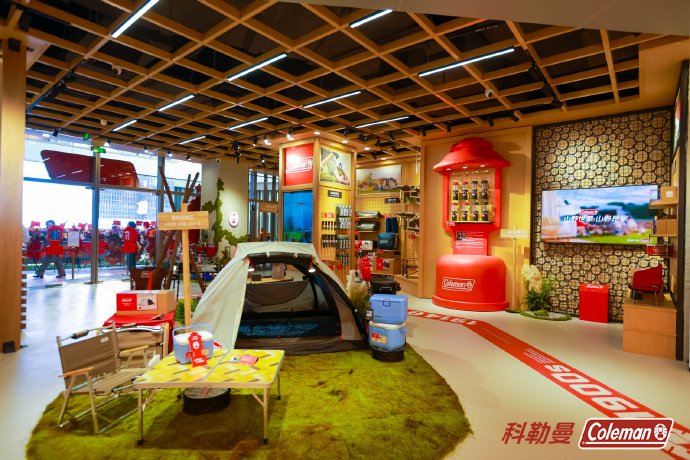
Company Overview - Coleman, a century-old American camping brand, has opened its first flagship store in Shanghai and launched online sales through platforms like Tmall and JD, marking the start of systematic operations in the Chinese market [1] - The flagship store is designed not just for sales efficiency but as an experiential space to educate consumers about the brand and its products [1][2] Sales and Product Strategy - The top-selling categories online include camping folding carts, canopies, and tents, with prices primarily ranging from 1,000 to 2,000 yuan [1] - Coleman has adopted a strategy of limiting SKU numbers in stores to create complete camping scenarios, allowing consumers to understand product combinations and functionalities [2] - The company plans to focus on flagship stores in first-tier and select new first-tier cities, prioritizing store size and experience over rapid expansion [4] Market Insights - The outdoor products market in China is relatively new, with a current size of approximately 87.2 billion yuan, expected to grow to 104.9 billion yuan by 2030 [4] - Despite a low penetration rate of about 3% in camping, the market is seen as having long-term potential, with a projected 20% year-on-year growth in camping-related categories by the second half of 2025 [5] Brand Localization - Coleman has tailored its brand messaging for the Chinese market, shifting from the global slogan "Count on Coleman" to "山野世家,山野是家," emphasizing reliability and the brand's long history [7] - The company has carefully selected 78 SKUs for the Chinese market, focusing on products that have been validated in mature markets [6][9] Product Adaptation - Products are reassessed for safety and suitability in local contexts before launch, with adjustments made based on consumer feedback [9] - Coleman aims to extend the usage of camping products beyond traditional settings by introducing items like cups and folding chairs that can be used in everyday scenarios, thereby increasing consumer engagement [9][10] Competitive Landscape - Coleman aspires to become a leading brand in the Chinese camping equipment sector within 5 to 10 years, building on its success in the U.S. and Japan, where it generates over 2 billion yuan in revenue [10] - The brand faces challenges in differentiating itself in a competitive market where established players like Snow Peak and local brands dominate [11]

净利润暴跌139%!A股户外龙头业绩暴雷,董事长三年涨薪近7倍
Xin Lang Cai Jing· 2026-01-20 09:32
Core Viewpoint - The company Muguo has reported its first annual loss since its listing, with a projected net loss of 22 million to 33 million yuan for 2025, marking a significant decline from a net profit of 83.76 million yuan the previous year, representing a drop of 126.27% to 139.40% [1][25][27] Group 1: Performance Decline - Muguo's performance has been on a downward trend since the peak of the camping economy in 2022, with each quarter in 2025 showing a year-on-year decline in net profit, culminating in a loss of 10.56 million yuan in Q3 [3][7][27] - The company’s revenue growth has significantly slowed, with a mere 1.40% increase in 2023 and a 10.42% decline in 2024, while net profit dropped by 24.05% to 10.7 million yuan in 2023 and by 21.57% in 2024 [7][32][34] - The projected loss for Q4 2025 could reach as high as 58.65 million to 69.65 million yuan, indicating a severe downturn in financial performance [7][32][34] Group 2: Market Dynamics - The initial success of Muguo was driven by the camping boom during the pandemic, with revenues soaring to 1.436 billion yuan in 2022, a 55.52% increase from the previous year [3][28] - However, as the pandemic subsided and tourism resumed, the camping trend waned, leading to a sharp decline in Muguo's sales and profitability [7][32][34] - The company has failed to capitalize on the growing outdoor apparel market, which is projected to reach 150.4 billion yuan in 2024 with a growth rate of 23% [12][36] Group 3: Management and Strategy Issues - Muguo's management has seen significant salary increases despite the company's declining performance, with the chairman's salary rising from 722,700 yuan in 2022 to 5.629 million yuan in 2024 [19][44] - The company has struggled with its transition from an OEM model to a brand-focused strategy, missing opportunities in the outdoor apparel segment while relying heavily on its core camping gear business [39][41] - Employee incentive plans have been undermined by the company's poor performance, leading to the termination of stock option plans that were contingent on achieving specific revenue and profit growth targets [41][43]


许多咖啡店都在用的「露营椅」,怎么突然就被嫌弃了?
36氪· 2025-09-28 09:32
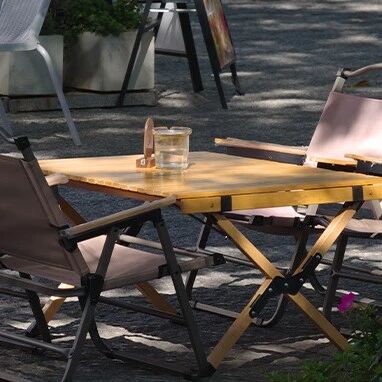
Core Viewpoint - The article discusses the declining popularity of camping chairs in independent coffee shops, highlighting a shift in consumer preferences from aesthetic appeal to comfort and practicality [4][10][30]. Group 1: Consumer Preferences - Initially, consumers appreciated the novelty of sitting in camping chairs for the ambiance they created, but this sentiment has changed as comfort becomes a priority [7][10]. - Many consumers now express a preference for traditional seating options, such as plastic stools, over uncomfortable camping chairs [14][18]. - The trend of using camping chairs is perceived as outdated by some consumers, indicating a shift in what is considered trendy in coffee shop environments [18][26]. Group 2: Business Considerations - Coffee shop owners face a dilemma between creating visually appealing spaces for social media and ensuring customer comfort to encourage longer visits [28][29]. - The low cost and ease of setup associated with camping chairs make them attractive to business owners, but this often compromises customer experience [22][23]. - The article suggests that as the novelty of aesthetic-focused designs fades, comfort will become a critical factor for customer retention in independent coffee shops [30][32]. Group 3: Industry Trends - The article notes a broader industry trend where coffee shops have been heavily influenced by various design styles, such as camping and industrial themes, leading to consumer fatigue [33]. - As consumers seek more traditional and comfortable seating, there is an emerging opportunity for coffee shops to differentiate themselves by prioritizing comfort over aesthetic trends [33].
新玩法持续出圈 露营经济爆火
Zhong Guo Zheng Quan Bao· 2025-06-02 20:43
Core Insights - The camping economy is experiencing significant growth during the Dragon Boat Festival, with a 50% year-on-year increase in search volume for "camping" on Meituan [1] - The "camping+" model, which includes activities like pet interaction, water play, and barbecuing, has seen over a 120% increase in orders on Meituan [1][5] - Popular camping sites in Beijing are fully booked, indicating high demand and a thriving camping culture [1][2] Camping Economy Trends - The rental of camping tents is in high demand, with standard tents accommodating 6 to 8 people priced at 198 yuan for 4 hours, and larger tents costing over 1000 yuan [2] - Many visitors are opting for self-catering, purchasing ingredients from local markets, which enhances the overall camping experience [2][4] - The presence of additional amenities such as food stalls and recreational activities has increased the appeal of camping sites [3] Market Potential - The camping economy in China is projected to reach a core market size of 2139.7 billion yuan in 2024, with expectations to grow to 2483.2 billion yuan by 2025, contributing to a total market size of 14402.8 billion yuan [6] - Outdoor product sales, particularly camping gear, are surging as summer approaches, with promotional activities boosting sales in physical stores [6]
跨境电商运营:中国露营装备出海国别机会洞察报告
Sou Hu Cai Jing· 2025-04-11 19:56
Core Insights - The report titled "Cross-Border E-commerce Operations: Insights into China's Camping Equipment Export Opportunities" focuses on the export market for Chinese camping equipment, analyzing market size, competitive landscape, buyer and supplier conditions, regulatory standards, and key enterprises [1] - From 2020 to 2024, China's camping equipment export value is expected to show an overall growth trend, with major export destinations including the United States, Mexico, and Russia [1] - The competitive landscape reveals a low market concentration with many exporters, leading to significant product homogeneity and price competition, although some companies are gaining market share through brand and technological advantages [1] Industry Overview and Export Data - The global camping equipment market is experiencing rapid growth, driven by increasing consumer demand for convenient camping solutions, particularly in markets like Russia [7][8] - The report highlights the importance of product quality, innovation, and brand building for suppliers to enhance competitiveness in the international market [1] - Regulatory standards are becoming stricter across various countries, necessitating compliance with safety and environmental regulations to ensure market access [1] Export Trends and Challenges - The export value of camping carts is projected to reach $2.436 billion in 2024, reflecting a 15.32% increase from 2023, with a significant rise in export volume [13] - The United States remains the largest export market for camping carts, accounting for 35.51% of total exports, while emerging markets like Germany and Russia are showing substantial growth rates [13] - The export value of camping lights is expected to decline to $2.747 billion in 2024, following a peak in 2022, indicating a shift towards lower-priced products [15][19] Key Product Insights - Camping tents and canopies are primarily made from synthetic fibers, with an export value of $1.902 billion in 2024, although this represents a decline from previous highs [23][25] - The export of camping chairs is projected to reach $7.762 billion in 2024, with the U.S. as the leading market, but with increasing competition from European markets [30][31] - Camping tables are expected to generate $1.1564 billion in exports in 2024, with the U.S. also being the dominant market, while Southeast Asian markets are showing significant growth [35][37]