
马来酸吡咯替尼片

Search documents
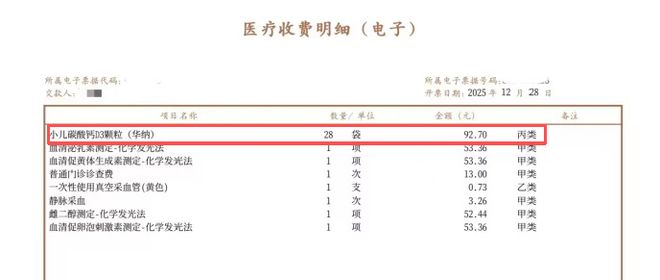
医院卖34.93元药店19元 同款药为何不同价?
2 1 Shi Ji Jing Ji Bao Dao· 2026-01-16 00:22
Core Viewpoint - The significant price discrepancies between hospital and retail pharmacy prices for the same medication raise concerns about the effectiveness of centralized procurement policies and the trust in public healthcare systems [2][3]. Price Discrepancies - A specific example highlights that the price of pediatric calcium carbonate D3 granules is 34.93 yuan in a hospital, while the same product is priced at approximately 19 yuan in pharmacies and e-commerce platforms, resulting in a price difference of 15.93 yuan [2]. - The price of the same medication can vary significantly across different sales channels, with instances of hospital prices being higher than retail prices and vice versa [3]. Centralized Procurement Issues - The pediatric calcium carbonate D3 granules were included in centralized procurement in 2022, with a winning bid price of 3.795 yuan per bag, which was further reduced to 2.495 yuan per bag in subsequent procurement rounds [3][4]. - Despite the centralized procurement prices, hospitals are reportedly selling the medication at prices that exceed these rates, indicating a disconnect between procurement prices and actual supply costs [4][6]. Factors Contributing to Price Differences - The pricing discrepancies are attributed to several factors, including the dynamic nature of market conditions, hidden service costs in hospitals, and the competitive pricing strategies of retail pharmacies and e-commerce platforms [6][7]. - Regulatory gaps and insufficient monitoring of real-time prices across different sales channels contribute to the lack of price uniformity [8]. Regulatory Responses - The National Medical Insurance Administration has initiated measures to address price discrepancies, including monitoring and comparing prices across various platforms to ensure compliance with procurement guidelines [10][11]. - Local governments are also implementing stricter regulations to align hospital prices with those of retail pharmacies and e-commerce platforms, emphasizing the need for transparency and fairness in drug pricing [11][12]. Future Directions - Experts suggest that a more transparent pricing mechanism is necessary, potentially resembling e-commerce platforms, to allow for direct price comparisons and foster competition among pharmaceutical companies [12].


价差80%!电商平台卖19元,医院卖34.93元,又一乱象曝光
2 1 Shi Ji Jing Ji Bao Dao· 2026-01-15 15:01
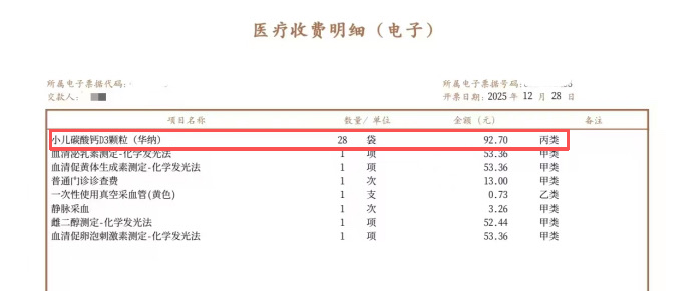
Core Viewpoint - The significant price discrepancies between hospital and retail/e-commerce prices for pediatric calcium D3 granules raise concerns about the effectiveness of centralized procurement policies and public trust in healthcare pricing [1][3][7]. Group 1: Price Discrepancies - Pediatric calcium D3 granules from Hunan Warner Pharmaceutical are priced at 34.93 yuan in a pediatric hospital, while the same product is available for approximately 19 yuan in pharmacies and e-commerce platforms, indicating a price difference of over 80% [1]. - A similar case was reported where a consumer found a vitamin D product priced at 47.4 yuan in a hospital, while the same product was 63 yuan in a retail pharmacy and only 29.8 yuan online [2]. - The price of pediatric calcium D3 granules in hospitals is reportedly higher than the centralized procurement price of 2.495 yuan per bag, which raises questions about the adherence to procurement policies [3][4]. Group 2: Causes of Price Differences - The price discrepancies are attributed to several factors, including the dynamic nature of market conditions, raw material costs, and the potential disconnect between procurement prices and actual supply costs [7][10]. - Public hospitals are expected to follow a zero-markup policy, but actual selling prices may reflect higher supply costs, leading to price deviations from the centralized procurement prices [7][10]. - The lack of timely updates to the listed prices on procurement platforms compared to the competitive pricing in retail and e-commerce markets contributes to these discrepancies [10][11]. Group 3: Regulatory Responses - The National Medical Insurance Administration has initiated actions to compare prices across different sales channels and address any significant discrepancies [14]. - Local governments, such as in Guangdong and Anhui, have implemented rules to ensure that listed prices align with local retail prices and to prompt adjustments when prices exceed a certain threshold [15][16]. - Experts suggest establishing a transparent pricing mechanism that allows for real-time price comparisons across channels to enhance market competition and reduce reliance on administrative controls [17].
价差80%!电商平台卖19元,医院卖34.93元,又一乱象曝光
21世纪经济报道· 2026-01-15 14:56
Core Viewpoint - The article highlights significant price discrepancies between hospital and retail prices for pediatric calcium D3 granules, raising concerns about the effectiveness of centralized procurement policies and the trust in public healthcare systems [1][2][3]. Price Discrepancies - A notable price difference of 80% was reported for pediatric calcium D3 granules, with hospital prices reaching 34.93 yuan compared to 19 yuan in pharmacies and e-commerce platforms [1]. - Similar instances of price variation exist, such as a consumer purchasing a vitamin D product for 47.4 yuan in a hospital, while the same product was priced at 63 yuan in a retail pharmacy and only 29.8 yuan online [2]. Centralized Procurement Issues - Pediatric calcium D3 granules were included in centralized procurement in 2022, with the winning bid price set at 3.795 yuan per bag, which was later reduced to 2.495 yuan per bag in 2025 [3]. - Despite the procurement price, the hospital price for the same product was found to be 3.31 yuan per bag, indicating a discrepancy between procurement prices and actual hospital pricing [3]. Factors Contributing to Price Differences - Experts suggest that the price differences stem from various factors, including the dynamic nature of market conditions, raw material costs, and the potential disconnect between procurement prices and actual supply costs [6]. - Public hospitals are expected to adhere to a zero-markup policy, but the actual supply prices may lead to higher hospital prices if they exceed the procurement prices [6]. Regulatory Responses - The National Medical Insurance Administration has initiated measures to address price discrepancies, including monitoring and adjusting prices to align with market conditions [15][16]. - Local governments have also implemented regulations to ensure that procurement prices remain comparable to retail prices, with specific thresholds for price adjustments [16]. Future Directions - Experts advocate for a transparent pricing mechanism that allows for real-time price comparisons across different sales channels, aiming to reduce reliance on administrative controls and enhance market competition [18].

恒瑞医药(600276)披露公司药品纳入国家医保目录,12月08日股价上涨1.36%
Sou Hu Cai Jing· 2025-12-08 09:59
Core Viewpoint - Heng Rui Medicine (600276) has seen a positive market response following the announcement of multiple drugs being included in the National Medical Insurance Directory for 2025, which is expected to enhance its revenue potential significantly [1]. Group 1: Stock Performance - As of December 8, 2025, Heng Rui Medicine closed at 62.46 CNY, up 1.36% from the previous trading day, with a total market capitalization of 414.56 billion CNY [1]. - The stock opened at 62.6 CNY, reached a high of 63.55 CNY, and a low of 61.92 CNY, with a trading volume of 3.187 billion CNY and a turnover rate of 0.8% [1]. Group 2: Drug Inclusion in National Insurance - Heng Rui Medicine announced that several of its drugs have been included in the National Basic Medical Insurance, Work Injury Insurance, and Maternity Insurance Drug Directory for 2025 [1]. - Newly included drugs are injection of Rukang Qutuzumab and Apixaban Famitin Capsules, while additional indications for drugs like injection of Karilizumab and Fluorouracil Capsules have also been added [1]. - The total sales for these drugs are projected to be approximately 8.66 billion CNY for the year 2024 and about 7.554 billion CNY for the first three quarters of 2025 [1]. - The new insurance directory will be implemented starting January 1, 2026, with specific payment standards to be announced officially [1].

江苏恒瑞医药股份有限公司 关于公司药品纳入国家医保目录的公告
Zhong Guo Zheng Quan Bao - Zhong Zheng Wang· 2025-12-07 22:40
Core Points - The company has successfully included several of its products in the National Medical Insurance Catalog for 2025, which is expected to enhance sales and improve operational performance [1] - The total estimated sales for the included drugs in 2024 is approximately 8.66 billion yuan, and for the first three quarters of 2025, it is about 7.55 billion yuan [1] Drug Inclusion in National Medical Insurance Catalog - The following drugs have been newly included: - Injection of Rukang Qutuzumab - Apixaban Famitinib Capsules - Injection of Funaqi Zhumab - Sulfate of Amatuximab Tablets - Injection of Phosphorola Pitant Palonosetron - Injection of Ruikasi Zhumab - Acetate of Abiraterone Tablets (II) - Lipid Injection of Irinotecan Hydrochloride (II) - Regaglitin Metformin Tablets (I)/(II) - Perfluorohexyl Octane Eye Drops [1] - The following drugs have successfully added new indications: - Injection of Karelizumab - Fluorazepam Capsules - Injection of Fumaric Acid Tegafur [1] - The following drugs have been renewed and retained in the National Medical Insurance Catalog: - Maleate of Pyrotinib Tablets - Hecorapam Ethanolamine Tablets - Phosphate of Regaglitin Tablets - Injection of Methylsulfonylmethane Remazolam - Sulfate of Pevonedistat Injection [1] - The following drugs have new indications and have been adjusted to regular catalog management: - Mesylate of Apatinib Tablets - Lipid Injection of Bupivacaine [1] Impact on the Company - The inclusion of these drugs in the National Medical Insurance Catalog is expected to positively impact sales, although the exact effect on the company's operational performance is currently indeterminate [1] - The National Medical Insurance Catalog will officially take effect on January 1, 2026, with further details on payment standards and reimbursement rules to be announced by relevant government departments [1]
恒瑞医药:多款药品纳入2025年国家医保目录
Xin Lang Cai Jing· 2025-12-07 08:17
Core Viewpoint - Heng Rui Medicine announced that several products will be included in the National Basic Medical Insurance, Work Injury Insurance, and Maternity Insurance Drug List (2025), effective from January 1, 2026 [1] Group 1: Product Inclusion - Ten products, including injection of Rui Kang Qu Tuo Zhuan Tan, are newly included in the drug list [1] - Three products, including injection of Ka Li Li Zhuan Tan, have new indications added to the list [1] - Five products, including Maleate Pyrolitin Tablets, have successfully renewed their contracts [1] Group 2: Adjustments and Sales Impact - Two products, including Methanesulfonic Acid Apatinib Tablets, have new indications and are adjusted to regular directory management [1] - The total sales revenue of the aforementioned drugs is approximately 8.66 billion yuan for the year 2024 and about 7.55 billion yuan for the first three quarters of 2025 [1] - The impact on the company's performance from these changes is currently difficult to estimate [1]
2025年ASCO大会召开在即,中国创新药企惊艳亮相——医药生物行业跨市场周报(20250525)
EBSCN· 2025-05-27 02:45
Investment Rating - The report maintains an "Overweight" rating for the pharmaceutical and biotechnology sector [4]. Core Insights - The upcoming 2025 ASCO conference highlights the impressive presence of Chinese innovative pharmaceutical companies, with over 70 research projects selected, indicating a robust growth in domestic drug development [2][22]. - The report emphasizes the structural selection of investment opportunities based on payment willingness and ability, focusing on three payment channels: hospital payments, out-of-pocket payments, and overseas payments [3]. Summary by Sections Market Review - The pharmaceutical and biotechnology index rose by 1.78%, outperforming the CSI 300 index by 1.96 percentage points and the ChiNext index by 2.83 percentage points, ranking first among 31 sub-industries [1][16]. - The Hong Kong Hang Seng Medical Health Index increased by 5.54%, surpassing the Hang Seng National Enterprises Index by 4.18 percentage points [1][16]. Company Research Progress - Recent developments include the IND application for HS-10510 by Haosen Pharmaceutical and ongoing clinical trials for several drugs from companies like Hengrui Medicine and BeiGene [35]. Key Company Highlights - Hengrui Medicine has 69 research projects selected for the ASCO conference, covering various cancer types, showcasing its leadership in innovative drug development [23][26]. - Innovent Biologics will present clinical data for IBI363 and IBI343 at ASCO, indicating its strong pipeline in cancer immunotherapy [27][28]. - Rongchang Biopharmaceutical has over 20 clinical progress reports accepted for presentation at ASCO, focusing on ADC therapies for various cancers [30][31]. Investment Recommendations - The report recommends focusing on companies such as Hengrui Medicine, Mindray Medical, United Imaging Healthcare, and Yuyue Medical, based on their strong market positions and growth potential [3].
医药生物行业跨市场周报:2025年ASCO大会召开在即,中国创新药企惊艳亮相-20250527
EBSCN· 2025-05-27 02:17
Investment Rating - The report maintains an "Overweight" rating for the pharmaceutical and biotechnology sector [4]. Core Insights - The upcoming 2025 ASCO conference highlights the impressive presence of Chinese innovative pharmaceutical companies, with over 70 research projects selected, indicating a robust growth in domestic drug development [2][22]. - The report emphasizes the increasing competitiveness of domestic drugs in the global market, particularly in oncology, as several innovative drugs are making significant progress [2][23]. Summary by Sections Market Review - The pharmaceutical and biotechnology index rose by 1.78%, outperforming the CSI 300 index by 1.96 percentage points and the ChiNext index by 2.83 percentage points, ranking first among 31 sub-industries [1][16]. - The Hong Kong Hang Seng Healthcare Index increased by 5.54%, surpassing the Hang Seng Index by 4.18 percentage points [1][16]. Company Research Progress - Recent developments include the IND application for HS-10510 by Haosen Pharmaceutical and ongoing clinical trials for several drugs by companies such as Hengrui Medicine and BeiGene [35]. Key Company Highlights - Hengrui Medicine has 69 research projects selected for the ASCO conference, covering various cancer types, showcasing its leadership in innovative drug development [23][26]. - Innovent Biologics will present clinical data for IBI363 and IBI343 at ASCO, indicating its strong pipeline in oncology [27][28]. - Rongchang Biopharmaceutical has over 20 clinical progress reports accepted for presentation at ASCO, focusing on various cancer treatments [30][31]. Investment Strategy - The report suggests a structural selection of investment opportunities based on payment willingness and ability, focusing on three main areas: hospital payment support, expansion of consumer demand, and overseas market opportunities [3]. Key recommendations include Hengrui Medicine, Mindray Medical, United Imaging Healthcare, and Yuyue Medical [3].