
马肉

Search documents
挚爱人间一抹红——追记实干为民的好干部贺娇龙
Xin Lang Cai Jing· 2026-02-09 05:10
Core Viewpoint - The article highlights the life and contributions of He Jiaolong, a local leader in Xinjiang, who dedicated her life to improving the living conditions of her community and promoting local tourism and agriculture, ultimately becoming a beloved figure before her untimely passing. Group 1: Early Life and Career - He Jiaolong was born in 1979 in a small village in Xinjiang, raised in a loving family that valued education and hard work [5] - She worked various jobs before becoming a village official, where she quickly gained recognition for her practical approach and dedication to community service [6][8] Group 2: Community Development Initiatives - As a local leader, He Jiaolong addressed significant challenges in her community, such as poor infrastructure and healthcare access, by initiating road construction and improving local services [9][10] - Under her leadership, the village became the first in the county to transition all residents into brick houses and became known for its cleanliness [10] Group 3: Promotion of Tourism and Agriculture - He Jiaolong focused on promoting tourism in her hometown, leveraging its natural beauty and cultural heritage to attract visitors [19] - She helped local residents start businesses related to tourism, such as restaurants and handicrafts, significantly improving their livelihoods [19][21] Group 4: Rise to Fame and Online Presence - In November 2020, He Jiaolong gained national attention when she appeared in a viral video promoting winter tourism, leading to a surge in visitors to her town [22][24] - She later embraced live streaming to sell local agricultural products, achieving remarkable sales figures and building a substantial online following [38][52] Group 5: Challenges and Resilience - Despite facing criticism and personal challenges, He Jiaolong remained committed to her mission of helping her community, even during the COVID-19 pandemic [48][51] - She established a charity to support local residents and responded to emergencies, demonstrating her dedication to public service [60] Group 6: Legacy and Impact - He Jiaolong's tragic passing in January 2026 left a profound impact on her community, with many mourning her loss and celebrating her contributions [78][82] - A rose was named "Jiaolong" in her honor, symbolizing her lasting influence and the love she cultivated in her community [83]

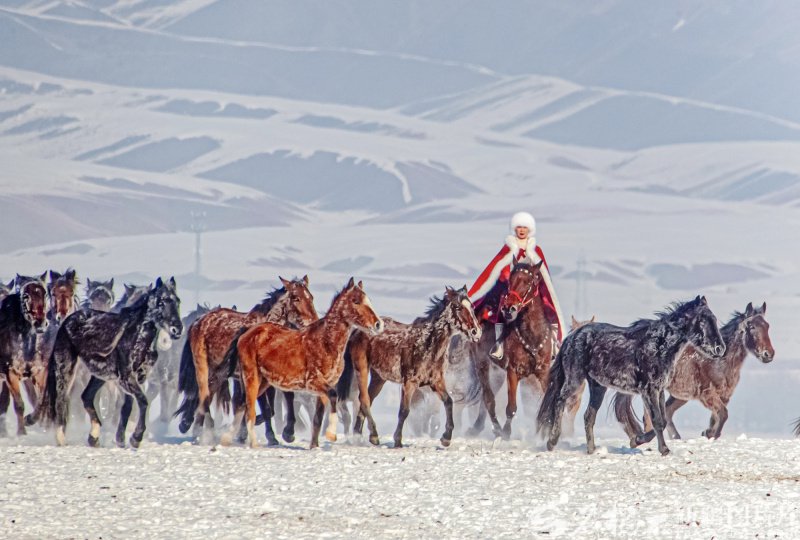
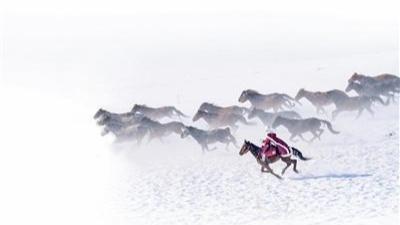
难忘那个纵马雪原的红色身影
Xin Lang Cai Jing· 2026-01-28 23:07
Core Viewpoint - The news highlights the impact and legacy of He Jiaolong, a prominent figure in promoting agricultural products in Xinjiang, who tragically passed away at the age of 47. Her efforts in e-commerce and live streaming significantly boosted local agricultural sales and tourism, leaving a lasting impression on the community [3][4][5][6]. Group 1: Impact on Agriculture and E-commerce - He Jiaolong's live streaming initiatives transformed the marketing of local agricultural products, leading to a dramatic increase in sales. For instance, a cooperative reported that honey production surged from 2,000 bottles per day to 20,000 bottles due to her efforts [5]. - The "品味新疆" (Taste of Xinjiang) brand initiative, which He led, successfully established a public brand directory that includes 239 regional brands and 776 products, enhancing market competitiveness for Xinjiang's agricultural goods [6]. Group 2: Community Engagement and Legacy - He Jiaolong's approach to public service was characterized by her commitment to community welfare, as evidenced by her refusal to accept commissions for her live streams, instead directing all donations to charitable causes. Over five years, her team conducted 55 charitable activities, raising over 11.1 million yuan for those in need [6]. - In a symbolic tribute, a new rose variety was named "Jiaolong" to honor her contributions, reflecting the deep respect and emotional connection the community has for her legacy [7].
中疾控提示猪肉千万不能这么吃
Ren Min Wang· 2025-12-24 01:58
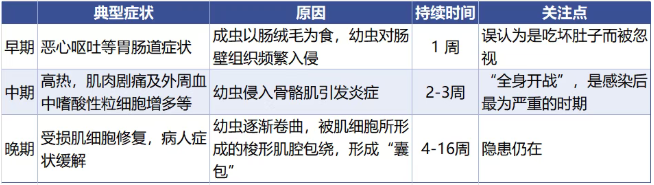
Core Viewpoint - Trichinella spiralis, a parasitic roundworm, poses significant health risks to humans through the consumption of undercooked or improperly processed meat, particularly pork, leading to symptoms such as high fever and muscle pain [1][3]. Group 1: Infection Mechanism - The life cycle of Trichinella spiralis is simple, requiring no intermediate hosts, and can complete its development within the same host [2]. - Infection occurs primarily through oral ingestion of contaminated meat, with pork being the main source of transmission [3]. - The larvae are resistant to various cooking methods, making undercooked or improperly processed meat a significant risk factor for infection [3]. Group 2: Symptoms of Infection - Early symptoms include gastrointestinal issues such as nausea and vomiting, often mistaken for food poisoning, lasting about one week [4]. - Mid-stage symptoms involve high fever and severe muscle pain due to larvae invading skeletal muscles, typically lasting 2-3 weeks [4]. - Late-stage symptoms show a gradual recovery as larvae become encysted in muscle tissue, with potential lingering health issues lasting 4-16 weeks [4]. Group 3: Prevention Measures - It is crucial to change dietary habits by ensuring that meat is thoroughly cooked and avoiding raw or undercooked meat products [5]. - Consumption of uninspected meats, such as horse, dog, and wild boar, should be avoided to reduce infection risk [6]. - Maintaining kitchen hygiene by separating raw and cooked foods can help prevent cross-contamination [7]. Group 4: Response to Suspected Infection - Prompt medical attention is essential if infection is suspected, with patients advised to inform healthcare providers about any history of consuming raw meat [8]. - Upon diagnosis, treatment typically involves medications such as albendazole [8]. Group 5: Host Range and Awareness - Trichinella spiralis has a wide host range, infecting over 150 species, including pigs, wild boars, dogs, and rodents, indicating a broader risk than commonly perceived [9]. - Increased vigilance against consuming raw and wild meats, along with improved dietary practices, is necessary for health protection [9].
马肉冒充驴肉,供应商获刑又赔偿
Xin Jing Bao· 2025-09-22 04:20
Core Viewpoint - A criminal and civil public interest lawsuit was filed against a supplier for selling counterfeit products, resulting in a prison sentence and significant fines, highlighting the importance of food safety and consumer protection in the industry [1][4][6]. Group 1: Case Details - The supplier, Zhang, was found guilty of selling horse meat disguised as donkey meat, which he did to increase profits after initially providing a mix of both [2][3]. - Zhang paid the restaurant's chef a kickback of 1-2 yuan per kilogram, totaling approximately 600 yuan per month, to facilitate the fraudulent sales [2]. - The restaurant was penalized for selling unverified donkey meat and failing to provide necessary documentation, leading to administrative sanctions [2][4]. Group 2: Legal Proceedings - The case was escalated to the public interest litigation department after it was determined that the actions harmed food safety and public interest [4][6]. - The total sales amount of unverified donkey meat sold by the restaurant was approximately 807,993.85 yuan, with both parties violating food safety laws [4][6]. - The court sentenced Zhang to 18 months in prison (suspended for 18 months) and imposed a fine of 90,000 yuan, along with a punitive compensation of over 800,000 yuan to be paid jointly with the restaurant [6][8]. Group 3: Implications for Food Safety - The case underscores the risks associated with selling uninspected meat, including the potential spread of zoonotic diseases and contamination from harmful substances [5][6]. - The public interest litigation aims to deter similar illegal activities and enhance consumer confidence in food safety [7][8]. - The prosecution emphasized the need for strict regulatory measures and accountability in the food industry to protect consumer rights and ensure food safety [8].
以马肉冒充驴肉,北京一供货商被刑事追责并惩罚性赔偿80万余元
Xin Jing Bao· 2025-09-21 08:20
Core Viewpoint - A criminal and civil public interest lawsuit was filed against supplier Zhang for selling counterfeit products, resulting in a prison sentence and significant financial penalties [1][4]. Group 1: Case Background - Zhang, a meat supplier for a restaurant, began collaborating with the chef in January 2023, offering kickbacks of 1-2 RMB per kilogram, totaling over 600 RMB monthly [2]. - To increase profits, Zhang started substituting horse meat for donkey meat, which was sold at a higher price, leading to significant financial gains [2][3]. - The restaurant was later found to be selling uninspected donkey meat, resulting in administrative penalties [2][4]. Group 2: Legal Proceedings - The case was transferred to the Stone District Prosecutor's Office in September 2024, where it was determined that the actions violated food safety laws and harmed public interests [4][6]. - The prosecutor's office conducted thorough investigations, revealing that the restaurant purchased uninspected meat worth 807,993.85 RMB from Zhang over a 14-month period [4][6]. - This case marked a precedent for criminal civil public interest lawsuits in Beijing, with prosecutors seeking punitive damages based on the sales amount [4][6]. Group 3: Sentencing and Penalties - On August 20, 2025, the court sentenced Zhang to 18 months in prison (6 months suspended) and imposed a fine of 90,000 RMB [1][6]. - Zhang and the restaurant were ordered to pay over 800,000 RMB in punitive damages and publicly apologize [1][6]. - The case emphasizes the importance of food safety and the legal consequences of violating regulations, aiming to deter similar future offenses [5][6].