骆驼冲锋衣

Search documents
与争议网红合作 骆驼营销翻车
Bei Jing Shang Bao· 2026-01-26 16:37
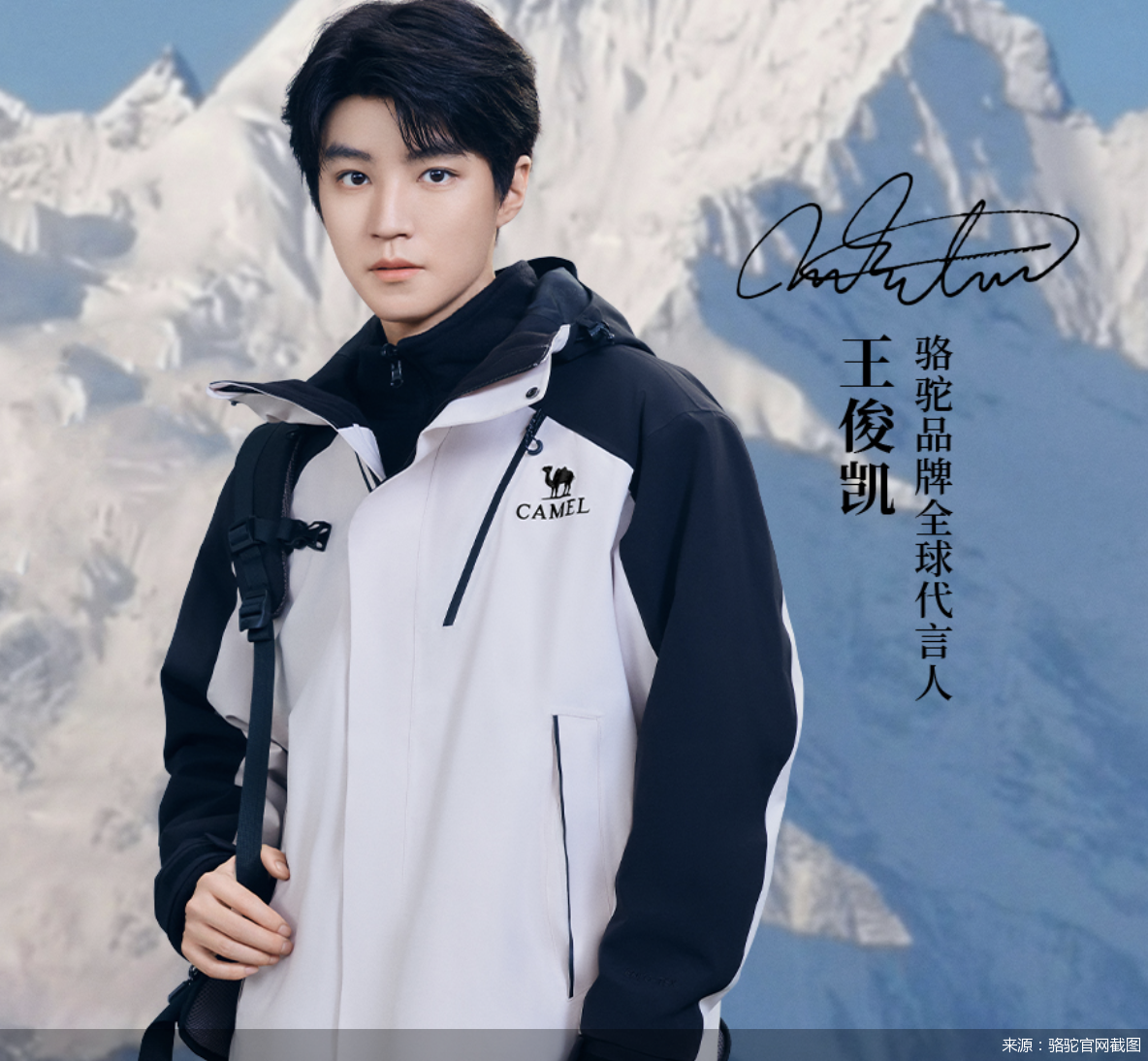
Core Viewpoint - The outdoor clothing brand Camel recently issued an apology due to inappropriate actions by its staff, which led to dissatisfaction among fans and consumers, highlighting the risks associated with marketing strategies [1][3]. Group 1: Apology Incident - Camel's internal staff collaborated with a social media influencer who mimicked the brand's global ambassador, Wang Junkai, leading to inappropriate comments on the official account [3]. - The brand publicly apologized, acknowledging management failures and promising to rectify the situation by contacting Wang's team, punishing involved staff, and improving oversight mechanisms [3][4]. - Despite the apology, many fans remained dissatisfied, indicating a lack of acceptance [4]. Group 2: Brand Management Issues - The incident revealed significant shortcomings in Camel's brand management and protection of ambassador rights, reflecting internal coordination failures and ineffective review processes [4]. - Experts noted that Camel's marketing failure is a common issue among brands, which often lack crisis management awareness and professional response capabilities [4]. Group 3: Market Performance and Positioning - Camel has established itself as a leading brand in the outdoor apparel market, with retail sales exceeding 5 billion yuan in 2024 and a market share of 43.75% for its jackets on Tmall [6][7]. - The brand's positioning focuses on casual outdoor and mass-market consumption, appealing to consumers seeking high cost-performance products [6][7]. - Camel's pricing strategy, significantly lower than international brands, has contributed to its perception as a "high cost-performance alternative" [7][9]. Group 4: Consumer Sentiment and Product Quality - There is a growing trend among consumers towards rational spending, with a focus on value for money, which has benefited Camel's sales [7]. - However, some outdoor enthusiasts express concerns about the dilution of Camel's professional image, preferring specialized outdoor gear over its products [8][9]. - Reports of product quality issues, such as inadequate waterproofing, have led to consumer dissatisfaction and returns [8][9]. Group 5: Future Development Strategies - Experts suggest that Camel should focus on maintaining its position as a cost-effective outdoor brand, particularly in lower-tier markets, rather than pursuing high-end branding [10]. - The brand's strategy may involve balancing upward brand development while still catering to a broad consumer base with affordable products [10].

与争议网红合作,骆驼营销“翻车”
Bei Jing Shang Bao· 2026-01-26 14:10
Core Viewpoint - The outdoor clothing brand Camel issued an apology due to inappropriate actions by its staff, which involved collaborating with a social media influencer imitating its global ambassador, Wang Junkai, leading to consumer dissatisfaction [2][3]. Group 1: Incident Details - Camel's internal staff collaborated with a social media influencer who mimicked Wang Junkai, leading to inappropriate comments on the official account [3]. - The brand's apology highlighted management failures and a lack of oversight, which negatively impacted its reputation and trust with fans [3]. - Camel outlined corrective measures, including direct apologies to Wang Junkai's team, removal of controversial videos, and stricter internal oversight [3]. Group 2: Brand Management Issues - The incident revealed significant shortcomings in Camel's brand management and protection of ambassador rights, indicating a failure in internal coordination and review processes [4]. - Experts noted that the marketing failure reflects a broader issue among brands lacking crisis management awareness and professional response capabilities [5]. Group 3: Brand Performance and Market Position - Camel has seen significant success, with retail sales exceeding 5 billion yuan in 2024 and a market share of 43.75% for its jackets on Tmall [8]. - The brand's positioning focuses on outdoor and leisure products, appealing to consumers seeking high cost-performance ratios [9]. - Camel's pricing strategy, with jackets priced between 200-400 yuan, positions it as a cost-effective alternative to higher-priced international brands [12]. Group 4: Consumer Perception and Product Quality - Despite its popularity, some outdoor enthusiasts express concerns about the quality of Camel's jackets, particularly regarding their waterproof capabilities [10]. - Consumer feedback indicates dissatisfaction with product performance, leading to returns and negative perceptions of the brand [10]. Group 5: Future Development Strategies - Experts suggest that Camel should focus on maintaining its cost-effective brand identity while exploring upward brand development to enhance its market positioning [12]. - The brand's strategy of targeting the mass market is seen as a viable path for growth, especially as many brands seek to move upscale [12].
被调侃「地铁里的骆驼比沙漠还多」,户外品牌骆驼还要面临哪些考验? | 声动早咖啡
声动活泼· 2026-01-23 10:05
Core Viewpoint - The article discusses the remarkable growth of the Camel brand in the outdoor apparel market, highlighting its transition from a shoe manufacturer to a leading outdoor clothing brand in China, particularly in the casual wear segment [4][5]. Group 1: Sales Performance and Market Position - Camel achieved significant sales milestones, with over 100 million yuan in sales within 30 minutes during the Double Eleven shopping festival, and it ranked first in the domestic outdoor apparel market with sales reaching 5.6 billion yuan in 2024 [4][5]. - The brand's popularity has surged, with a notable presence in urban settings, indicating a shift in consumer behavior towards casual outdoor wear [4][5]. Group 2: Target Market and Consumer Behavior - The outdoor consumer base in China is broad, with a significant portion of buyers seeking stylish and affordable outdoor products rather than high-performance gear [6][7]. - Approximately two-thirds of consumers wearing outdoor jackets do so in everyday settings, with only about 16% using them for hardcore outdoor activities [5][6]. Group 3: Marketing and Brand Strategy - Camel has effectively positioned its products in the mid-to-low price range, with popular items like jackets priced between 400 to 600 yuan, appealing to students and young professionals [7][8]. - The brand has invested heavily in e-commerce and social media marketing, leveraging platforms like Douyin (TikTok) and collaborating with numerous influencers to drive sales [8][9]. Group 4: Challenges and Future Directions - Camel faces challenges in transitioning to a higher-end market segment, as it launched a new sub-brand, Himalaya, targeting professional outdoor activities with prices ranging from 1,000 to 5,000 yuan [11]. - Quality concerns and counterfeit products have emerged as significant issues, with reports of poor product quality and a proliferation of imitation goods in the market [12][13].
遍地“骆驼”,只是因为消费降级吗?
虎嗅APP· 2025-12-29 00:11
Core Viewpoint - The article discusses the rising popularity of the Camel brand in the outdoor apparel market, particularly its down jackets, driven by effective marketing strategies and a shift in consumer behavior towards value-oriented purchases [4][11]. Group 1: Brand Strategy and Marketing - Camel has signed Wang Junkai as its brand ambassador, leveraging his massive social media following of over 200 million across platforms to enhance brand visibility among young consumers [6][7]. - The brand's marketing strategy includes a broad approach on platforms like Douyin (TikTok) and Xiaohongshu (Little Red Book), utilizing a large number of influencers to ensure constant exposure and engagement with potential customers [9][10]. - Camel's pricing strategy positions its products between 400 to 800 yuan, making them significantly cheaper than premium outdoor brands while still appealing to consumers seeking quality [12]. Group 2: Consumer Behavior and Market Trends - The popularity of Camel's products reflects a shift in consumer preferences, where young consumers prioritize cost-effectiveness and functionality over brand prestige, indicating a move towards "value equality" rather than mere consumption downgrade [11][13]. - The article highlights that consumers are increasingly discerning, with 67% of respondents in a McKinsey survey indicating they compare prices across multiple platforms to ensure they get the best deal [18]. - There is a notable trend of consumers extending the replacement cycles for big-ticket items like smartphones and cars, indicating a cautious approach to spending [19]. Group 3: Economic Context and Implications - The article points out a dual trend of rising savings and declining consumer spending, with household deposits increasing significantly while consumer willingness to spend remains low [22][23]. - This cautious consumer sentiment is reflected in the retail sales growth, which has slowed down, suggesting a potential negative feedback loop affecting demand and business profitability [24]. - The article concludes that brands like Camel, which offer high-quality products at reasonable prices, can still find opportunities in a market characterized by cautious spending and a shift in consumer values [24].

怒刷200亿流量“紧急叫停”,荒野求生太难了
3 6 Ke· 2025-12-22 12:07
Core Insights - The second "Qixing Mountain Wilderness Survival Challenge" concluded, leading to a significant increase in hotel occupancy rates and local agricultural sales, while creating new job opportunities in outdoor survival coaching [1][16] Group 1: Event Overview - The event garnered nearly 20 billion online views, showcasing a raw and unedited portrayal of survival, contrasting sharply with polished international survival shows [1][3] - Participants, primarily ordinary individuals, faced primitive survival tasks in a challenging environment, leading to a unique viewing experience [3][5] Group 2: Safety and Environmental Considerations - A comprehensive safety system was implemented, including real-time monitoring and medical support, ensuring zero safety incidents during the event [7][8] - Environmental protection was integrated into the competition rules, with a fund allocated for ecological restoration post-event [10][8] Group 3: Economic Impact - The event significantly boosted local tourism, with hotel occupancy rates nearly doubling and agricultural sales exceeding 8 million [16] - The event also created 120 new jobs related to outdoor survival and ecological guidance, enhancing the local economy [16] Group 4: Brand and Participant Benefits - The sponsoring brand "Camel" experienced a surge in visibility, with sales skyrocketing during promotional events, demonstrating effective brand integration [14][16] - Participants gained not only monetary rewards but also long-term benefits such as free access to local attractions and increased social media presence, leading to new business opportunities [11][13] Group 5: Future Implications - The success of the event has sparked interest in replicating similar events across China, though caution is advised regarding safety and environmental standards [18][20] - The desire for authentic experiences in outdoor activities reflects a broader trend in consumer behavior, emphasizing the importance of unique storytelling in future events [22][21]

杀疯的国产冲锋衣,统一打工人审美
盐财经· 2025-12-22 10:13
Core Viewpoint - The article discusses the rise of the Chinese outdoor brand Camel, highlighting its popularity among young consumers and its strategic positioning in the market, particularly through e-commerce and affordable pricing [4][6][16]. Group 1: Market Performance - Camel ranked first in sales on Tmall's outdoor category during the 2025 Double Eleven event, marking its third consecutive year at the top [4]. - The brand's estimated GMV for 2024 is projected to exceed 5 billion yuan, with Camel achieving the highest global sales of outdoor jackets for six consecutive years from 2019 to 2024 [6][12]. - The brand's success is attributed to its cost-effectiveness and versatility, appealing to a broader audience beyond traditional outdoor enthusiasts [6][12]. Group 2: Consumer Insights - The primary consumer demographic for Camel consists of young individuals who prioritize aesthetics and affordability over high-performance outdoor features [12][14]. - A survey indicated that 66% of consumers wear jackets for daily use, while only 16.3% use them for hardcore outdoor activities [12][14]. - Camel's products are perceived as stylish and suitable for various urban scenarios, which has contributed to its market penetration [8][12]. Group 3: Marketing Strategy - Camel capitalized on the rise of e-commerce and social media, particularly through live streaming, to enhance brand visibility and sales [17][19]. - The brand has shifted its marketing strategy to include younger celebrities as brand ambassadors, which has helped reshape its image among younger consumers [21][34]. - The brand's online presence is significant, with a large number of official accounts on short video platforms, indicating a robust digital marketing strategy [19][21]. Group 4: Challenges and Future Directions - Despite its success, Camel faces challenges such as market saturation and increased competition from low-cost alternatives [22][23]. - The brand is exploring new growth avenues, including launching sub-brands targeting higher-end markets and diversifying into beauty products [27][30]. - The transition to higher-end products poses risks, as Camel's established image is that of a budget-friendly outdoor brand, making it difficult to convince consumers to pay premium prices [36][38].
从大街到山野,骆驼不想只做“景区顶流”
Guan Cha Zhe Wang· 2025-12-19 02:17
Core Insights - The second "Qixing Mountain·Camel Cup" extreme wilderness survival challenge has been suspended due to a cold wave, with the remaining eight contestants sharing the victory and prize money [1] - The event gained over 5 billion views online, showcasing the intense survival narratives of participants [1] - Camel, known as "China's outdoor first brand," aims to enhance its professional image in the outdoor sector through this extreme event [3][10] Company Positioning - Camel has established a strong presence in the outdoor apparel market, achieving the highest sales in global sales of jackets for six consecutive years from 2019 to 2024, with a market share of approximately 5.5% and retail sales of about 5.6 billion yuan [4] - The brand's success is attributed to its "pan-outdoor" positioning, targeting urban sports and daily commuting while ensuring professional functionality [4][5] - Camel's pricing strategy, with average prices between 400-600 yuan, has made it a preferred choice among consumers, particularly students and young professionals [7] Marketing and Brand Strategy - Camel's marketing emphasizes fashion and urban outdoor activities, making its jackets popular in various lifestyle contexts [5] - The brand has faced challenges in establishing a professional image within the outdoor community, as it is often associated with casual outdoor wear [9] - The collaboration with the wilderness survival event is a strategic move to build Camel's professional recognition in the outdoor sector [10][13] Product Development and Innovation - Camel has developed its own ENFO-TECH nano three-proof shell, which has been validated in real-world conditions during the survival challenge [12] - The brand is expanding its product lines to include various outdoor and lifestyle items, including beauty products tailored for outdoor enthusiasts [21][22] Future Growth and Expansion - Camel plans to continue its growth trajectory with an expected 30%-50% increase in jacket sales over the next two years [9] - The company is also expanding its offline presence with large outdoor sports stores, enhancing customer experience and interaction [19][20] - Camel is building a multi-brand matrix to cover different market segments, including high-end and fashion-oriented brands, to penetrate higher-value niches [22][24]

年轻人最爱的户外顶流,也要“塌房”?
凤凰网财经· 2025-11-03 12:53
Core Viewpoint - Camel has become a focal point in the outdoor sports sector during this year's Double Eleven shopping festival, achieving significant sales figures while also facing quality controversies that could impact its brand reputation [1][2][8]. Sales Performance - On Douyin, Camel ranks first in outdoor sports sales [2]. - On Tmall, Camel's sales exceeded 100 million within just 30 minutes of the sale starting on October 20 [3]. Consumer Demographics - Camel's user base is undergoing a generational shift, with an increasing number of young consumers embracing the brand, which was previously associated with older generations [5][6]. - The brand is shedding its old image and appealing to younger consumers by adopting a more contemporary style [7]. Product Quality Controversy - As Camel gains popularity among younger consumers, reviews on social media have become polarized, highlighting both positive and negative feedback [9]. - Supporters appreciate the brand's affordability and practicality, noting that Camel's jackets are suitable for both daily wear and light outdoor activities [10][11]. - Critics have raised concerns about product quality, citing issues such as poor stitching and visible threads upon delivery [13][19]. - Negative feedback is prevalent not only on social media but also in Camel's official store reviews, indicating a significant quality perception issue [19]. Brand Evolution - Camel originated as a shoe store in Tianjin in 1930 and transitioned to outdoor gear in 2003 after the Wang family acquired the brand [22][24]. - The brand has successfully positioned itself as a leader in the outdoor footwear market by expanding its product lines and capitalizing on the rise of outdoor activities post-2019 [25][27]. - Camel's marketing strategy includes collaborations with popular celebrities and a multi-channel live streaming approach to reach a broader audience [29][30]. Future Challenges - Despite its rapid growth and market presence, Camel faces challenges related to product quality, which could undermine its competitive advantage of affordability [34][35]. - Young consumers have high expectations for functionality and durability in outdoor gear, and any quality issues could damage brand credibility [36][37]. - The brand must balance speed and quality to maintain consumer trust and avoid being a fleeting trend [38].
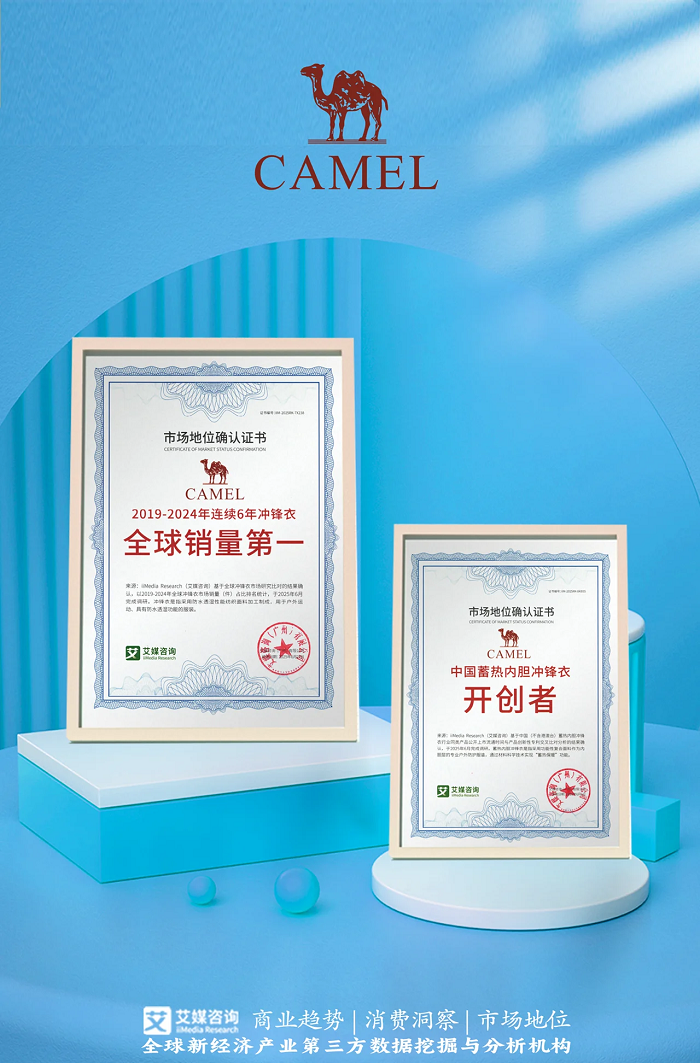
骆驼获艾媒咨询“2019-2024年连续6年冲锋衣全球销量第一”等双项市场地位确认
Sou Hu Wang· 2025-07-15 06:35
Core Insights - Camel has been awarded by iiMedia Research as the "Global Sales Champion of Jackets for Six Consecutive Years (2019-2024)" and "Pioneer of Heat Retention Inner Jackets in China" [1][4] - The brand has also achieved significant recognition in the outdoor down jacket sector, being named "National Sales Champion of Outdoor Down Jackets in 2024" and "Six-Year Cumulative National Sales Champion of Outdoor Down Jackets" [1][4] Industry Trends - The rise of the "All-People Outdoor" era and the rapid expansion of the outdoor activity industry are driving a shift in outdoor experiences from "professional exploration" to "lifestyle integration" [3] - Consumers are increasingly demanding outdoor apparel that combines functionality with fashion and comfort, moving beyond single-purpose designs [3] Company Strengths - Camel has a long-standing focus on outdoor and leisure product development since 1930, emphasizing technological innovation and product quality as key drivers of brand growth [5] - The brand's jackets are designed to meet diverse consumer needs, balancing professional outdoor performance with urban style and comfort [5] Product Innovation - The Camel Seven-in-One Functional Jacket exemplifies sustainable design, allowing for multiple wearing scenarios through a modular combination approach [5] - The use of "Weifeng MICROTOP-TEX fabric" provides high waterproof and breathability ratings, breaking the long-standing monopoly of Western brands in high-end jacket materials [6] Technological Advancements - Camel has established the "Camel High-Performance Outdoor Product Innovation Research Institute" to focus on material technology and functional design [7] - The upcoming H5500 technical hard-shell jacket is set to win the ISPO WINNER 2024 ECO-NOVA award, showcasing the brand's commitment to sustainable fashion [7] Market Position - The domestic demand for professional outdoor gear is surging, with local brands like Camel narrowing the gap with international leaders through technological and design advancements [7][8] - Camel's journey from "Pioneer of Heat Retention Inner Jackets" to "Global Sales Leader" reflects the broader trend of Chinese outdoor brands transitioning from manufacturing to innovation [8]
始祖鸟的挑战者,又多了一个?
3 6 Ke· 2025-04-28 07:58
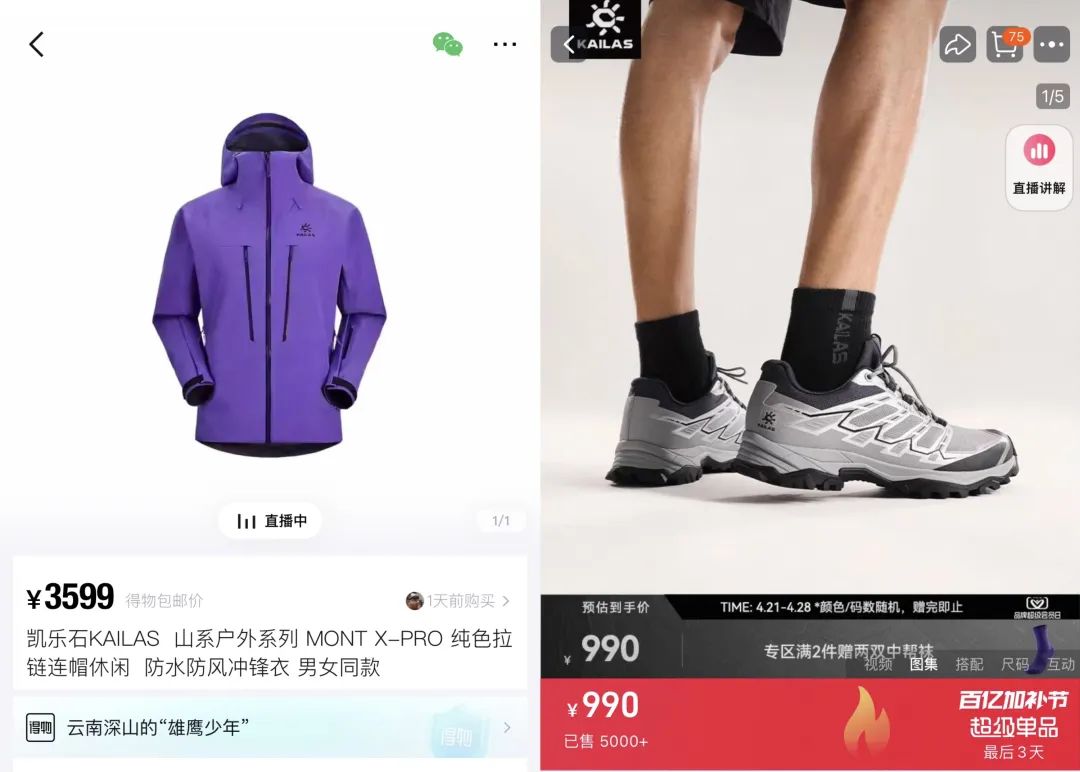
Core Viewpoint - KAILAS, traditionally known for its professional outdoor gear, is undergoing a transformation towards a more fashionable and high-end positioning, which has sparked mixed reactions among consumers and industry observers [7][10][17]. Group 1: Brand Transformation - KAILAS has shifted its image from a purely professional outdoor brand to one that incorporates fashion elements, as evidenced by social media trends where users showcase KAILAS products in casual settings [7][8]. - The brand's recent product launches, such as the MONT X-PRO series and the "future of YAN" hiking shoes, reflect a focus on stylish designs and modern color palettes, moving away from traditional bold colors [8][10]. - KAILAS has seen a significant price increase, with average prices rising by 63.3% to 963 yuan, aligning closer to international premium outdoor brands [10][22]. Group 2: Consumer Perception - There are divided opinions on KAILAS's new direction; while some consumers appreciate the aesthetic appeal of new products, others criticize the high prices, suggesting that KAILAS is becoming a luxury brand [13][18]. - The brand's core consumer demographic primarily consists of outdoor sports enthusiasts aged 30-45, predominantly in first and second-tier cities, which may limit its broader market appeal [23]. - KAILAS's established reputation for high-quality, professional outdoor gear creates a perception barrier for average consumers, making it challenging for the brand to penetrate the mass market [24][25]. Group 3: Competitive Landscape - As KAILAS raises its prices, it faces increased competition from other established outdoor brands like Descente and Montbell, which offer similar products at lower price points [26][28]. - The brand's visibility and recognition in the market are still behind competitors, with KAILAS's search volume on social media significantly lower than that of brands like Salomon and Arc'teryx [28]. - To become a "new treasure for the middle class," KAILAS must enhance its visibility and appeal to a broader audience while maintaining its professional image [28].