鲁班锁

Search documents
“老小孩”玩具如何征服“银发族”
Xin Hua Wang· 2026-02-09 02:47
Core Insights - The article discusses the emerging trend of "senior toys" catering to the elderly population, highlighting a significant increase in demand and sales for these products, particularly among consumers aged 55 and above [1][2][4]. Group 1: Market Trends - The search volume for "senior toys" on an e-commerce platform increased by 124% year-on-year, with transaction volume rising over 70% [1]. - The elderly population in China is projected to reach 310 million by the end of 2024, with the silver economy estimated to be around 7 trillion yuan, accounting for approximately 6% of GDP [4]. - By 2035, the silver economy is expected to grow to 30 trillion yuan, representing 10% of GDP [4]. Group 2: Consumer Behavior - The primary consumers of "senior toys" are individuals under 60 who are adept at using the internet, while those over 60 often have their purchases made by their children [3]. - The demand for "senior toys" is driven by a shift in the elderly's needs from basic survival to a focus on physical and mental well-being [2]. Group 3: Product Development - "Senior toys" are designed to meet various needs, including physical fitness, leisure, and social interaction, with popular items including wrist elastic balls and memory games [2]. - Products aimed at Alzheimer's patients, such as memory training blocks and interactive chess, have shown higher repurchase rates than the industry average [2]. Group 4: Industry Challenges - There are concerns regarding the suitability of some "senior toys," with issues such as complex operation, small print instructions, and safety hazards like small detachable parts [5][7]. - The offline sales of "senior toys" are struggling, with some stores reporting annual sales of only a few hundred thousand yuan, indicating a need for better market cultivation [6][5]. Group 5: Future Outlook - The industry is seen as a blue ocean market with significant growth potential, as companies are beginning to develop specialized products for different segments of the elderly population [5][4]. - To transition from "wild growth" to "standardized maturity," the industry needs to focus on creating products that cater to the complex needs of the elderly, including cognitive training and emotional companionship [7][8].
44项世界第一!非遗“活”在当下 更“焕”新前行
Yang Guang Wang· 2025-11-27 11:49
Core Insights - The report from the Ministry of Culture and Tourism highlights significant achievements in the protection of intangible cultural heritage (ICH) during the 14th Five-Year Plan period, with 325 new national-level ICH representative projects announced and 44 items listed in UNESCO's ICH inventory, ranking first globally [1][2]. Group 1: Cultural Heritage and Its Value - The essence of ICH lies in its "living" nature, contrasting with static cultural relics, and it reflects the ongoing experience of life [2]. - The rising interest in cultural heritage, including trends like "cultural fever" and "creative cultural products," indicates a growing public engagement with traditional culture in diverse forms [2]. - ICH has expanded its value in contemporary contexts, as seen in the integration of traditional elements into modern media, exemplified by the use of the Dong people's songs in films, which revitalizes ancient cultural narratives [2]. Group 2: Societal Impact and Future Directions - The material wealth of society has awakened a deeper desire for cultural identity, infusing traditional practices with new vitality, as demonstrated by modern interpretations of festivals like the Dragon Boat Festival [3]. - The symbolic gesture of gifting a Luban lock to UN representatives illustrates how ICH embodies Chinese wisdom and has garnered international attention [3]. - The 15th Five-Year Plan emphasizes the systematic protection and unified oversight of cultural heritage, aiming to strengthen the foundations of cultural roots and clarify future directions for ICH [3].
怎么理解不常见的非遗项目也需要保护
Ren Min Ri Bao· 2025-11-22 22:00
Core Viewpoint - The article emphasizes the importance of intangible cultural heritage (ICH) in preserving cultural identity, promoting economic development, and facilitating cultural exchange, despite some skepticism regarding its practical value in modern life [1][2][3][4][5][6][7] Group 1: Cultural Significance - ICH serves as a historical memory and a source of cultural recreation, with over 100,000 representative projects in China that encapsulate collective memory and wisdom [2] - Examples such as the Dragon Boat Festival and the Karez irrigation technique illustrate how ICH maintains relevance and contributes to modern practices and engineering solutions [2] Group 2: Economic Impact - There are over 12,900 ICH workshops across 2,138 county-level administrative regions, including 693 poverty-stricken counties, creating employment for over 1.2 million people [3] - ICH not only enriches cultural life but also drives economic growth by integrating traditional crafts into modern markets, thus enhancing both financial and intellectual wealth in rural areas [3] Group 3: Cultural Confidence and Exchange - ICH acts as a universal language for civilization exchange, with symbols like the Luban lock representing Chinese wisdom and fostering international understanding [4] - Many ICH elements, such as dragon and lion dances, serve as cultural symbols for overseas Chinese, reinforcing cultural identity and connections [4] Group 4: Innovative Preservation - The preservation of ICH should focus on creative transformation and innovative development, integrating traditional skills into contemporary life rather than merely preserving them [5][6] - New approaches include reimagining traditional crafts for modern applications, such as using oil paper umbrellas as decorative lampshades and developing eco-friendly materials inspired by traditional lacquer techniques [6] Group 5: Growing Popularity and Future Outlook - The rising interest in cultural heritage, driven by material abundance and cultural awareness, highlights the potential of ICH as a solution database for contemporary needs [7] - The "14th Five-Year Plan" suggests a systematic approach to protecting and promoting traditional culture, indicating a shift in focus from questioning the necessity of ICH to envisioning its future [7]
多省非遗汇聚武汉:“老技艺”变身“新时尚”
Zhong Guo Xin Wen Wang· 2025-09-14 06:23
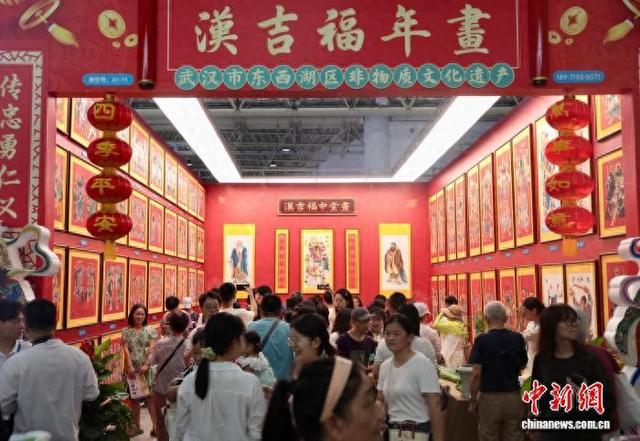
Core Insights - The 2025 China Cultural Tourism Industry Expo was held in Wuhan from September 12 to 14, showcasing various intangible cultural heritage (ICH) items, which became a highlight of the event [1]. Group 1: Event Overview - The expo featured vibrant displays of Hanji Fu New Year paintings, characterized by bright colors and a blend of traditional and modern aesthetics, attracting significant visitor interest [1]. - The event included various ICH exhibits from different provinces, such as Han embroidery and creative products like "cloth tigers" and "mud dogs" from Henan, appealing to younger audiences [3][5]. Group 2: Cultural Heritage Highlights - The Hanji Fu New Year painting technique has a history dating back to the Qing Dynasty and has been passed down for over a century, showcasing innovation by incorporating fashionable elements into traditional designs [3]. - The Shandong exhibition featured the ancient "Luban Lock," which has been recognized as a provincial intangible cultural heritage item, allowing visitors to engage with its historical significance through interactive experiences [5]. Group 3: Interactive Experiences - The expo included a special "Non-Heritage Cultural Creative Goods Warehouse" focusing on various non-heritage creative brands, offering hands-on activities such as traditional incense making and lacquer gourd crafting, enhancing visitor engagement with ICH [7].

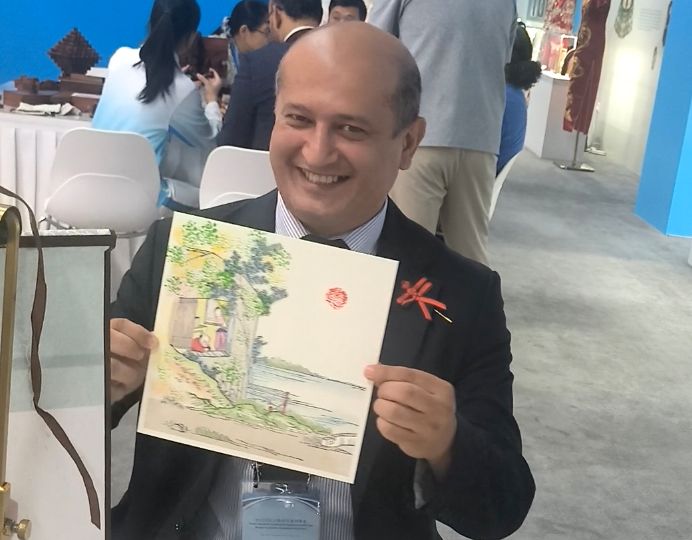
记者观察|文化体验、非遗传承,如何促进上合组织成员国民众情感互通?
Mei Ri Jing Ji Xin Wen· 2025-09-01 14:25
Group 1 - The 2025 Shanghai Cooperation Organization (SCO) Summit held in Tianjin is the largest since the organization's inception, focusing on consensus building, cooperation, and development planning [1] - A significant 93% of respondents in a public opinion survey among SCO member countries expressed a desire for cultural exchange activities [1] - The summit featured interactive displays of intangible cultural heritage (ICH) and technology, attracting considerable attention from international media [1] Group 2 - Cultural experiences foster emotional connections among people from different countries, highlighting the historical exchanges and mutual support among SCO member states [2] - Journalists from various countries expressed that hands-on cultural activities, such as traditional crafts, enhance their understanding of Chinese culture [3][4] - ICH is evolving from traditional skills to a modern spiritual connection for individuals, with many participants finding personal meaning and community through these practices [4][5] Group 3 - The establishment of "Luban Workshops" aims to promote vocational education and cultural exchange, with plans to build 10 new workshops in SCO member countries over the next five years [6][7] - As of last year, China has built over 30 Luban Workshops across Asia, Europe, and Africa, training nearly 10,000 students and providing vocational training to over 31,000 individuals [6][7] - The Luban Workshop initiative is positioned as a means to share China's vocational education experience globally, promoting Chinese craftsmanship and traditional culture [7]