
360安全大模型

Search documents
三六零时隔三年扭亏预盈超2亿 货币资金223亿拟投80亿理财
Chang Jiang Shang Bao· 2026-02-02 00:50
Core Viewpoint - After three years of losses, 360 (601360.SH) has finally returned to profit, with a projected net profit of approximately 213 million to 318 million yuan for the fiscal year 2025, marking a turnaround from previous losses [1][3]. Financial Performance - The company expects to achieve a net profit of about 213 million to 318 million yuan for 2025, compared to a loss in the previous year [1][3]. - In the first three quarters of 2025, 360 reported a revenue of 6.068 billion yuan, an increase of 8.18% year-on-year, although it still recorded a loss of 122 million yuan, which is a reduction in losses by 78.88% compared to the previous year [5]. - The company has experienced a significant decline in revenue and profit since 2020, with cumulative losses of 3.79 billion yuan from 2022 to 2024 [5]. Investment Strategy - 360 plans to use up to 8 billion yuan of idle funds for entrusted wealth management, investing in low-risk financial products such as structured deposits and bank wealth management products [1][11]. - The company emphasizes that this investment strategy will enhance capital efficiency without significantly impacting its main business or financial status [12]. Research and Development - 360 has been heavily investing in research and development, with expenditures of 3.129 billion, 3.314 billion, 3.104 billion, and 3.202 billion yuan from 2021 to 2024, and 2.357 billion yuan in the first three quarters of 2025 [10]. - The company aims to leverage AI technology to reshape its business, launching products like "Nano AI Search" and "360 AI Office" [8]. Financial Health - As of September 30, 2025, 360 holds 22.339 billion yuan in cash and nearly 600 million yuan in trading financial assets, with total assets of 37.839 billion yuan and a low debt-to-asset ratio of 22.64% [11].

三六零:公司凭借在搜索领域的深厚积累,构筑了五大AI优势
Zheng Quan Ri Bao Wang· 2025-12-29 13:13
Core Viewpoint - The company, 360 (601360), emphasizes its "AllInAgent" strategy and highlights five key AI advantages derived from its extensive experience in the search domain [1] Group 1: AI Advantages - Technical Advantage: The company has been tracking cutting-edge NLP technologies like Bert and GPT, investing continuously in foundational research to build a solid technical base [1] - Data Advantage: Leveraging high-traffic platforms such as "360 Browser" and "360 Search," the company possesses over 10TB of high-quality training data across various industries and languages, providing excellent material for model training [1] - Search Enhancement Advantage: By deeply integrating search with large models, the company effectively addresses the "hallucination" issue through data updates and knowledge calibration, thereby improving AI accuracy [1] Group 2: User and Resource Advantages - Scenario Advantage: The company benefits from real application scenarios with hundreds of millions of users, which not only validate products and anchor real demands but also allow user feedback to enhance model evolution [1] - Computational and Financial Advantage: The company has ample computational resources and over 20 billion yuan in financial reserves, ensuring sustained development of the aforementioned advantages [1] Group 3: AI Product Ecosystem - The company's self-developed AI product system includes general large models, AI applications, AI hardware, AI security products, and various intelligent agents, featuring products like 360 Smart Brain Model, 360 Security Model, Nano AI, 360 AInote, and 360 Security Intelligent Agent [1] - Notably, Nano AI possesses capabilities for text chatting and super search, along with built-in intelligent agents suitable for multiple scenarios [1]
三六零获评年度卓越人工智能应用企业,周鸿祎荣膺年度卓越领袖?
Ge Long Hui· 2025-12-23 02:32
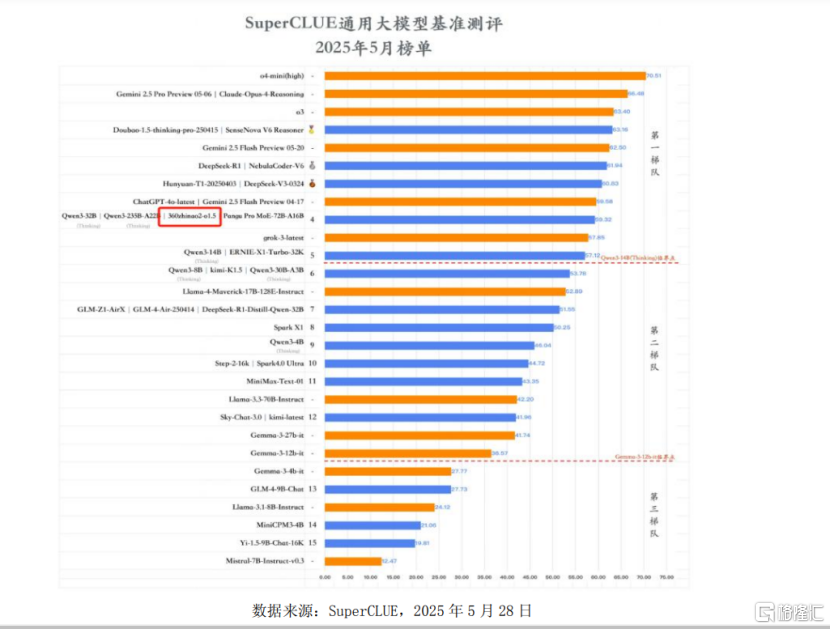
Core Viewpoint - The company, 360, has been recognized as the "Outstanding AI Application Enterprise of the Year" and its CEO Zhou Hongyi as the "Outstanding Leader of the Year" at the annual "Golden Award" selection by Gelonghui, indicating a successful transition from a traditional internet security company to an AI application platform [1] Group 1: AI Strategy and Growth - The company has established a dual strategy of "AI + Security," integrating AI technology deeply into its security business while enhancing the credibility of AI products through its security capabilities [3][4] - The global AI investment is surging, with IDC projecting a total investment of $315.8 billion in AI IT by 2024, and the Chinese market expected to grow at a compound annual growth rate (CAGR) of 35.2% over five years [3] - The company’s AI applications are focused on practical implementations rather than competing directly with major players on model size, emphasizing a more grounded approach to AI development [5] Group 2: AI Product Development - The company has developed its own large model, "360 Zhinao," which ranks among the top domestic models in comprehensive capabilities, particularly excelling in mathematical reasoning [6] - The "Nano AI Search Super Intelligent Agent" is a flagship product that leverages multi-platform information and model collaboration to execute complex tasks, positioning the company favorably in the AI search market [8] - The company’s internet value-added services generated revenue of 1.379 billion yuan in 2024, with a significant year-on-year growth of 253.25% in value-added services [9] Group 3: Security Business and Digital Transformation - The company has a strong foundation in security, having covered 1.5 billion terminals globally, and is expanding its offerings to include AI-driven security solutions for government and enterprise clients [10] - The introduction of the "360 Security Intelligent Agent" has been recognized in multiple core areas of security operations and compliance, showcasing the company's commitment to enhancing its digital security capabilities [10][11] - The company has secured contracts worth over 300 million yuan for AI and digital security projects, highlighting its strong B-end implementation capabilities [12] Group 4: Financial Performance and Future Outlook - The company reported a revenue of 2.241 billion yuan in Q3 2025, reflecting a year-on-year growth of 16.88%, indicating a significant improvement in financial performance [13] - The company is expected to achieve revenues of 8.637 billion yuan, 9.695 billion yuan, and 10.918 billion yuan from 2025 to 2027, with corresponding growth rates of 8.7%, 12.2%, and 12.6% [13] - The company maintains a high R&D expense ratio of nearly 40%, significantly above the industry average, which is expected to solidify its technological advantages [13]
三六零获评年度卓越人工智能应用企业,周鸿祎荣膺年度卓越领袖
Ge Long Hui A P P· 2025-12-23 01:50
Core Viewpoint - The company has been recognized for its achievements in AI applications, marking a significant transformation from a traditional software vendor to an AI application platform, which provides a basis for re-evaluation in the market [1] Group 1: AI Strategy and Growth - The company has established a dual strategy of "AI + Security," integrating AI technology deeply into its security business while enhancing the credibility of AI products through its security capabilities [3][4] - The company’s approach to AI is application-oriented, focusing on practical implementations rather than competing directly with major players on model size or general capabilities [5] - The company’s self-developed large model, "360智脑," has been continuously iterated, achieving top-tier performance in domestic evaluations, particularly in mathematical reasoning [6][8] Group 2: Product Development and Market Position - The "Nano AI Search Super Intelligent Agent" is a flagship product that leverages multi-platform information to complete complex tasks, positioning the company advantageously in the competitive AI search market [9] - The company’s internet value-added services generated revenue of 1.379 billion yuan in 2024, with a significant year-on-year growth of 253.25% in other value-added services, indicating a shift in revenue structure towards AI applications [10] Group 3: Security Capabilities and Digital Transformation - The company has a strong foundation in security, having covered 1.5 billion terminals globally, and is now enhancing its digital security capabilities through the "360 Security Intelligent Agent" [11][12] - The company has secured contracts exceeding 300 million yuan for AI and digital security projects, demonstrating its strong B-end implementation capabilities [13] Group 4: Financial Performance and Future Outlook - In Q3 2025, the company reported revenues of 2.241 billion yuan, a year-on-year increase of 16.88%, and a net profit of 160 million yuan, marking a significant turnaround [15] - The company is expected to see continued revenue growth, with projections of 8.7% to 12.6% annual growth from 2025 to 2027, driven primarily by its AI business [15][16]

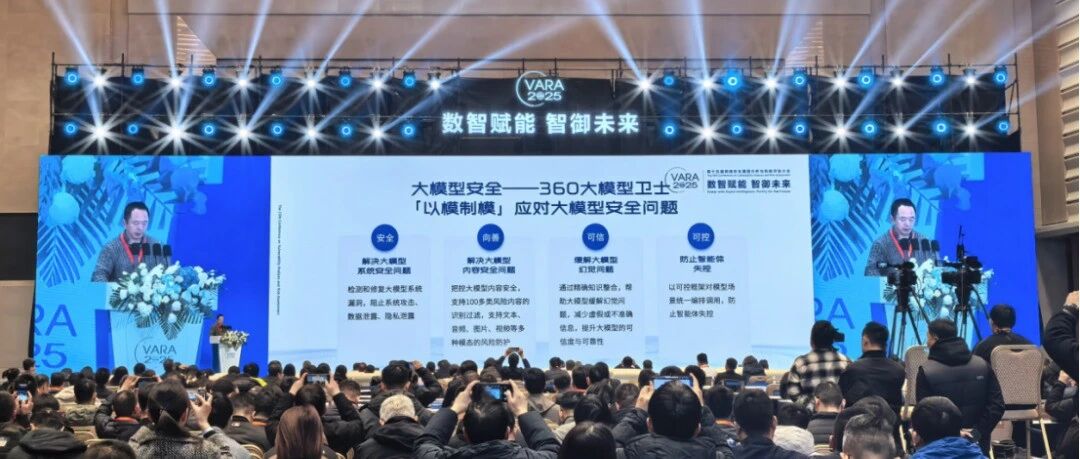
第十五届VARA大会在天津开幕 周鸿祎发表主题演讲:筑牢AI安全底座 护航高质量发展
Zheng Quan Ri Bao· 2025-12-11 11:13
Group 1 - The 15th Vulnerability Analysis and Risk Assessment Conference (VARA) was held in Tianjin, featuring Zhou Hongyi, founder of 360 Group, as the only representative from the industry, discussing new challenges in cybersecurity in the era of artificial intelligence [2] - 360 Digital Security Technology Group received two significant honors from the National Information Security Vulnerability Database (CNNVD) and the China Information Security Testing Center, recognizing its contributions and technical support capabilities in national vulnerability governance [2] - Zhou Hongyi emphasized that the existence of vulnerabilities has fundamentally changed the rules of cybersecurity, allowing attackers to exploit a single vulnerability to bypass traditional defenses and directly invade systems [2] Group 2 - The emergence of "hacker agents" is raising concerns, as they can automate tasks such as vulnerability discovery and network attacks, allowing a single human hacker to manage multiple agents, thus shifting the cybersecurity landscape from "human vs. human" to "human vs. machine" [3] - 360's core strategy to combat these challenges is "using AI to fight AI," enhancing vulnerability detection efficiency and accuracy through its self-developed 360 security model, which includes multiple expert models working in collaboration [3][4] - 360 has developed a swarm intelligence model for automated vulnerability analysis and discovery, significantly simplifying the vulnerability management process and reducing reliance on human intervention [4]
第十五届VARA大会在津开幕 周鸿祎强调筑牢AI安全底座
Zheng Quan Shi Bao Wang· 2025-12-11 10:55
Group 1 - The VARA conference, a significant annual event in the cybersecurity field, focuses on vulnerability management and AI security, highlighting the importance of collaboration among government, industry, academia, and research [1] - Zhou Hongyi, founder of 360 Group, emphasized the changing landscape of cybersecurity due to vulnerabilities, which allow attackers to bypass traditional defenses with minimal effort [2] - The emergence of "hacker agents" has transformed the nature of cyber warfare, shifting the confrontation from "human vs. human" to "human vs. machine," increasing the asymmetry in cyber defense [2] Group 2 - 360's core strategy to combat AI threats involves using its self-developed 360 security model to enhance the efficiency and accuracy of vulnerability detection, transitioning from rule-based to learning-driven methods [3] - The company has developed multiple expert models that work collaboratively to address various issues in vulnerability management, laying the groundwork for creating intelligent security agents [3] - 360 has introduced a swarm intelligence model for automated vulnerability analysis and discovery, significantly streamlining the vulnerability management process and reducing reliance on manual operations [4]
聚焦AI时代网络安全新挑战 周鸿祎:用AI对抗AI
Zhong Guo Xin Wen Wang· 2025-12-11 10:21
Core Insights - The existence of vulnerabilities has fundamentally changed the rules of the cybersecurity game, with AI serving as both a new productivity tool and a source of risk [1][2] - The 15th Vulnerability Analysis and Risk Assessment Conference (VARA) gathered representatives from various sectors to discuss vulnerability management and AI security [1] Group 1: Vulnerabilities and Cybersecurity Landscape - Society has entered an era where "everything can be programmed," leading to unprecedented levels of vulnerability destruction [1] - Traditional cyberattacks required breaching defense systems, but now attackers can exploit a single vulnerability to bypass traditional protections [1] - AI-based "hacker agents" can automate the tasks of vulnerability discovery and exploitation, creating a "super hacker" effect that shifts the confrontation from "human vs. human" to "human vs. machine" [1] Group 2: AI as a Countermeasure - A proposed strategy to counter new challenges is "using AI to fight AI," which involves upgrading traditional detection methods to learning-driven approaches [2] - The 360 security model aims to create a collaborative network of expert models to enhance threat response capabilities [2] - The VARA conference has become a significant annual platform for collaboration among government, industry, academia, and research in the cybersecurity field since its inception in 2008 [2]
周鸿祎第十五届VARA演讲:筑牢AI安全底座,护航高质量发展
华尔街见闻· 2025-12-11 08:21
Core Viewpoint - The VARA conference highlights the increasing importance of cybersecurity in the age of artificial intelligence, emphasizing the need for advanced strategies to combat new threats posed by vulnerabilities and AI-driven attacks [3][5][8]. Group 1: Conference Overview - The 15th VARA conference took place in Tianjin, attended by representatives from 27 national ministries, 52 state-owned enterprises, over 100 cybersecurity companies, and more than 30 universities and research institutions [1]. - The conference serves as a significant platform for collaboration among government, industry, academia, and research, focusing on key issues such as vulnerability management and AI security [3]. Group 2: Recognition and Achievements - 360 Digital Security Technology Group received two prestigious awards from the National Information Security Vulnerability Database (CNNVD) and the China Information Security Testing Center, recognizing its contributions to the national vulnerability management ecosystem [2][4]. Group 3: Key Challenges and Strategies - Zhou Hongyi, founder of 360, discussed the transformative impact of vulnerabilities on cybersecurity, noting that attackers can exploit a single vulnerability to bypass traditional defenses [3][5]. - The emergence of "hacker agents" has shifted the landscape of cyber warfare, allowing individuals to manage multiple automated hacking entities, thus intensifying the asymmetry in cyber defense [3][5]. Group 4: AI-Driven Solutions - 360's strategy to combat AI-driven threats involves developing an AI-powered security model that enhances the efficiency and accuracy of vulnerability detection [5]. - The company has created multiple expert models that work collaboratively to address various security challenges, laying the groundwork for the development of intelligent security agents [5][7]. - The introduction of automated vulnerability analysis and discovery through the "hive intelligence" model significantly streamlines the vulnerability management process, reducing reliance on manual operations [7]. Group 5: Future Outlook - Zhou emphasized that AI represents both a new productivity driver and a potential source of risk, advocating for collaborative efforts to strengthen digital security foundations [8].
周鸿祎第十五届VARA演讲:筑牢AI安全底座,护航高质量发展
券商中国· 2025-12-11 07:32
Core Viewpoint - The VARA conference highlighted the increasing challenges in cybersecurity due to the emergence of AI-driven threats and the need for advanced solutions to address vulnerabilities in the digital landscape [5][6]. Group 1: Conference Overview - The 15th VARA conference took place in Tianjin, attended by over a thousand representatives from 27 national ministries, 52 central enterprises, and more than 100 cybersecurity companies, along with 30 universities and research institutions [1]. - The conference serves as a significant platform for collaboration among government, industry, academia, and research, focusing on key issues such as vulnerability management and AI security [5]. Group 2: Recognition of 360 Group - 360 Digital Security Technology Group received two prestigious awards from the National Information Security Vulnerability Database (CNNVD) and the China Information Security Testing Center, recognizing its contributions to national vulnerability management [2][3]. Group 3: Key Insights from Zhou Hongyi's Speech - Zhou Hongyi emphasized that vulnerabilities have fundamentally altered the rules of cybersecurity, allowing attackers to exploit weaknesses with minimal effort, such as through malicious emails or specially crafted data packets [5]. - The rise of "hacker agents" has intensified the asymmetry in cyber defense, enabling a single hacker to manage multiple automated agents, transforming the nature of cyber warfare from human-to-human to human-to-machine confrontations [5][6]. Group 4: 360's AI Strategy - 360's strategy involves using AI to combat AI threats, enhancing vulnerability detection efficiency and accuracy through the development of a security model that integrates multiple expert models for comprehensive threat management [6]. - The introduction of automated vulnerability detection and response systems has streamlined processes that previously relied heavily on manual intervention, significantly improving operational efficiency [8]. Group 5: Future Outlook - Zhou Hongyi concluded by stating that while AI presents new opportunities for productivity and security, it also introduces new risks, urging collaboration across sectors to strengthen digital security foundations [9].

策略点评:AI应用:从工具创新到生态整合
Bank of China Securities· 2025-11-19 02:35
Group 1 - The core viewpoint of the report indicates that the AI industry is transitioning from "tool innovation" to "ecosystem integration," with an expected surge in AI application performance due to industry inflection points [2][6] - The launch of Alibaba's "Qianwen" app marks a significant step towards the "ecosystem" phase of AI applications, aiming to create a comprehensive personal AI assistant that integrates various life services [3][6] - The report highlights that AI application companies are beginning to show signs of performance inflection, with vertical applications validating business models and revealing profit potential [2][6] Group 2 - The report notes that since 2025, the AI industry chain has experienced a rotation in market performance, with AI applications showing limited growth compared to other segments, suggesting a high cost-performance ratio for investments in AI applications [2][6] - The report cites that as of September 2025, the number of monthly active users for AI applications in China has surpassed 729 million, indicating a significant increase in user engagement [5] - The performance reversal of AI applications is attributed to the accelerated penetration rate and the initial success of vertical application commercialization, with notable profit growth in companies like 360 and Kingsoft [4][5]
