
阿里巴巴千问

Search documents
每经热评|“千元豆”战役升级,穿新鞋如何不走老路?
Mei Ri Jing Ji Xin Wen· 2026-02-09 13:21
Core Insights - The "AI War" leading up to the 2026 Spring Festival is intensifying, with major players like Baidu, Tencent, ByteDance, and Alibaba engaging in aggressive promotional activities, including significant cash giveaways [1][2] - The competition is characterized by a struggle for user engagement and traffic, with promotional campaigns causing operational challenges for businesses and delivery services [2][3] - The reliance on subsidies for user acquisition is reminiscent of past strategies in the mobile internet era, raising concerns about sustainability and the true value of AI applications [2][4] Group 1: Industry Dynamics - The AI industry is witnessing a fierce competition among tech giants, with initiatives like Tencent's "Yuanbao" and Alibaba's "Qianwen" offering substantial cash incentives to attract users [1][2] - The promotional activities have led to overwhelming demand, exemplified by the "Qianwen" app processing 10 million orders in just 9 hours, causing operational strain on businesses [1][2] - The current promotional strategies are heavily dependent on subsidies, which may undermine the long-term value proposition of AI technologies [3][4] Group 2: Challenges and Risks - The surge in demand due to promotional activities has disrupted normal business operations, leading to customer dissatisfaction and potential risks of fraud in secondary markets [2][3] - The industry's approach of using traditional subsidy methods to promote cutting-edge AI technology raises questions about the effectiveness and sustainability of such strategies [4][5] - There is a need for the industry to shift focus from subsidy-driven competition to creating genuine user value through technological innovation and seamless integration of AI into everyday scenarios [4][5] Group 3: Future Directions - To avoid repeating past mistakes, the industry must move beyond subsidy dependency and focus on core technological advancements and user-centric solutions [4][5] - Companies should aim to develop sustainable business models that prioritize real value creation over short-term gains, fostering long-term relationships with users [4][5] - The future of AI lies in understanding and addressing user needs effectively, rather than merely competing on financial incentives [4][5]
AI巨头春节狂撒45亿红包雨
Qi Lu Wan Bao· 2026-02-06 12:38
Core Insights - The competition among major internet companies for user engagement during the Spring Festival has intensified, with Tencent, Baidu, and Alibaba collectively distributing over 4.5 billion yuan in cash red envelopes, marking the beginning of a heated "AI red envelope war" [1] - The challenge for these companies is to convert users from "one-time visitors" to "retained users" through deeper integration of software with social media and various industry applications [1][6] Group 1: AI Red Envelope War - Tencent initiated the "Spring Festival AI Red Envelope War" by announcing a 1 billion yuan cash red envelope campaign through its Yuanbao app from February 1 to February 17 [1] - Baidu quickly followed with a 500 million yuan red envelope offer, integrating it with its AI product, Wenxin Assistant [1] - Alibaba's Qianwen launched a 3 billion yuan "Spring Festival Treat Plan" and secured exclusive naming rights for the Bilibili New Year's Eve gala [1] - ByteDance's Volcano Engine is set to participate in the 2026 CCTV Spring Festival Gala as the exclusive AI cloud partner, enhancing its interactive features [1] Group 2: User Engagement and Retention - Users are downloading apps primarily due to promotional activities, but there is skepticism about continued usage post-campaign, as indicated by user feedback [2] - The "AI red envelope war" is seen as a strategy to transition AI from simple search functions to more interactive capabilities [2] - QuestMobile data shows that by Q4 2025, Doubao's monthly active users (MAU) could reach 230 million, while Alibaba's Qianwen app may achieve 100 million MAU [2] Group 3: Historical Context and Strategy - The strategy of using red envelopes to attract users is not new; it was successfully employed during the 2015 Spring Festival with WeChat's "shake to grab red envelopes" feature, which significantly increased user engagement [3] - The current competition focuses on establishing the first point of interaction with AI applications, which is crucial for future user engagement [3] - The "AI red envelope war" is expected to shorten the adoption cycle of AI applications, transitioning into a phase focused on user loyalty [3] Group 4: Long-term User Retention Challenges - The primary challenge remains how to retain users after initial engagement, as past experiences show that high initial user numbers do not guarantee long-term retention [5] - Experts suggest that simply attracting users with red envelopes is insufficient; deeper interaction is necessary to form habitual usage [5] - The success of Yuanbao's red envelope initiative is contingent on its ability to leverage the WeChat ecosystem and provide ongoing value beyond the initial cash incentive [5]



继续看多航天-AI投资机会
2026-02-03 02:05
Summary of Key Points from Conference Call Records Industry Overview - The conference call discusses the AI industry and its impact on hardware and software sectors, highlighting significant growth driven by capital expenditure in AI, particularly in overseas markets [1][2]. Core Insights and Arguments - **AI Capital Expenditure**: The hardware sector has seen substantial performance improvements due to AI-driven capital expenditures, especially from overseas investments [2]. - **Software Industry Disparity**: There is a notable gap between domestic and international software industries in cloud computing, with domestic companies primarily using hybrid cloud architectures, leading to lower standardization and productization levels [1][4]. - **Rapid AI Application Development**: Since the end of 2025, AI applications have accelerated, with major companies entering the market and product iterations speeding up [1][4]. - **Multimodal Technology Advancements**: Multimodal technology has reached a stage where it can fully replace traditional production methods, with significant improvements in image recognition and video generation capabilities [1][5][6]. - **Emergence of AI Social Products**: New AI social products have been launched by various companies, utilizing innovative methods like red envelope distribution to attract users and establish a foundation for future commercialization [1][7]. Additional Important Content - **2026 Predictions**: The year 2026 is anticipated to be a pivotal year for AI applications and commercial space ventures, with companies like ByteDance, Alibaba, and Tencent expected to accelerate their growth in traffic and business expansion [1][8]. - **Token Usage Growth**: The integration of agents and multimodal technology in workflows is expected to significantly increase token usage, benefiting cloud and edge computing demands, as well as terminal device markets like AI glasses [3][9]. - **SpaceX Developments**: SpaceX is actively pursuing an IPO and plans to raise over $40 billion, with applications for millions of AI satellites that could enhance satellite deployment rates globally [3][9]. - **Apple's Collaboration with SpaceX**: Apple is in discussions with SpaceX to integrate Starlink connectivity into the iPhone 18 Pro, indicating a shift towards satellite communication as a potential alternative to cellular networks [9]. This summary encapsulates the key points discussed in the conference call, providing insights into the current state and future trends of the AI and commercial space industries.
AI红包大战引股民连问,AI应用板块公司业绩分化
第一财经· 2026-02-02 15:31
Core Viewpoint - The article discusses the competitive landscape of the "AI Red Packet" initiative during the Spring Festival, highlighting the strategic positioning of major tech companies like Tencent, Alibaba, Baidu, and ByteDance in leveraging AI to enhance user engagement and ecosystem integration [2][4]. Group 1: AI Red Packet Battle - The total amount of red packets distributed by major companies exceeds 4 billion yuan, marking a significant strategic move to enhance AI user engagement [2]. - Alibaba's "Spring Festival Treat Plan" involves a record investment of 3 billion yuan, while Tencent contributes 1 billion yuan through its "Yuanbao" initiative, and Baidu allocates 500 million yuan for its "Wenxin Assistant" [3]. - The competition is not just about monetary distribution but also about integrating AI into social interactions and commercial ecosystems [4]. Group 2: Market Reactions and Company Performance - Investor interest in AI applications has surged, with numerous inquiries about companies' involvement in the AI red packet initiatives, indicating a strong market response [3]. - As of February 2, 72 companies in the AI application sector have released performance forecasts, with 20 expecting growth, 12 turning profitable, and 25 continuing to report losses [5]. - Companies with strong technological foundations and clear application scenarios are beginning to see positive financial results, while those in transition face challenges [5]. Group 3: Future of AI Applications - The year 2026 is anticipated to be a pivotal moment for AI applications, with the current red packet initiatives serving as a critical turning point for commercializing AI technology [5]. - Companies like iFlytek are projecting significant profit growth, attributing success to the integration of AI models into existing solutions, which address customer pain points [6]. - The article emphasizes that not all companies will benefit from the AI boom, as many traditional firms may struggle to adapt to the evolving technological landscape [8].


红包刷屏!互联网大厂打响春节AI流量争夺战
证券时报· 2026-02-02 00:10
Group 1 - The core viewpoint of the article highlights the competitive landscape among major internet companies during the Chinese New Year, focusing on AI applications as a new traffic entry point [1][9][10] - Tencent initiated the "AI battle" with its "Yuanbao" campaign, offering a total of 1 billion yuan in cash red envelopes to attract users and boost downloads [1][4][10] - The Chinese New Year is identified as a peak period for user engagement and social interaction, providing a unique opportunity for companies to enhance their AI application visibility and user acquisition [3][10] Group 2 - Other major internet companies, including Baidu, ByteDance, and Alibaba, are also leveraging the Chinese New Year for marketing, with Baidu offering 500 million yuan in cash red envelopes through its Wenxin assistant [6][10] - ByteDance's focus is on the Spring Festival Gala, where its Volcano Engine will serve as the exclusive AI cloud partner, enhancing the event's interactive experience [6][10] - Alibaba's Qianwen has announced sponsorship of the Jiangsu Satellite TV Spring Festival Gala, further emphasizing the competitive marketing strategies during this festive period [7][10] Group 3 - The article suggests that the competition for AI applications as a traffic entry point is intensifying, with companies aiming to bind users to their ecosystems through effective marketing strategies [9][10] - The current phase of large model competition is described as "application-oriented," with AI assistants becoming the next generation of interaction points [10] - The challenge for these companies will be converting the influx of users attracted by promotional activities into loyal customers, which will be crucial for long-term success [10]

摩根大通:中国AI交易,不确定“谁是最终赢家”,押注“AI应用大战”的受益者
美股IPO· 2026-01-31 16:03
Core Viewpoint - Morgan Stanley defines 2026 as the "activation year" for consumer AI, suggesting investors should focus on secondary beneficiaries rather than single application winners due to the lack of a solid moat in the application layer [1][2]. Group 1: Market Dynamics - The report emphasizes that it is premature to determine "AI application winners and losers" in the Chinese chatbot market, as the market is still developing and short-term share changes reflect distribution and product iteration rather than a solid competitive advantage [3][10]. - Morgan Stanley believes that 2026 will mark a significant shift in consumer AI, with chatbots transitioning from novelty to habitual use, fundamentally changing how users discover information and make decisions [3][4]. Group 2: Investment Strategy - The report advises avoiding bets on single application winners and instead focusing on secondary beneficiaries that are likely to see earlier returns and higher visibility [4]. - The investment logic is anchored on secondary exposures, including AI infrastructure and cloud providers that can capture the rising demand for reasoning workloads, and advertising platforms that will benefit from increased sales and marketing intensity [6]. Group 3: Sector Insights - In the enterprise AI sector, the turning point is when the value proposition becomes measurable in high-stakes workflows, with examples such as Google generating over 25% of new code through AI [6]. - The report highlights that the growth of daily multi-turn chatbot conversations will directly benefit reasoning demand and token throughput, with a compound growth in token consumption as agents expand from conversation to execution [6]. Group 4: Company Comparisons - The report notes that despite recent rebounds, leading Chinese internet companies still trade at significant discounts compared to global peers, with Alibaba's expected PE for 2026 at 20 times compared to Google's 29 times and Amazon's 26 times [11][12]. - The valuation comparison indicates that as AI narratives converge, it is feasible to narrow valuation gaps for companies that achieve execution milestones, benefiting long-term narratives with high credibility [12].

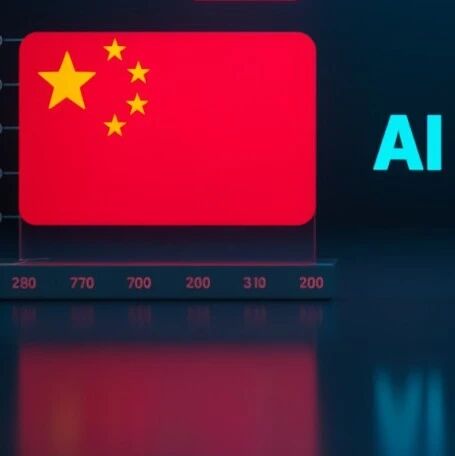
腾讯员工大会后,豆包手机再次回应安全争议
2 1 Shi Ji Jing Ji Bao Dao· 2026-01-27 06:17
Core Viewpoint - Tencent's CEO Ma Huateng discussed the integration of AI agents into mobile applications, emphasizing the importance of user privacy and security in contrast to competitors like Alibaba and ByteDance [1][3]. Group 1: Tencent's Position on AI - Ma Huateng criticized the use of "black market plugins" for data processing, labeling them as "extremely unsafe" and "irresponsible" [1]. - Tencent is contemplating how to introduce AI into its WeChat ecosystem while balancing user needs and privacy concerns [4]. Group 2: Competitor Analysis - Alibaba's Qianwen has adopted an A2A (Agent to Agent) model, allowing direct interaction between AI and platform systems, which Ma Huateng acknowledged as leveraging Alibaba's ecosystem advantages [3]. - In contrast, the GUI technology used by ByteDance's Doubao assistant allows AI to operate independently of app cooperation, raising privacy and platform rule concerns [2]. Group 3: Industry Trends and Responses - The launch of Doubao assistant led to immediate privacy and security controversies, prompting the team to limit its operational boundaries [2]. - Tencent's recent AI updates, such as the "Yuanbao Party" feature, focus on social interaction rather than task execution, indicating a different approach to AI integration [4].
刚刚,两大主线涨停潮!
天天基金网· 2026-01-22 05:20
Group 1: Market Overview - The commercial aerospace and AI application sectors experienced a rebound, with commercial aerospace showing stronger performance, boosting related sectors such as military industry and photovoltaic equipment [2] - The mining sector also saw gains, particularly in oil and gas extraction, with "three major oil companies" collectively rising, and China National Offshore Oil Corporation increasing by over 4% [2] - Overall, the market favored small-cap stocks, with the micro-cap index rising by 1.1%, reaching a historical high, while major indices like the Shanghai Composite Index and Shenzhen Component Index declined [2] Group 2: Commercial Aerospace Sector - The commercial aerospace sector rebounded, with stocks like Zhongtai Co., Triangle Defense, and Tianli Composite experiencing significant increases [4] - Notable stock performances included Zhongtai Co. rising by 15.82% with a market cap of 13.1 billion, Triangle Defense up by 14.92% with a market cap of 20.1 billion, and Tengjing Technology increasing by 14.09% with a market cap of 26.4 billion [5] - Recent news regarding SpaceX's IPO plans and updates from three commercial aerospace companies on their IPO guidance have positively influenced market sentiment [6] Group 3: Investment Opportunities in Commercial Aerospace - The value chain of commercial aerospace can be divided into five core levels: "sky, ground, terminal, rocket, and application," with unique market opportunities and technical challenges expected from 2026 to 2030 [7] - Current investment opportunities in commercial aerospace are categorized into three main lines: 1. Launch and manufacturing segments, which are expected to benefit directly from increased orders as satellite constellations enter a dense deployment phase 2. Core components and systems, which include satellite payloads and critical electronic systems, characterized by high technical barriers and essential for long-term competitiveness 3. Downstream applications and operational services, which, while currently limited in scale, hold the most significant long-term potential for value realization [7] Group 4: AI Application Sector - The AI application sector also saw a rebound, with stocks like Huakai Yibai and Deepin Technology experiencing substantial gains [8] - Key stock performances included Huakai Yibai rising by 20.03% with a market cap of 5.29 billion and Deepin Technology increasing by 10.21% with a market cap of 42.5 billion [9] - Recent developments include Baidu's release of the Wenxin large model 5.0, which supports multi-modal understanding and is now available on various platforms, indicating a competitive landscape among major AI model providers [10][11]




TMT行业周报(1月第2周):阿里巴巴举办千问产品发布会
Century Securities· 2026-01-21 00:25
Investment Rating - The report does not explicitly state an investment rating for the industry, but it suggests a positive outlook for Alibaba and related sectors, indicating a favorable investment environment [2]. Core Insights - Alibaba's "Qianwen" product launch signifies a shift in AI capabilities from a "Q&A assistant" to a "task executor," integrating over 400 functions across its ecosystem, which is expected to enhance user engagement and commercial viability [3][5]. - The emergence of the GEO (Generative Engine Optimization) business model is transforming marketing strategies, shifting focus from SEO to GEO, which is anticipated to benefit marketing agencies and authoritative media platforms while traditional traffic platforms may face challenges [3][5]. - The TMT sector showed a strong performance in the week of January 12-16, with notable gains in sub-sectors such as portal websites and semiconductor equipment, outperforming the broader market [3][5]. Market Weekly Review - The TMT sector's performance from January 12-16 showed a rise in the computer sector by 3.82%, electronics by 3.77%, media by 2.04%, and communication by 1.42%, collectively outperforming the CSI 300 index, which fell by 0.57% [3][5]. - The top-performing sub-industries included portal websites (17.69% increase), integrated circuit packaging and testing (14.47% increase), and semiconductor equipment (9.31% increase) [3][5]. Industry News and Key Company Announcements - Alibaba's "Qianwen" product launch on January 15 is a significant event, showcasing its AI capabilities and integration with various services [3][5]. - The report highlights the rapid growth of the "Qianwen" app, which achieved over 100 million monthly active users within two months of launch, indicating strong market acceptance [3][5]. - The report notes that the GEO model is expected to enhance the profitability of marketing agencies and elevate the status of authoritative media platforms, while traditional traffic platforms may experience a decline [3][5].
国证国际港股晨报-20260120
国投证券(香港)· 2026-01-20 02:43
Group 1: Market Overview - The Hong Kong stock market continued its adjustment trend, with all three major indices closing lower; the Hang Seng Index fell by 1.05%, the Hang Seng China Enterprises Index by 0.94%, and the Hang Seng Tech Index by 1.24% [1] - The overall market sentiment is cautious, with a trading volume of approximately HKD 225.7 billion, and the short-selling ratio remains relatively low at about 13.85% [1] - Southbound capital saw a rebound, with a net inflow of HKD 2.29 billion [1] Group 2: Sector Performance - The technology sector was the main contributor to the decline, with SaaS, cloud computing, and AI application stocks under significant pressure; notable declines were seen in Huilyang Technology and Zhipu [2] - The pharmaceutical and education sectors also showed weakness, with WuXi Biologics leading the CXO sector decline [2] - Conversely, the aviation sector performed well, benefiting from the upcoming Spring Festival travel rush and favorable oil exchange rates, with China Eastern Airlines leading gains of over 9% [2] Group 3: Economic Data - The National Bureau of Statistics reported that China's GDP grew by 5.0% in 2025, meeting the official target and laying a solid foundation for the 14th Five-Year Plan [3] - In December, the industrial added value above designated size increased by 5.2% year-on-year, exceeding market expectations and indicating sustained high manufacturing activity [3] - Exports in December rose by 6.6% year-on-year, marking a quarterly high, with high-tech product exports growing by 13.2%, significantly outpacing overall growth [3] Group 4: Investment Trends - Despite pressures from real estate adjustments, investment in manufacturing equipment surged by 11.8%, indicating structural optimization in investment [3] - The real estate sector is still in an adjustment phase, but signs of improvement are emerging, with a narrowing decline in new housing sales [3] - Consumer spending showed signs of potential recovery, supported by a stable employment situation [3] Group 5: E-commerce Insights - In December, the online retail sales of physical goods grew by 0.8% year-on-year, with a total of RMB 1.3 trillion, reflecting a slowdown compared to previous months [5] - Alibaba's Qianwen app has integrated various services, potentially enhancing user engagement and operational efficiency [6] - The overall e-commerce market growth is expected to slow down in Q4 due to weak macro consumption and high base effects from government subsidies [8]