
500米口径球面射电望远镜(FAST)

Search documents
【新华社】一起来看!中国科技创新的“硬核”与“温度”
Xin Hua She· 2026-01-04 01:23
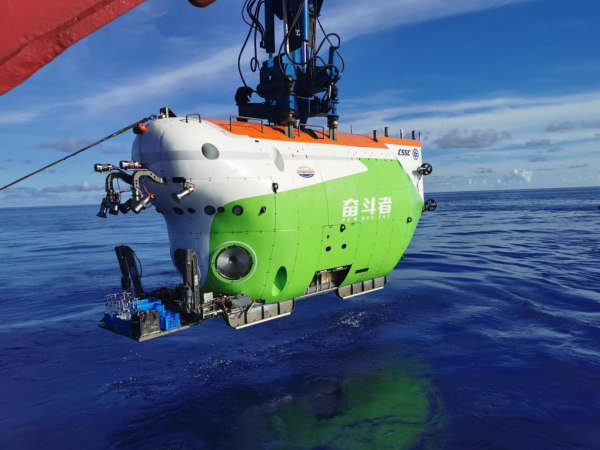
Core Insights - China is making significant advancements in various scientific fields, including artificial intelligence, space exploration, and quantum technology, positioning itself as one of the fastest-growing innovative economies globally [4][5][7]. Group 1: Space Exploration - The Chang'e 6 mission successfully returned 1935.3 grams of lunar soil samples, providing crucial scientific data for future lunar exploration [5]. - The Chinese space station has transitioned to regular operations, serving as a "space laboratory" that produces significant scientific results, including breakthroughs in materials science and life support technologies for deep space missions [5]. - The "Fighter" manned submersible has completed China's first manned deep-sea scientific expedition in the Arctic, marking a shift from "full ocean depth" to "full ocean area" exploration [5]. Group 2: Artificial Intelligence - The launch of the DeepSeek-R1 model demonstrates a significant reduction in training costs while achieving results comparable to previous AI models [10]. - Robotics have become integral to various sectors, showcasing capabilities in entertainment and manufacturing, indicating a shift from AI as a tool to a partner in daily life [10]. - The evolution of AI technologies is reshaping human-computer interaction and driving innovation across industries, enhancing both productivity and quality of life [10]. Group 3: Quantum Technology and Materials Science - China has achieved a breakthrough in quantum computing with the "Zu Chongzhi No. 3" model, showcasing a computing power increase of trillions of times [8]. - The development of atomic-level thin two-dimensional metals has been realized through innovative techniques, marking a significant achievement in materials science [8]. Group 4: Research and Development - China continues to lead globally in high-quality scientific research output, with a growing advantage in various fields [7]. - The "Seed Precision Design and Creation" initiative has successfully developed high-yield crop varieties, increasing production by 10% to 20% while reducing input losses by 15% to 20% [8].

科学与健康丨一起来看!中国科技创新的“硬核”与“温度”
Xin Hua She· 2026-01-01 06:45
Group 1: Technological Advancements - China's AI large models are rapidly advancing, with breakthroughs in chip self-research, positioning the country as one of the fastest-growing economies in innovation [2] - The Tianwen-2 mission has commenced its "star-chasing" journey, while significant infrastructure projects like the Yaxia hydropower project and the commissioning of the first electromagnetic catapult aircraft carrier are underway [2] - By 2026, major technological achievements are transitioning from "point breakthroughs" to "systematic explosions," highlighting the integration of "hardcore strength" and "people's livelihood" [2] Group 2: Space and Ocean Exploration - China is expanding its exploration efforts into deep space and deep sea, revealing previously unknown geological activities on the moon and collecting significant lunar samples [3] - The Chinese space station is now operational, serving as a "space laboratory" that produces major scientific results, including high-temperature experiments and valuable data for deep space life support [3] - The "Fendouzhe" manned submersible has successfully conducted deep-sea explorations, marking a shift from "full ocean depth" to "full ocean area" capabilities [3][5] Group 3: Fundamental Research and Innovation - China maintains its position as the global leader in high-quality scientific research output, with significant advancements in fusion energy, agricultural research, and quantum technology [7] - The EAST fusion reactor achieved a milestone of 1 million degrees Celsius for 1000 seconds, marking a critical step towards practical fusion energy [7] - Breakthroughs in seed research have led to the development of high-yield crop varieties, with a promotion of 14.48 million acres of new crop varieties [7] Group 4: National Scientific Instruments - The FAST telescope has discovered over 1,170 pulsars, surpassing the total number found by other telescopes during the same period [9] - Researchers in Jiangmen have improved the precision of neutrino oscillation measurements by 1.5 to 1.8 times compared to previous experiments [9] - The Guo Shoujing telescope has published over 28 million spectral data, maintaining the highest data volume globally [9] Group 5: Artificial Intelligence Integration - The launch of the DeepSeek-R1 model demonstrates significant advancements in AI with lower training costs achieving previous performance levels [11] - AI is increasingly integrated into daily life, enhancing experiences in various sectors, including entertainment and manufacturing [11] - The evolution of AI technologies is reshaping human-computer interaction and driving innovation across industries [11]

中国铁建:2016年公司所属十一局集团参建的世界上最大的单口径射电望远镜在贵州省平塘县落成启用
Zheng Quan Ri Bao· 2025-12-30 12:07
Core Viewpoint - China Railway Construction Corporation (CRCC) announced the completion and operation of the world's largest single-dish radio telescope, known as FAST, located in Pingtang County, Guizhou Province, marking a significant advancement in China's ability to explore deep space and cosmic phenomena [1] Group 1 - The FAST telescope, with a diameter of 500 meters and a total area of 250,000 square meters, is equivalent to 30 standard football fields [1] - The telescope is capable of receiving electromagnetic signals from 13.7 billion light-years away, providing opportunities for breakthroughs in fundamental research areas such as large-scale physics of the universe and the deep structure and laws of matter [1] - The Eleventh Bureau Group of CRCC played a crucial role in the construction of the FAST project, contributing to various civil engineering works including access roads, site excavation, water diversion tunnels, and research facilities [1]

【财经观察】“中国邀全球科研人才共商发展之路”
Huan Qiu Shi Bao· 2025-11-16 23:08
Core Insights - China has become a global hub for scientific research, as highlighted by experts at the Hong Kong Crown Forum 2025, emphasizing the country's achievements in various fields [1][2]. Group 1: Scientific Collaboration - Nobel laureate Reinhard Genzel noted the close collaboration between Chinese researchers and international scientists, particularly in the field of black hole research and galaxy evolution [1][2]. - Genzel emphasized the importance of international cooperation in large-scale projects to alleviate financial pressures, despite political challenges affecting collaborations [2]. Group 2: Advancements in Microscopy - Wolfgang Baumeister, a recipient of the 2025 Shaw Prize in Life Science and Medicine, stated that China may possess the largest number of high-end microscopes globally, facilitating significant advancements in cryo-electron tomography [3][5]. - Baumeister highlighted the efficiency of decision-making in China regarding the procurement of expensive research equipment, which contrasts with challenges faced in other countries due to political factors [5]. Group 3: Mathematical Research Trends - Nigel Hitchin, a British mathematician, observed a trend of talented mathematicians returning to China, where they are valued and provided with ample research opportunities [6][8]. - Hitchin discussed the increasing complexity of mathematical concepts and the growing reliance on computers and artificial intelligence in research, indicating a shift in methodologies [7][8].
中国首个深度参与的国际大科学工程“平方公里阵列射电望远镜”取得阶段性成果——走进“世界巨眼”南非台址
Ren Min Ri Bao· 2025-10-27 08:04
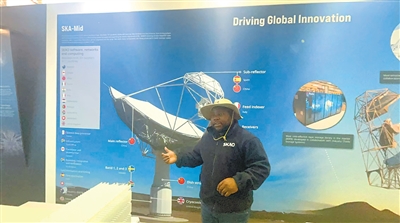
Core Insights - The Square Kilometer Array (SKA) is a major international scientific project involving multiple countries, aimed at building the world's largest radio telescope to explore cosmic mysteries [1][4][5] - The SKA project has two main sites: one in South Africa and the other in Australia, chosen for their low light pollution and optimal conditions for astronomical observations [2][3] Project Overview - SKA is designed to consist of thousands of 15-meter diameter dish antennas spread over a 3000-kilometer radius, utilizing radio interferometry to enhance signal reception [2][4] - The South African site has completed the initial phase with 64 antennas built, including 15 antennas designed and constructed by Chinese teams [2][4] Technical Features - The SKA's array layout allows for better signal coverage and reception across different frequencies and directions, enhancing its observational capabilities [3][4] - The project generates approximately 8 terabytes of data per second, which is processed by supercomputers and shared with scientists globally [4][5] Scientific Contributions - SKA is expected to significantly advance human understanding of the universe, with early results from the MeerKAT telescope already yielding important discoveries, such as imaging the center of the Milky Way and detecting signals from distant galaxies [6][7] - The project aims to explore various cosmic phenomena, including the evolution of large galaxies, the behavior of pulsars, and the dynamics of cosmic gas [6][7] International Collaboration - The SKA project is a collaborative effort involving multiple countries, with China playing a crucial role by providing key components and participating in scientific research [5][7] - The partnership between SKA and China's FAST telescope is expected to enhance research capabilities, combining strengths in observational depth and efficiency [7]
走进“世界巨眼”南非台址
Ren Min Ri Bao· 2025-10-27 06:18
Core Insights - The Square Kilometer Array (SKA) is a major international scientific project aimed at building the world's largest radio telescope, with significant participation from China [5][9][11] - The SKA project is divided into two sites: one in South Africa and the other in Australia, chosen for their low light pollution and optimal conditions for astronomical observations [6][9] - The project aims to enhance our understanding of the universe through advanced radio astronomy techniques, with a focus on high sensitivity, wide-field surveys, and rapid observation capabilities [10][12] Project Overview - SKA is a collaborative effort involving multiple countries, initiated in 1993, and has evolved into a global scientific partnership [9][11] - The South African site will consist of thousands of 15-meter diameter dish antennas, utilizing radio interferometry to enhance signal reception [6][8] - As of now, 64 antennas have been constructed at the South African site, with an additional 15 antennas designed and built by Chinese teams currently being assembled [6][11] Technical Features - The SKA's design allows for a large effective aperture, significantly increasing its sensitivity and ability to detect faint signals from the universe [9][10] - The MeerKAT telescope, a precursor to SKA, has already achieved notable scientific results, including imaging the center of the Milky Way and detecting signals from distant galaxies [10][12] - The project generates approximately 8 terabytes of data per second, which is processed and analyzed by supercomputers to facilitate global scientific collaboration [8][10] International Collaboration - China plays a crucial role in the SKA project, contributing to the design and construction of the mid-frequency antennas and participating in the SKA Regional Science Center [11][12] - The collaboration between SKA and China's Five-hundred-meter Aperture Spherical Telescope (FAST) is expected to enhance research capabilities in various fields of astronomy [12] - The SKA project exemplifies the importance of international cooperation in advancing scientific knowledge and addressing complex challenges in data processing and analysis [9][12]
走进“世界巨眼”南非台址(国际科技前沿)
Ren Min Ri Bao· 2025-10-26 22:19
Core Insights - The Square Kilometer Array (SKA) is a major international scientific project involving multiple countries, aimed at building the world's largest radio telescope to explore cosmic mysteries [1][5][6] Group 1: Project Overview - SKA is a collaborative effort involving ten countries, including China, which plays a significant role in the project [6][7] - The project features two main sites: one in South Africa and another in Australia, chosen for their low light pollution and optimal conditions for astronomical observations [2][4] - The South African site will consist of thousands of 15-meter diameter dish antennas arranged in a spiral pattern to enhance signal reception [2][4] Group 2: Technical Features - SKA utilizes a technique called radio interferometry, allowing multiple antennas to work together to create a larger effective aperture for observing the universe [2][4] - The project is expected to generate massive amounts of data, approximately 8 terabytes per second, which will be processed by supercomputers and shared with scientists worldwide [4][6] - SKA's design allows for high sensitivity and resolution, enabling the detection of previously undetectable faint signals from the cosmos [5][6] Group 3: Scientific Contributions - The MeerKAT telescope, a precursor to SKA, has already achieved significant scientific milestones, including imaging the center of the Milky Way and discovering a giant galaxy [6][8] - The project aims to enhance understanding of cosmic phenomena, such as the evolution of galaxies and the behavior of dark matter [6][8] - Collaboration between SKA and China's FAST telescope is expected to yield new insights into the universe, leveraging the strengths of both facilities [7][8]
中国首个深度参与的国际大科学工程“平方公里阵列射电望远镜”取得阶段性成果—— 走进“世界巨眼”南非台址(国际科技前沿)
Ren Min Ri Bao· 2025-10-26 22:01
Core Points - The Square Kilometer Array (SKA) is the world's largest radio telescope project, involving multiple countries, including China, and aims to explore the mysteries of the universe [1][5][6] - The SKA project has two main sites: one in South Africa and another in Australia, chosen for their low light pollution and optimal conditions for astronomical observations [2][4] - The South African site will consist of thousands of 15-meter diameter dish antennas, with 64 antennas already constructed and an additional 15 designed and built by Chinese teams [2][4][7] Group 1: Project Overview - SKA is a collaborative international scientific project initiated in 1993 by ten countries, transitioning to a government-level organization in 2021 [5][6] - The project aims to achieve high sensitivity, high resolution, and rapid observation capabilities, significantly enhancing humanity's understanding of the universe [6][7] - The MeerKAT telescope, part of the SKA project, has already produced significant observational results, including images of the Milky Way's center and the detection of signals from distant galaxies [6][7] Group 2: Technical Aspects - The SKA's design includes a unique array layout that optimizes signal reception across various frequencies and directions [3][4] - The project generates approximately 8 terabytes of data per second, which is processed by supercomputers and shared with scientists worldwide [4][5] - The dish antennas are designed with high precision, ensuring effective collection of radio waves from space, which is crucial for achieving observational goals [7] Group 3: International Collaboration - China plays a significant role in the SKA project, contributing to the design and construction of antennas and participating in scientific research [6][7] - The collaboration between SKA and China's FAST telescope represents a significant partnership in astronomical research, leveraging the strengths of both facilities [7] - The project emphasizes the importance of global cooperation in data processing and analysis to tackle the challenges posed by the vast amounts of data generated [5][6]
全球首台、世界最大!上周末,大国工程捷报频传
Huan Qiu Wang Zi Xun· 2025-10-20 00:04
Group 1 - The world's first mid-infrared solar magnetic field observation system (AIMS telescope) has been officially launched, filling a gap in international solar magnetic field observation [1][3][5] - The AIMS telescope's core components have been fully domestically produced, enhancing China's independent innovation capabilities in astronomical instruments [3] - The successful launch of the AIMS telescope marks the transition from construction to scientific output, providing crucial data for solar physics and space weather forecasting [5] Group 2 - The "Chinese Sky Eye" (FAST) has detected a new type of millisecond radio burst originating from the magnetic field of stellar sunspot regions, filling a knowledge gap in the understanding of small-scale magnetic fields outside the solar system [5][6] - The successful installation of the first steel beam for the Shituo Yangtze River Bridge marks a significant milestone in the construction of the Yuwang High-Speed Railway, which will greatly reduce travel time between Chongqing and Wanzhou to under one hour [6][8] Group 3 - The successful damming of the Changbo Hydropower Station on the Jinsha River represents a key breakthrough in the construction of China's largest pressure chamber hydropower project, expected to produce over 4.3 billion kilowatt-hours of clean energy annually upon completion [8][9]

“中国天眼”看清极高速星际云内结构细节
Ke Ji Ri Bao· 2025-07-17 01:12
Core Insights - The research conducted by the Shanghai Astronomical Observatory and other institutions using the FAST telescope has revealed complex filamentary structures in the G165 high-velocity interstellar gas cloud, providing new insights into the early evolutionary mechanisms of interstellar media [1][2] Group 1: Research Findings - The G165 cloud, composed mainly of hydrogen atoms, is located approximately 50,000 light-years from Earth and is moving at a speed of about 300 kilometers per second [1] - G165 is characterized by a significant presence of warm neutral medium and exhibits notable supersonic turbulent motion, with local velocity fluctuations exceeding 20 kilometers per second [2] - The study indicates that G165's composition is almost entirely made up of warm neutral gas, contrasting with typical high-velocity clouds that show a mix of cold and warm gas, suggesting that G165 represents an earlier stage in the evolution of interstellar clouds [2] Group 2: Structural Observations - Observations using the 21-centimeter line of neutral hydrogen from FAST have revealed highly structured features within G165, filled with complex interwoven filamentary structures distributed across multiple velocity layers [2] - These filamentary structures exhibit a twisted morphology in three-dimensional space, with a significantly asymmetric radial density profile, indicating the presence of shock compression processes and strong turbulence within the system [2]