
5G/5G RedCap模组

Search documents
五部门部署有序推进低空场景通信网络建设
Ke Ji Ri Bao· 2026-02-11 05:33
Core Viewpoint - The Ministry of Industry and Information Technology, along with four other departments, has issued an implementation opinion to strengthen the capacity of the information and communication industry to support the development of low-altitude infrastructure, which is crucial for the low-altitude economy [1] Group 1: Low-altitude Infrastructure Development - Low-altitude infrastructure is identified as a critical foundation for the development of the low-altitude economy, with the information and communication industry playing a significant role in supporting communication, monitoring, navigation, and intelligent networking systems [1] - The opinion sets a target for 2027, aiming for a nationwide ground mobile communication network coverage rate of no less than 90% along low-altitude public flight routes, with improvements in multi-fusion perception solutions and navigation service levels [1] Group 2: Key Tasks and Implementation - The opinion outlines ten key tasks, including advancing low-altitude scene communication network coverage, enhancing navigation precision services, and supporting the construction of low-altitude intelligent networking systems [1] - Specific measures include utilizing existing 5G infrastructure to enhance coverage in low-altitude application hotspots and exploring the integration of low-altitude communication, navigation, and monitoring functions [2]
开盘:三大指数集体低开 油气开采及服务板块跌幅居前
Sou Hu Cai Jing· 2026-02-11 01:39
Market Overview - The three major indices opened lower, with the oil and gas extraction and service sector experiencing the largest declines. As of the market opening, the Shanghai Composite Index was at 4124.43, down 0.1%; the Shenzhen Component Index was at 14186.65, down 0.17%; and the ChiNext Index was at 3312.64, down 0.24% [1] Monetary Policy and Economic Development - The People's Bank of China released the "2025 Q4 China Monetary Policy Implementation Report," emphasizing the continuation of a moderately loose monetary policy and the flexible use of various policy tools such as reserve requirement ratio cuts and interest rate reductions [2] - The Ministry of Industry and Information Technology and four other departments issued opinions on strengthening the capacity building of the information and communication industry to support low-altitude infrastructure development, focusing on the integration of low-altitude equipment and information communication [2] - The National Development and Reform Commission and other departments published implementation opinions to accelerate the application of artificial intelligence in the bidding and tendering sector, aiming to enhance the digitalization of services and supervision [2] - The State Council forwarded opinions from the Ministry of Civil Affairs and ten other departments on further strengthening safety management in elderly care institutions, with a goal to eliminate safety risks by the end of 2026 [2] - Shanghai has opened over 5200 kilometers of autonomous driving testing roads, expanding the scope of autonomous driving based on real-world scenarios during the 14th Five-Year Plan period [2] - The "15th Five-Year Plan Outline for Economic and Social Development of Zhejiang Province" was officially released, proposing the exploration of a computing power system that integrates various computing methods [2] Company Announcements - Semiconductor Manufacturing International Corporation (SMIC) announced a net profit of 1.223 billion yuan for Q4 2025, representing a year-on-year increase of 23.2% [3] - CITIC Securities reported that Huaxia Fund achieved a net profit of 2.396 billion yuan for 2025 [3] - Jianghuai Automobile disclosed a report on its private placement, raising approximately 3.5 billion yuan from eight investors [4] - Yanjing Microelectronics announced that its fourth-largest shareholder, the Big Fund, reduced its stake by 1.08% between January 6 and February 10 [6] - The Aviation Group announced that its wholly-owned subsidiary signed an EPC general contracting contract worth 1.331 billion yuan [5]
五部门部署低空基础设施,产业链上下游迎来哪些机遇
第一财经· 2026-02-11 01:27
Core Viewpoint - The article emphasizes that low-altitude infrastructure is a crucial foundation for the development of the low-altitude economy, with a new policy document aiming to enhance the capabilities of the information and communication industry to support this infrastructure [3][12]. Summary by Sections Policy Overview - The Ministry of Industry and Information Technology, along with four other departments, released an implementation opinion aimed at strengthening the information and communication industry's capacity to support low-altitude infrastructure development [3][4]. - By 2027, the goal is to achieve a ground mobile communication network coverage rate of no less than 90% for low-altitude public air routes, improve navigation service levels, and develop at least 10 information infrastructure standards [3][16]. Key Tasks - The policy outlines four key tasks: advancing low-altitude scene communication network coverage, exploring multi-source detection collaborative service capabilities, enhancing navigation precision service levels, and supporting the construction of low-altitude intelligent network systems [6][8]. - It emphasizes the use of existing public mobile communication facilities and a combination of ground mobile communication, satellite communication, and other technologies to support low-altitude applications [6][19]. Industry Development - The policy is expected to accelerate the growth of various upstream and downstream industry chain segments, creating a complete industrial ecosystem covering core components, network facilities, equipment manufacturing, system integration, and operational services [7][9]. - It aims to enhance the integration of low-altitude equipment with information communication, promoting the development of 5G and lightweight modules, and facilitating the adaptation of these technologies to low-altitude aircraft [9][10]. Infrastructure and Technology Integration - The policy promotes the upgrade of ground base stations, the development of sensing and fusion devices, and the establishment of dedicated low-altitude networks, which will drive the growth of related industries such as communication equipment manufacturing and signal enhancement [9][10]. - It also focuses on the integration of hardware and software capabilities, ensuring that both construction and operation are synchronized for a robust low-altitude economy [9][10]. Safety and Regulation - The document highlights the importance of establishing a regulatory framework for telecommunications business access, equipment management, service supervision, and data security, ensuring a safe and orderly development of the low-altitude economy [8][26]. - It calls for the development of a network and data security assurance system to protect critical information infrastructure and enhance monitoring and emergency response capabilities [26][27].

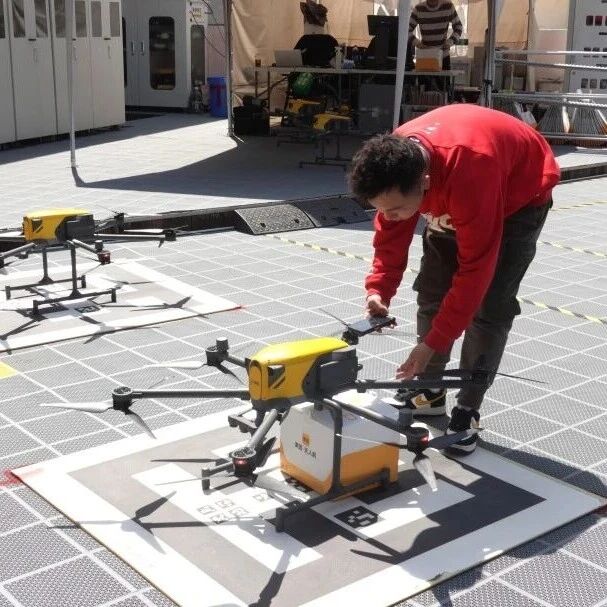
五部门:有序推进低空场景通信网络建设
Zhong Guo Zheng Quan Bao· 2026-02-10 20:22
Core Viewpoint - The implementation opinions aim to strengthen the synergy between the information and communication industry and low-altitude equipment manufacturing, enhancing technical capabilities, supply capacity, network support, and security assurance for low-altitude infrastructure development [1][2] Group 1: Implementation Goals - By 2027, the ground mobile communication network coverage rate for national low-altitude public air routes is expected to reach no less than 90% [1] - The development will focus on areas with conditional and demand-driven low-altitude flight activities, promoting the coordinated development of information infrastructure and low-altitude applications [1] Group 2: Specific Tasks - The implementation opinions propose advancing low-altitude scene communication network coverage based on demand, utilizing existing 5G infrastructure and optimizing beam patterns, antenna adjustments, and new base stations [2] - Encouragement is given to telecom companies to collaborate with relevant national departments to provide network coverage for low-altitude airspace above 300 meters and remote areas through a combination of satellite and ground mobile communications [2] Group 3: Infrastructure Development - The construction of a low-altitude intelligent network system will leverage the advantages of the information and communication industry, utilizing IoT, AI, cloud computing, and big data technologies [2] - The opinions emphasize the promotion of 5G-A industry development, upgrading existing ground base station functionalities, and reducing equipment costs while enhancing the integration of low-altitude equipment with communication technologies [2]
五部门发文推动低空经济“新基建” 2027年低空公共航路地面移动通信网络覆盖率不低于90%
Shang Hai Zheng Quan Bao· 2026-02-10 18:09
Core Viewpoint - The government document outlines the first capability requirements for drones, mandating a unique identification code and dedicated number for each compliant drone, aiming to enhance traceability and accountability throughout the drone lifecycle [1][3]. Group 1: Policy Objectives - The document sets a target for nationwide low-altitude public air route mobile communication network coverage to reach at least 90% by 2027, with a focus on developing typical low-altitude application scenarios in urban governance, logistics, and tourism [1][2]. - It emphasizes the need for improved network support capabilities, utilizing existing 5G infrastructure to enhance low-altitude communication networks based on demand [2]. Group 2: Industry Development - The policy encourages the advancement of 5G-A technology and the integration of low-altitude equipment with information communication systems, aiming to lower equipment costs and enhance technological maturity [2]. - The document highlights the importance of developing a regulatory framework for telecommunications business access, equipment management, and emergency communication, particularly in the context of drone operations [3]. Group 3: Safety and Regulation - A key focus is on safety assurance capabilities, with the introduction of a regulatory system that includes unique identification for drones, facilitating real-time monitoring of flight trajectories and operational data [3]. - The initiative aims to create a regulatory framework that ensures drones are traceable from production to decommissioning, addressing issues of unclear identity and responsibility in the current drone landscape [3][4].
五部门联合印发!利好低空经济
Qi Huo Ri Bao· 2026-02-10 10:29
Core Viewpoint - The implementation opinion aims to enhance the capabilities of the information and communication industry to support the development of low-altitude infrastructure, focusing on technology, industry supply, network support, and security assurance [1][2]. Group 1: Infrastructure Development - The opinion emphasizes the need to improve technical capabilities, industry supply capacity, network support, and security assurance in the information and communication sector [1]. - It advocates for a collaborative development of information infrastructure and low-altitude applications, focusing on areas with specific needs for low-altitude flight activities [2]. - By 2027, the goal is to achieve a ground mobile communication network coverage rate of no less than 90% for low-altitude public air routes [2]. Group 2: Technology and Innovation - The implementation opinion calls for the use of existing 5G mobile communication infrastructure to enhance low-altitude communication network coverage, particularly in areas below 300 meters [3]. - It encourages the integration of new information technologies such as IoT, AI, cloud computing, and big data to provide solutions for low-altitude intelligent network construction [3]. - The development of 5G-A industry is prioritized to upgrade existing ground station functionalities and reduce equipment costs [3]. Group 3: Organizational Support - The opinion stresses the importance of inter-departmental collaboration and provincial coordination to ensure the effective implementation of network deployment, technical capability enhancement, and application scenario cultivation [4]. - It highlights the need for diverse funding channels to support key technology breakthroughs, equipment development, and application growth in information infrastructure [4]. - Local governments are encouraged to increase support for the construction of information infrastructure, industry development, application promotion, and security assurance [4].
利好低空经济!工信部等五部门发布
Zhong Guo Zheng Quan Bao· 2026-02-10 08:36
Core Viewpoint - The Ministry of Industry and Information Technology, along with four other departments, has issued implementation opinions to strengthen the capacity building of the information and communication industry to support the development of low-altitude infrastructure Group 1: Low-altitude Communication Network Coverage - The implementation opinions propose that by 2027, the ground mobile communication network coverage along low-altitude public air routes should be no less than 90% [1] - It encourages the use of existing 5G infrastructure and various technical methods to enhance low-altitude mobile communication network coverage in specific areas [2] Group 2: Low-altitude Intelligent Network System - The opinions emphasize leveraging new-generation information technologies such as IoT, AI, cloud computing, and big data to provide solutions for building low-altitude intelligent network systems [3] - It encourages collaboration between telecom enterprises and air traffic management departments to support the development of digital systems for low-altitude traffic management services [3] Group 3: Experimental Verification - The implementation opinions highlight the need for telecom enterprises to conduct research and verification on key low-altitude communication technologies based on actual operational network environments [4] - It aims to enhance low-altitude perception capabilities through the development of collaborative networking and interference coordination technologies [4] Group 4: Enhancing Industry Supply Capacity - The opinions advocate for the active promotion of 5G-A industry development and the upgrading of existing ground station facilities [5] - It emphasizes the integration of low-altitude equipment with information communication and the exploration of research and development for communication, navigation, and monitoring function modules [5]
刚刚,大利好来了!
天天基金网· 2026-02-10 08:36
Core Viewpoint - The article discusses the implementation opinions on strengthening the capacity of the information and communication industry to support the development of low-altitude infrastructure, emphasizing its significance for the low-altitude economy and the need for collaboration between various sectors [2][7]. Summary by Sections Overall Requirements - The implementation aims to enhance the technical foundation, industrial supply capacity, network support, and security assurance of the information and communication industry, facilitating the construction of low-altitude communication networks and improving navigation precision [8][9]. Key Tasks - The document outlines several key tasks, including: - Promoting low-altitude communication network coverage, particularly in areas below 300 meters, utilizing existing 5G infrastructure and optimizing network deployment [10]. - Enhancing navigation precision services by leveraging the BeiDou ground enhancement system and public service platform [11]. - Supporting the construction of low-altitude intelligent network systems using advanced technologies like IoT, AI, and big data [11]. - Conducting trials and validations for key low-altitude communication technologies to improve perception capabilities [12]. - Advancing the 5G-A industry and reducing equipment costs while promoting innovation in low-altitude communication and navigation [12]. - Encouraging collaborative construction and sharing of low-altitude infrastructure among telecom enterprises [12]. Industry Management and Security - The implementation emphasizes the need for regulatory frameworks for telecom services, equipment management, and data security, ensuring a robust management system for low-altitude applications [13]. - It also highlights the importance of establishing a network and data security assurance system to protect critical information infrastructure [13]. Frequency Resource Optimization - The document calls for research on low-altitude radio frequency resource planning to support communication and monitoring needs in the low-altitude economy [14]. Organizational Support - It stresses the importance of inter-departmental collaboration and local government involvement to ensure the effective implementation of the proposed measures, including funding and technical support for infrastructure development [15].

低空经济迎利好!五部门联合印发
证券时报· 2026-02-10 08:07
Core Viewpoint - The article discusses the implementation opinions released by the Ministry of Industry and Information Technology and other departments to strengthen the information and communication industry's capacity to support the development of low-altitude infrastructure, which is crucial for the growth of the low-altitude economy [2][4]. Summary by Sections Overall Requirements - The initiative aims to enhance the technical foundation, industrial supply capacity, network support capability, and security assurance of the information and communication industry, facilitating the construction of low-altitude communication networks and intelligent network systems [7][8]. Key Tasks - The implementation opinions outline several key tasks, including: - Promoting low-altitude communication network coverage based on demand, particularly in areas below 300 meters, utilizing existing 5G infrastructure and optimizing network capabilities [9]. - Exploring multi-source detection capabilities for monitoring critical areas and enhancing navigation precision using the Beidou system and 5G networks [10]. - Supporting the construction of low-altitude intelligent network systems by leveraging new information technologies such as IoT, AI, and big data [10]. - Conducting experimental validations to improve low-altitude communication technologies and develop replicable solutions [11]. - Enhancing industrial supply capabilities by advancing 5G-A technology and reducing equipment costs [11]. - Promoting collaborative and standardized construction of low-altitude infrastructure [11]. - Establishing regulatory frameworks for telecommunications services and ensuring data security [12]. Organizational Support - The implementation opinions emphasize the need for inter-departmental collaboration and local government involvement to ensure the effective deployment of networks, technology enhancement, and safety measures [13].

低空经济利好!五部门发布
Xin Lang Cai Jing· 2026-02-10 07:34
Core Viewpoint - The implementation opinion released by the Ministry of Industry and Information Technology and other departments aims to strengthen the capacity of the information and communication industry to support the development of low-altitude infrastructure, emphasizing the importance of enhancing industrial supply capabilities and promoting the development of 5G-A technology [1][10]. Overall Requirements - The initiative is guided by Xi Jinping's thoughts and aims to enhance the technical foundation, industrial supply capacity, network support capability, and security assurance of the information and communication industry while promoting the construction of low-altitude communication networks [3][12]. - By 2027, the goal is to achieve a ground mobile communication network coverage rate of no less than 90% for low-altitude public air routes, improve multi-sensor integration solutions, and enhance navigation service levels [4][13]. Key Tasks - **Low-altitude Communication Network Coverage**: Focus on areas below 300 meters, utilizing existing 5G infrastructure and optimizing network coverage through various methods [5][14]. - **Multi-Detection Collaborative Service Capability**: Enhance detection and monitoring capabilities in key areas such as military facilities and large events, improving the ability to track low-altitude aircraft [6][15]. - **Navigation Precision Services**: Utilize the BeiDou ground enhancement system to improve the positioning speed and accuracy of low-altitude aircraft [6][15]. - **Low-altitude Intelligent Network System**: Leverage new information technologies like IoT and AI to support the development of low-altitude traffic management systems [7][16]. - **Trial Verification**: Conduct research and validation on key technologies for low-altitude communication, aiming to develop replicable solutions [7][16]. Industry Supply Capacity - The initiative promotes the development of the 5G-A industry, upgrades existing ground station functionalities, and accelerates the maturity of sensor fusion technologies while gradually reducing equipment costs [7][16]. Collaborative and Standardization Efforts - The plan encourages the sharing and collaborative construction of low-altitude infrastructure, supporting the establishment of a standard system for low-altitude technology industry development [8][17]. Regulatory Management - The initiative includes research on regulatory frameworks for telecommunications business access, equipment management, and emergency communication, aiming to enhance the management of drone communication resources [8][17]. Network and Data Security - A security assurance system for information infrastructure will be explored, focusing on network security and data protection measures [8][17]. Frequency Supply Optimization - Research will be conducted on low-altitude radio frequency resource planning to support the development of low-altitude communication and aircraft operations [8][17]. Organizational Assurance - Strengthening inter-departmental collaboration and local government coordination is essential for the successful implementation of the initiative, with a focus on funding and support for infrastructure development [9][18].