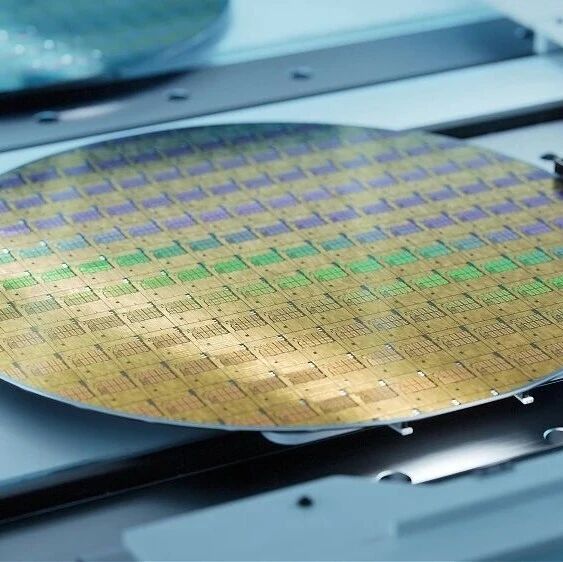
8英寸芯片

Search documents
中芯国际,业绩超预期
DT新材料· 2026-02-10 16:05
Core Viewpoint - SMIC reported a record high performance for Q4 2025, exceeding expectations with significant revenue and profit growth driven by increased wafer sales and improved capacity utilization [2][3]. Financial Performance - In Q4 2025, SMIC achieved total revenue of 17.81 billion RMB, a year-on-year increase of 11.9% [5] - The net profit attributable to shareholders was 1.22 billion RMB, reflecting a 23.2% increase compared to the same period last year [5] - For the entire year of 2025, SMIC's unaudited revenue reached 67.32 billion RMB, up 16.5% year-on-year, with a net profit of 5.04 billion RMB, marking a 36.3% increase [2] Capacity and Production - The capital expenditure for 2025 was 8.1 billion USD, with an 8-inch standard logic monthly capacity of 1.059 million wafers, an increase of approximately 110,000 wafers year-on-year [3] - The total shipment volume was around 9.7 million wafers, with an average capacity utilization rate of 93.5%, up 8 percentage points year-on-year [3] Market Trends - Due to surging demand, Chinese wafer fabs have raised the prices of 8-inch chip processes by about 10%, with some orders seeing increases of up to 20% [4] - This price increase trend is expected to continue until 2026, affecting various processes and clients across the industry [4]


中芯国际第四季度净利大增23%
2 1 Shi Ji Jing Ji Bao Dao· 2026-02-10 11:05
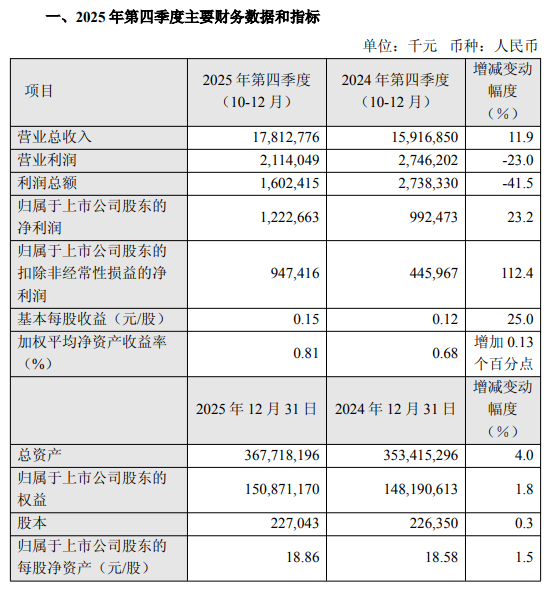
Core Viewpoint - SMIC reported a mixed performance for Q4 2025, with revenue growth but a significant decline in profit, indicating challenges in profitability despite increased sales volume and capacity utilization [1][4]. Financial Performance - Total revenue for Q4 2025 reached 17.81 billion CNY, an increase of 11.9% year-on-year [2]. - Gross profit was 3.10 billion CNY, with a gross margin of 17.4% [1]. - Total profit decreased by 41.5% to 1.60 billion CNY compared to the same quarter in 2024 [2]. - Net profit attributable to shareholders was 1.22 billion CNY, up 23.2% year-on-year [1][2]. - Basic earnings per share increased by 25.0% to 0.15 CNY [2]. Capacity and Production - The company maintained a capacity utilization rate of 95.7% in Q4 2025 [1]. - For the full year 2025, SMIC's sales revenue was 9.33 billion USD, a 16.2% increase year-on-year, with a gross margin of 21.0% [4]. - The total output for the year was approximately 9.7 million wafers, with an average capacity utilization rate of 93.5%, up 8 percentage points year-on-year [4]. Future Outlook - For Q1 2026, the company expects revenue to remain stable quarter-on-quarter, with a gross margin forecasted between 18% and 20% [4]. - The capital expenditure for 2025 was reported at 8.10 billion USD, with expectations for similar levels in 2026 [4]. Market Context - The semiconductor industry is experiencing a shift towards localization, impacting the supply chain dynamics [4]. - Due to increased demand, prices for 8-inch chips have risen by approximately 10%, with some orders seeing increases of up to 20% [6]. - Industry experts predict that strong long-term demand for semiconductors will continue to drive capacity growth, particularly in wafer foundries and power semiconductors [7].
中芯国际第四季度净利大增23%
21世纪经济报道· 2026-02-10 10:59
Core Viewpoint - The financial performance of SMIC in Q4 2025 shows a mixed picture with revenue growth but a significant decline in total profit, indicating challenges in the semiconductor industry despite increased sales and production capacity [1][4]. Financial Performance Summary - In Q4 2025, SMIC reported total revenue of 17.81 billion CNY, a year-on-year increase of 11.9% [2]. - Gross profit for the same quarter was 3.10 billion CNY, with a gross margin of 17.4% [1]. - Total profit decreased by 41.5% to 1.60 billion CNY, while net profit attributable to shareholders rose by 23.2% to 1.22 billion CNY [2][1]. - The company achieved a sales revenue of 2.49 billion USD in Q4, with a gross margin of 19.2% and a capacity utilization rate of 95.7% [1]. Yearly Performance Overview - For the entire year of 2025, SMIC's sales revenue reached 9.33 billion USD, reflecting a 16.2% year-on-year growth, with a gross margin of 21.0%, up by 3.0 percentage points [4]. - Capital expenditure for 2025 was reported at 8.10 billion USD, with an annual average capacity utilization rate of 93.5%, an increase of 8 percentage points year-on-year [5]. Future Outlook - SMIC provided guidance for Q1 2026, expecting stable sales revenue and a gross margin between 18% and 20% [5]. - The company anticipates that its revenue growth will exceed the average of comparable peers in 2026, with capital expenditure remaining roughly the same as in 2025 [5]. Market Context - The semiconductor industry is experiencing a shift towards localization, which is expected to continue influencing SMIC's performance throughout 2025 [4]. - Due to increased demand, prices for 8-inch chips have risen by approximately 10%, with some orders seeing increases of up to 20% [8].

李亚鹏7天涨粉197万,直播提现29万元全捐了,一文详解唇腭裂
21世纪经济报道· 2026-01-21 05:19
Core Viewpoint - The article discusses the operational challenges faced by the Yanran Angel Children's Hospital due to unpaid rent, which has led to public concern and increased donations to the Yanran Angel Foundation [1][8]. Group 1: Hospital and Foundation Operations - Yanran Angel Children's Hospital is facing potential closure due to unpaid rent, prompting public donations to support its operations [1]. - The Yanran Angel Foundation, established to assist children with cleft lip and palate, is legally separate from the hospital and cannot publicly solicit donations [12]. - The hospital continues to operate normally, providing cleft lip and palate surgeries, with ongoing support from the foundation [8][12]. Group 2: Cleft Lip and Palate Awareness - Cleft lip and palate, known as "harelip," affects approximately 1 in every 600 to 1000 newborns, leading to various health and social challenges [9]. - The psychological impact on patients is significant, with many facing bullying and discrimination throughout their lives [10]. - The article highlights the long journey of treatment for cleft lip and palate, which often spans from infancy to adulthood, requiring multiple surgeries and ongoing rehabilitation [11]. Group 3: Community Response and Support - The public response to the hospital's situation has been overwhelmingly positive, with many individuals contributing donations, reflecting a strong community support network [8][12]. - Personal stories of patients like Pengpeng, who received free surgery through the foundation, illustrate the hospital's impact on families in need [7][12]. - The article emphasizes the importance of continued public awareness and support for cleft lip and palate treatment, showcasing a shift towards a more inclusive understanding of these conditions [15][18].

A股指数全线飘红,芯片股爆发,金银股大涨,黄金首次站上4840美元
21世纪经济报道· 2026-01-21 02:33
Market Overview - The Asia-Pacific stock markets opened lower due to the impact of a significant decline in the US stock, bond, and currency markets, but A-shares turned positive with the ChiNext Index rising over 1% [1] - The Shanghai Composite Index rose to 4123.49, gaining 9.84 points or 0.24%, while the Shenzhen Component Index increased by 110.56 points or 0.78% [2] Sector Performance - The storage chip sector continued its strong performance, with stocks like Yingfang Microelectronics and Puran Technology seeing significant gains [2] - The GPU sector also experienced a surge, with Longxin Technology hitting a daily limit increase and Haiguang Information rising over 13% to reach a new high [2] - Gold and silver stocks saw substantial increases, with Hunan Silver achieving a consecutive limit increase and other mining stocks following suit [3] Commodity Prices - Gold prices reached a historical high, surpassing $4840 per ounce, with a peak at $4844.24, while silver also crossed $95 per ounce for the first time [3] - The increase in precious metal prices is attributed to the easing of dollar liquidity and escalating global geopolitical tensions [3] International Market Trends - Japanese government bonds are experiencing a historic sell-off, with the 20-year bond yield dropping 5 basis points to 3.295% and the 40-year bond yield falling 6.5 basis points to 4.145% [5] - The global bond market is facing a collective sell-off, with Japanese bonds entering a new yield era above 4% for the first time in over 30 years [5] Company Actions - Major companies in the semiconductor industry, including SMIC, have collectively raised prices, with 8-inch chips seeing increases of up to 20% [5]

中芯国际等巨头集体提价 8英寸芯片最高涨20%
Ge Long Hui· 2026-01-21 01:11
Core Viewpoint - The global 8-inch wafer supply and demand is entering a period of imbalance, primarily due to strategic capacity reductions by TSMC and Samsung, leading to a projected 2.4% shrinkage in global 8-inch foundry capacity by 2026 [1] Group 1: Industry Overview - The demand for AI-driven power management chips (Power IC) remains strong, pushing the average industry capacity utilization rate back up to a high of 90% [1] - Chinese mainland wafer foundries are emerging as alternative solutions to meet the demand for 8-inch chips, with price increases expected between 5% and 20% [1] Group 2: Company-Specific Insights - TSMC currently operates four 8-inch wafer fabs and one 6-inch fab in Taiwan, with a monthly production capacity of approximately 528,000 wafers. A complete exit from the 8-inch market by 2027 would require continued capacity reductions starting in 2026 [1] - Samsung Electronics plans to reduce 8-inch wafer production starting in the second half of 2025, reallocating resources to compete in the 12-inch wafer market. Samsung's monthly production capacity for 8-inch wafers is also around 528,000 wafers [1] - United Microelectronics Corporation (UMC) has an 8-inch wafer monthly production capacity that previously exceeded 360,000 wafers, with a current utilization rate of about 70%. UMC is optimistic about continued growth in operations through 2026 by focusing on specialized process technologies [1] - Semiconductor Manufacturing International Corporation (SMIC) operates three 8-inch fabs and four 12-inch fabs, with a historical monthly production capacity of 1,023,000 wafers (equivalent to 8-inch) as of Q3 2025, achieving a capacity utilization rate of 95.8%, the highest since Q2 2022 [1] - Hua Hong Semiconductor demonstrates competitive strength in specialty processes, with some 8-inch production lines nearing 100% utilization, benefiting from orders transferred from international power semiconductor giants [1]
中芯国际等巨头集体提价,8英寸芯片最高涨20%
21世纪经济报道· 2026-01-21 00:52
Core Viewpoint - The article discusses the structural shift in the 8-inch wafer market due to the increasing demand for AI-related chips and the strategic reduction of production capacity by major players like TSMC and Samsung, leading to a supply-demand imbalance and price increases in the industry [1][4]. Group 1: 8-inch Wafer Supply and Demand Dynamics - The global supply of 8-inch wafers is entering a period of imbalance, with a projected 2.4% decline in total production capacity by 2026 due to strategic capacity reductions by TSMC and Samsung [1][3]. - The demand for power management chips driven by AI applications is robust, pushing the average capacity utilization rate in the industry back up to 90% [1][4]. - The shift from overcapacity to price increases is evident, with wafer foundries expected to raise prices by 5% to 20% [1][4]. Group 2: Impact on Chinese Wafer Foundries - Chinese wafer foundries are emerging as key players to fill the global capacity void, benefiting from the structural changes in the market [5][6]. - Major Chinese companies like SMIC have reported significant increases in production capacity, with SMIC's monthly capacity reaching 1.023 million 8-inch equivalent wafers and a utilization rate of 95.8% [7]. - The price of 8-inch chips has increased by approximately 10%, with some orders seeing price hikes of up to 20% due to the tightening supply-demand situation [8]. Group 3: Long-term Trends and Future Outlook - Despite the current boom in 8-inch wafer production, there is a long-term trend of migrating power management and display driver chips to 12-inch nodes, which necessitates that Chinese manufacturers also accelerate their 12-inch specialty process layouts [8][9]. - The global semiconductor industry is expected to increase 12-inch wafer production capacity to a historical high of 9.6 million wafers per month by 2026, driven by strong demand [8][9].

晶圆巨头,“放弃”八英寸
半导体行业观察· 2026-01-19 01:54
Core Viewpoint - The global foundry market is witnessing a shift as leading companies like TSMC and Samsung Electronics reduce traditional processes such as 8-inch wafer production, focusing instead on advanced nodes. This presents an opportunity for Chinese foundries like SMIC and Hua Hong Semiconductor to capture market share, especially with the rising demand for power semiconductors driven by the AI industry [1][2]. Group 1: Market Dynamics - TSMC has announced plans to close its 6-inch and 8-inch wafer production lines next year, while Samsung is also expected to cut some of its 8-inch wafer capacity. TrendForce predicts a 2.4% decline in global 8-inch wafer production this year due to these reductions [1]. - Despite lower single-chip output from 8-inch processes compared to the mainstream 12-inch processes, 8-inch production is favored for small-batch, multi-variety manufacturing, making it a key focus for smaller foundries [1]. - The demand for power semiconductors, primarily produced on 8-inch lines for home appliances, automotive, and data centers, is increasing due to the growth of AI, leading to a projected price increase of 5% to 20% for older process nodes this year [1]. Group 2: Chinese Foundries' Position - Chinese foundries are emerging as alternatives for 8-inch chip production, with companies like SMIC, Hua Hong Semiconductor, and Huazhong Microelectronics providing these services. Due to surging demand, Chinese foundries have raised 8-inch chip prices by approximately 10% [2]. - Hua Hong Semiconductor's 8-inch production lines are nearing full utilization, largely due to orders from leading automotive chip manufacturers like Infineon and ON Semiconductor [2]. - Analysts note that as the U.S. imposes restrictions on advanced semiconductors in China, Chinese firms are strengthening their capabilities in older nodes, solidifying their position in the 8-inch wafer foundry market [2]. Group 3: Industry Outlook - TSMC plans to invest between $52 billion to $56 billion in capital expenditures this year to meet AI market demands, exceeding market expectations by over 20%. The company has also raised its revenue growth target for 2029 from an annual average of 20% to 25% [2]. - Samsung is accelerating the production of 3nm and below process technologies to cater to the orders from major global tech clients [2]. - Ongoing semiconductor industry conflicts between the U.S. and China may pose risks, as global automakers are hesitant to rely on Chinese foundries for semiconductor production to mitigate dependency on Chinese components [2].