
AI巡检系统

Search documents
国内物业服务制度演进——以万科物业、华润物业等代表性企业为例
Sou Hu Wang· 2026-04-01 06:35
Core Insights - The Chinese property management industry has evolved from "property management offices" to "modern service providers" over the past 40 years, with over 60 listed companies and a management scale exceeding 30 billion square meters by 2024 [1] - The industry is undergoing a paradigm shift from being "affiliated with developers" to becoming "independent space operators," with Vanke Property showcasing a dual-driven model of "technology-organization" through its "Butterfly City" strategy [1] Industry Evaluation Paradigm Shift - The traditional ranking system based on managed area and revenue has shown limitations during the industry's deep adjustment period, as scale expansion no longer guarantees profit growth [2] - The unique property rights structure in China, characterized by fragmented ownership, necessitates a focus on the ability of property service companies to coordinate diverse interests and integrate dispersed powers [2] Path Differentiation in Property Rights Integration - Vanke Property is reducing its reliance on affiliated developers, demonstrating a "de-dependence" practice with its "Butterfly City" strategy, which emphasizes spatial intensive operations and aims to create over 100 Butterfly Cities by 2025 [3][4] - Poly Property and China Resources Vientiane Life leverage their state-owned enterprise backgrounds to maintain stable property rights integration, with Poly Property projected to exceed 15 billion yuan in revenue in 2024 [3] Governance Coordination Capability - Leading property service companies are transitioning from basic service providers to "community platform operators," with Vanke Property implementing a dual spiral governance structure combining technology and humanistic approaches [5][6] - Green Town Service focuses on high-quality service but faces challenges in converting quality investments into profitability, while China Overseas Property excels in cost control but is conservative in market expansion [7] Technology Empowerment Capability - Technology empowerment is crucial for long-term competitiveness, with Vanke Property exploring the restructuring of production factors through its "Butterfly City" model, achieving significant economies of scale [8][9] - China Resources Vientiane Life has a strong technical advantage in commercial operations but lags in residential property technology applications, limiting its expansion potential in that market [10] Challenges for Small and Medium Enterprises - Small and medium property companies face significant capability gaps in technology investment, with top 100 companies' personnel costs comprising 54.71% of operating costs, while tech investment remains below 5% [11] - The future competition in the property service industry will focus on "governance capability" rather than mere scale, with challenges such as declining property fee collection rates and insufficient participation from owner self-governance organizations [12]

AI是泡沫?50家企业实战证明:真正的机会藏在“落地体系”里
3 6 Ke· 2025-11-18 12:31
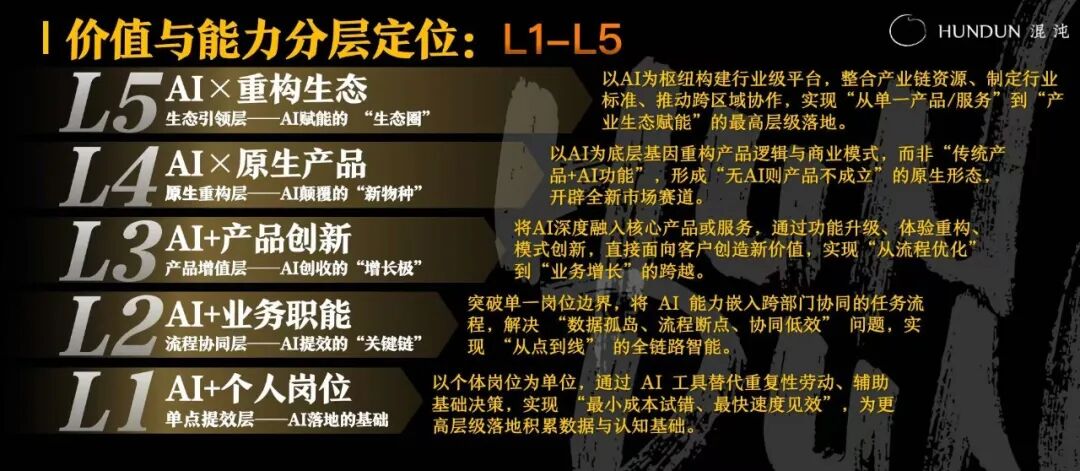
Core Insights - The article discusses the cyclical nature of AI investment, highlighting a pattern where enthusiasm peaks at the beginning of the year but wanes by year-end due to a lack of tangible returns [1][3] - It emphasizes that AI is not merely a short-term bubble or a tool exclusive to large companies, but rather a technology that requires a strategic approach to integrate with business operations for effective implementation [3][4] Group 1: AI Investment Trends - Many companies experience a cycle of initial excitement followed by project stagnation due to unmet expectations and a disconnect between technology and business needs [1][2] - A significant number of enterprises abandon AI initiatives midway, with only about 300 out of thousands achieving real results [2] Group 2: Identifying Opportunities and Pitfalls - Companies that successfully leverage AI focus on the "middle ground" of integrating AI with their specific business needs, avoiding the extremes of macro-level concepts and micro-level techniques [3][4] - Common pitfalls include investing in flashy AI projects without addressing real business problems, leading to low usage rates and increased customer complaints [5][6] Group 3: Effective AI Implementation Strategies - Successful AI applications often target high-frequency, repetitive tasks, yielding quick returns on investment and building confidence in AI's value [7][12] - Companies that integrate AI into their core products or services can create new revenue streams and enhance operational efficiency [15][16] Group 4: The Five-Level Implementation Framework - The article introduces a "L1-L5" framework for AI implementation, which helps businesses systematically approach AI integration based on their specific industry needs [9][11] - Levels L1 and L2 focus on validating AI's value with minimal investment and optimizing core processes, while levels L3 to L5 emphasize transforming AI into a revenue-generating engine and building industry-wide ecosystems [14][18] Group 5: Recommendations for Different Business Sizes - Small and medium-sized enterprises are advised to start with low-cost, high-impact AI applications to achieve quick wins [21] - Mature companies should focus on breaking down data silos and embedding AI into their core operations to gain a competitive edge [22] - Leading firms are encouraged to develop AI-native products and build ecosystems to capitalize on long-term market opportunities [23]

地产诞生了“新物种”
Hua Er Jie Jian Wen· 2025-09-04 08:03
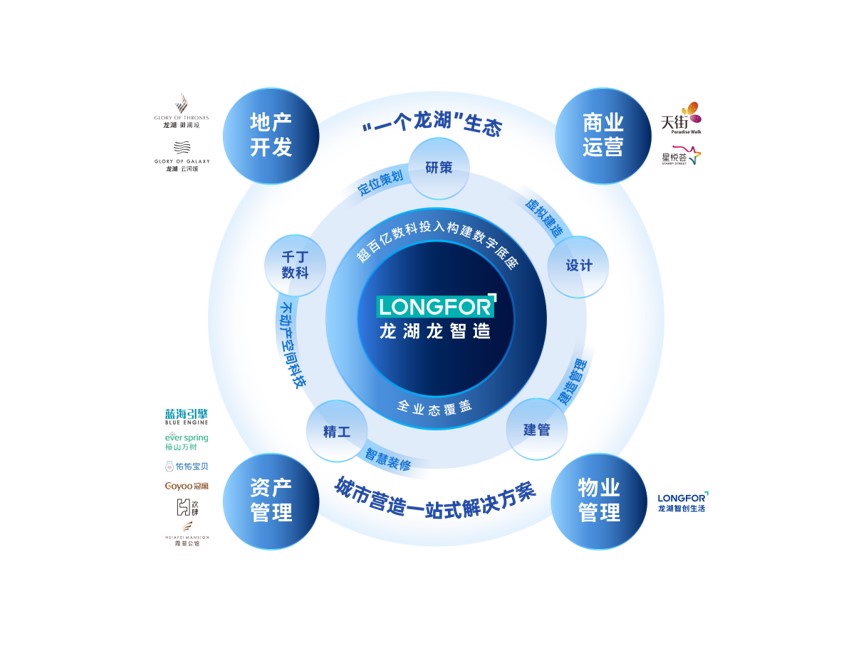
Core Viewpoint - The real estate industry is transitioning from an era focused on scale, land reserves, and leverage to one that prioritizes operating cash flow, future profitability, and the growth potential of new businesses [2][3]. Group 1: Industry Trends - The trend of significant losses continues in the real estate sector, indicating a challenging bottoming process [3]. - The performance of Longfor Group's mid-year report showcases a different model, achieving positive profitability and over 2 billion yuan in net operating cash flow [3][4]. - The shift from traditional developers to service-oriented firms is highlighted, emphasizing the importance of technology and efficiency in enhancing property value [3][8]. Group 2: Longfor's Business Model - Longfor's transformation to a capability-driven model integrates over 30 years of development experience and digital technology, positioning itself as a light-asset service brand [4][8]. - The new business model, Longfor Longzhizao, offers a comprehensive "one-stop urban construction solution" covering the entire lifecycle of projects [4][6]. - The revenue from Longfor Longzhizao reached 700 million yuan in the first half of 2025, with a year-on-year growth rate of 65% [6]. Group 3: Client and Project Success - Longfor Longzhizao secured 62 new construction projects in the first half of 2025, maintaining its position in the industry's top tier [6]. - The client base has shifted, with 63.3% of new projects coming from central state-owned enterprises and government entities, reflecting trust in Longfor's brand and delivery capabilities [6][9]. - Successful case studies, such as the Chengdu Xijingtai project, demonstrate Longfor's ability to resolve complex issues and deliver value to stakeholders [7][9]. Group 4: Technological Empowerment - The integration of AI and digital technologies is central to Longfor Longzhizao's operations, enhancing efficiency and precision in project execution [8][9]. - Technologies like BIM and VR have significantly reduced design time and improved project outcomes, showcasing the potential for value reconstruction in the real estate sector [8][9]. - Longfor's approach illustrates that real estate companies can extend their capabilities beyond traditional development boundaries into broader urban service areas [9][11]. Group 5: Future Outlook - Longfor's mid-year report indicates that as inventory decreases, the impact of real estate development on the group will lessen, while operational and service businesses will drive profit growth [11]. - The transition to a new era in real estate emphasizes the need for product strength, service capability, technological advancement, and comprehensive operational skills [11].

观茶|AI成门店督导,“智能奶茶”时代全面到来?
Nan Fang Nong Cun Bao· 2025-07-31 14:34
观茶|AI成门店 督导,"智能奶 茶"时代全面到 来?_南方+_南 方plus 日前,茶饮品牌 沪上阿姨与蚂蚁 集团子公司数字 蚂力宣布达成战 略合作,率先在 业内引入"AI督 导员"系统,通 过高精度多模态 大模型,将传统 人工巡店的"人 海战术"升级为 数字化监控,为 行业的智能化管 理变革注入了新 动力。 在"万店时代"重 构茶饮门店管理 茶饮品牌在门店 管理上,一般会 由督导定期进行 现场巡店,一名 督导员的有效管 理半径通常不超 过20家门店。对 沪上阿姨这类头 部品牌而言,突 破万店规模将面 临严峻的管理挑 战,依赖传统人 工督导已然捉襟 见肘。 数字蚂力推出 的"AI督导员"基 于多模态大模型 技术,可精准识 别门店内的工作 人员、行为、物 品与环境状态, 识别准确率超过 90%。其技术能 力可以覆盖食品 安全监控、标准 化生产保障、运 营效率管理等门 店运营的关键环 节。"有工具的 帮助,我不需要 花大量时间去反 复核对,而是能 把更多精力放在 服务顾客和激励 团队上,工作效 率更高了。"一 位沪上阿姨店长 说。 AI技术将督导员 从"找问题"中解 放,转向"解决 问题"。当系统 自动完成标准 ...
