
AI工厂解决方案

Search documents
《2025中国科创企业创新力TOP500》,联想集团成功跻身总榜单前十
Xin Lang Cai Jing· 2026-01-01 11:32
Core Findings - Innovation has become the core driving force for the high-quality development of Chinese enterprises, with those investing in continuous innovation and achieving significant results leading the way in economic growth [1][9]. Group 1: Innovation Leaders - Lenovo Group ranks among the top ten in the "2025 China Science and Technology Innovation Enterprises Innovation Power TOP500" due to its breakthroughs in AI, VR, and new materials, showcasing its role as an innovation leader [2][8]. - Lenovo's "full-stack AI" strategy and "AI factory" solutions set a benchmark for innovation in China, demonstrating its commitment to driving industrial upgrades [2][8]. Group 2: Innovation Investment and Technical Accumulation - Lenovo invests over 5% of its revenue annually in R&D, establishing a global innovation research and development system with over 200 cutting-edge technologies [3]. - ZTE Corporation also shows significant innovation investment in chips, 5G, and cloud computing, contributing to China's communication technology autonomy [3]. Group 3: Innovation Outcomes and Industrial Applications - Lenovo's innovations translate into practical applications through products like AI PCs and AI workstations, showcasing the conversion of innovation into productivity [5]. - BYD has become a leader in the global new energy vehicle industry through innovations in battery technology, such as its blade battery and DM-i hybrid technology [5]. Group 4: Innovation Ecosystem and Industrial Empowerment - Lenovo is building an open and shared innovation ecosystem through platforms like "Lenovo Innovation Open Day" and "Lenovo TechWorld," collaborating with global AI chip manufacturers and industry applications [6]. - Alibaba and Baidu are also contributing to the innovation ecosystem, with Alibaba providing infrastructure through Alibaba Cloud and Baidu supporting AI development with its deep learning platform [6][12]. Group 5: Recognition and Impact - Lenovo's achievements in innovation have been recognized by various authoritative institutions, affirming its status as a benchmark for innovation in Chinese enterprises [7][8].

十大券商一周策略:跨年行情蓄势待发,风格切换可能会越来越强,关注低位价值板块
Sou Hu Cai Jing· 2025-12-15 00:08
Group 1 - The central economic work conference has set the tone for 2026 economic work, with expectations for a "cross-year market" and "spring excitement" rising among broker reports [1] - The policy focus on "expanding domestic demand and countering involution" is expected to lead the market out of deflation, with technology sectors like AI computing power and commercial aerospace being key offensive directions [1][4] - There is a growing preference for low-volatility, high-dividend assets, indicating a potential market style switch [1][3] Group 2 - Citic Securities suggests seeking intersection in configurations, focusing on products with overseas exposure and positive changes in domestic demand as catalysts [2] - The report emphasizes that while external demand products have been validated, the potential for exceeding expectations is limited, and investors' low expectations could lead to valuation elasticity if domestic demand surprises positively [2] - The focus remains on industries where China has a global share advantage, such as non-ferrous metals, chemicals, and new energy, with an emphasis on companies that can enhance global pricing power [3] Group 3 - The market is expected to enter a new phase of recovery, with significant support from previous price levels and a shift in investor sentiment following recent adjustments [5] - Structural risks are emerging, which could hinder the sustained strength of advantageous themes, as indicated by high transaction concentration [5][6] - The focus on low-volatility and stable return assets is increasing, with potential interest in service consumption sectors like aviation, duty-free, and hotels [3][12] Group 4 - The central economic work conference has highlighted the importance of expanding domestic demand and addressing involution, clarifying the path out of deflation [7][19] - The emphasis on enhancing the income of middle and low-income groups and stimulating private investment indicates a shift towards endogenous growth drivers [7] - The conference also pointed out the need for a unified national market and the deepening of anti-involution measures, which are crucial for the recovery of corporate profits and subsequent improvements in resident income [8] Group 5 - The new policy deployment is expected to support the A-share market's cross-year performance, with a focus on TMT and advanced manufacturing sectors [9] - The historical performance of the A-share market during the start of the "13th Five-Year" and "14th Five-Year" plans suggests a positive outlook for 2026 [9] - The report indicates that the market may experience fluctuations due to various domestic and international events, but the overall economic policy is expected to remain supportive [9] Group 6 - The AI industry is characterized by a competition in full-stack capabilities and deep penetration into various application scenarios [10][11] - Domestic firms are focusing on building a full-stack system in the computing hardware sector, with significant advancements in AI solutions and infrastructure [11] - The demand for AI infrastructure is expected to drive growth in related sectors, including telecommunications and high-spec data centers [11][16] Group 7 - The commercial aerospace sector is entering a period of heightened activity, supported by new policies and government initiatives [17] - The establishment of a national commercial aerospace development fund aims to attract private investment and enhance the capabilities of commercial companies [17] - Recent advancements in satellite internet and frequent launches are expected to benefit the entire aerospace industry chain [17]
策略周评20251214:AI应用端多场景落地试点
Soochow Securities· 2025-12-14 07:35
Group 1 - The core viewpoint of the report highlights that the AI industry is entering a critical phase characterized by a competition in full-stack capabilities and deep penetration into various application scenarios [2][3] - Domestic manufacturers are focusing on breakthroughs in full-stack systems within the computing hardware sector, with Lenovo launching its "AI Factory" solution and Huawei Cloud introducing a cross-regional computing resource scheduling system [3] - The application side is witnessing multiple breakthroughs, with AI technology evolving from a tool to a core engine of the industry, as seen in various sectors such as content creation and logistics [4] Group 2 - Significant events include OpenAI's release of GPT-5.2, which enhances performance in professional tasks, and Disney's $1 billion investment in OpenAI, marking a deep integration of traditional content with AI technology [5][6] - The report indicates that the competition focus in the era of large models has shifted from mere model capability upgrades to the construction of comprehensive systems, with intelligent agents becoming the core carriers of industrial upgrades [6] - The report recommends several companies and sectors, including those involved in AI applications, semiconductor ecosystems, and equipment exports, highlighting potential investment opportunities in these areas [7][15]
环球问策|构建全链路智算体系,联想AI工厂引领产业转型
Huan Qiu Wang· 2025-12-10 06:54
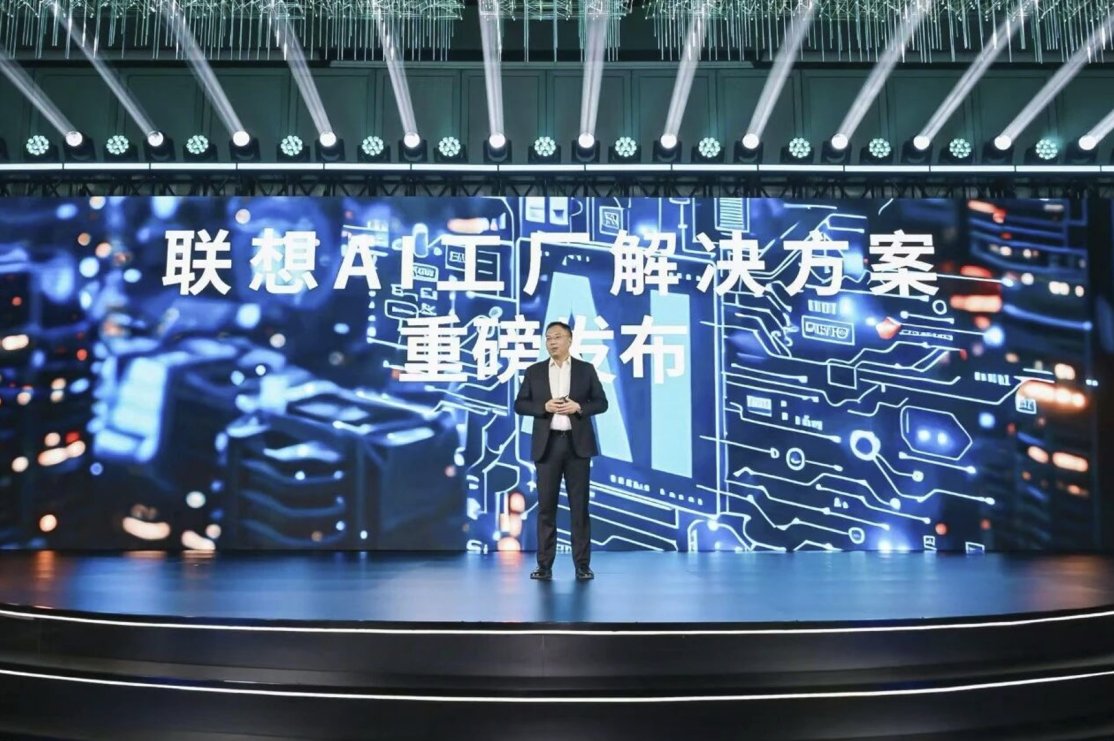
Core Insights - The AI industry is rapidly evolving, with a consensus forming that by 2026, the performance iteration of large models will stabilize, allowing companies to focus on productization of large models [1] - Lenovo has launched the "AI Factory" solution and new high-end AI servers, aiming to inject strong momentum into China's AI industry for high-quality development [3][10] Industry Developments - Lenovo's "AI Factory" solution aims to transform traditional data centers into efficient AI factories, utilizing customer data as raw materials to produce intelligent models and services [10][11] - The launch of Lenovo's "万全异构智算平台4.0" addresses the diverse computing power needs in China, enabling efficient collaboration among different brands of CPUs and GPUs [6][12] Technological Innovations - The new platform has achieved significant performance improvements, including a 35% reduction in pre-training time and a 50% reduction in post-training time, along with a 60% increase in bandwidth utilization for inference scenarios [6] - Lenovo's WA8080a G5 server features a 10U chassis design to support GPUs with power consumption exceeding 1000 watts, addressing the rapid evolution of GPU technology [9] Strategic Positioning - Lenovo's approach emphasizes a complete ecosystem, integrating hardware and software to overcome the challenges of heterogeneous computing power in China [12] - The company aims to provide a comprehensive service system that addresses various client needs, from data governance to AI production management [11]

加速“碎片化”AI应用规模化落地,算力竞争迎来新范式
Xin Lang Cai Jing· 2025-12-09 12:05
Core Insights - The article discusses the transformative impact of AI on various industries, emphasizing the shift towards a new paradigm characterized by "large models + large computing power + large data" as the foundation for AI 2.0 development [1][9] - It highlights the rapid growth of China's AI server market, which is expected to more than double by mid-2025 compared to the same period in 2024, driven by increasing demand [3][9] - The article outlines the evolution of large models, focusing on their deepening, broadening, and lengthening capabilities, which are essential for advancing AI technology [11][12] Industry Trends - The AI infrastructure development is entering a three-phase cycle: short-term acceleration, medium-term expansion, and long-term structural upgrades, necessitating a shift from merely stacking hardware to providing systematic services [10][12] - The penetration rate of AI in core products has increased from 5% in 2018 to an estimated 60% by next year, indicating a significant market evolution [12] - The global AI competition landscape is changing, with companies needing to balance between international and domestic GPU resources amid geopolitical tensions [5][12] Company Developments - Lenovo has introduced the "AI Factory" solution, aiming to streamline AI application development and deployment processes, transforming complex tasks into a standardized, efficient production line [15][16] - The Lenovo Wanquan Heterogeneous Intelligent Computing Platform 4.0 has been upgraded to support various computing scenarios, achieving a throughput of over 12,000 Tokens/s for local model deployment [16] - Lenovo's approach emphasizes the importance of a robust foundational support system to facilitate the transition from traditional computing centers to AI factories, helping businesses reduce initial barriers and operational costs [16]
对话联想基础设施业务群黄山、周韬:单纯算力中心面临生存危机,AI工厂如何重构商业闭环
Feng Huang Wang· 2025-12-07 02:08
Core Insights - The article discusses the transition of China's AI industry from a phase of intense competition to a focus on practical applications, highlighting Lenovo's initiatives in this transformation [1][10] Group 1: AI Factory Concept - Lenovo introduced the "AI Factory" concept as a reconstruction of the computing infrastructure business model, moving beyond mere computing power to address complex industry needs [2][3] - The shift from traditional computing centers to AI factories is seen as essential for reducing costs and enhancing efficiency for small and medium enterprises [2][3] Group 2: Business Model Innovation - Lenovo aims to fill the capability gaps of its clients by providing a comprehensive suite of services, including consulting, data governance, and AI production management, thus lowering the barriers for SMEs [3][4] - The company emphasizes the importance of ecosystem collaboration to enhance operational efficiency and competitiveness [3] Group 3: Standardization Efforts - The lack of industry standards for AI training and inference efficiency is identified as a significant challenge, prompting Lenovo to collaborate with various institutions to establish integrated training and inference standards [4] - This initiative aims to eliminate information asymmetry in the computing service market, allowing clients to better understand the return on investment for their expenditures [4] Group 4: Hardware Innovations - Lenovo's new server, the WA8080a G5, is designed to address the challenges posed by the rapid evolution of GPU technology, which has seen power consumption exceed 1000 watts [5][6] - The company has adopted a modular design strategy to accommodate the fast-paced changes in GPU architecture, ensuring long-term investment protection for clients [7] Group 5: Software and Performance Optimization - Lenovo's Wanquan Heterogeneous Computing Platform 4.0 has been optimized to address emerging technology trends, particularly in handling long sequences in model training [8] - Innovations in network load balancing have been implemented to tackle bandwidth degradation issues in large-scale clusters [8] Group 6: Market Observations - Despite technological advancements, the commercial viability of AI applications remains a challenge, with only a small percentage of clients willing to pay for models [9] - The current market is compared to the mobile internet era, indicating that the ecosystem for AI applications has not yet reached a stage of widespread willingness to pay [9] Group 7: Conclusion - Lenovo's initiatives signal a significant shift in the AI computing industry towards standardized, measurable, and profitable services, marking a deep transformation in production efficiency and business models [10]
