
AI摄像头

Search documents
2026年新股择股路径(一)-AI应用:AI应用春潮涌动,产业链次新股大盘点
Huajin Securities· 2026-02-15 05:24
Investment Rating - The report does not explicitly provide an investment rating for the companies discussed. Core Insights - AI technology is reshaping various industries, with significant advancements in AI models and applications, particularly following the launch of OpenAI's ChatGPT-3.5 in November 2022, which marked the beginning of a new era in artificial intelligence [2][15] - Several newly listed companies in the A-share market have integrated AI technology into their operations, seizing opportunities in the AI development strategy across various sectors, including agriculture, office, retail, medical, energy, and consumer fields [2] Summary by Sections AI Applications Surge - AI models are rapidly evolving, with diverse applications emerging across different sectors, driven by advancements from companies like OpenAI, Google, and others [15] - The commercial success of AI applications is evident in products like AI smart glasses, AI toys, and intelligent driving systems, which are gaining popularity and transforming consumer experiences [15][18][19][30] Representative New Stocks in AI - **Top Cloud Agriculture**: A leading company in smart agriculture, developing pest recognition algorithms and smart agricultural products like AR glasses and robotic dogs for field inspections [58][64] - **Hehe Information**: Focused on AI in office applications, offering products like TextIn and Qixin Huiyan that leverage AI for document processing and data analysis [72][74] - **Hanshu Technology**: A provider of digital solutions for retail, including smart shopping carts and AI cameras, enhancing the shopping experience through technology [89][91] - **Chao Yan Co., Ltd.**: Engaged in AI medical diagnostics, offering innovative products for breast cancer screening and ultrasound imaging systems for minimally invasive surgeries [99][108] - **Southern Network Digital**: Concentrating on digital solutions for energy, developing core products like the "Electric Hong" IoT operating system [2] - **Ying Shi Innovation**: Focused on consumer applications, creating AI algorithms for content creation in products like panoramic action cameras [2] Industry Trends - AI technology is deeply embedded in various sectors, including e-commerce, finance, government, energy, and education, demonstrating its commercial viability and transformative potential [44][53] - The AI toy market is projected to exceed 100 billion yuan by 2030, with a compound annual growth rate (CAGR) of over 50% [20] - The report highlights the increasing integration of AI in daily life, enhancing efficiency in personal and work scenarios, such as energy management and document processing [38][43]
全域数据+AI分析 楼宇进化为“智慧生命体”
Zhong Guo Jing Ying Bao· 2026-01-23 07:41
Core Insights - Hitachi Elevators aims to evolve from an "equipment supplier" to a "city service provider" by integrating cutting-edge technologies like AI into its services, contributing to the development of smart cities globally [1] Group 1: AI Integration and Safety Features - Hitachi has launched a new generation of smart elevators, NCA, which incorporates five core technologies, enhancing user experience and safety while increasing peak transport capacity by 50% and reducing average waiting time by 22% [1] - An AI camera developed by Hitachi ensures passenger safety by keeping the elevator doors open when it detects someone approaching, and a remote monitoring system allows for preventive maintenance based on data analysis [2] Group 2: Smart Building Solutions - The "14th Five-Year Plan" emphasizes the construction of safe, comfortable, green, and smart buildings, marking a shift towards quality improvement in housing [3] - Hitachi's comprehensive smart building solution, "HMAX for Building," integrates data access and deep AI analysis, transforming buildings into "smart living entities" and enhancing operational efficiency through various modules [3] Group 3: Future Expansion and Collaboration - Hitachi plans to leverage the "Belt and Road" initiative to expand its smart building solutions internationally, collaborating with Chinese partners and utilizing the global network of the Hitachi Group [4]
AI产品走俏元旦消费市场
Zheng Quan Ri Bao Wang· 2026-01-04 14:03
Core Insights - The article highlights the increasing integration of AI technology into everyday life, particularly in entertainment and education, marking a shift from the "trial" phase to practical applications in the consumer market [1] Group 1: AI in Entertainment - Interactive robots with emotional engagement capabilities are gaining popularity, providing fun and engaging experiences for children and parents alike [2] - The sales of AI-enabled chess robots demonstrate a strong consumer demand for functional interaction, offering personalized training and analysis that traditional methods cannot match [2] Group 2: AI in Education - AI learning devices are becoming increasingly popular among parents, featuring capabilities such as voice assessment for pronunciation correction and personalized practice plans based on individual weaknesses [3] - The shift from traditional rote learning to AI-assisted learning tools is evident, as parents are willing to invest in products that effectively address their children's educational challenges [3] Group 3: Consumer Electronics and AI - The proliferation of AI technology is driving the upgrade of consumer electronics, with products like smart speakers and AI cameras becoming more accessible and practical for everyday use [4] - The trend of "technology democratization" is making AI products more affordable and practical, with manufacturers offering discounts to encourage adoption [4] Group 4: Challenges and Future Outlook - The industry faces two main challenges: reducing hardware costs to make AI features more accessible and improving the naturalness of product interactions to avoid awkward user experiences [5] - The consumer enthusiasm during the New Year holiday reflects a significant transition of AI technology from concept to application, indicating a potential for further integration into daily life [5]
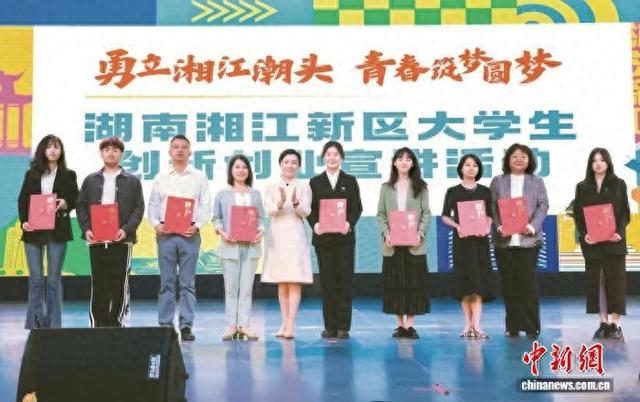
湖南湘江新区:中部首个国家级新区孕育“创业雨林”
Zhong Guo Xin Wen Wang· 2025-11-26 14:24
Core Viewpoint - The article highlights the innovative and entrepreneurial environment in Hunan Xiangjiang New Area, which is attracting and retaining young talent through practical measures and supportive policies [1][10]. Talent Attraction and Retention - Xiangjiang New Area is leveraging its strong industrial foundation to provide diverse job opportunities for young talent, fostering innovation and entrepreneurship [4][5]. - The area has established a comprehensive talent attraction and retention mechanism, including seed funds, venture loans, and industry funds tailored to different stages of entrepreneurial projects [7][8]. Industrial Ecosystem - The region focuses on creating a robust industrial ecosystem by integrating local advantages in engineering machinery, intelligent networking, and new materials, collaborating with leading companies to strengthen the industrial chain [3][5]. - The establishment of a "computing power infrastructure + innovation platform + ecological support" system is pivotal in attracting talent to the rapidly growing "AI+" industry [3][5]. Supportive Policies - Xiangjiang New Area has introduced ten supportive policies for university student entrepreneurship, including free office space and various forms of financial assistance to reduce the burden on entrepreneurs [8][10]. - The "Red Maple Plan" and "Willow Branch Action" provide targeted financial support for successful project incubation and entrepreneurship [7][8]. Success Stories - Successful entrepreneurs, such as Gu Shanzhi and Su Xing, have utilized local resources and support to establish innovative companies, contributing to the region's technological advancements [4][11]. - The area has seen the establishment of numerous high-tech enterprises and the creation of significant job opportunities, with over 500 jobs generated from incubated startups [8][10].


科技赋能“义乌6.0”,“商二代”开始接棒新生意
Mei Ri Jing Ji Xin Wen· 2025-10-16 14:55
Core Insights - The Yiwu Global Digital Trade Center officially opened on October 14, 2023, with a total investment of 8.3 billion RMB and a construction area of 1.25 million square meters, featuring various sectors including markets, office buildings, commercial streets, apartments, and a digital trade port [1][2][3] Group 1: Market Dynamics - Yiwu has established itself as a global small commodity trading center, gathering over 2.1 million types of products and connecting domestic, international, and online markets [2] - The Yiwu International Trade City is a key player, with a projected transaction volume of 279.8 billion RMB in 2024, marking a 20.02% year-on-year increase [2] - Daily foot traffic in the market has reached 224,300, with an average of over 3,900 foreign merchants visiting daily, both figures hitting a 10-year high [2] Group 2: Technological Integration - The opening of the Yiwu Global Digital Trade Center is expected to further enhance these figures, with a strong emphasis on digitalization and AI technology in trade processes [3][4] - The "Small Business AI Navigation" app has been developed to streamline the traditional trade process, allowing buyers to efficiently locate products and merchants [3] - AI applications in trade have seen significant growth, with over 30,000 registered users and more than 1 billion AI product calls, indicating increasing acceptance among business operators [4] Group 3: Financial Performance - As of October 15, 2023, the total transaction amount using Yiwu Pay has reached 29.46 billion RMB, with a 40% increase in the first three quarters [5] - The "Smart Port" has recorded an outbound volume of over 123,500 standard containers in 2023, representing a 106% year-on-year growth [5] Group 4: Emerging Business Trends - The Yiwu Global Digital Trade Center has attracted various innovative companies, including leading firms in consumer technology, indicating a shift towards direct consumer engagement [6][7] - Young entrepreneurs and new business models are increasingly represented, with over 52% of new market entrants being from the "second generation" of business owners [7][8] - The market is witnessing a trend towards AI-enabled products, although many businesses are still in the early stages of product development [8][9]
越南将举办科技创新和数字化转型成就展
Shang Wu Bu Wang Zhan· 2025-08-27 10:35
Core Points - The Vietnam Ministry of Science and Technology is organizing an exhibition to celebrate the 80th anniversary of Vietnam's national achievements from August 28 to September 5 in Hanoi [1] - The exhibition aims to showcase the contributions of the science and telecommunications sectors over the past 80 years, highlighting Vietnam's journey towards independence, unity, and development [1] - The exhibition features a central area and five sub-areas, displaying dozens of representative items and products that demonstrate modern technological achievements [1] Technology Highlights - Key exhibits include 5G technology, VINASAT-1 satellite, ELBOT robot, MK-eID chip, Dat Bike electric vehicle, smart home solutions, AI cameras, virtual reality/augmented reality technologies, and holographic imaging technology [1] - These exhibits reflect Vietnam's innovative potential and self-research capabilities, underscoring the role of technology in building a modern, innovative, and sustainable nation [1] Exhibition Objectives - The exhibition employs modern display methods, integrating data, images, physical items, and technological means to honor the history and contributions of Vietnam's technology sector [1] - It aims to inspire the younger generation, evoke national pride, enhance confidence in Vietnamese intelligence, and promote a spirit of innovation throughout society [1]
【头条评论】中国发展AI产业须打好三张牌
Zheng Quan Shi Bao· 2025-08-11 17:47
Group 1 - The global AI competition is shifting from a "sprint" of technological breakthroughs to a "marathon" of ecosystem building, with key variables being computing power costs, data quality, and scene implementation capabilities [1] - China aims to leverage its advantages in "green electricity + domestic chips," "data flow," and "scene sinking" to create a unique development path that combines technological breakthroughs with social benefits [1][2] - The high energy costs and chip supply limitations are major constraints on the global AI industry, and China's solution lies in integrating its renewable energy advantages with independent innovation to build a low-cost, high-security computing power supply system [1][2] Group 2 - The "Westward Migration" strategy of data centers is reshaping the cost structure of computing power, with regions like Qinghai and Inner Mongolia offering significantly lower electricity prices, thus reducing the costs of large model training [1] - The innovative "modular" chip cluster solution developed by Chinese companies allows for the combination of domestic 14nm chips to achieve performance equivalent to 3nm chips, drastically reducing training costs from tens of millions to millions [2] - The challenge of "data islands" and security concerns hinders the transformation of vast data into innovative momentum, but China's large-scale data base can provide continuous "live water" for AI development if data circulation barriers are broken [2][3] Group 3 - Innovations in data circulation are emerging across the country, with examples like Shenzhen's data element market and Hangzhou's "city brain" demonstrating the potential for increased efficiency when data is treated as a public resource [3] - The ultimate value of AI lies in solving real-world problems, and China's unique advantage is its comprehensive application scenarios from urban to rural areas, enabling AI to evolve from a "toy" to a "tool" [3][4] - Scene sinking is transforming traditional production methods, with AI applications in community markets and agriculture enhancing productivity and making technology accessible to ordinary people [4] Group 4 - The successful implementation of these three strategies relies on precise policy guidance, balancing innovation with resource management to prevent waste while allowing for experimentation [4]
广东省委常委王曦答每经问:十五运会通过AI技术应用和赛事自由视角系统等提供沉浸式观赛体验
Mei Ri Jing Ji Xin Wen· 2025-07-25 14:24
Core Viewpoint - The 15th National Games will showcase the integration of advanced technologies such as artificial intelligence and cloud computing in sports events, enhancing the spectator experience and operational efficiency [1][2]. Group 1: Technological Innovations - The event will feature a cloud-based sports village, allowing for immersive viewing experiences through AI applications and a free-viewing system, enabling spectators to track players and analyze movements [1][2]. - Various digital technologies, including virtual reality and high-definition video, will be utilized in the opening and closing ceremonies to create a blend of technology and culture [2]. - AI cameras will form a "Sky Eye" network in venues like Guangzhou and Shenzhen, predicting crowd risks 15 minutes in advance and automatically generating emergency plans [2]. Group 2: Accessibility and Support - Smart accessibility features, such as electronic dogs and unmanned vehicles, will provide convenient services for disabled individuals, highlighting a commitment to humanistic care [2]. - AI shooting glasses will assist journalists in capturing 360-degree views and switching perspectives during the events, while digital volunteers will offer real-time information [3]. Group 3: Cross-Border Collaboration - The 15th National Games marks the first joint hosting by Guangdong, Hong Kong, and Macau, with a focus on enhancing sports exchanges and economic collaboration in the Greater Bay Area [4][7]. - Smart customs processes will facilitate seamless cross-border participation, allowing athletes to pass through checkpoints without stopping, enhancing the overall experience [6]. - It is anticipated that over 6,000 participants from the mainland will travel to Hong Kong and Macau, while more than 3,000 from these regions will come to the mainland for the events [6].
中国AI硬件市场今年将首破万亿元,未来五年还会持续高增长
Di Yi Cai Jing· 2025-07-16 03:27
Core Insights - The Chinese AI hardware market (excluding AI smartphones and AI vehicles) is projected to exceed 1 trillion yuan for the first time in 2023 and will continue to grow rapidly over the next five years [1][3][5] Market Growth and Projections - The market size for AI hardware in China is expected to reach 1,102 billion yuan by 2025, representing a 13.4% increase from 971.8 billion yuan in the previous year [5] - The compound annual growth rate (CAGR) for the domestic AI hardware market over the next five years is conservatively estimated at 18% [5] Market Drivers - Four key drivers are identified for the rapid development of the AI industry in China: 1. Policy support 2. Technological breakthroughs, such as the DeepSeek model being integrated with over 200 companies 3. Application scenarios and data support 4. Capital investment, with AI-related investment expected to reach 80 billion yuan in 2023, doubling from the previous year [3][5] Market Segmentation - In 2023, the AI consumer electronics hardware market is estimated to be approximately 461 billion yuan, while the public service AI hardware market is projected to be around 641 billion yuan [5] - The breakdown of the AI hardware market includes: - Smart wearables: 1,190 million yuan - Black electronics (including projectors): 1,180 million yuan - White goods: 760 million yuan - Home appliances: 480 million yuan - Kitchen appliances: 290 million yuan - Educational smart hardware: 340 million yuan - Smart home hardware: 370 million yuan [6] AI Penetration in Consumer Electronics - The penetration rates of AI in various consumer electronics are as follows: - 90% in robotic vacuum cleaners, air purifiers, and smart mattresses - Over 70% in AI televisions - Over 30% in kitchen appliances - 20% in refrigerators, washing machines, and air conditioners - 87% in projectors for smart voice interaction [7][8] Characteristics of AI and Smart Hardware Integration - The integration of AI with smart hardware exhibits several characteristics: 1. Intelligent interaction through voice and gesture recognition 2. Lightweight technology requiring low power consumption 3. Ecosystem-oriented scenarios emphasizing cross-device interaction 4. Market differentiation with high-end premium products alongside accessible AI solutions 5. The need for deep experience to appreciate AI enhancements in products [8]
学校体育改革调研丨魔镜、AI……体育课这么科幻吗
Xin Hua Wang· 2025-05-12 00:02
Core Viewpoint - The article highlights the innovative approaches taken by schools in Hefei, Anhui, to enhance physical education through technology and engaging activities, addressing the growing concerns about youth health and the importance of sports education. Group 1: Technological Integration in Physical Education - The use of "magic mirrors" for jump rope competitions has transformed physical education classes into engaging experiences, making sports feel like a game to students [2][3][4] - Smart devices, such as heart rate monitors and AI cameras, are being utilized to provide real-time feedback on students' performance, making physical education more scientific and safe [8][10][11] Group 2: Implementation of Daily Physical Education - Hefei's Baohe District has pioneered the initiative of "one physical education class per day," which has now been implemented across Anhui province [5][6] - Schools are required to offer two special physical education classes each week, focusing on activities like magic mirror sessions, football, and badminton to foster a love for sports among students [7] Group 3: Encouraging Student Participation and Enjoyment - Schools are creating additional sports facilities, such as badminton and table tennis tables, to encourage students to engage in physical activities during breaks and after school [13] - The emphasis on competition, such as the "Sunshine Sports Movement" and various inter-school leagues, aims to cultivate a sports culture and motivate students to participate actively [16][17] Group 4: Broader Educational Goals - The ultimate goal of these reforms is not merely to prepare students for physical education exams but to instill lifelong fitness habits and resilience through sports [18][19]