
AI自动化工具

Search documents
固收视角看配置系列二:3月大类资产怎么看?
ZHESHANG SECURITIES· 2026-03-06 07:58
Group 1: Macro Trading Themes - The uncertainty brought by tariff policies is expected to intensify, as tariffs have become an integral part of the Trump administration's policy framework, serving multiple purposes including fiscal revenue, manufacturing return, and international relations [1][16][21] - The current tariff policy, based on the 1974 Trade Act Section 122, imposes a 10% tariff on most goods, but its future direction remains complex, with potential legal challenges and limitations on duration and rates [2][23][24] - The impact of tariffs on the U.S. economy is significant, with projections indicating a decrease in effective tariff rates and potential positive effects on GDP growth following the Supreme Court's ruling against previous tariffs [3][27][31] Group 2: AI Replacement Effects - The rapid development of AI technologies is causing significant disruptions across various sectors, leading to concerns about job displacement and economic downturns as companies increasingly replace human labor with AI [4][35][40] - The narrative of an "AI crisis" suggests a cycle where cost savings from AI lead to layoffs, reduced consumer spending, and further reliance on AI, potentially resulting in a recession driven by technological advancements [5][41][42] - Despite concerns, there are alternative pathways to mitigate negative impacts, including the creation of new job categories and the potential for AI to coexist with human workers, enhancing productivity rather than solely replacing jobs [41][42] Group 3: Asset Performance Review - In February 2026, global risk assets showed a significant shift from upward momentum to a period of consolidation, with notable performance disparities among equity markets, particularly with South Korea leading due to AI-related demand [7][43][45] - The bond market experienced a general decline in yields, with U.S. Treasury yields dropping significantly, influenced by tariff uncertainties and weaker GDP data [8][43] - Commodity markets displayed structural divergence, with gold prices rising sharply due to geopolitical tensions, while other metals like silver faced corrections after previous gains [8][43]
软件股溢价已跌至金融危机以来新低,高盛:别急,还没跌透!
Hua Er Jie Jian Wen· 2026-02-09 05:55
Core Viewpoint - The global software and IT services sector is undergoing a significant revaluation, with software stocks experiencing a notable decline in relative valuation compared to the broader market, reflecting aggressive market responses to AI disruptions [1][2]. Group 1: Market Dynamics - Goldman Sachs analysts indicate that the valuation premium of software stocks has fallen to its lowest level since the financial crisis, suggesting a market reaction to the "AI impact" [1]. - The European software sector has seen a decline of approximately 16% year-to-date, significantly underperforming the broader European market, which is supported by financial, resource, utility, and industrial sectors [2]. - The rapid evolution of AI automation tools has led to a systematic reassessment of business models reliant on software and data services, resulting in double-digit declines across various sectors including software and gaming [2]. Group 2: Valuation Metrics - Current forward P/E ratio for European software and IT services companies is around 16.8 times, with only a 9% premium over the broader market, nearing the lows seen during the 2009 financial crisis [3]. - The broader digital economy sector's forward P/E has compressed from 18.7 times at the beginning of 2025 to 13.7 times, placing it at the lower end of the valuation range observed over the past two decades [3]. - The implied revenue growth assumption for software stocks is currently only 4%-5%, aligning with nominal GDP growth, while analysts maintain a long-term revenue growth expectation of nearly 9% for the software industry [3]. Group 3: Profitability Concerns - The primary concern in the market is not immediate profit collapse but the long-term sustainability of profit margins in the software sector [4]. - Historical data shows that net profit margins in the software and IT services industry have risen significantly, reaching about twice the average of non-financial sectors in Europe, raising concerns about vulnerability to disruption [4]. - The software industry has transitioned from a deflationary force to a source of moderate inflation, making it more susceptible to structural shocks [5]. Group 4: Historical Context and Future Outlook - Historical patterns indicate that stock price recoveries typically occur after earnings expectations have bottomed out, rather than prior to valuation declines [6]. - The current adjustment in software stocks is viewed as an early pricing of future risks rather than a complete market clearing process [6]. - Despite a cautious outlook for the software sector, there remains long-term investment value in technology stocks, particularly those with strong competitive advantages and pricing power [6].
超级利空 全线崩盘!黄仁勋驳斥人工智能将取代软件工具的担忧
Zhong Guo Ji Jin Bao· 2026-02-04 13:39
Core Viewpoint - The release of a new AI legal plugin by Anthropic has triggered a significant sell-off on Wall Street, resulting in a combined market value loss of approximately $300 billion for software, financial data, and exchange-traded stocks [1][2]. Group 1: Market Reaction - The introduction of Anthropic's AI automation tool led to a 6% drop in a basket of U.S. software stocks, marking the largest single-day decline since April of the previous year [3]. - The financial services index plummeted nearly 7%, reflecting widespread panic among investors [3]. - The sell-off has extended to global markets, with Indian IT exporters' index dropping nearly 6% and significant declines in Japanese software companies, including NEC, which fell by 11.79% [6][9]. Group 2: Analyst Insights - Analysts have noted a shift in market sentiment from skepticism to a "doomsday narrative," with traders indiscriminately selling off stocks of companies potentially impacted by AI advancements [11]. - Morgan Stanley analyst Toby Ogg highlighted that the current environment is one where software companies are presumed guilty until proven innocent, with market confidence severely shaken [5]. - Concerns are particularly focused on the "seat-based" pricing model of software companies, which may be undermined by AI tools that reduce the need for multiple user logins [5]. Group 3: Company Responses - NVIDIA CEO Jensen Huang dismissed fears that AI would replace software tools, arguing that such concerns are illogical and that AI will continue to rely on existing software rather than reinventing foundational tools [2]. - Huang emphasized that the recent breakthroughs in AI are centered around "tool usage," reinforcing the importance of existing software in the AI landscape [2].

超级利空,全线崩盘!黄仁勋,回应!
Zhong Guo Ji Jin Bao· 2026-02-04 13:31
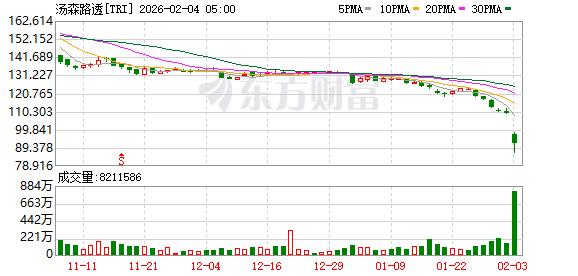
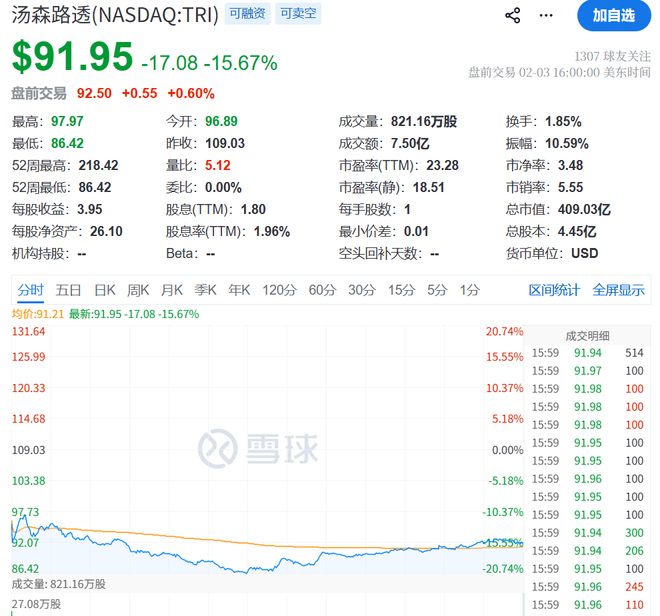
Core Viewpoint - Nvidia CEO Jensen Huang dismissed concerns that AI will replace software tools, stating that such fears are illogical and that AI will continue to rely on existing software rather than reinventing foundational tools [2][4]. Group 1: Market Reaction - The release of a new AI automation tool by Anthropic led to a significant market sell-off, with software, financial services, and asset management sectors collectively losing approximately $300 billion in market value [1][2]. - A basket of U.S. software stocks fell by 6%, marking the largest single-day decline since April of the previous year, while the financial services index plummeted nearly 7% [3][12]. - The Indian IT exporter index dropped nearly 6%, following the global trend in software stock declines [12][14]. Group 2: Analyst Insights - Analysts indicated that the current environment for software companies is one of presumption of guilt, where positive earnings are insufficient to reassure the market unless companies can convincingly demonstrate that AI will be a sustainable growth driver rather than a long-term drag [4][15]. - Concerns were raised about the "seat-based" pricing model, where software vendors charge per user, as AI tools may reduce the number of logins or users needed, potentially undermining this revenue model [4][15]. - The introduction of new AI tools, such as Anthropic's latest legal tool, could exacerbate investor concerns regarding the software sector [4][15]. Group 3: Stock Performance - Thomson Reuters saw a stock price decline of 15.67%, closing at $91.95, with a significant drop in trading volume [5][6]. - LegalZoom's stock fell by 19.68%, closing at $7.33, reflecting broader market fears [8][9]. - Other companies providing legal tools or research databases, such as Thomson Reuters and LegalZoom, experienced stock declines exceeding 12% [4][15].


业绩超预期也没用?美国软件股正面临市场的“未审先判”
Xin Lang Cai Jing· 2026-02-04 11:39
Core Viewpoint - The software sector is experiencing a significant sell-off due to increasing investor pessimism, particularly in light of new AI automation tools that threaten traditional business models [1][3]. Group 1: Market Sentiment - Morgan Stanley analysts report that the current market environment for software stocks is characterized by a presumption of guilt, with the industry facing a "trial by media" scenario [1][3]. - Over the past two weeks, analysts have met with over 50 investors in Europe and the U.S., finding that many have significantly reduced their holdings in software stocks over the past 12 to 18 months [1][3]. - Despite recent market corrections, investor willingness to enter the software sector remains low [1][3]. Group 2: Impact of AI Tools - The release of a new AI automation tool by Anthropic has heightened fears among investors regarding the viability of many companies' business models in the face of generative AI threats [1][3]. - Analysts believe that merely exceeding earnings expectations is insufficient to convince the market; companies must demonstrate that AI is a sustainable growth driver rather than a long-term hindrance [4]. - Concerns are growing over the subscription-based pricing model, as AI tools may reduce the number of required accounts, potentially undermining this revenue model [4]. Group 3: Stock Performance - The sell-off in software stocks has spread to Asian markets, with European stocks at risk from AI impacts dropping by 2.1% on Wednesday, following an 8% decline the previous trading day [2][4]. - Companies like SAP and Sage continue to see their stock prices decline amid these market conditions [2][4].