AI替代

Search documents
忘掉阶层固化,一场更关键的大分流正在发生
虎嗅APP· 2026-03-15 03:26
Core Viewpoint - The article discusses the profound impact of AI on the labor market, emphasizing a significant shift in societal structures and the emergence of a new class of individuals who can leverage AI effectively. It argues that traditional measures of success, such as wealth and education, are becoming obsolete in the face of AI advancements. Group 1: The Changing Landscape of Employment - The concept of "class solidification" is being challenged as AI drives a more profound and ruthless "great divide" in the job market, affecting not just the lower classes but also highly educated white-collar workers [4][7][9] - A report by Anthropic indicates that the most affected jobs are not low-skilled positions but rather high-income, highly educated roles, with programmers experiencing a 74.5% exposure to AI [20][28] - The traditional metrics of social standing are shifting from wealth and education to one's relationship with AI tools [11][21] Group 2: Acceleration of AI Impact - The speed of technological change has outpaced previous predictions, with the proportion of jobs exposed to AI rising from nearly zero in 2023 to 30% by 2026, marking a 4.5-fold acceleration [14][15] - The report highlights that the traditional middle-class protections, such as licenses and experience, are losing their value as AI commoditizes average cognitive outputs [21][22] - The disparity in job entry rates for young workers is widening, with a 14% decline in entry into high-exposure jobs post-ChatGPT launch [43][45] Group 3: Capital and Labor Decoupling - The article outlines a significant decoupling of capital from labor, with modern companies relying increasingly on intangible assets rather than physical labor [31][33] - Major tech companies have shown that substantial revenue growth can occur with minimal increases in workforce size, indicating a shift towards capital-intensive models [34][36] - AI-related expenditures are driving a significant portion of GDP growth, highlighting a shift in economic dynamics where capital is increasingly self-reinforcing [37][39] Group 4: The New Survival Strategies - The article proposes a new framework for survival in the AI era, emphasizing the importance of material, intelligence, network, and diversity capital [56][59] - It warns against competing with AI on efficiency, suggesting that individuals should focus on building unique skills and networks that cannot be easily replicated by machines [56][58] - The narrative stresses that the traditional career paths are being rewritten, and those who adapt to the new rules will thrive while others may struggle to find opportunities [62][64]


2月环球经济与大类资产配置观察:“沃什交易”、AI担忧、中东局势叠加扰动市场
工银亚洲· 2026-03-11 10:36
Market Overview - In February 2026, major asset classes experienced declines due to concerns over the new Fed chair's "balance sheet reduction" policy, geopolitical tensions, and AI-related worries, particularly affecting precious metals[4] - The South Korean stock market outperformed with a gain of 19.5%, followed by Japan's Nikkei 225 at +10.4% and European indices such as the FTSE 100 (+6.7%) and CAC40 (+5.6%) [5] Fund Flows - Global stock and bond markets saw increased net inflows, with emerging markets attracting more capital than developed markets; passive funds were a significant driver of this trend[6] - In February, U.S. stock markets had a net inflow of $13.38 billion, while European stocks saw a substantial increase in net inflows to $36.9 billion, up from $23.06 billion the previous month[12] Economic Indicators - The U.S. economy showed signs of "stagflation" with a Q4 2025 GDP growth rate of 1.4%, significantly below the expected 2.8%[14] - Eurozone manufacturing PMI rose to 50.8 in February, indicating a recovery, while inflation rates showed a decrease to 1.7%[14] Policy Developments - The U.S. Supreme Court ruled against certain tariffs, leading to a temporary 10% global import tariff imposed by the Trump administration, which may affect trade agreements[15] - The European Central Bank maintained its interest rates, while Japan's monetary policy is expected to remain accommodative despite rising inflation concerns[18] Commodity Trends - Gold prices fluctuated significantly, reaching over $5,300 per ounce due to geopolitical tensions and changes in U.S. monetary policy expectations[23] - Brent crude oil prices rose to nearly $80 per barrel amid ongoing geopolitical conflicts, particularly between the U.S. and Iran[23]
固收视角看配置系列二:3月大类资产怎么看?
ZHESHANG SECURITIES· 2026-03-06 07:58
Group 1: Macro Trading Themes - The uncertainty brought by tariff policies is expected to intensify, as tariffs have become an integral part of the Trump administration's policy framework, serving multiple purposes including fiscal revenue, manufacturing return, and international relations [1][16][21] - The current tariff policy, based on the 1974 Trade Act Section 122, imposes a 10% tariff on most goods, but its future direction remains complex, with potential legal challenges and limitations on duration and rates [2][23][24] - The impact of tariffs on the U.S. economy is significant, with projections indicating a decrease in effective tariff rates and potential positive effects on GDP growth following the Supreme Court's ruling against previous tariffs [3][27][31] Group 2: AI Replacement Effects - The rapid development of AI technologies is causing significant disruptions across various sectors, leading to concerns about job displacement and economic downturns as companies increasingly replace human labor with AI [4][35][40] - The narrative of an "AI crisis" suggests a cycle where cost savings from AI lead to layoffs, reduced consumer spending, and further reliance on AI, potentially resulting in a recession driven by technological advancements [5][41][42] - Despite concerns, there are alternative pathways to mitigate negative impacts, including the creation of new job categories and the potential for AI to coexist with human workers, enhancing productivity rather than solely replacing jobs [41][42] Group 3: Asset Performance Review - In February 2026, global risk assets showed a significant shift from upward momentum to a period of consolidation, with notable performance disparities among equity markets, particularly with South Korea leading due to AI-related demand [7][43][45] - The bond market experienced a general decline in yields, with U.S. Treasury yields dropping significantly, influenced by tariff uncertainties and weaker GDP data [8][43] - Commodity markets displayed structural divergence, with gold prices rising sharply due to geopolitical tensions, while other metals like silver faced corrections after previous gains [8][43]
申万宏源:单票价格进入修复通道 看好快递量价表现
Zhi Tong Cai Jing· 2026-02-27 06:20
Core Viewpoint - The acceleration of AI replacement processes is reshaping the express delivery industry, which serves as a significant "reservoir" for flexible employment. The end-of-line rights protection policies are expected to stabilize and increase delivery fees, leading to a recovery in single-ticket prices and gradually releasing corporate profit elasticity. The industry is anticipated to experience high-quality development, concentrating profits and market shares among leading companies [1][3]. Group 1: Industry Demand and Recovery - The express delivery industry shows strong demand resilience, with companies accelerating their resumption of operations. From December 29, 2025, to February 22, 2026, the cumulative express delivery volume reached 28.642 billion pieces, a year-on-year increase of 5.4%, while the delivery volume was 29.369 billion pieces, up 6.8% year-on-year. The overall volume maintained a steady growth trend in January and February [1][2]. Group 2: End-of-Line Rights Protection Policies - The national postal work conference in 2026 emphasized "penetrating" regulation to address issues like "punishment upon complaint" and promote the implementation of new social security policies, effectively safeguarding the rights of delivery personnel. The new social security regulations are expected to convert previously unregulated hidden costs into a unified rigid cost for all players, while minimum delivery fee guidelines will create a rigid price transmission point [2]. Group 3: Investment Analysis - The express delivery industry is viewed positively, with recommendations for companies like YTO Express and ZTO Express, which are expected to enhance their competitive advantages. Attention is also drawn to Shentong Express for its performance elasticity. Jitu Express is noted for its accelerated growth in Southeast Asia and new markets, while SF Express is recognized for its management structure and business line adjustments, presenting potential bottom-fishing opportunities [3].



快递行业点评:行业高质量发展,看好快递量价表现
Shenwan Hongyuan Securities· 2026-02-26 12:44
Investment Rating - The report rates the express delivery industry as "Overweight," indicating a positive outlook for the sector's performance compared to the overall market [3]. Core Insights - The express delivery industry is expected to experience high-quality development, driven by the acceleration of AI replacement processes and policies aimed at protecting the rights of delivery personnel, which are likely to stabilize and increase delivery fees, leading to a recovery in per-package pricing and gradual release of profit elasticity for companies [3]. - The demand in the express delivery sector remains resilient, with a reported cumulative collection of 28.642 billion packages from December 29, 2025, to February 22, 2026, reflecting a year-on-year growth of 5.4%, and a delivery volume of 29.369 billion packages, with a year-on-year increase of 6.8% [3]. - New policies regarding the protection of delivery personnel's rights are reshaping the cost and pricing structure within the industry, with the implementation of social security regulations expected to standardize costs across all players, thereby influencing pricing dynamics [3]. Summary by Sections Industry Overview - The express delivery sector is characterized by strong demand resilience, with companies rapidly resuming operations post-holiday and eliminating additional fees during the Spring Festival [3]. Policy Impact - The national postal conference in 2026 emphasized "penetrative" regulation to address issues related to delivery personnel's rights, which is expected to enforce a baseline for labor costs and stabilize delivery fees [3]. Investment Recommendations - The report recommends investing in YTO Express and ZTO Express due to their competitive advantages and expected profit growth, while also suggesting to monitor Shentong Express and Jitu Express for their performance elasticity [3]. - SF Express is noted for its management restructuring and business line adjustments, presenting potential opportunities for bottom-fishing investments [3]. Valuation Metrics - The report includes a valuation table for key companies in the transportation sector, highlighting YTO Express with a projected net profit of 42.55 billion RMB for 2025 and a PE ratio of 15, while ZTO Express is projected to have a net profit of 89.93 billion RMB for 2025 with a PE ratio of 15 [4].
京东集团股价跌破60日均线,市场情绪与资金流出成主因
Jing Ji Guan Cha Wang· 2026-02-14 21:23
Market Overview - JD Group's stock closed at HKD 106.40 on February 13, down 1.85%, falling below the 60-day moving average of HKD 113.187, primarily due to weak market conditions [1] - The Hang Seng Index dropped by 1.72% and the Hang Seng Tech Index fell by 0.90%, with the online retail sector declining by 1.98%, reflecting overall market sentiment [1] Fund and Technical Analysis - There was a net outflow of HKD 44.7193 million in JD's stock on February 13, with large sell orders accounting for 24%, indicating strong short-term selling pressure from institutions [2] - The stock has been trading below the 60-day moving average for several consecutive days, with the MACD histogram remaining negative and the KDJ indicator in the oversold zone, suggesting increased technical selling pressure [2] Company Developments - Despite JD's announcement of over HKD 1.3 billion in welfare subsidies for the Spring Festival and a future investment of HKD 22 billion in the "Little Brother Home" initiative, the market remains focused on short-term performance pressures and the impact of new business investments on profitability [3] - An incident involving the theft of goods from a warehouse in Paris was reported, with most items recovered by February 14; however, this event occurred in December 2025 and had limited direct impact on the stock price as of February 13 [3] Valuation Metrics - As of February 13, JD's price-to-earnings ratio stood at 8.56 and the price-to-book ratio at 1.19, indicating that the stock is at a historical low valuation; however, concerns about slowing growth in the e-commerce sector and increased competition are suppressing the potential for valuation recovery [4] - The decline below the 60-day moving average is attributed to a combination of overall market sentiment, capital outflows, and technical breakdowns rather than a single negative event [4]

因立夫股价连续下跌,市场情绪疲软与基本面薄弱成主因
Jing Ji Guan Cha Wang· 2026-02-13 22:51
Group 1 - The core viewpoint of the article highlights the continued decline in the stock price of INLF, closing at $0.40 on February 13, 2026, with a daily drop of 6.59% [1] - The stock opened at $0.41, reached a high of $0.41, and a low of $0.35, with a trading volume of $162,700 and a turnover rate of 0.19%. The cumulative decline over the past five trading days has reached 18.66% [2] - The market sentiment remains weak, with concerns over AI replacement leading to selling pressure, particularly affecting small-cap tech stocks like INLF, despite mixed performance in major US indices [3] Group 2 - The company's fundamentals are weak, indicated by a negative price-to-earnings ratio (TTM) of -8.29, reflecting ongoing losses and a lack of improvement in profitability. The business is heavily concentrated in the injection molding robotic arm sector, accounting for over 65% of revenue, making it vulnerable to manufacturing cycle fluctuations [4] - Low liquidity amplifies volatility, as evidenced by the trading volume of only $162,700 and a turnover rate of 0.19%. This low participation means that even small sell orders can significantly impact the stock price, resulting in a daily fluctuation of 13.00% [5] - The technical support has been breached, with the stock price falling below the previous day's closing price of $0.42 and approaching the year-to-date low of $0.35, which may have triggered concentrated stop-loss selling [6]

因立夫股价单日跌近9%,市场避险情绪升温拖累科技股
Jing Ji Guan Cha Wang· 2026-02-12 17:10
Group 1: Stock Performance - The stock price of INLF.OQ closed at $0.45 on February 12, 2026, with a daily decline of 8.98% [1] - The stock has seen a cumulative decline of 14.15% over the past five days and a year-to-date drop of 7.19% [1] - The trading volume for the day was approximately $88,200, with a turnover rate of 0.09%, indicating low liquidity [4] Group 2: Market Context - On February 12, major U.S. stock indices collectively fell, with the Nasdaq down 1.63%, S&P 500 down 1.20%, and Dow Jones down 1.18% [2] - The commercial equipment services sector, to which INLF.OQ belongs, declined by 0.74%, underperforming the broader market [2] Group 3: Company Fundamentals - The company's price-to-earnings ratio (TTM) is negative at -9.36, indicating weak profitability [3] - The main business focus is on injection molding robotic arms, which account for over 65% of its operations, leading to a single business structure vulnerable to manufacturing cycle fluctuations [3] Group 4: Technical and Financial Aspects - The stock price fell below the previous closing price of $0.49 and approached the year-to-date low of $0.44, with short-term moving average support being breached [4] - The shift of main capital from small-cap stocks to defensive sectors has made INLF.OQ, as a small-cap stock with a total market value of approximately $9.9 million, more susceptible to marginalization [4]
“软件恐慌抛售潮”下有哪些赢家和输家?Wedbush与高盛给出参考答案
智通财经网· 2026-02-06 03:44
Core Viewpoint - The rapid development of artificial intelligence has led to a panic in the market, causing significant sell-offs in the software sector of the U.S. stock market, while some analysts still see investment opportunities amidst the turmoil [1][2]. Group 1: Market Reactions and Predictions - Analysts from Wedbush Securities predict that 2023 will be a breakthrough year for Apple (AAPL.US), with AI potentially increasing the company's per-share valuation by $75 to $100 [1]. - KKM Financial's CEO Jeff Kilburg notes that investors are shifting from previously successful stocks like Nvidia (NVDA.US) and Meta (META.US) to underperformers like Apple and Alphabet (GOOGL.US), which provided buying opportunities during a low period last April [1]. - Kilburg expresses strong optimism for Alphabet, highlighting that the company's revenue has surpassed $400 billion for the first time and that the efficiency of the Google Gemini platform has improved significantly, processing 10 billion tokens per minute with service costs down 78% over the past year [2]. Group 2: Analyst Insights on Software and Cryptocurrency - Despite the widespread sell-off described by Ives as a "software apocalypse," both analysts see this as a buying opportunity for oversold stocks like Salesforce (CRM.US), CrowdStrike (CRWD.US), Microsoft (MSFT.US), Oracle (ORCL.US), and ServiceNow (NOW.US) [2]. - Ives characterizes the current market as a "digestive period," suggesting that the indiscriminate selling presents significant opportunities for investors willing to endure market volatility [3]. - Goldman Sachs analysts, led by Alexander Blostein, indicate that concerns about AI's impact on the software industry are ongoing, affecting alternative asset management firms and direct lending institutions [3]. Group 3: Performance of Alternative Asset Management Firms - The VanEck Alternative Asset Management ETF (GPZ) has dropped 14% over the past month, while the S&P 500 index has only decreased by 0.8% during the same period [3]. - Goldman Sachs reports that the significant sell-off in alternative asset management firms is primarily due to investor concerns regarding their exposure to software in private equity and private credit, which could impact growth if investment performance deteriorates [3]. - The report suggests that alternative asset management firms have relatively small software exposure at the corporate level, with software in private equity accounting for about 5% of total management fees [3]. Group 4: Company-Specific Exposure to Software Risks - Companies like TPG (TPG.US) and KKR (KKR.US) have a higher exposure in private equity, with their management fees from the software sector reaching single-digit percentages [4]. - Blue Owl (OWL.US) and Ares Management (ARES.US) have significant exposure in private credit, with management fees from software accounting for 13% and 8%, respectively [4]. - Goldman Sachs estimates that firms like Carlyle Group (CG.US), Apollo Global Management (APO.US), and Brookfield Asset Management (BAM.US) have the least risk exposure to software investments [4].


表面增长难掩结构隐患:美国高生产率行业收缩,经济活力减退
Sou Hu Cai Jing· 2025-12-17 00:01
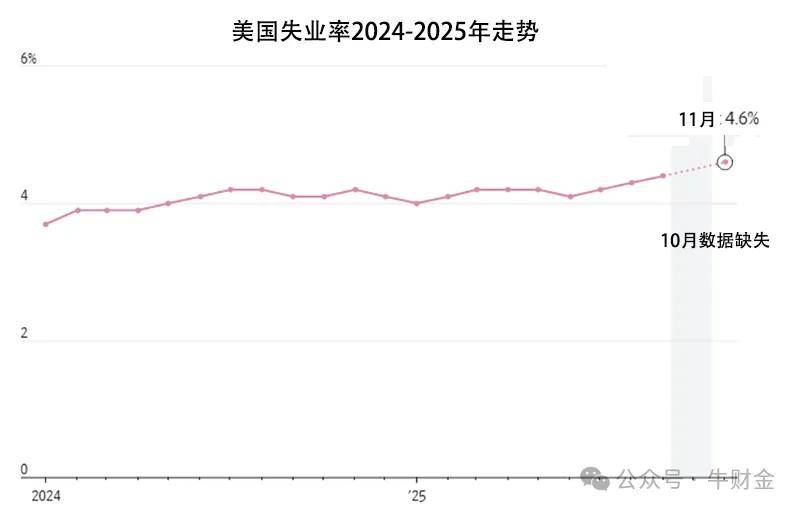
Group 1 - The unemployment rate in the U.S. rose to 4.6% in November, marking the highest level in over four years, up from 4.4% in September [2][3] - The job market is showing signs of "high-frequency volatility and low-speed growth," with three months of net job losses in the past six months [3] - November saw an addition of 64,000 non-farm jobs, which was above the expected 45,000, but insufficient to offset previous job losses [4][3] Group 2 - Job growth is primarily occurring in low productivity or government-dependent sectors, while sectors representing economic vitality, such as manufacturing and professional services, are contracting [6] - Federal government jobs decreased by 6,000 in November and saw a significant drop of 162,000 in October, with a total reduction of approximately 270,000 since January [8][9] - The wage growth in the private sector fell to 3.5% year-over-year in November, the lowest in years, indicating that wage increases are not keeping pace with living costs [11][12] Group 3 - The current employment situation is characterized as "low-fire, low-hire," where companies are hesitant to make large layoffs or expand hiring, reflecting a cautious approach to seasonal employment and the testing of AI replacements [15] - The report suggests that the true state of the U.S. job market may be weaker than indicated, as the Federal Reserve has warned that current statistical models may overestimate job additions by about 60,000 each month [13][14] - The employment market is entering a dangerous phase, showing signs of cooling without a clear collapse, which could lead to a prolonged period of economic uncertainty [17]