ASHR

Search documents
重磅信号,2024年10月以来最高水平
Zhong Guo Ji Jin Bao· 2026-02-13 13:55
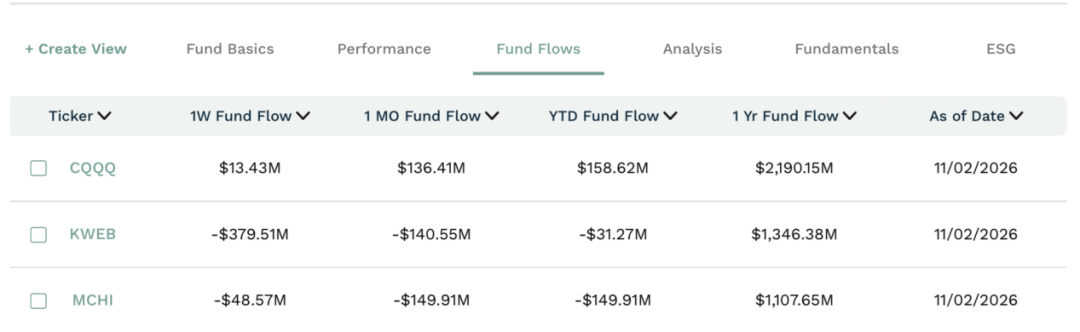
Group 1 - In January, public funds from the US and EU saw a net inflow of $9 billion into the Chinese market, marking the highest level since October 2024, with active management funds turning to net inflows for the first time since early 2023 [1] - Over the past year, overseas ETFs focused on Chinese technology indices have significantly attracted capital, with the largest five ETFs in the US having total assets of $79 billion, $78.2 billion, $65.9 billion, $30.8 billion, and $18.2 billion respectively [2] - Three US-listed Chinese stock ETFs attracted over $1 billion in capital over the past year, with CQQQ leading at $2.19 billion, followed by KWEB at $1.35 billion and MCHI at $1.11 billion [2] Group 2 - In 2025, net inflows of overseas funds into China were primarily driven by passive funds, but there are signs that active management funds may accelerate their inflows, particularly in the technology sector [3] - Beeneet Kothari, founder of Tekne Capital Management, stated that China's investment attractiveness in AI is stronger than that of the US, highlighting China's advantages in construction and infrastructure for AI development [4] - The MSCI China Index had a total return of approximately 31% in 2025, leading to increased interest from investors, with Qube Research & Technologies' China long-only fund growing over tenfold to exceed $2 billion [5]

害怕“踏空”A股!海外资金加速入场,吸金130亿
Zhong Guo Ji Jin Bao· 2025-08-20 00:06
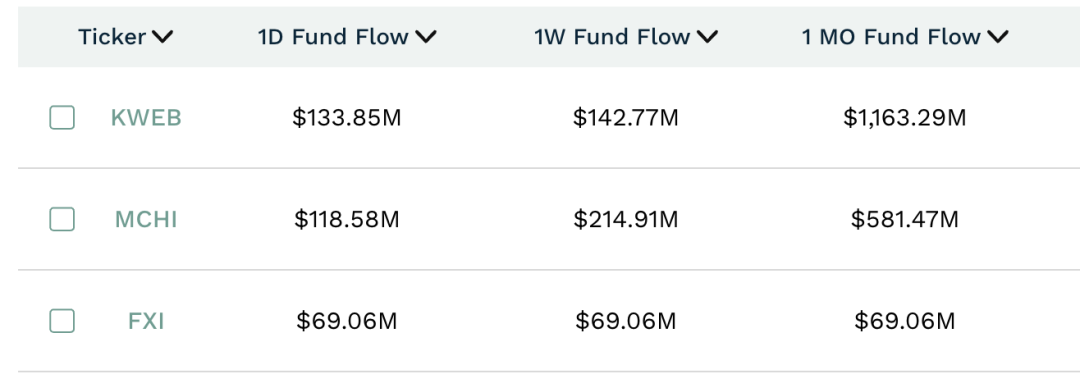
Group 1: Market Trends - The Chinese market is gaining traction, with overseas Chinese ETFs experiencing significant inflows, particularly from South Korean investors [1][4] - In August, South Korean investors accelerated their purchases of Chinese stocks, with net buying amounts reaching $7.29 million in July and $6.63 million from August 1 to August 18 [5][8] Group 2: ETF Inflows - The top three ETFs collectively attracted net inflows of approximately 13.03 billion yuan ($1.81 billion) over the past month, with KWEB, MCHI, and FXI leading the way [2][3] - KWEB saw inflows of $1.34 million on August 15, totaling $1.16 billion since July, while MCHI and FXI also reported substantial inflows [2][3] Group 3: Investor Behavior - Hedge funds are reportedly buying Chinese ETFs at the fastest pace in seven weeks, driven by both long positions and short covering, with a ratio of 1.9:1 [4] - There is a noticeable difference in sentiment between domestic and overseas investors, with Asian clients inquiring about the A-share bull market, while U.S. clients remain hesitant [4]

害怕“踏空”A股!海外资金加速入场,“吸金”130亿!
Zhong Guo Ji Jin Bao· 2025-08-19 13:49
Group 1 - The core viewpoint of the articles indicates that overseas funds are rapidly investing in A-shares, with significant inflows into Chinese ETFs, particularly from Korean investors [1][4]. - The top three ETFs have collectively attracted a net inflow of 13 billion yuan (approximately 1.81 billion USD) over the past month, with KWEB, MCHI, and FXI leading the way [2][3]. - There is a notable increase in the allocation of global actively managed public funds to Chinese stocks, reaching 6.4% of their portfolios, although this remains below the historical average [3]. Group 2 - Korean investors have significantly increased their purchases of Chinese stocks, with net buying amounts reaching 7.29 million USD in July and 6.63 million USD from August 1 to August 18 [5][7]. - The top ten stocks purchased by Korean investors in July included Alibaba, Ningde Times, and various ETFs, with a total net buying amount of 7.29 million USD [5][6]. - In August, the top three A-shares purchased by Korean investors were Zhongji Xuchuang, BYD, and Heng Rui Pharmaceutical, with net buying amounts of 3.7 million USD, 259.71 thousand USD, and 236.79 thousand USD respectively [8].
害怕“踏空”A股!海外资金加速入场,“吸金”130亿!
中国基金报· 2025-08-19 13:43
Core Viewpoint - The article highlights the increasing interest of overseas investors in A-shares, particularly through ETFs, with significant inflows observed in recent months, indicating a potential bullish sentiment in the Chinese market [2][4][8]. Group 1: ETF Inflows - The top three ETFs have collectively attracted 13 billion RMB (approximately 1.31 billion USD) in the past month [3][6]. - The KWEB ETF, tracking the China Internet Index, saw inflows of 1.34 million USD on August 15, totaling 1.16 billion USD since July [4]. - The MCHI ETF, tracking the MSCI China Index, received 1.19 million USD on August 15, with total inflows of 581 million USD since July [4]. - The FXI ETF, tracking the FTSE China 50 Index, had inflows of 690.6 million USD since July [4]. - In contrast, the ASHR ETF, tracking the CSI 300 Index, experienced a net outflow of 80.1 million USD on August 13, totaling 65.19 million USD since July [4]. Group 2: Investor Behavior - Retail investors typically enter the Chinese market through ETFs, but hedge funds have also contributed to net inflows, buying at the fastest pace in seven weeks [8]. - There is a noticeable difference in sentiment between domestic and overseas investors, with Asian clients inquiring about the A-share bull market, while U.S. clients remain hesitant [8]. - The fear of missing out (FOMO) among overseas investors is expected to intensify, although many still exhibit a selling bias [8]. Group 3: Korean Investors - In August, Korean investors accelerated their purchases of Chinese stocks, with net buying of 72.94 million USD in July for the top ten Hong Kong stocks [10]. - From August 1 to August 18, Korean investors net bought 66.27 million USD in the top ten Hong Kong stocks, nearly matching the total for July [10]. - For A-shares, Korean investors net bought 21.03 million USD from August 1 to August 18, surpassing the 16.43 million USD net buying in July [13].

单日新高!外资疯狂涌入
Zhong Guo Ji Jin Bao· 2025-07-29 12:13
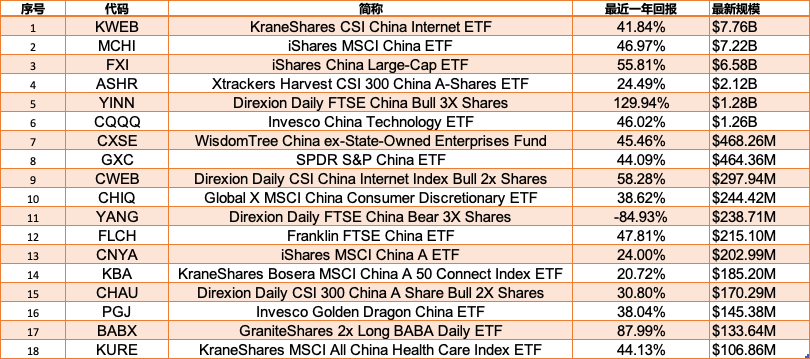
Core Viewpoint - There is a significant increase in passive foreign capital inflows into the Chinese stock market, particularly through ETFs, indicating renewed interest from international investors in Chinese equities [1][14]. Group 1: ETF Inflows - The largest Chinese stock ETF listed in the US, KWEB, saw a net inflow of $876 million (approximately 6.29 billion RMB) from July 17 to July 25, with a peak single-day inflow of $264 million on July 17, marking a five-month high [2][5]. - Other ETFs also experienced substantial inflows, such as MCHI, which had a net inflow of $154 million on July 24 and $201 million on July 25, setting a new annual single-day inflow record [2][3]. - FXI reversed a long trend of outflows with a net inflow of $76.9 million on June 17, while ASHR recorded a net inflow of $96 million over the past month [3]. Group 2: Performance of Chinese ETFs - KWEB has delivered a one-year return of 41.84% with a current size of $7.76 billion, while MCHI has a return of 46.97% and a size of $7.22 billion [5]. - FXI has shown a one-year return of 55.81% with a size of $6.58 billion, and ASHR has a return of 24.49% with a size of $2.12 billion [5]. - CQQQ, a technology-focused ETF, saw a net inflow of $7.23 million in the past month, with a peak inflow of $4.84 million on June 27, marking a three-month high [4]. Group 3: Active Management Funds - Some overseas active management funds are increasing their positions in internet technology stocks, reflecting a preference for high-tech ETFs amid the return of passive capital [6]. - The FSSA China Growth I fund, with a size of $2.7 billion, has increased its holdings in Tencent by 2.75% and in Trip.com by 9.18% [7][8]. - The Fidelity China Focus Fund, with a size of $2.5 billion, has increased its stake in Alibaba by 12.46% and in Trip.com by 6.32% [9][10]. Group 4: Market Sentiment and Future Outlook - Goldman Sachs has raised its 12-month target for the MSCI China Index from 85 to 90, suggesting an 11% upside potential for the index [14]. - The firm noted a resurgence of interest in Chinese stocks among international investors, driven by diversification needs, expectations of a stronger RMB, and the emergence of AI applications in China [14]. - Despite a recent rebound in US stocks, many overseas investors are strategically rebalancing their portfolios through IPOs and secondary offerings, with foreign cornerstone investor participation in Hong Kong IPOs reaching a five-year high [16].
单日新高!外资疯狂涌入!
Zhong Guo Ji Jin Bao· 2025-07-29 12:03
Group 1 - Overseas passive funds are accelerating their return to the Chinese stock market, with some Chinese stock ETFs experiencing significant net inflows recently [1][2] - The largest Chinese stock ETF listed in the US, KWEB, saw a net inflow of $876 million (approximately 6.29 billion RMB) from July 17 to July 25, marking a five-month high for single-day net inflows [2][3] - Other ETFs, such as MCHI and FXI, also reported substantial net inflows, with MCHI achieving a single-day net inflow of $201 million (approximately 1.46 billion RMB) on July 25, the highest for the year [3][4] Group 2 - The CQQQ ETF focused on Chinese technology stocks recorded a net inflow of $7.23 million (approximately 52 million RMB) in the past month, with a notable single-day inflow of $4.84 million (approximately 35 million RMB) on June 27 [5] - Active management funds are also increasing their positions in internet technology stocks, reflecting a preference for high-tech ETFs amid the return of passive funds [7][10] - Notable active funds, such as FSSA China Growth I and Fidelity's China Focus Fund, have increased their holdings in major Chinese tech companies like Tencent and Alibaba [8][10][11] Group 3 - Goldman Sachs has raised its 12-month target for the MSCI China Index from 85 to 90, indicating an estimated 11% upside potential for the index [14] - The interest in Chinese stocks among international investors has reached a high point, driven by factors such as diversification needs beyond the US market and the emergence of AI applications in China [14][15] - Participation of foreign cornerstone investors in Hong Kong IPOs has reached a five-year high, reflecting a strategic rebalancing of investment portfolios [15]





单日新高!外资疯狂涌入!
中国基金报· 2025-07-29 11:57
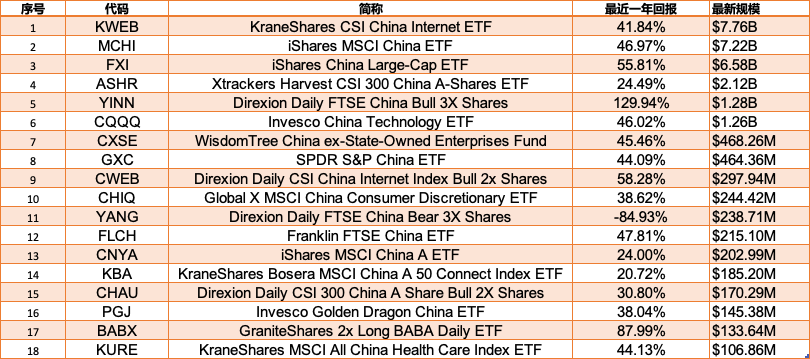
Core Viewpoint - There is a significant inflow of overseas passive funds back into the Chinese stock market, particularly through ETFs, indicating renewed interest from international investors [2][4][14]. Group 1: ETF Inflows - The largest Chinese stock ETF listed in the US, KWEB, saw a net inflow of $876 million (approximately 6.29 billion RMB) from July 17 to July 25, with a single-day inflow peak of $264 million on July 17, marking a five-month high [4][5]. - Other ETFs also experienced substantial inflows, such as MCHI with $154 million and $201 million on July 24 and 25 respectively, and FXI with $76.9 million on June 17, reversing a long trend of outflows [5][6]. - CQQQ, a technology-focused ETF, recorded a net inflow of $72.3 million in the past month, with a notable single-day inflow of $48.4 million on June 27 [5]. Group 2: Performance of ETFs - KWEB has shown a one-year return of 41.84% with a current size of $7.76 billion, while MCHI has a return of 46.97% and a size of $7.22 billion [6]. - FXI has the highest one-year return at 55.81% with a size of $6.58 billion, indicating strong performance among these ETFs [6]. - The technology-focused CQQQ has a one-year return of 46.02% and a size of $1.26 billion, reflecting the growing interest in tech stocks [6]. Group 3: Active Fund Management - Some overseas active management funds are also increasing their positions in internet technology stocks, with notable examples including FSSA China Growth I and Fidelity's China Focus Fund, which have sizes of $2.7 billion and $2.5 billion respectively [8][10]. - These funds have shown strong performance, with Fidelity's fund reaching a five-year high in net value [10][12]. Group 4: Market Sentiment and Future Outlook - Goldman Sachs has raised its 12-month target for the MSCI China Index from 85 to 90, suggesting an 11% upside potential, and maintains an overweight stance on Chinese stocks [14]. - The renewed interest in Chinese stocks is driven by diversification needs beyond the US market, expectations of a stronger RMB, and the emergence of AI applications in China [14].