Amazon Trainium

Search documents
Amazon Just Lost a Key AI Chip Executive. Is That Bad News for AMZN Stock?
Yahoo Finance· 2026-03-30 19:32
For a company with the scale of Amazon, the long-term story still looks nothing short of remarkable. The stock has delivered a staggering 10,814% return over the past two decades and 572% over the last ten years. Even in the more recent stretch, AMZN is up 93% over the past three years, showing its ability to keep compounding despite shifts in the market.Through AWS, it powers a big chunk of the internet, while also expanding into streaming, smart devices, advertising, healthcare, and now AI. From getting p ...

OpenAI's record funding is essentially everyone against Google in the AI race
Business Insider· 2026-02-27 18:33
Core Insights - OpenAI was founded to create competition against Google in the AI sector, which Google has dominated for over 25 years [1] - OpenAI raised a record $110 billion, with significant investments from major competitors of Google [2] Investment Landscape - Amazon is investing $50 billion in OpenAI, positioning itself as a major competitor to Google in cloud computing and product search [2][3] - Nvidia has committed $30 billion to OpenAI, enhancing its competitive stance against Google in the AI chip market [6] - Microsoft remains a significant stakeholder in OpenAI, owning over 20% despite not participating in the latest funding round [8] Competitive Dynamics - Amazon's investment allows it to leverage OpenAI's technology and develop custom AI models, enhancing its cloud services [4][5] - Nvidia's partnership with OpenAI focuses on utilizing advanced computing capacity to improve AI model training and inference [7] - Microsoft continues to compete with Google across various sectors, including cloud computing and business software, with OpenAI being a strategic asset [9][10]





Nvidia’s Week: UBS Raises Target, Hyperscaler Spending Holds, AMD Stumbles
Yahoo Finance· 2026-02-14 12:50
Quick Read NVIDIA shares dropped from last week and are now underperforming broad semiconductor ETFs by 15% this year. Hyperscaler CapEx from Microsoft, Amazon and Alphabet continues to drive demand for Nvidia GPUs. There continues to be worry that NVIDIA faces pressure from programs like Amazon’s Trainium and AMD’s upcoming MI450. Yet, AMD shares fell dramatically after issuing earnings on February 4th. A recent study identified one single habit that doubled Americans’ retirement savings and moved ...
Prediction: This Artificial Intelligence (AI) Stock Will Crush the Market in 2026
The Motley Fool· 2026-01-28 07:19
Microsoft released its in-house chip that will directly compete with Nvidia.Here's an AI stock that'll crush the market in 2026, and no, it's not Nvidia (NVDA +1.15%). Microsoft (MSFT +2.23%) is going to have the best year among the AI leaders. Why is that? Because on Jan. 26, the software company revealed its long-awaited Maia 200 chip.NASDAQ : MSFTMicrosoftToday's Change( 2.23 %) $ 10.51Current Price$ 480.79Key Data PointsMarket Cap$3.6TDay's Range$ 473.13 - $ 482.8552wk Range$ 344.79 - $ 555.45Volume1.3M ...
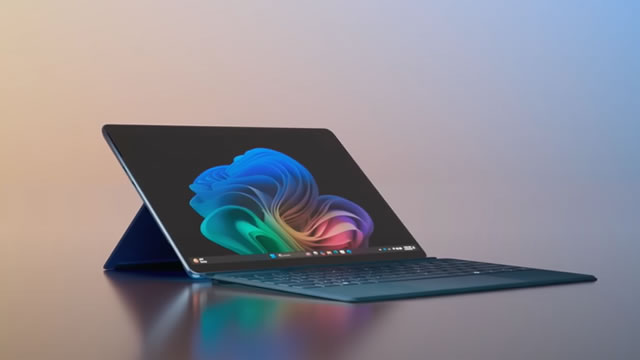
Microsoft Releases Powerful New AI Chip to Take on Nvidia
Yahoo Finance· 2026-01-27 20:17
There's no denying that Nvidia's (NASDAQ: NVDA) graphics processing units (GPUs) are tops when it comes to artificial intelligence (AI) processing. Unfortunately, being the king of the hill means there's always someone trying to take your crown. Microsoft (NASDAQ: MSFT) just announced the debut of a powerful new AI chip, the latest move in the company's bid to become a greater force in the AI landscape. Where to invest $1,000 right now? Our analyst team just revealed what they believe are the 10 best stock ...
Microsoft announces powerful new chip for AI inference
TechCrunch· 2026-01-26 16:00
Core Insights - Microsoft has launched the Maia 200 chip, designed to enhance AI inference capabilities and efficiency [1][2] Group 1: Chip Specifications and Performance - The Maia 200 chip features over 100 billion transistors, achieving over 10 petaflops in 4-bit precision and approximately 5 petaflops in 8-bit performance, marking a significant improvement over the Maia 100 [2] - The chip is positioned to run large AI models with minimal disruption and lower power consumption, with one node capable of handling today's largest models and accommodating future demands [4] Group 2: Industry Context and Competition - The launch of Maia 200 reflects a trend among tech giants to develop self-designed chips to reduce reliance on Nvidia's GPUs, which are critical for AI operations [5] - Microsoft claims that Maia delivers three times the FP4 performance of Amazon's third-generation Trainium chips and surpasses Google's seventh-generation TPU in FP8 performance [6] Group 3: Current Applications and Collaborations - The Maia chip is already being utilized to support Microsoft's AI models from its Superintelligence team and the operations of its Copilot chatbot [7] - Microsoft has invited developers, academics, and AI labs to leverage the Maia 200 software development kit for their projects [7]
直面AI泡沫争议,亚马逊云科技交出了一份实干答卷
Di Yi Cai Jing· 2025-12-24 09:29
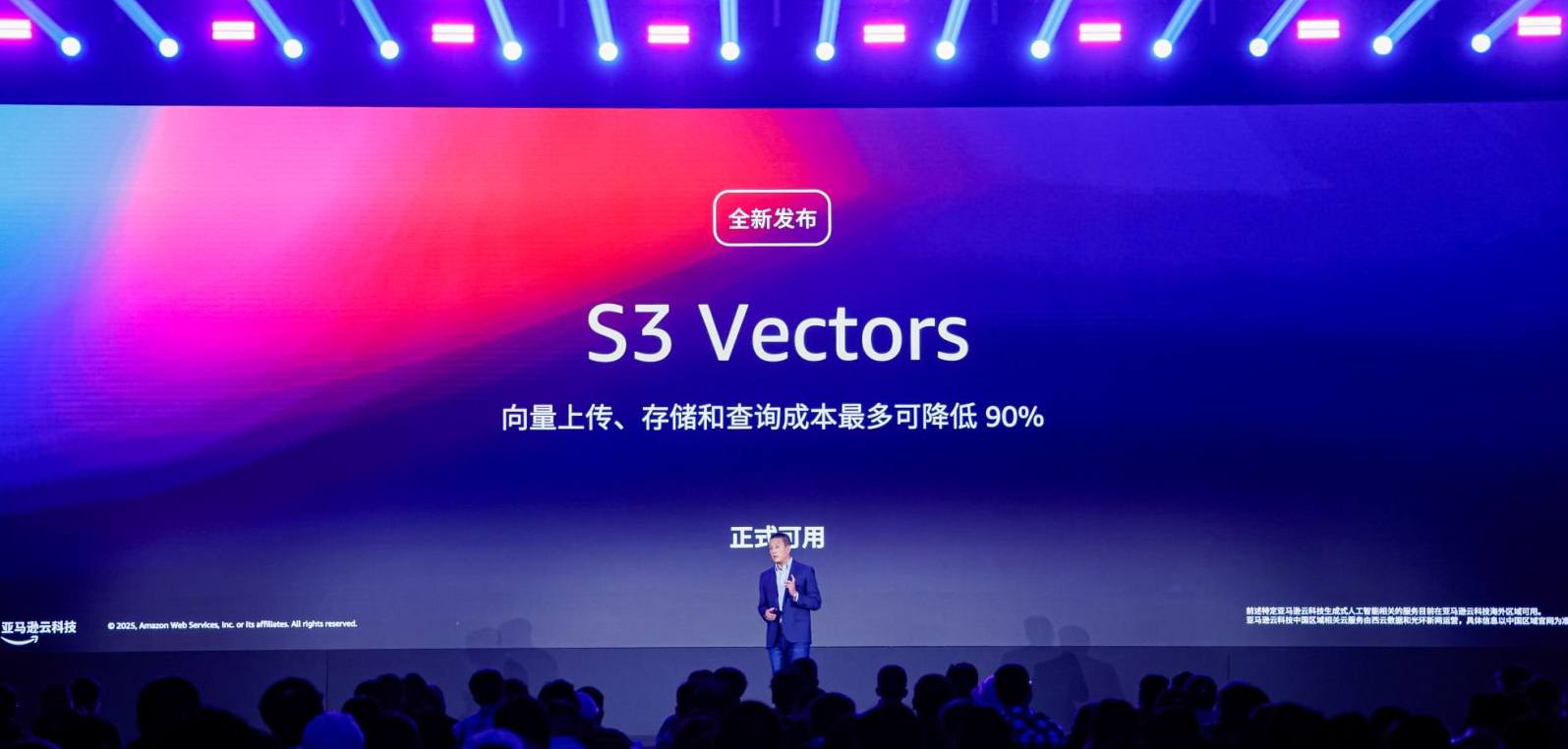
Core Insights - AI technology is undergoing a paradigm shift, evolving from simple chatbots to autonomous agents capable of complex task execution and integration into core business processes [1] - The capital market is reassessing AI investments, with discussions around the AI bubble as tech giants' spending on infrastructure reaches trillions, while short-term revenue growth appears disproportionate [1] - Amazon Web Services (AWS) is addressing market concerns by providing a systematic approach to AI cost management and infrastructure upgrades [2] Infrastructure Innovations - AWS is restructuring its AI cost model by upgrading core services, including a significant increase in Amazon S3's object storage limit from 5TB to 50TB, simplifying the handling of large models [3] - The introduction of Amazon S3 Vectors allows for the storage and management of trillions of vector data at a 90% lower cost, enhancing efficiency in data handling [4] Computing Resource Strategy - AWS employs a dual-track strategy for computing resources, ensuring compatibility with NVIDIA while developing proprietary chips like Amazon Trainium to offer cost-effective options [6][7] - The latest Amazon Trainium 3 UltraServers demonstrate a 4.4x increase in computing power and a 5x improvement in energy efficiency compared to previous generations [9] AI Model Ecosystem - AWS's Amazon Bedrock platform offers a diverse range of models, including new additions from Google and OpenAI, allowing businesses to select models tailored to their specific needs [11][13] - The launch of the Nova 2 model series focuses on cost efficiency and performance, with Nova 2 Lite designed for low-complexity tasks and Nova 2 Pro for high-demand scenarios [14][15] Agent Development Framework - Amazon Bedrock AgentCore standardizes the development of AI agents, enabling businesses to assemble agents that can independently execute tasks [16][17] - The framework allows for the integration of multiple specialized agents within a single workflow, enhancing flexibility and efficiency in task execution [18][19] Quality Control and Trust - AWS introduces a policy management feature in AgentCore to ensure compliance and control over agent actions, addressing concerns about reliability and safety [20] - The AgentCore Evaluations tool provides comprehensive performance assessments, allowing for early detection of issues during the development phase [20] Enterprise Integration - Amazon Quick Suite aims to streamline data access across various business systems, enhancing productivity by reducing the need for manual data retrieval [22] - The introduction of Amazon Transform facilitates the modernization of legacy systems, enabling smoother transitions to cloud environments [24] Software Development Evolution - The Kiro Autonomous Agent represents a shift in software engineering, allowing AI to autonomously complete tasks and collaborate with human developers [25][27] - This evolution signifies a move towards a model where AI handles routine coding tasks, freeing developers to focus on core business innovations [27]
亚马逊云科技推出自研AI芯片Amazon Trainium
Xin Lang Cai Jing· 2025-12-04 12:16
Core Insights - Amazon Web Services (AWS) announced the launch of the new P6E GB300 series and the Trainium 3-based Trn3 UltraServers at the 2025 re:Invent global conference, emphasizing their commitment to providing top-tier computing power for demanding AI workloads [1][2][3] - The introduction of Amazon AI Factories allows customers to deploy dedicated AWS AI infrastructure within their own data centers, ensuring physical and logical isolation while maintaining access to AWS's advanced AI services [1][3] Product Launches - The P6E GB300 series utilizes NVIDIA's latest GB300 NVL72 system, designed to deliver exceptional reliability and performance for large enterprises, including NVIDIA's own Project Ceiba and organizations like OpenAI [1][3] - AWS's self-developed AI chip, Amazon Trainium, is recognized as one of the best inference systems globally, with deployment speeds significantly faster than previous chips, contributing to a multi-billion dollar business that continues to grow [2][4] Future Developments - The Trainium 3 UltraServers are now officially available, and AWS is actively developing Trainium 4, which is expected to achieve substantial improvements over Trainium 3, including a 6x increase in FP4 computing performance, 4x increase in memory bandwidth, and 2x increase in high-bandwidth memory capacity [2][5]
科技:ASIC 受益标的;按 AI 芯片平台划分的营收敞口- Tech_ ASIC beneficiaries; revenues exposures by AI chips platform; Read across to Google's Gemini 3 announcement
2025-12-01 03:18
Summary of Key Points from the Conference Call Industry Overview - The report focuses on the ASIC (Application-Specific Integrated Circuit) market, particularly in relation to AI (Artificial Intelligence) chips and servers, highlighting the increasing demand and customization in this sector [1][11][22]. Core Insights and Arguments - **ASIC Market Growth**: ASIC chips are expected to play a significant role in AI server solutions, with projections indicating that ASICs will contribute 40% of total AI chips by 2026 and 45% by 2027 [11][22]. - **Demand Projections**: The demand for AI chips is forecasted to reach 10 million, 14 million, and 17 million units from 2025 to 2027, with ASIC shipments contributing 38%, 40%, and 45% respectively [1]. - **Revenue Growth**: The global server total addressable market (TAM) is expected to grow by 42%, 32%, and 19% year-over-year, reaching $359 billion, $474 billion, and $563 billion from 2025 to 2027 [13]. - **Customization Benefits**: ASIC solutions provide higher gross margins for suppliers due to their customization, which allows for better performance and energy efficiency compared to general-purpose GPUs [15][22]. Company-Specific Highlights - **Wiwynn**: Expected to have the largest ASIC exposure among ODMs by 2026, with significant partnerships with Amazon and Meta. The company has reported over 100% year-over-year growth in revenue for the first three quarters of 2025 [6][27]. - **Hon Hai**: Anticipated to expand its ASIC customer base significantly by 2026, benefiting from its role as a supplier for Google TPU servers [23]. - **Innolight**: Positioned as a key supplier of optical transceivers, with expected revenue growth of 104% year-over-year in 2026 from 800G optical modules [24][25]. - **LandMark**: Expected to see a revenue increase from 71% in 2025 to 85% in 2026 due to the demand for high-speed optical transceivers [26]. - **EMC**: Anticipated to maintain a strong market position with over 50% market share in the ASIC AI server supply chain, expecting solid revenue growth [28]. - **TSMC**: Expected to manufacture next-generation TPUs, with projections indicating that TPU revenue will account for less than 5% of TSMC's total revenue through 2026 [29]. Additional Important Insights - **Market Dynamics**: The shift towards ASICs is driven by major AI model suppliers developing in-house ASIC platforms to optimize performance and reduce costs [22]. - **Investment Trends**: Amazon plans to invest up to $50 billion in AI infrastructure, which will utilize in-house Trainium chips and Nvidia GPUs [24]. - **Emerging Partnerships**: OpenAI's collaboration with Broadcom to design in-house AI accelerators is expected to enhance the capabilities of AI systems by 2029 [24]. This summary encapsulates the key points from the conference call, providing insights into the ASIC market's growth, company-specific developments, and broader industry trends.


与OpenAI签署380亿美元算力供应协议,亚马逊开盘涨超4%
第一财经· 2025-11-03 16:27
Core Viewpoint - Amazon has announced a long-term strategic partnership with OpenAI, involving a financial commitment of $38 billion, which is expected to enhance AI processing capabilities through AWS infrastructure [3][4]. Group 1: Partnership Details - OpenAI will utilize Amazon EC2 UltraServers, accessing hundreds of thousands of NVIDIA GPUs, with the potential to scale to tens of millions of CPUs [4]. - The partnership's value of $38 billion is projected to grow over the next seven years [4][5]. - OpenAI is expected to start using AWS computing services immediately, with full deployment of computing capabilities anticipated by the end of 2026 [5]. Group 2: Competitive Landscape - OpenAI is focusing on GPU usage for its computational needs, contrasting with Anthropic, which has opted for Amazon's proprietary AI chips [5]. - Recent collaborations between OpenAI and major GPU manufacturers, including NVIDIA and AMD, indicate a trend of significant investments in AI infrastructure [6]. Group 3: Financial Performance - Amazon reported a 12% increase in net sales to $180.2 billion for Q3 2025, with a net profit of $21.2 billion, reflecting a 38.6% year-over-year growth [7]. - AWS has experienced its highest growth rate since 2022, driven by strong demand for AI and core infrastructure [7]. Group 4: Market Sentiment - There is ongoing debate in the market regarding the potential for an AI bubble, with experts suggesting that the return on investment from massive AI expenditures may not be clear for at least a year [7].