
消费零售

Search documents
中国企业社会化用工趋势分析报告
艾瑞咨询· 2026-02-28 00:06
Core Viewpoint - The trend of socialized employment is expanding, driven by macroeconomic pressures and the need for flexible labor arrangements in various industries, particularly in manufacturing and retail sectors [1][2][6]. Group 1: Concept and Environment - Socialized employment refers to various forms of labor relationships outside standard employment, including outsourcing, labor dispatch, hourly pay, platform-based flexible employment, and shared employment [3][4]. - The macroeconomic environment is characterized by a decline in the working-age population, leading to labor shortages and rising costs for companies, particularly in labor-intensive sectors like manufacturing and retail [1][16]. Group 2: Trends and Policy - The scale of socialized employment continues to grow, with supportive policies expected to improve further [2][9]. - The relationship between individuals and organizations is shifting from dependency to symbiosis, requiring diverse skill sets [2]. Group 3: Industry-Specific Insights - In the retail sector, socialized employment is used to manage sales fluctuations and market changes, with a significant portion of employment being flexible [1][29]. - The manufacturing sector employs socialized labor to address capacity fluctuations and strategic focus, with foreign and leading private enterprises showing a preference for this model [1][44]. Group 4: Employment Characteristics - Socialized employment in retail is characterized by high employee turnover, with rates exceeding 30% for frontline positions, leading to management challenges [37]. - In manufacturing, the recruitment process is a critical pain point, especially during peak periods, affecting production stability [52]. Group 5: Technological and Talent Dynamics - Digital technology is reshaping employment relationships, fostering new forms of platform-based flexible work that enhance labor resource allocation efficiency [12]. - The demand for cross-disciplinary and composite talents is increasing in manufacturing, driven by the need for skills in emerging technologies [54].


突传利好,集体飙涨!
Xin Lang Cai Jing· 2026-02-20 03:09
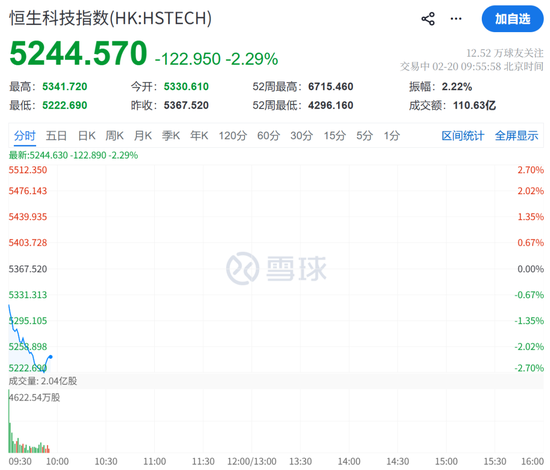
Market Overview - The Hong Kong stock market opened lower, with the Hang Seng Index down 0.18%, the Hang Seng Tech Index down 0.69%, and the Hang Seng China Enterprises Index down 0.19% [1][18] - The market continued to decline, with the Hang Seng Index dropping over 1% and the Hang Seng Tech Index reaching a decline of 2.7% at one point [1][18] - By the time of reporting, the major indices had narrowed their losses but remained predominantly in the red [1][18] Sector Performance - The media and consumer sectors experienced widespread declines, with notable drops in companies such as DaMai Entertainment (over 6%), NetEase Cloud Music (over 5%), and Tencent Music (nearly 4%) [2][21] - Conversely, sectors such as oil and petrochemicals, semiconductors, and enterprise services showed resilience, with AI applications gaining significant traction [2][20] AI Sector Highlights - The AI application sector continued its upward momentum, with HaiZhi Technology Group surging over 28% to a peak price of 154.4 HKD per share, marking a new high since its listing [10][27] - ZhiPu Technology's stock reached a peak of 635 HKD per share, reflecting a 25% increase, with a total market capitalization exceeding 270 billion HKD [11][29] - MINIMAX also saw a strong performance, rising over 15% to a peak of 980 HKD per share [30][31] Investment Insights - Recent developments in AI technology, including the integration of major models like ZhiPu GLM-5 and Alibaba Qwen3.5, are expected to enhance the capabilities of enterprise AI platforms [32][33] - The AI sector is witnessing a dual trend of technological breakthroughs and intensified commercial competition, supported by national strategies promoting "Artificial Intelligence+" [33]
中国企业社会化用工趋势分析报告
艾瑞咨询· 2026-02-18 00:05
Core Viewpoint - The trend of socialized employment is expanding, driven by macroeconomic pressures, labor shortages, and the need for flexible workforce solutions across various industries [1][2][6]. Group 1: Concept and Environment - Socialized employment refers to various forms of employment outside standard labor relations, including outsourcing, labor dispatch, hourly pay, platform-based flexible employment, and shared employment [1][3]. - The macroeconomic environment is characterized by fluctuations, a declining working-age population, and rising labor costs, leading to a dual pressure on enterprises [1][6]. - The manufacturing and wholesale retail sectors are the most receptive to socialized employment due to their large workforce and inherent employment characteristics [1][16]. Group 2: Trends and Policy - The scale of socialized employment continues to grow, with supportive policies expected to improve [2][9]. - Socialized employment is becoming a standard practice for enterprises, with human resource service providers upgrading towards specialization and digitalization [2][9]. - The relationship between individuals and organizations is shifting from dependency to symbiosis, requiring a more diverse skill set [2][9]. Group 3: Macro Environment - The digital economy is rapidly growing, projected to reach 63.2 trillion yuan by 2024, accounting for 46.8% of GDP, driving high-quality economic development [6][12]. - Government policies are encouraging the development of socialized employment models to enhance competitiveness [9][12]. Group 4: Industry Penetration - As of 2024, over 240 million flexible workers are employed in various sectors, with socialized employment deeply penetrating industries [19]. - Business outsourcing has a penetration rate exceeding 50%, while labor dispatch accounts for 20-30%, and platform-based employment is below 20% [19]. Group 5: Micro Environment - Enterprise Demand - External competitive pressures and internal management needs are driving the shift towards socialized employment strategies [23]. - Socialized employment allows enterprises to build agile organizational structures and control labor costs flexibly [23][26]. Group 6: Core Value of Socialized Employment - Socialized employment effectively balances the need for cost efficiency in enterprises with the personal development needs of workers [26]. - It enables dynamic adjustments to labor costs based on business fluctuations while providing flexible employment options for workers [26]. Group 7: Pain Points in Employment - High employee turnover is a core pain point for retail enterprises, with turnover rates exceeding 30% for socialized employment [37]. - Traditional recruitment and training methods struggle to meet fluctuating demand, leading to imbalances in labor flexibility [37]. Group 8: Sector-Specific Characteristics - In the retail sector, socialized employment is characterized by diverse employment forms, with a focus on flexibility to meet peak demand [31][35]. - Manufacturing enterprises prefer socialized employment for non-core positions while maintaining core technical roles with full-time employees [46][49].

股票市场概览:资讯日报:AI颠覆性风险再度冲击美股,物流和商业地产等传统板块重挫
Guoxin Securities· 2026-02-14 02:45
Market Overview - The U.S. stock market experienced a significant decline, with the Nasdaq dropping by 2.0%, while the S&P 500 and Dow Jones fell by over 1% each, driven by concerns over AI's disruptive impact on traditional business models[9][10]. - The Hang Seng Index closed at 27,033, down 0.86% for the day, while the Hang Seng Tech Index fell by 1.65%[3]. Sector Performance - Major technology stocks in Hong Kong faced pressure, with Meituan and NetEase both declining over 4%, and Tencent and Baidu dropping more than 2%[9]. - The electric equipment sector showed strong performance, with Harbin Electric rising by 13.73% after forecasting a 57.2% increase in net profit for 2025[9]. - AI application stocks surged, with Zhizhu rising by 28.68% due to strong market demand and a price adjustment announcement[9]. Economic Indicators - The heavy machinery sector continued its upward trend, with sales of excavators in January 2026 increasing by 49.5% year-on-year, driven by both domestic and export demand[9]. - Consumer stocks showed weakness, with notable declines in companies like Jiumaojiu and Budweiser Asia, which reported a 6.0% drop in total sales for the fiscal year 2025[9]. Global Market Trends - Concerns about AI's impact on the labor market have affected real estate demand, leading to declines in commercial real estate stocks like CBRE and SL Green Realty[10]. - Defensive stocks such as Walmart and Coca-Cola recorded positive returns, indicating a shift towards safer investments amid rising market volatility[13].
中国企业社会化用工趋势分析报告
艾瑞咨询· 2026-02-07 00:04
Core Viewpoint - The trend of socialized employment is expanding, driven by macroeconomic pressures, labor shortages, and the need for flexible workforce solutions across various industries [1][2][6]. Group 1: Concept and Environment - Socialized employment refers to various forms of employment outside standard labor relations, including outsourcing, labor dispatch, hourly pay, platform-based flexible employment, and shared employment [1][3]. - The macroeconomic environment is characterized by fluctuations, a declining working-age population, and rising labor costs, leading to a dual pressure on enterprises [1][6]. - The manufacturing and wholesale retail sectors are the most receptive to socialized employment due to their large workforce needs and inherent employment characteristics [1][16]. Group 2: Trends and Policy - The scale of socialized employment continues to grow, with supportive policies expected to improve further [2][9]. - Socialized employment is becoming a standard practice for enterprises, with human resource service providers upgrading towards specialization and digitalization [2][9]. - The relationship between individuals and organizations is shifting from dependency to symbiosis, requiring a more diverse skill set [2]. Group 3: Macro Environment - The digital economy is rapidly growing, projected to reach 63.2 trillion yuan by 2024, accounting for 46.8% of GDP, driving high-quality economic development [6]. - Recent policies encourage the development of socialized employment, pushing enterprises to enhance competitiveness through these models [9][12]. Group 4: Industry Penetration - As of 2024, over 240 million flexible employment individuals exist in China, indicating deep and high-quality penetration of socialized employment across various sectors [19]. - Business outsourcing has a penetration rate exceeding 50%, while labor dispatch accounts for 20%-30%, and platform-based employment is below 20% [19]. Group 5: Micro Environment - Enterprise Demand - External competitive pressures and internal management needs are driving enterprises to adopt socialized employment strategies [23]. - Socialized employment allows companies to build agile organizational structures and control labor costs flexibly [23][26]. Group 6: Value of Socialized Employment - Socialized employment effectively balances the need for cost efficiency in enterprises with individual development needs, enhancing labor market flexibility [26]. - It allows for dynamic adjustments in workforce size based on business fluctuations, reducing recruitment and management risks [26]. Group 7: Sector-Specific Characteristics - In the retail sector, socialized employment is characterized by high employee turnover, with rates exceeding 30% for frontline positions [37]. - The manufacturing sector utilizes socialized employment to address capacity fluctuations and strategic focus, with outsourcing and labor dispatch being common practices [44][49]. Group 8: Pain Points in Socialized Employment - High employee turnover in retail leads to management challenges, including training costs and operational inefficiencies [37][52]. - Recruitment difficulties during peak periods and compliance challenges related to labor relations are significant issues for manufacturing enterprises [52].

北水动向|北水成交净买入133.73亿 大摩称市场过度担忧增值税传闻 北水继续抢筹科网股
智通财经网· 2026-02-04 10:13
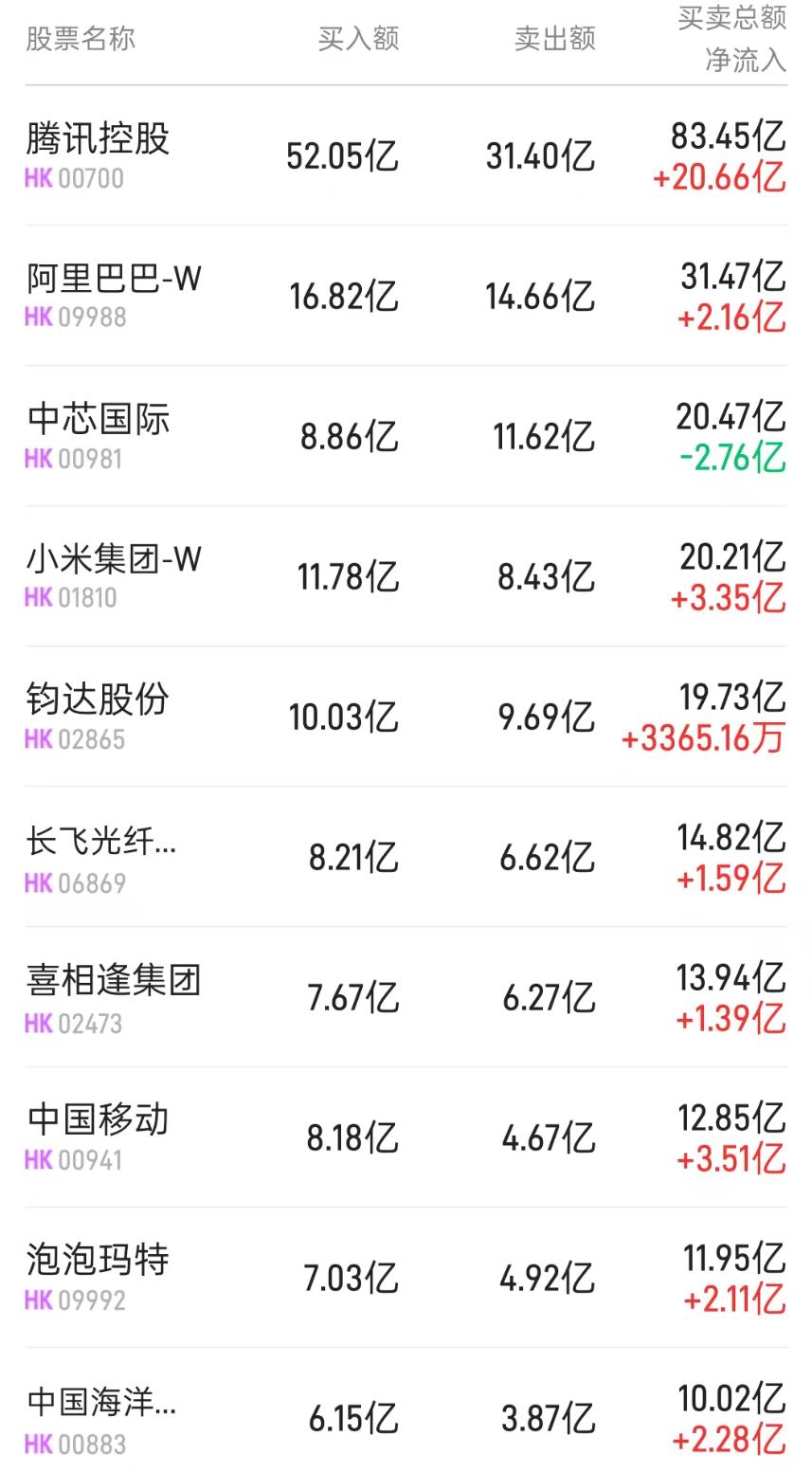
Core Viewpoint - The Hong Kong stock market experienced significant net inflows from northbound capital, totaling HKD 133.73 billion, with major contributions from Tencent, Alibaba, and Southern Hang Seng Technology, while SMIC and Hua Hong Semiconductor faced the highest net outflows [1]. Group 1: Northbound Capital Inflows - Tencent Holdings (00700) received a net inflow of HKD 52.05 billion, with total trading volume of HKD 83.45 billion, reflecting a net increase of HKD 20.66 billion [2]. - Alibaba-W (09988) saw a net inflow of HKD 16.82 billion, with total trading volume of HKD 31.47 billion, resulting in a net increase of HKD 2.16 billion [2]. - Southern Hang Seng Technology (03033) attracted a net inflow of HKD 11.67 billion, contributing to the overall positive sentiment in the tech sector [4]. Group 2: Notable Net Outflows - SMIC (00981) experienced a net outflow of HKD 8.86 billion, with total trading volume of HKD 20.47 billion, indicating a net decrease of HKD 2.76 billion [2]. - Hua Hong Semiconductor (01347) faced a net outflow of HKD 1.90 billion, with total trading volume of HKD 6.15 billion, reflecting a significant decline [4]. Group 3: Sector Performance and Trends - The telecommunications sector, represented by China Mobile (00941), saw a net outflow of HKD 3.5 billion, attributed to anticipated pressure on net profits due to an increase in value-added tax rates [5]. - The optical fiber industry, led by Changfei Optical Fiber (06869), is experiencing a price increase trend, with expectations of continued growth driven by demand from telecom operators [6]. - Xiaomi Group (01810) reported a net inflow of HKD 7.65 billion, supported by strong electric vehicle delivery performance and ongoing investments in AI and robotics [5].





17家公司同日递表港股IPO
2 1 Shi Ji Jing Ji Bao Dao· 2026-02-02 14:42
Core Insights - The Hong Kong capital market has started 2026 with a vibrant listing wave, continuing the momentum from Q4 2025, with 17 companies submitting applications on January 30 alone [1] - A total of 139 companies submitted listing applications in January 2026, with 2 companies passing the listing hearing and 13 companies successfully listing on the exchange [1][2] Group 1: Market Trends - The listing activities reflect a strategic choice by companies towards the Hong Kong Stock Exchange, indicating global capital's confidence in China's new economic sectors [2] - The sectors represented in the applications include renewable energy, semiconductors, AI, robotics, consumer goods, and biomedicine, showcasing a diverse range of industries [4] Group 2: Notable Companies - XINWANGDA, a leading global consumer lithium battery manufacturer, submitted its application to the Hong Kong Stock Exchange, aiming to raise funds for its overseas production capacity expansion [4][5] - EVE Energy also submitted its application, with plans to use the raised funds for the construction of its production base in Hungary [5] - ATOOM, known as the "king of parallel robots" in China, has also applied for listing, demonstrating significant revenue growth and market leadership in various sectors [5][6] Group 3: Financial Performance - XINWANGDA reported a revenue of 13.89 billion yuan for its consumer battery business in the first half of 2025, with a 5.2% year-on-year growth and a gross margin of 19.63% [4] - ATOOM's revenue grew from 93.5 million yuan in 2023 to 135 million yuan in 2024, with a further increase to 157 million yuan in the first nine months of 2025 [6] Group 4: Future Projections - Predictions indicate that around 160 new stocks will be listed on the Hong Kong Stock Exchange in 2026, with a total fundraising target of at least 300 billion HKD (approximately 38 billion USD) [9][10] - The recent regulatory reforms at the Hong Kong Stock Exchange have facilitated the listing of companies in emerging sectors, enhancing the attractiveness of the market for international investors [9][10]



一日内17家公司递表 港股IPO开年爆红
2 1 Shi Ji Jing Ji Bao Dao· 2026-02-02 10:26
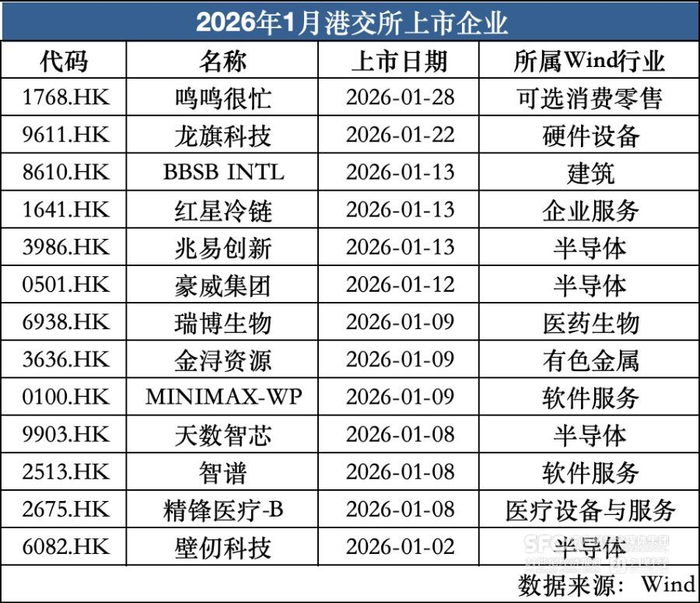
Core Viewpoint - The Hong Kong capital market has experienced a vibrant start in 2026, with a significant number of companies submitting listing applications, reflecting strong confidence in China's new economy sectors [1][2]. Group 1: Listing Activity - A total of 139 companies submitted listing applications to the Hong Kong Stock Exchange in January 2026, with 17 companies applying on January 30 alone [1]. - Notable companies that completed their listings include Mingming Hen Mang, Longqi Technology, and Zhaoyi Innovation, among others, with various sectors represented [1][5]. - The listing activity is characterized by a diverse range of sectors, including new energy, semiconductors, AI, robotics, consumer goods, and biomedicine [2][7]. Group 2: Sector Highlights - The new energy sector has shown particularly strong performance, with companies like Xinnengda and Yiwei Lithium Energy planning to raise funds for overseas market expansion [2][3]. - Xinnengda reported a revenue of 13.89 billion yuan for its consumer battery business in the first half of 2025, with a year-on-year growth of 5.2% and a gross margin of 19.63% [2]. - Yiwei Lithium Energy is focusing its fundraising on the construction of its production base in Hungary, with a total investment of up to 8.654 billion yuan for its new energy storage battery project [3]. Group 3: AI and Robotics Developments - AI chip company Aixin Yuanzhi is set to launch its IPO on February 10, 2026, and is recognized as a key player in the edge AI chip market, holding a 6.8% market share [4]. - The robotics sector is represented by companies like Atonmo Robot, which has seen rapid revenue growth, reaching 157 million yuan in the first nine months of 2025 [3]. - The AI large model sector has also generated market enthusiasm, with companies like Zhipu and MiniMax experiencing significant stock price increases upon their listings [4]. Group 4: Market Dynamics and Policy Support - The surge in listings is attributed to multiple factors, including companies' long-term capital needs and the supportive policies from the Hong Kong Stock Exchange [7][8]. - Recent reforms, such as the 18A and 18C listing rules, have facilitated the entry of biotech and tech companies into the market, allowing for greater flexibility in fundraising [7][8]. - Deloitte predicts that around 160 new stocks will be listed on the Hong Kong Stock Exchange in 2026, raising at least 300 billion HKD (approximately 38 billion USD), indicating a continued trend of high fundraising [8].
基金双周报:ETF市场跟踪报告-20260202
Ping An Securities· 2026-02-02 07:53
1. Report Industry Investment Rating No information provided in the content. 2. Core Viewpoints of the Report - As of January 30, in the past two weeks, ETF products showed mixed performance. Among domestic major broad - based ETFs, CSI 500 had the largest increase, and among industry and theme products, cyclical theme ETFs had the largest increase. In the past two weeks, among domestic major broad - based ETFs, CSI 2000 ETF had a net inflow of funds, while CSI 300 ETF had a significant net outflow of funds [3][10]. - In 2025, the technology theme ETF had the largest cumulative net inflow of funds, followed by the financial real - estate ETF. Except for the military - industry theme, all other industry theme ETFs had a net inflow of funds in 2025. In the past two weeks, the inflow of funds into cyclical, pharmaceutical, and consumer ETFs accelerated, the inflow of funds into military - industry, financial real - estate ETFs slowed down, the net inflow of funds into other large - manufacturing and new - energy ETFs turned positive, and the outflow of funds from dividend ETFs slowed down [11][17]. - In 2025, the credit - bond ETF had the largest net inflow of funds, followed by the treasury - bond ETF. In the past two weeks, the net inflow of funds into convertible - bond ETFs accelerated, the net inflow of funds into short - term financing ETFs turned positive, and the outflow of funds from policy - financial - bond, credit - bond, treasury - bond, and local - bond ETFs slowed down [17]. 3. Summary by Relevant Catalogs 3.1 ETF Market Review 3.1.1 Main Types of ETF Fund Flows Overview - As of January 30, in the past two weeks, among domestic major broad - based ETFs, CSI 500 had the largest increase, and among industry and theme products, cyclical theme ETFs had the largest increase. In the past two weeks, among domestic major broad - based ETFs, CSI 2000 ETF had a net inflow of funds, while CSI 300 ETF had a significant net outflow of funds [3][10]. - In the past two weeks, the inflow of funds into cyclical, pharmaceutical, and consumer ETFs accelerated, the inflow of funds into military - industry, financial real - estate ETFs slowed down, the net inflow of funds into other large - manufacturing and new - energy ETFs turned positive, and the outflow of funds from dividend ETFs slowed down. In the bond ETF category, the net inflow of funds into convertible - bond ETFs accelerated, the net inflow of funds into short - term financing ETFs turned positive, and the outflow of funds from policy - financial - bond, credit - bond, treasury - bond, and local - bond ETFs slowed down [3]. 3.1.2 Cumulative Fund Flows of Main Types of ETFs - For broad - based ETFs, in 2025, the fund flow trend of major broad - based ETFs changed from outflow to inflow and then back to outflow, with a significant inflow at the end of the year. In April, there was a large - scale inflow of funds into broad - based ETFs such as CSI 300 ETF, and thereafter, all types of broad - based ETFs had a continuous outflow of funds. In mid - to late December, there was a significant inflow of funds into CSI A500 ETF. In 2025, CSI 1000/CSI 2000 had the largest cumulative net inflow of funds, followed by CSI 300 and CSI 500 ETFs. The cumulative funds of science - innovation/growth - enterprise and A - series ETFs all had a net outflow. In the past two weeks, major broad - based ETFs had a significant net outflow of funds, with CSI 300, SSE 50, CSI 500, CSI 1000/CSI 2000 ETFs having an accelerated net outflow, and the net outflow of funds from science - innovation/growth - enterprise and A - series ETFs slowing down [11]. - For industry and theme ETFs, in 2025, the technology theme ETF had the largest cumulative net inflow of funds, followed by the financial real - estate ETF. Except for the military - industry theme, all other industry theme ETFs had a net inflow of funds in 2025. The technology ETF had a large - scale outflow at the beginning of the year and then turned to an inflow of funds since March. In the past two weeks, the inflow of funds slowed down. In the past two weeks, the inflow of funds into cyclical, pharmaceutical, and consumer ETFs accelerated, the inflow of funds into military - industry, financial real - estate ETFs slowed down, the net inflow of funds into other large - manufacturing and new - energy ETFs turned positive, and the outflow of funds from dividend ETFs slowed down [17]. - For bond ETFs, since 2025, the credit - bond ETF had the largest net inflow of funds, followed by the treasury - bond ETF. In the past two weeks, the net inflow of funds into convertible - bond ETFs accelerated, the net inflow of funds into short - term financing ETFs turned positive, and the outflow of funds from policy - financial - bond, credit - bond, treasury - bond, and local - bond ETFs slowed down [17]. 3.1.3 ETF Product Structure Distribution - As of January 30, in the past two weeks, a total of 19 new ETFs were established in the market, with a total issuance share of 1.0963 billion, all of which were stock ETFs. Compared with the end of 2025, the scales of commodity ETFs, industry + dividend ETFs, and QDII - ETFs increased by 38.50%, 23.19%, and 6.01% respectively, while the scales of bond ETFs and broad - based ETFs decreased by 12.49% and 34.99% respectively [23][24]. 3.1.4 Fund Manager Scale Distribution - As of January 30, Huaxia Fund had the largest on - exchange ETF scale of 765.023 billion yuan. The ETF management scale of Guotai Fund expanded by more than 170 billion yuan compared with a year ago [25]. 3.2 Classification - Based ETF Tracking 3.2.1 Technology Theme ETF Tracking in the Past Two Weeks - Products tracking semiconductor materials and equipment had the largest net inflow of funds in the past two weeks, while products tracking science - innovation AI had a net outflow of funds [31]. 3.2.2 Dividend Theme ETF Tracking in the Past Two Weeks - Products tracking low - volatility dividend had the largest net inflow of funds in the past two weeks, while products tracking CSI Dividend had a net outflow of funds [34]. 3.2.3 Consumption Theme ETF Tracking in the Past Two Weeks - Products tracking the S&P 500 Consumer Select Index had a relatively high premium rate. ETFs tracking CSI Tourism had the largest net inflow of funds in the past two weeks, while products tracking CSI Animal Husbandry had a net outflow of funds [37]. 3.2.4 Pharmaceutical Theme ETF Tracking in the Past Two Weeks - ETFs tracking CS Innovative Drugs had the largest net inflow of funds in the past two weeks, while products tracking the All - Index Pharmaceutical had a net outflow of funds [40]. 3.2.5 Large - Manufacturing Theme ETF Tracking in the Past Two Weeks - Products tracking the power grid equipment theme had the largest net inflow of funds in the past two weeks, while products tracking robots had a net outflow of funds [43]. 3.2.6 QDII ETF Tracking in the Past Two Weeks - Products tracking Hang Seng Technology had the largest net inflow of funds in the past two weeks, while ETF products tracking the Hang Seng Index had a net outflow of funds [46]. 3.3 Hot - Theme ETF Tracking 3.3.1 AI Theme ETF Tracking in the Past Two Weeks - AI theme products showed mixed performance in the past two weeks, with an average return rate of - 0.6%. Products tracking GEM Artificial Intelligence had the largest increase. Since 2025, there has been an overall net inflow of funds. There was a large - scale inflow from mid - February to April, a continuous outflow from May to August, and a large - scale inflow since mid - August. In the past two weeks, there was a net inflow of funds of 2.944 billion yuan [56]. 3.3.2 Robot Theme ETF Tracking in the Past Two Weeks - Robot theme products had a poor performance in the past two weeks, with an average return rate of - 5.21%. Products tracking the Robot Index had a relatively small decline. After February 2025, the funds had an overall rapid inflow trend, and there was a small net inflow of funds of 0.052 billion yuan in the past two weeks [60]. 3.3.3 New - Energy Theme ETF Tracking in the Past Two Weeks - New - energy theme products had a poor performance in the past two weeks, with an average return rate of - 3.14%. Products tracking Green Power had a relatively small decline. There was a continuous outflow of funds before August 2025, a large - scale inflow from August to October, a large - scale outflow since late October, and a net inflow of funds of 0.0101 billion yuan in the past two weeks [65]. 3.3.4 Satellite and Commercial Aerospace Theme ETF Tracking in the Past Two Weeks - Satellite and commercial aerospace theme products had a poor performance in the past two weeks, with an average return rate of - 3.55%. Products tracking the National Securities Aerospace Index had a relatively small decline. There was a small inflow of funds in late August 2025, a large - scale inflow since mid - to late December, and a net inflow of funds of 3.896 billion yuan in the past two weeks [70]. 3.3.5 Commodity ETF Tracking in the Past Two Weeks - Commodity ETFs had a good performance in the past two weeks, with an average return rate of 7.26%. Products tracking SGE Gold 9999 had the largest increase. There were large - scale inflows in April and mid - to late October 2025, and a large - scale net inflow of funds of 37.054 billion yuan in the past two weeks. Since the beginning of this year, there has been a large - scale net inflow of funds into gold ETFs, with a cumulative net inflow of 23.471 billion yuan in the past week, and the inflow decreased on January 30 [75]. 3.3.6 Central Huijin, Guoxin, and Chengtong's Holdings of ETF Tracking in the Past Two Weeks - As of June 30, 2025, the total scale of ETFs held by Central Huijin, Guoxin, and Chengtong was 39.1336 billion shares. In the past two weeks, there was a net outflow of funds of 711.4 billion yuan. In the past two weeks, ETFs such as Huatai - Peregrine CSI 300 ETF, E Fund CSI 300 ETF, and Huaxia CSI 300 ETF had the largest outflows of funds [79].
2026年中国经济形势展望:新质驱动,能级跃-ciic中智咨询
新经销· 2026-01-31 09:40
Economic Outlook - China's GDP is expected to maintain a growth rate of around 5% in 2026, shifting from high-speed growth to high-quality development driven by new productivity[8] - Fixed asset investment (excluding rural households) is projected to decline by 3.8% in 2025, with private investment decreasing by 6.4%[13] - The retail sales of consumer goods in 2025 are anticipated to grow by 3.7%, with service retail sales increasing at a faster rate than goods[13] Investment and Consumption Trends - Investment is transitioning from real estate to strategic projects and high-tech manufacturing, with a focus on equipment upgrades, green energy, and new infrastructure[8] - Consumption is exhibiting a "hollow" structure, with high-end experiences and cost-effective options gaining strength, while the mid-market faces pressure[8] Foreign Trade and Reform - Exports are evolving from "new three samples" to "new new three samples," with diversification towards the Belt and Road Initiative and high-value-added products[8] - State-owned enterprise reforms are focusing on strategic missions and technological innovation, while local debt resolution and urban investment transformation are entering a "systematic" phase[8] Risks and Opportunities - Risks include insufficient demand and weak prices, with CPI and PPI remaining low, reflecting fragile domestic recovery[14] - Opportunities lie in investments in new productivity sectors such as high-tech manufacturing and green energy, as well as the growth of service and county-level consumption, which is expected to exceed 40%[14]