
CPI报告

Search documents
11月CPI数据“跳水”,华尔街却齐声警告:别被骗了!
Jin Shi Shu Ju· 2025-12-19 00:30
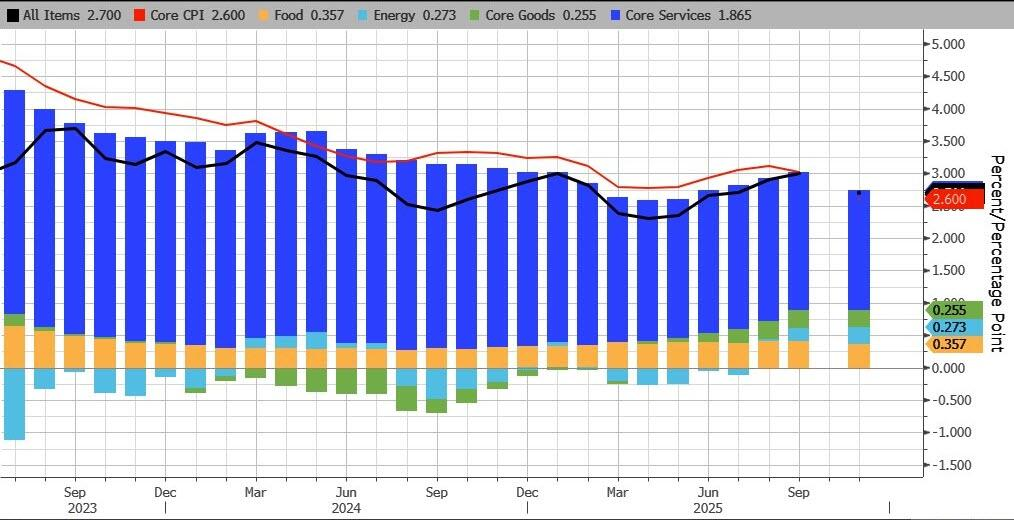
Group 1 - The core inflation in the U.S. dropped to a four-year low in November, but economists question the "authenticity" of the report due to significant data gaps caused by a record-length government shutdown [1] - The Consumer Price Index (CPI) report showed a year-over-year increase of 2.6% in November, the slowest growth since 2021, but the missing data from October led to assumptions that inflation did not occur that month [1][2] - Economists criticized the report's methodology, particularly the use of "carry-forward imputation" for housing prices, which assumed no price changes, leading to inconsistencies in the data [2][3] Group 2 - The largest discrepancies in the report were found in the housing category, which has been a major driver of inflation, with average rent increases of only 0.06% and owner-equivalent rent increases of 0.14% over two months [3] - Despite the anomalies, some economists believe inflation is cooling, although not to the extent suggested by the report, indicating a need for caution in interpreting the data [4]
美CPI降温别高兴太早:经济学家怀疑政府关门导致数据失真,有人指明显出错
Hua Er Jie Jian Wen· 2025-12-18 19:28
Core Insights - The November core inflation unexpectedly dropped to its lowest level in over four years, raising skepticism among economists due to data collection issues caused by a prolonged government shutdown [1][3] - The core Consumer Price Index (CPI) excluding food and energy rose by 2.6% year-on-year, the lowest growth rate since March 2021, while the overall CPI increased by 2.7%, both below economists' expectations [1][3] Data Collection Issues - The core CPI only increased by 0.2% over the two months leading to November, with significant data collection disruptions due to a 43-day government shutdown [3][4] - Economists criticized the Bureau of Labor Statistics (BLS) for assuming zero growth in rental prices for October, which artificially lowered the November inflation figures [3][4][6] - The BLS's data collection was delayed until late November, coinciding with the "Black Friday" discount period, potentially distorting the data further [4][6] Market Reactions - Despite skepticism regarding the data's reliability, U.S. stock markets rebounded following the CPI release, with expectations of a slight increase in the probability of a Federal Reserve rate cut in January [3][7] - Some market analysts view the unexpected decline in inflation as a strong basis for the Federal Reserve to consider a rate cut, while others remain cautious about the data's validity [7][10] Sector-Specific Insights - Housing costs emerged as a significant concern, with a year-on-year increase of only 3%, the smallest in over four years, raising questions about the accuracy of the reported inflation figures [9][10] - The report indicated that energy prices rose by 4.2%, with electricity prices increasing by 6.9%, while used car prices saw a 3.6% rise, reflecting ongoing affordability concerns among consumers [10][11]

降息持续升温,黄金却怂了!
Jin Tou Wang· 2025-12-04 09:45
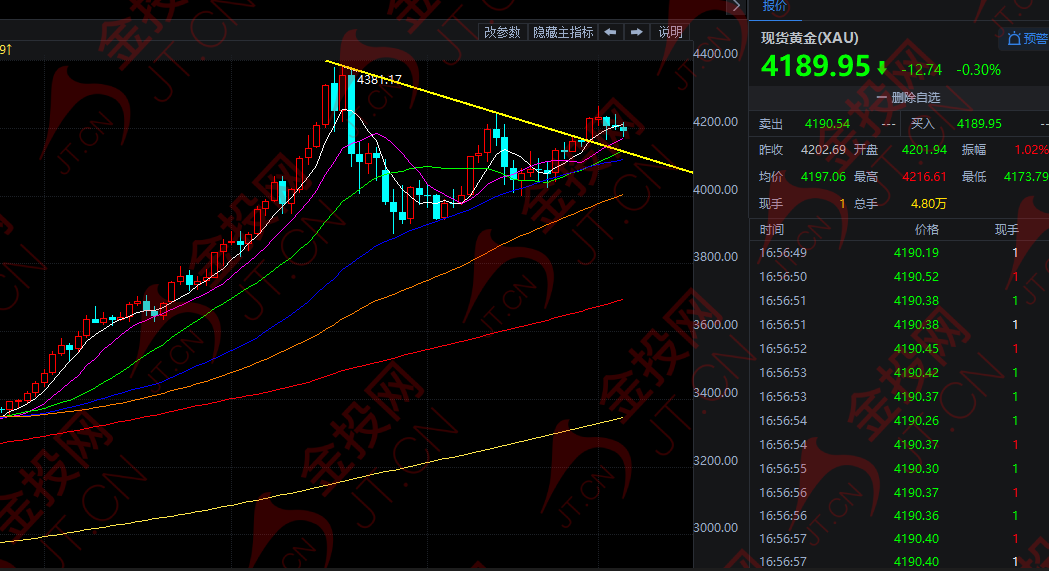
Group 1 - Gold prices remained stable above $4200, reaching a high of $4241.40 due to weak U.S. employment data, but closed near $4203, showing little change [1] - In the European market, gold prices slightly declined, hovering around $4188 [1] Group 2 - The U.S. job market unexpectedly contracted, with private sector jobs decreasing by 32,000 in November, the largest drop since March 2023, significantly below the expected increase of 40,000 [3] - Wage growth also slowed, with job switchers seeing a 6.3% increase, the lowest since February 2021, and wage growth for those staying in their positions at 4.4%, down 0.1 percentage points from October [3] Group 3 - The Federal Reserve is expected to announce a 25 basis point rate cut in December, with a probability of 89%, up from 88% the previous day [7] - The November non-farm payroll report has been rescheduled for release on December 16, which will be the last employment data available before the Fed's meeting on December 9-10 [5][6]
美政府关门“污染”!美国9月CPI报告恐失真?
Jin Shi Shu Ju· 2025-10-14 12:26
Core Insights - The U.S. government shutdown is threatening the quality of key inflation data, particularly the Consumer Price Index (CPI) report scheduled for release next month [1] - The Bureau of Labor Statistics (BLS) has been instructed to recall some employees to prepare the September CPI report, but has been unable to collect new price information since the shutdown began on October 1 [1][2] - The labor-intensive nature of CPI data collection, which involves gathering information on approximately 80,000 items nationwide, is particularly impacted by the funding interruption [1] Data Collection Challenges - The BLS may resort to more estimations due to the inability to collect certain prices, as noted by former BLS officials [2] - If the shutdown continues, the BLS might adjust the weights of various categories based on longer-term price changes [2] - The collection rate of prices has declined, which poses further risks to data quality [3] Impact on Reports - Any issues with the October CPI report could affect the release of other reports, including the PCE price index, which relies on CPI data [3] - The September CPI report, initially scheduled for release, has been delayed to October 24 due to the need to recall staff for Social Security adjustments [2][3] Caution on Data Interpretation - Economists advise against overinterpreting any single data point, especially for the October report [4] - Analysts recommend a cautious approach to any anomalies in the October data [5]