
CTE布

Search documents
电子布龙头年报都说了什么
2026-03-22 14:35
Summary of Key Points from Conference Call Records Industry Overview - The conference call primarily discusses the electronic fiberglass industry, focusing on companies such as Jushi Group and China National Building Material Group (CNBM) [1][2][3]. Core Insights and Arguments - **Inventory Levels**: The inventory of electronic fiberglass has significantly decreased, with current levels at approximately 7 to 10 days, down from about 30 days at the end of 2025. This low inventory level is expected to support price increases in April, with anticipated price hikes of 0.4 to 0.5 yuan [1][2]. - **New Production Capacity**: Jushi Group's first new production line of 50,000 tons is expected to start producing by the end of April. If prices continue to rise in May and June, annual profits could be revised upwards to 7 to 8 billion yuan [1][3][6]. - **Market Dynamics**: The weaving machine segment faces rigid bottlenecks, as Toyota's weaving machines are shifting to AI electronic fabric production, making it difficult for domestic equipment to be applied on a large scale in the 7,628 electronic fabric production [1][3]. - **Cost Transmission**: CCL manufacturers can fully pass on costs and enhance gross margins, while PCB manufacturers face pressure but can offset it with profits from AI business [1][4]. - **Earnings Expectations**: The first quarter of 2026 is expected to show optimistic earnings for companies like Jushi, CNBM, and International Composites, with Jushi's annual profit potentially reaching 6 billion yuan, corresponding to a PE ratio of 15 times [3][9]. Additional Important Insights - **Price Trends**: The price of traditional electronic fabric has risen as expected in February and March 2026, reaching levels between 5.8 to nearly 6 yuan [2]. - **Investment Sentiment**: The market is concerned about the potential impact of macroeconomic factors, such as reduced interest rate cuts in the U.S., which could pose systemic risks [3]. - **Supply Constraints**: The supply of raw materials for the CCL and PCB sectors is under pressure, but demand remains strong, with no significant negative feedback from customers regarding order volumes [4][5]. - **Future Supply**: The confirmed new supply for 2026 includes Jushi's two 50,000-ton lines and CNBM's 70,000-ton line, with the latter expected to be operational in the third quarter [5][6][8]. - **Catalysts for Growth**: The main investment logic in the fiberglass industry revolves around the upward revision of profit expectations and relatively reasonable valuation levels, with potential catalysts including strong Q1 earnings and continued price increases in AI electronic fabric [9][10]. Conclusion - The electronic fiberglass industry is poised for growth, driven by low inventory levels, new production capacities, and favorable pricing trends. Companies like Jushi and CNBM are expected to benefit significantly, with potential upward revisions in earnings forecasts and valuations.

龙虎榜复盘丨油服大涨,玻纤板块再度强势
Xuan Gu Bao· 2026-02-24 11:06
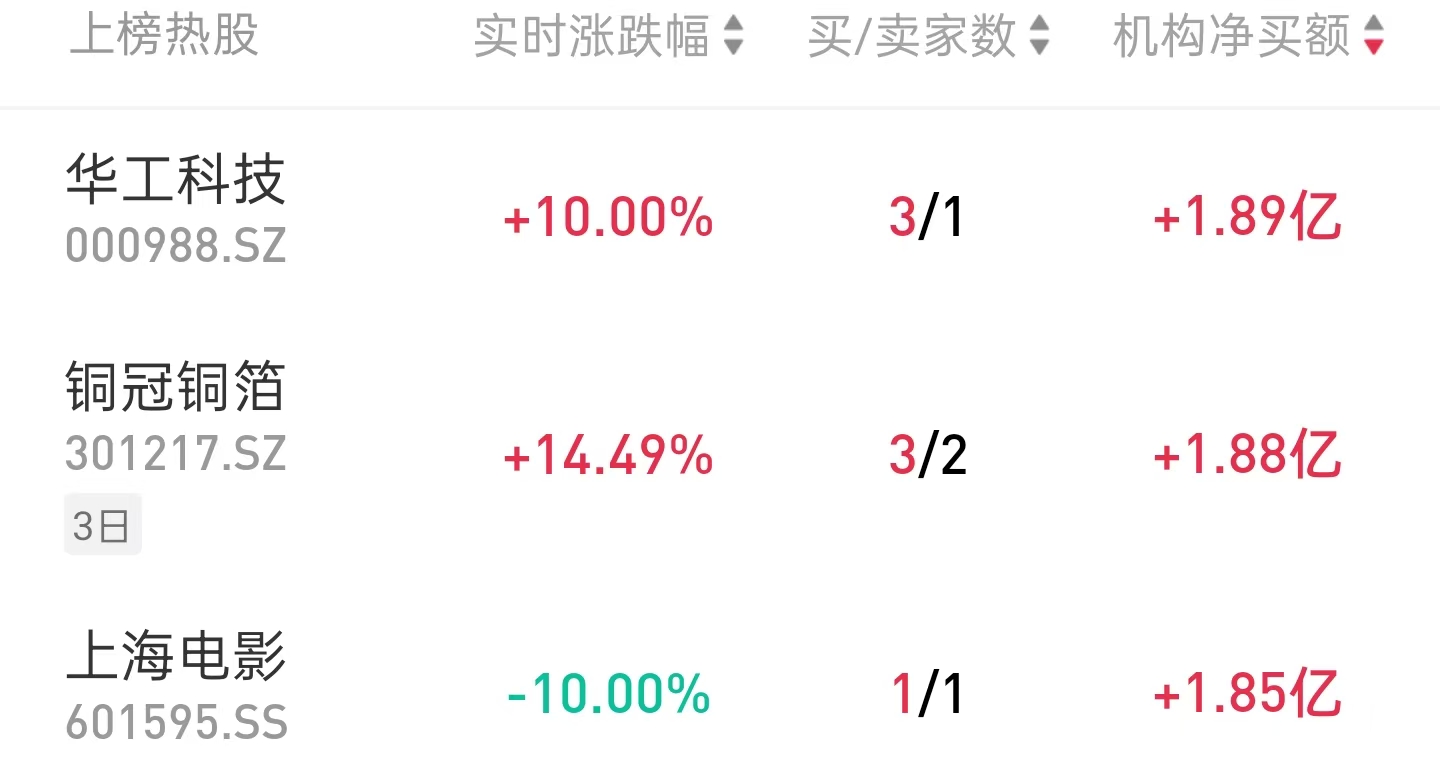
Group 1: Stock Market Activity - 43 stocks were listed on the institutional leaderboard today, with 29 experiencing net buying and 13 facing net selling [1] - The top three stocks with the highest net buying by institutions were Huagong Technology (¥189 million), Tongguan Copper Foil (¥188 million), and Shanghai Film (¥185 million) [1][2] Group 2: Oil and Gas Industry - Domestic oil and gas capital expenditure is expected to gradually recover, with the U.S. government continuing to promote oil and gas development [3] - The EIA predicts that the natural gas generation capacity in the U.S. is likely to increase in the coming years, indicating a potential rebound in oil service spending by 2026 [3] Group 3: Glass Fiber Industry - Glass fiber manufacturers are anticipated to initiate a second round of price increases due to rising costs and supply tightness, with planned monthly adjustments of 10% to 15% [5] - If the current pricing strategy proceeds as planned, prices could potentially double by the end of the year, following a cumulative increase of over 50% since 2025 [5] - The demand for AI electronic fabrics is expected to drive the market, with 2026 being a pivotal year for the realization of volume and profit in this sector [5]


国泰海通:AI转产驱动下传统布超预期提价 26年特种布将进入量利兑现期
智通财经网· 2026-02-12 07:53
Core Viewpoint - The report from Guotai Junan indicates that the price increase of traditional fiberglass electronic cloth has accelerated since February, confirming the view that the shift of weaving machine capacity to AI electronic cloth has led to a supply shortage of traditional cloth [1][2]. Group 1: Price Increase and Supply Shortage - The price of traditional electronic cloth has risen significantly in February, with the first week of February seeing prices for 7628 electronic cloth ranging from 4.9 to 5.45 yuan per meter, an increase of 0.5 to 0.6 yuan per meter compared to the previous month [2]. - The announcement from Taiyao Technology on February 10 regarding reduced supply of E-glass products due to strong demand for low-dielectric materials has further fueled expectations of a shortage in traditional cloth [2]. Group 2: Inventory Levels and Profitability - Current inventory levels for leading traditional electronic cloth manufacturers are only two weeks, compared to a normal level of 1 to 1.5 months, primarily due to the impact of weaving machines shifting to produce AI specialty cloth [3]. - The expected increase in prices is likely to boost profitability for leading companies, with China Jushi's traditional electronic cloth capacity at 1 billion meters and Jiantao's at 800 million meters [3]. Group 3: AI Electronic Cloth Demand - The shortage of traditional cloth and the strong demand for AI electronic cloth are interconnected, with 2026 expected to be a year of realization for AI specialty cloth demand [4]. - The demand for CTE cloth has been driven by the packaging board needs of AI chips and consumer electronics, while low-dielectric cloth is expected to see stable demand from specific applications [4]. Group 4: Recommended Stocks - The report recommends investment in China Jushi (600176.SH), Jiantao Laminated Board (01888), and China National Materials (002080.SZ), along with related companies such as International Composites (301526.SZ) and Honghe Technology (603256.SH) [5].


国泰海通|建材:AI转产驱动下的传统布超预期提价
国泰海通证券研究· 2026-02-11 14:02
Core Viewpoint - The article maintains a "buy" rating, highlighting accelerated price increases for traditional fiberglass electronic fabrics since February, confirming previous reports that machine capacity shifts to AI electronic fabrics have led to supply shortages in traditional fabrics, thereby enhancing profitability for leading fiberglass companies [1]. Group 1: Price Increases and Supply Shortages - Traditional electronic fabric prices have surged in February, with the first week of February seeing prices for 7628 electronic fabric ranging from 4.9 to 5.45 yuan per meter, an increase of 0.5 to 0.6 yuan per meter compared to the previous month [1]. - The announcement by Taiyao Technology on February 10 indicated a reduction in E-glass supply due to high demand for low-dielectric fabrics, further exacerbating the supply shortage of traditional fabrics [1][2]. Group 2: Inventory Levels and Production Capacity - Current inventory levels for leading traditional electronic fabric companies are only two weeks, significantly lower than the normal inventory level of 1 to 1.5 months, primarily due to the shift in weaving machine production to AI specialty fabrics [2]. - Planned expansions for traditional electronic fabric production include 85,000 tons from International Composite Materials and 100,000 tons from China Jushi in Huai'an, with the latter expected to contribute 1 to 1.5 billion meters of electronic fabric capacity [2]. Group 3: AI Electronic Fabric Demand - The shortage of traditional fabrics and the strong demand for AI electronic fabrics are interconnected, with 2026 expected to be a year of realization for AI electronic fabric demand [3]. - The demand for CTE fabrics has been driven by the packaging board needs of AI chips and consumer electronics, with limited suppliers contributing to a high degree of scarcity [3]. - The overall increase in demand for low-dielectric fabrics is expected to remain strong, with significant growth anticipated in 2026 as AI electronic fabrics enter a phase of realization [3].

玻纤电子布行业更新:AI转产驱动下的传统布超预期提价
GUOTAI HAITONG SECURITIES· 2026-02-11 11:31
Investment Rating - The report maintains an "Overweight" rating for the fiberglass electronic cloth industry, indicating a projected increase of over 15% relative to the CSI 300 index within the next 12 months [4][10]. Core Insights - The acceleration in price increases for traditional fiberglass electronic cloth since February, combined with reduced supply of E-glass products announced by Taiyao Technology, has led to a continued expectation of tight supply for traditional cloth, enhancing profitability for leading fiberglass companies [2][4]. - The report highlights that the tight supply of traditional electronic cloth is primarily driven by two factors: unexpected price increases in February and a significant reduction in E-glass supply due to production shifts towards low-dielectric cloth [4]. - The report anticipates that 2026 will be a year of realization for AI electronic cloth, with strong demand expected to translate into financial performance for companies with comprehensive product structures and leading customer certifications [4]. Summary by Sections Price Trends and Supply Dynamics - Traditional electronic cloth prices have risen significantly, with the first week of February seeing prices between 4.9-5.45 RMB/m, an increase of 0.5-0.6 RMB/m compared to previous rounds of price hikes [4]. - The inventory levels for traditional electronic cloth are currently low, estimated at only two weeks, compared to a normal level of 1-1.5 months, indicating a supply shortage exacerbated by production shifts [4]. Company Recommendations - Recommended stocks include China Jushi, Kingboard Laminates, and China National Building Material, with expectations of increased profitability driven by price hikes in traditional electronic cloth [4]. - The report notes that the production capacity expansions planned for 2026 include significant increases from companies like International Composites and China Jushi, which are expected to alleviate some supply pressures [4]. Market Outlook - The report suggests that the demand for AI electronic cloth will remain strong, with specific segments like CTE cloth and low-dielectric cloth experiencing high demand due to their applications in AI chips and consumer electronics [4]. - Overall, the report indicates that companies with strong cost management and innovative product offerings are likely to outperform the industry as the market evolves in 2026 [4].

宏和科技(603256):25Q1-3净利润创18年来新高,特种布收入同比增长
Tianfeng Securities· 2025-11-03 13:45
Investment Rating - The report maintains a "Buy" rating for the company, with a target price not specified [7][4]. Core Insights - The company achieved a record net profit of 3.02 billion yuan in Q3, marking a year-on-year increase of 644.41% [1]. - For the first three quarters of 2025, the company reported revenues and net profits of 8.52 billion yuan and 1.39 billion yuan, respectively, reflecting year-on-year growth of 37.76% and 1696.45% [1][2]. - The demand for high-performance electronic fabrics, particularly LDK and CTE fabrics, is expected to grow significantly, with projected sales of 231,000 and 83,000 meters in Q4 2025 [2]. Financial Performance - The overall gross margin for the first three quarters of 2025 was 32.62%, an increase of 16.17 percentage points year-on-year, with Q3 gross margin at 34.92% [3]. - The net profit margin reached 16.28%, up by 15.03 percentage points compared to the previous year [3]. - Operating cash flow for the first three quarters was 1.75 billion yuan, an increase of 0.87 billion yuan year-on-year [3]. Future Growth Potential - The company is expected to continue its growth trajectory, with revised net profit forecasts for 2025-2027 increased to 2.0 billion, 2.9 billion, and 3.5 billion yuan, respectively [4]. - The production capacity for high-performance electronic fabrics is projected to reach 1,989,000 meters in 2025, with further increases in subsequent years [2].