
低介电布

Search documents
建材行业事件点评:普通布进一步提涨,看好高景气持续
Shenwan Hongyuan Securities· 2026-03-08 08:15
Investment Rating - The report rates the construction materials industry as "Overweight" indicating a positive outlook for the sector compared to the overall market performance [2][3]. Core Insights - The ordinary fabric has seen its third price increase of the year, rising by 0.5 yuan to 5.7 yuan/meter, with a total increase of 1.5 yuan/meter since January, reflecting sustained industry demand and pricing power [3]. - The demand for ordinary electronic fabric is robust, driven by the continuous growth in integrated circuit board production, which has seen a year-on-year increase of over 10% for seven consecutive months from June to December 2025 [3][10]. - Supply growth for ordinary electronic fabric is expected to decline as the expansion cycle driven by high demand from 2021-2022 is nearing its end, and many manufacturers are shifting production to high-margin specialty fabrics [3]. - Specialty fabrics are experiencing high demand, particularly low dielectric and low expansion coefficient fabrics, with significant price increases announced by leading companies in the sector [3]. - Key investment recommendations include focusing on core suppliers of ordinary fabric such as China Jushi and monitoring specialty fabric companies like China National Materials, International Composites, and Honghe Technology [3]. Summary by Sections Price Trends - The price of electronic fabric has been on a continuous upward trend, with significant increases noted in recent months [4][5]. Production Capacity - The growth rate of electronic fabric production capacity is entering a declining phase, with projections indicating a slowdown in capacity expansion [6]. Integrated Circuit Production - The production of integrated circuits in China has been consistently increasing, with record monthly outputs and strong year-on-year growth rates [9][10]. Company Valuation Comparisons - Key companies in the sector have varying valuations, with China Jushi rated as "Buy" and showing strong earnings growth projections for 2024-2026 [12].

龙虎榜复盘丨油服大涨,玻纤板块再度强势
Xuan Gu Bao· 2026-02-24 11:06
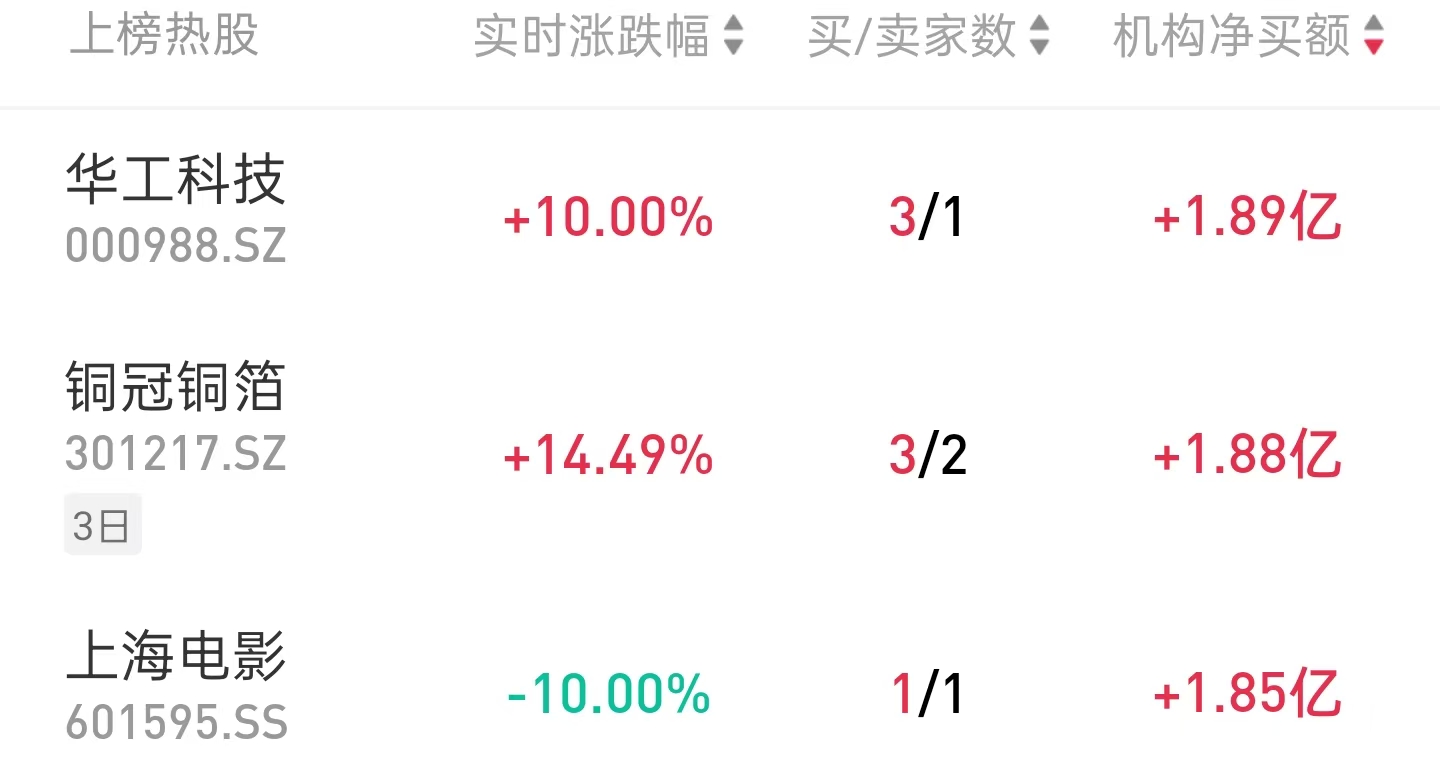
Group 1: Stock Market Activity - 43 stocks were listed on the institutional leaderboard today, with 29 experiencing net buying and 13 facing net selling [1] - The top three stocks with the highest net buying by institutions were Huagong Technology (¥189 million), Tongguan Copper Foil (¥188 million), and Shanghai Film (¥185 million) [1][2] Group 2: Oil and Gas Industry - Domestic oil and gas capital expenditure is expected to gradually recover, with the U.S. government continuing to promote oil and gas development [3] - The EIA predicts that the natural gas generation capacity in the U.S. is likely to increase in the coming years, indicating a potential rebound in oil service spending by 2026 [3] Group 3: Glass Fiber Industry - Glass fiber manufacturers are anticipated to initiate a second round of price increases due to rising costs and supply tightness, with planned monthly adjustments of 10% to 15% [5] - If the current pricing strategy proceeds as planned, prices could potentially double by the end of the year, following a cumulative increase of over 50% since 2025 [5] - The demand for AI electronic fabrics is expected to drive the market, with 2026 being a pivotal year for the realization of volume and profit in this sector [5]


国泰海通:AI转产驱动下传统布超预期提价 26年特种布将进入量利兑现期
智通财经网· 2026-02-12 07:53
Core Viewpoint - The report from Guotai Junan indicates that the price increase of traditional fiberglass electronic cloth has accelerated since February, confirming the view that the shift of weaving machine capacity to AI electronic cloth has led to a supply shortage of traditional cloth [1][2]. Group 1: Price Increase and Supply Shortage - The price of traditional electronic cloth has risen significantly in February, with the first week of February seeing prices for 7628 electronic cloth ranging from 4.9 to 5.45 yuan per meter, an increase of 0.5 to 0.6 yuan per meter compared to the previous month [2]. - The announcement from Taiyao Technology on February 10 regarding reduced supply of E-glass products due to strong demand for low-dielectric materials has further fueled expectations of a shortage in traditional cloth [2]. Group 2: Inventory Levels and Profitability - Current inventory levels for leading traditional electronic cloth manufacturers are only two weeks, compared to a normal level of 1 to 1.5 months, primarily due to the impact of weaving machines shifting to produce AI specialty cloth [3]. - The expected increase in prices is likely to boost profitability for leading companies, with China Jushi's traditional electronic cloth capacity at 1 billion meters and Jiantao's at 800 million meters [3]. Group 3: AI Electronic Cloth Demand - The shortage of traditional cloth and the strong demand for AI electronic cloth are interconnected, with 2026 expected to be a year of realization for AI specialty cloth demand [4]. - The demand for CTE cloth has been driven by the packaging board needs of AI chips and consumer electronics, while low-dielectric cloth is expected to see stable demand from specific applications [4]. Group 4: Recommended Stocks - The report recommends investment in China Jushi (600176.SH), Jiantao Laminated Board (01888), and China National Materials (002080.SZ), along with related companies such as International Composites (301526.SZ) and Honghe Technology (603256.SH) [5].


电子布:国际复材、中国巨石、宏和科技、中材科技,谁的潜力大?
Sou Hu Cai Jing· 2026-02-11 23:27
Core Insights - The electronic fabric industry is experiencing intense competition, with companies like Honghe Technology showing high profitability but also extremely high valuations, raising questions about market expectations and potential bubbles [1][6]. Group 1: Industry Overview - Electronic fabric, or electronic-grade glass fiber cloth, is a core material for manufacturing copper-clad laminates, which serve as the foundation for printed circuit boards (PCBs) [3]. - The price of a specific electronic fabric model, "7628," has increased from 4.15 yuan to 4.75 yuan per meter since October last year, driven by high demand from downstream AI servers and high-speed network equipment [3]. - The demand for low-dielectric and low-expansion fabrics is increasing as they provide better signal transmission and lower losses compared to traditional electronic fabrics [3]. Group 2: Company Profiles - Honghe Technology is a leader in high-end electronic fabric, capable of mass-producing 4-micron ultra-thin electronic fabric, which is crucial for chip substrates [5][6]. - Honghe Technology has achieved a sales net profit margin of 16.28% in the first three quarters of 2025, ranking second among four companies, and has a return on equity (ROE) of 9.29% [6]. - China Jushi is the largest producer of glass fiber globally, with a strategy focused on cost control and global presence, achieving a sales net profit margin of 19.22% [10]. - China Jushi's production capacity is set to reach 1.3 billion meters per year by 2025, enhancing its cost advantages [10]. - Zhongcai Technology adopts a strategy of full-category coverage and deep binding with major customers, achieving a total asset turnover rate of 0.348 times, the highest among the four companies [8]. - International Composite Materials holds about 35% of the domestic low-dielectric electronic fabric market but has the lowest sales net profit margin of 5.25% among the four companies [16]. Group 3: Competitive Dynamics - The competition among these companies is characterized by different strategies: Honghe Technology focuses on high-end niche markets, Zhongcai Technology emphasizes stable supply chains, China Jushi leverages scale for cost advantages, and International Composite Materials aims for breakthroughs in specialized materials [17]. - The rising prices of electronic fabrics signal the beginning of a larger narrative about which company can best meet the high-end product demands of AI and embed itself in the supply chains of major players like NVIDIA and AMD [17].


国泰海通|建材:AI转产驱动下的传统布超预期提价
国泰海通证券研究· 2026-02-11 14:02
Core Viewpoint - The article maintains a "buy" rating, highlighting accelerated price increases for traditional fiberglass electronic fabrics since February, confirming previous reports that machine capacity shifts to AI electronic fabrics have led to supply shortages in traditional fabrics, thereby enhancing profitability for leading fiberglass companies [1]. Group 1: Price Increases and Supply Shortages - Traditional electronic fabric prices have surged in February, with the first week of February seeing prices for 7628 electronic fabric ranging from 4.9 to 5.45 yuan per meter, an increase of 0.5 to 0.6 yuan per meter compared to the previous month [1]. - The announcement by Taiyao Technology on February 10 indicated a reduction in E-glass supply due to high demand for low-dielectric fabrics, further exacerbating the supply shortage of traditional fabrics [1][2]. Group 2: Inventory Levels and Production Capacity - Current inventory levels for leading traditional electronic fabric companies are only two weeks, significantly lower than the normal inventory level of 1 to 1.5 months, primarily due to the shift in weaving machine production to AI specialty fabrics [2]. - Planned expansions for traditional electronic fabric production include 85,000 tons from International Composite Materials and 100,000 tons from China Jushi in Huai'an, with the latter expected to contribute 1 to 1.5 billion meters of electronic fabric capacity [2]. Group 3: AI Electronic Fabric Demand - The shortage of traditional fabrics and the strong demand for AI electronic fabrics are interconnected, with 2026 expected to be a year of realization for AI electronic fabric demand [3]. - The demand for CTE fabrics has been driven by the packaging board needs of AI chips and consumer electronics, with limited suppliers contributing to a high degree of scarcity [3]. - The overall increase in demand for low-dielectric fabrics is expected to remain strong, with significant growth anticipated in 2026 as AI electronic fabrics enter a phase of realization [3].

玻纤电子布行业更新:AI转产驱动下的传统布超预期提价
GUOTAI HAITONG SECURITIES· 2026-02-11 11:31
Investment Rating - The report maintains an "Overweight" rating for the fiberglass electronic cloth industry, indicating a projected increase of over 15% relative to the CSI 300 index within the next 12 months [4][10]. Core Insights - The acceleration in price increases for traditional fiberglass electronic cloth since February, combined with reduced supply of E-glass products announced by Taiyao Technology, has led to a continued expectation of tight supply for traditional cloth, enhancing profitability for leading fiberglass companies [2][4]. - The report highlights that the tight supply of traditional electronic cloth is primarily driven by two factors: unexpected price increases in February and a significant reduction in E-glass supply due to production shifts towards low-dielectric cloth [4]. - The report anticipates that 2026 will be a year of realization for AI electronic cloth, with strong demand expected to translate into financial performance for companies with comprehensive product structures and leading customer certifications [4]. Summary by Sections Price Trends and Supply Dynamics - Traditional electronic cloth prices have risen significantly, with the first week of February seeing prices between 4.9-5.45 RMB/m, an increase of 0.5-0.6 RMB/m compared to previous rounds of price hikes [4]. - The inventory levels for traditional electronic cloth are currently low, estimated at only two weeks, compared to a normal level of 1-1.5 months, indicating a supply shortage exacerbated by production shifts [4]. Company Recommendations - Recommended stocks include China Jushi, Kingboard Laminates, and China National Building Material, with expectations of increased profitability driven by price hikes in traditional electronic cloth [4]. - The report notes that the production capacity expansions planned for 2026 include significant increases from companies like International Composites and China Jushi, which are expected to alleviate some supply pressures [4]. Market Outlook - The report suggests that the demand for AI electronic cloth will remain strong, with specific segments like CTE cloth and low-dielectric cloth experiencing high demand due to their applications in AI chips and consumer electronics [4]. - Overall, the report indicates that companies with strong cost management and innovative product offerings are likely to outperform the industry as the market evolves in 2026 [4].
中邮证券:电子布AI产业趋势加速 关注中国巨石(600176.SH)后续切入产业链机遇
智通财经网· 2025-09-02 02:26
Group 1 - The core players in the fiberglass electronic cloth industry are accelerating their capacity expansion, with China National Materials announcing an addition of 35 million square meters of low dielectric cloth capacity and 24 million meters of ultra-low loss low dielectric cloth capacity [1] - China Jushi's mid-year report indicates that the development of special electronic cloth series products is progressing actively, with downstream certifications also accelerating [1] - Given China Jushi's cost control capabilities and good cooperation with downstream CCL manufacturers, it is expected that the company will penetrate the supply chain and capture a certain market share in the future [1] Group 2 - The cement industry is expected to see a continuous decline in capacity under the implementation of anti-overproduction policies, leading to a significant increase in capacity utilization rates [2] - The glass industry is facing a downward trend in demand due to real estate impacts, but the supply side is not expected to see a drastic capacity reduction despite increased environmental requirements [2] - The fiberglass industry is experiencing a surge in demand driven by the AI industry, with low dielectric products seeing both volume and price increases, indicating a trend of continuous growth in demand [2]

周观点:建材中的“抱团”与“切换”-20250825
GUOTAI HAITONG SECURITIES· 2025-08-25 07:11
Investment Rating - The report maintains a positive outlook on the building materials sector, highlighting potential opportunities in both "grouping" and "switching" strategies within the industry [2][11]. Core Insights - The building materials market is experiencing a shift in focus, with technology stocks gaining momentum while the building materials sector presents viable options for investment [2]. - The report emphasizes the importance of monitoring production capacity and quality improvements in key segments such as electronic fabrics and Q fabrics, which are expected to see increased demand due to advancements in AI and PCB technologies [3][4]. - The report identifies a growing confidence in infrastructure projects in regions like Xinjiang and Tibet, driven by government investments and the necessity of transportation infrastructure [11][12]. - The consumer building materials segment is showing signs of recovery, with expectations of improved revenue performance as the market stabilizes [24][25]. Summary by Sections Grouping in Building Materials - The electronic fabric sector is expected to maintain its performance, with leading companies like Zhongcai Technology reporting strong sales and production growth [3]. - The AI industry's production expectations are advancing, with key suppliers anticipating increased output of Q fabrics by the end of the year [4]. - The report highlights the importance of monitoring the production capacity and quality of Q fabrics, which will determine the actual supply capabilities of companies [4]. Switching in Building Materials - Infrastructure projects in Xinjiang and Tibet are gaining traction, with significant government backing and a strong demand for cement due to the region's unique geographical advantages [11][12]. - The consumer building materials sector is entering a recovery phase, with sales and construction data indicating a bottoming out of the market [13][14]. - The report notes that the cement industry is poised for potential growth, driven by policy improvements and governance enhancements [15][29]. Cement Industry - The cement sector is entering a peak season, but market performance remains subdued due to high comparative bases from the previous year [29][30]. - The report emphasizes the importance of policy measures to limit overproduction in the cement industry, which could enhance profitability [30][33]. - Companies like Conch Cement and Huaxin Cement are highlighted for their strong cash flow and potential for shareholder returns [34][38]. Glass Industry - The float glass market is experiencing price stabilization, with environmental regulations expected to impact production costs [40][41]. - The report indicates that the glass industry is facing cash flow challenges, with many companies operating at a loss [42]. - Companies like Xinyi Glass are expected to maintain competitive positions despite market pressures, with a focus on improving operational efficiency [43]. Photovoltaic Glass - The photovoltaic glass segment is seeing a decline in inventory levels, with prices remaining stable amid increased demand from downstream component manufacturers [48]. - The report notes that while domestic prices are under pressure, overseas markets are performing better, which could benefit leading companies in the sector [49]. Fiberglass - The fiberglass market is characterized by a divergence in production and sales, with electronic fabrics maintaining a favorable outlook [50].


周观点:AI材料行情继续扩散,传统建材进入提价旺季-20250818
GUOTAI HAITONG SECURITIES· 2025-08-18 06:11
Investment Rating - The report maintains a positive outlook on the building materials industry, particularly in AI materials and traditional building materials entering a price increase season [1][3]. Core Insights - The AI materials market continues to expand, driven by the anticipation of mass production in the AI industry chain, which is expected to boost demand for related products [2][3]. - The construction materials sector is showing signs of recovery, with consumption fundamentals expected to improve in the second half of 2025 [10][24]. - The cement industry is entering a peak season, with price increases already observed in the Yangtze River Delta region [30][33]. Summary by Sections AI Materials - The M9 production for switches is expected to ramp up ahead of schedule, with core Q fabric suppliers also increasing production capacity [2]. - The demand for low dielectric fabrics is anticipated to rise alongside the production of GB200 and GB300 cabinets [2][3]. - The overall production ramp-up is seen as a key support for market trends [2]. Cement Industry - The opening of major infrastructure projects in Xinjiang and Tibet is expected to enhance market confidence and drive demand for cement [8][30]. - The cement market has seen a slight price increase, with certain regions experiencing price hikes of 10-30 RMB per ton [33][34]. - The report highlights a potential supply reduction in the North China region due to planned production cuts for air quality improvement [32][33]. Building Materials - The report notes a significant policy shift in Beijing aimed at stimulating the real estate market, which is expected to positively impact consumption building materials [10][24]. - Companies in the consumption building materials sector are beginning to stabilize their earnings, with expectations of improved profitability in the coming quarters [25][26]. - The report emphasizes the importance of cost management and pricing strategies among leading companies in the sector [25][26]. Glass Industry - The float glass market is currently facing price pressures, with average prices declining [41][42]. - Environmental regulations are tightening, which may lead to increased costs for glass manufacturers [42][43]. - Companies like Xinyi Glass are expected to maintain competitive positions despite market challenges, with a focus on profitability in their automotive glass segment [44].


国泰海通晨报-20250715
Haitong Securities· 2025-07-15 02:51
Group 1: Company Analysis - 长光华芯 - The company has shown rapid revenue growth, with Q1 2025 revenue reaching 94.28 million, and a significant reduction in net loss to 7.5 million [3][4] - The updated profit forecast for 2025-2027 indicates net profits of 28 million, 99 million, and 208 million respectively, with a target price set at 70.86 yuan based on a PE of 60.05x for 2027 [3][4] - The company has successfully launched three key products in the optical communication sector, which are expected to contribute significantly to revenue growth in the context of increasing demand from AI data centers [4] Group 2: Industry Analysis - Transportation - The central government's emphasis on "anti-involution" is expected to promote deeper industry reforms, benefiting sectors such as aviation, express delivery, and bulk supply chain operations [5][6] - The aviation sector is anticipated to improve revenue management strategies, which will help mitigate excessive price competition and enhance profitability [7] - The express delivery industry is likely to see a more favorable competitive environment due to regulatory measures against "involution," which may lead to the concentration of market share among leading firms [8] Group 3: Industry Analysis - Renewable Energy - The solar energy sector is experiencing positive momentum due to new policies aimed at increasing renewable energy consumption, with silicon material prices on the rise [31][32] - The wind energy sector is expected to maintain strong installation growth, supported by long project cycles and increasing demand for offshore wind projects [35][37] - The digital transformation of the energy sector is accelerating, driven by government initiatives to enhance the integration of information technology and energy industries [38]
