
Carvykti(西达基奥仑赛)

Search documents
吉利德78亿美元豪购Arcell,细胞治疗赛道迎分水岭之战
2 1 Shi Ji Jing Ji Bao Dao· 2026-02-24 08:53
Core Viewpoint - Gilead Sciences announced the acquisition of Arcellx for approximately $7.8 billion, with a significant focus on the potential of the anti-cel CAR-T therapy for multiple myeloma, indicating Gilead's strategic shift in the CAR-T market [1][2]. Group 1: Acquisition Details - Gilead will pay $115 per share in cash for Arcellx, leading to a nearly 80% surge in Arcellx's stock price [1]. - The acquisition includes a contingent value right (CVR) that could provide Arcellx shareholders with an additional $5 per share if the anti-cel therapy achieves at least $6 billion in global net sales by the end of 2029 [1]. - The anti-cel therapy is currently awaiting FDA approval, with a PDUFA date set for December 23, 2026, potentially allowing it to enter the U.S. market by the end of 2026 [1]. Group 2: Market Implications - The acquisition is seen as a signal of Gilead's intent to reshape the CAR-T landscape, particularly in the multiple myeloma sector, as it transitions from a partner to a full owner of the anti-cel therapy [2]. - Analysts view this move as a response to slowing sales growth in Gilead's existing oncology products, Yescarta and Tecartus, which are facing intense competition [2]. Group 3: Clinical Data and Technology - Clinical trial data for anti-cel shows a high objective response rate (ORR) of 96% and a complete response (CR) rate of 74% in heavily pre-treated patients, reinforcing the therapy's potential in treating relapsed/refractory multiple myeloma [3]. - Arcellx's D-Domain CAR platform technology is highlighted as a significant asset, offering advantages in transduction efficiency and reduced off-target toxicity, which could be pivotal for future CAR-T and bispecific antibody applications [4]. Group 4: Competitive Landscape - The CAR-T market is experiencing a shift, with major players like Johnson & Johnson and Bristol-Myers Squibb reporting significant sales growth in their CAR-T products, indicating a competitive environment [5][6]. - The global CAR-T market is characterized by a "winner-takes-all" dynamic, with U.S. companies maintaining a technological edge while Chinese firms rapidly advance in the sector [6][8]. Group 5: Future Outlook - Market expectations suggest that anti-cel could achieve peak sales of approximately $1.6 billion in the fourth-line multiple myeloma market, with potential expansion to second-line treatment reaching up to $3.8 billion [10]. - Gilead's strategic acquisition aims to position itself competitively against products like Carvykti, as the industry shifts focus from autologous CAR-T to universal and in vivo CAR-T therapies [9][10].

强生官宣分拆骨科,雅培210亿豪赌早筛:942亿vs443亿财报背后,中国区成变量
3 6 Ke· 2026-01-28 02:38
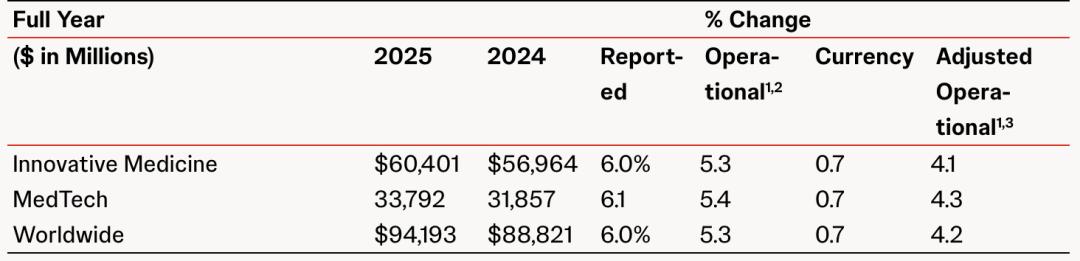
Core Insights - Johnson & Johnson reported a revenue of $94.193 billion for 2025, reflecting a 6% year-over-year growth, but faced a strategic contraction in its orthopedic segment, which grew only 1.1% [1][3][19] - Abbott's revenue for 2025 was $44.328 billion, a 5.7% increase, but its diagnostic business saw a decline of 4.3%, highlighting a need for transformation [2][8][14] - The two companies are adopting different strategies in response to market pressures: Johnson & Johnson is divesting low-growth assets, while Abbott is pursuing acquisitions to drive growth [2][19] Johnson & Johnson Financial Overview - Total revenue for 2025: $94.193 billion, up 6% from $88.821 billion in 2024 [4] - Innovative Medicine segment generated $60.401 billion, accounting for over 65% of total sales, with a 6% growth [4][3] - Medical Technology segment revenue reached $33.792 billion, also up 6.1%, with cardiovascular business showing a strong performance at $8.93 billion, growing 15.8% [4][6][7] Abbott Financial Overview - Total revenue for 2025: $44.328 billion, a 5.7% increase from the previous year [8] - Medical Devices segment was the largest, generating $21.387 billion, with a growth of 12.6% [9][10] - The diagnostic business, however, faced a decline, with revenue of $8.937 billion, down 4.3% [13][14] Strategic Moves - Johnson & Johnson announced the spin-off of its orthopedic business, DePuy Synthes, to focus on higher-growth areas like cardiovascular and surgical robotics [7][19] - Abbott made a significant acquisition of Exact Sciences for $21 billion to bolster its cancer screening capabilities, addressing the decline in its diagnostic segment [14][2] Market Dynamics - Both companies are navigating challenges in the Chinese market, with Abbott facing a $400 million impact from centralized procurement [16][17] - Johnson & Johnson's orthopedic market share in China has significantly dropped, with its spinal business share falling from 16% to below 5% [18][19] - The competitive landscape is intensifying, with both companies adapting their strategies to maintain growth amid external pressures [20]


细胞与基因治疗“变天了”
Ge Long Hui· 2025-11-06 12:03
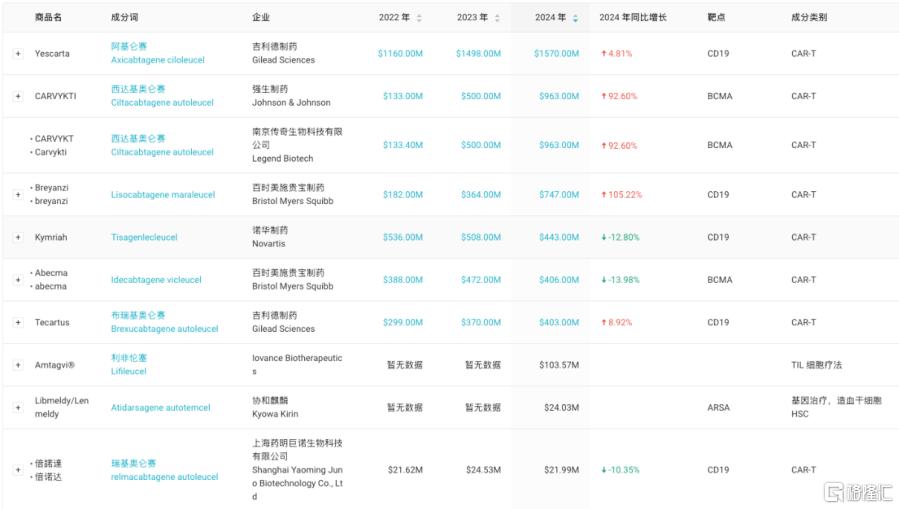
Core Insights - The cell and gene therapy (CGT) sector is experiencing a dichotomy, with major pharmaceutical companies entering the CAR-T therapy space while others are exiting, indicating a complex market landscape [1][2][10]. Group 1: Market Dynamics - The CGT market has seen rapid growth, with 46 CGT products approved by the FDA and approximately 3,600 active INDs [2]. - Despite the approval of over 10 CAR-T therapies globally, only a few have achieved blockbuster status, with Gilead's Yescarta showing a sales growth of only 4.81% in 2024 [3][4]. - The commercial performance of most CAR-T therapies has been disappointing, with high costs and market access issues limiting their success [6][9]. Group 2: Economic Challenges - The CGT sector faces significant economic challenges, including high R&D costs (estimated at $1.7 to $2.3 billion for CGT drugs compared to $1.25 to $1.48 billion for traditional drugs) and high production costs due to the personalized nature of treatments [11][12]. - The pricing of CAR-T therapies is exorbitant, with Carvykti priced over $500,000 in the U.S. and similar high costs in China, which restricts market accessibility [8][13]. Group 3: Industry Exits - Major multinational corporations (MNCs) like Takeda and Novo Nordisk have announced exits from the CGT space, indicating a shift in focus from technology-driven enthusiasm to financial viability [10][11]. - The industry's narrative has shifted from a focus on unique treatment mechanisms to a more pragmatic assessment of economic returns, highlighting the unsustainable nature of current CGT investments [11]. Group 4: Path to Recovery - The CGT industry is exploring various strategies to overcome its challenges, including the development of off-the-shelf CAR-T therapies to reduce costs and improve accessibility [14]. - Expanding the indications for CGT drugs to target larger patient populations is seen as a potential avenue for growth, similar to how Novartis expanded the application of siRNA therapies [17]. - The shift towards in vivo CAR-T therapies aims to simplify processes and reduce costs significantly, with predictions suggesting treatment costs could drop by an order of magnitude [18]. Group 5: Future Directions - The future of the CGT sector hinges on technological advancements that enhance accessibility, with a focus on universal CAR-T, in vivo therapies, and next-generation delivery technologies [19]. - The strategic movements of MNCs signal a paradigm shift in the industry, emphasizing the need to convert cutting-edge technology into sustainable business models for long-term success [19].



32亿美元收益背后:金斯瑞与传奇生物的估值倒挂之谜
Xi Niu Cai Jing· 2025-08-09 02:02
Core Viewpoint - King’s Ray Biotechnology (01548.HK) reported a net profit of $2.962 billion for the fiscal year 2024, a significant increase of 3202.19% year-on-year, marking a turnaround from losses [2] Financial Performance - The $3.2 billion one-time gain was attributed to accounting maneuvers, specifically the deconsolidation of subsidiary Legend Biotech (LEGN.NASDAQ) [3] - After excluding this gain and a $124 million fair value loss from another subsidiary, the adjusted net profit for King’s Ray's non-cell therapy business remained flat compared to 2023 [4] - The CDMO business revenue plummeted by 37.9%, while synthetic biology revenue grew by 24.6% to $53.7 million, but this only accounted for less than 10% of total revenue [4] Market Valuation - Following the deconsolidation, Legend Biotech's market valuation reached $7.8 billion on NASDAQ, while King’s Ray's market cap was only $4.7 billion, less than 60% of Legend's [5] - The valuation disparity reflects differing market perceptions of the core values of both companies, with Legend's valuation driven by the explosive growth of its product Carvykti, which achieved sales of $963 million in 2024, a 92.7% increase [5] Business Challenges - King’s Ray faces dual challenges: the ongoing deterioration of its CDMO business and growth bottlenecks in synthetic biology [9] - The CDMO business saw a 37.9% revenue decline, with operating losses widening by 46% due to low capacity utilization and high expansion costs in North America [9] - Cash flow remains a concern, with operating cash flow netting only $75.6 million, representing just 2.55% of net profit, indicating significant short-term debt repayment pressure [9] Future Outlook - The resolution of the valuation dilemma for King’s Ray and Legend Biotech hinges on capacity expansion and pipeline progress [11] - Legend Biotech's collaboration with Johnson & Johnson aims to achieve an annual production capacity of 10,000 doses by the end of 2025, which could support the growth of Carvykti in secondary markets [11] - King’s Ray must balance capital operations and business transformation, potentially through share divestment to improve cash flow while focusing on high-growth sectors like synthetic biology [12]



跨国药企2025年Q1财报:专利悬崖下的创新突围与全球扩张
2 1 Shi Ji Jing Ji Bao Dao· 2025-04-29 10:07
Core Insights - The Chinese pharmaceutical industry has made significant advancements in innovative drug development over the past decade, driven by supportive policies and reforms [1] - Currently, domestic pharmaceutical companies are reassessing strategies and exploring new business models due to challenges such as declining drug prices, financing difficulties, and geopolitical risks [1] - Global pharmaceutical giants are experiencing a performance divide, with companies like Merck, AstraZeneca, and Novartis showing resilience through innovative products, while others like Bristol-Myers Squibb and Roche face short-term challenges due to declining revenues from mature products [1][4] Industry Trends - The first quarter of 2025 is referred to as the "patent cliff year," where major drugs face generic competition, prompting companies to adopt diversification strategies to mitigate impacts [2][5] - Innovation in oncology, autoimmune, and neurological disease sectors remains crucial for growth, with companies needing to maintain rapid innovation and flexible localization strategies [2] - The global pharmaceutical market is projected to grow significantly, with spending expected to reach approximately $2.2 trillion by 2028, driven by increased drug usage, new product launches, and the rise of biosimilars [12] Company Performance - Bristol-Myers Squibb reported total revenue of $11.2 billion in Q1 2025, a 6% decline year-over-year, with growth products contributing $5.6 billion, while mature products saw a 20% revenue drop [4] - Roche's total revenue for Q1 2025 was approximately $18.5 billion, with a 6% year-over-year increase, driven by strong sales of innovative drugs, although the Chinese market faced a 23% decline [6][7] - Johnson & Johnson's Q1 2025 revenue reached $21.89 billion, a 2.4% increase, with significant contributions from CAR-T therapy Carvykti, which saw a 135% increase in sales [8] Strategic Adjustments - Companies are increasingly focusing on innovation and strategic partnerships to navigate market challenges, with many adopting dual strategies that combine internal R&D with external collaborations [15][16] - The need for cost control and operational optimization is evident, as companies like Roche and Bristol-Myers Squibb implement restructuring measures to adapt to market pressures [7][4] - The pharmaceutical industry is witnessing a shift towards differentiated value propositions and breakthrough innovations, with companies leveraging acquisitions and partnerships to enhance their market positions [11][15]
医药行业周报:技术平台领先,合作窗口提前
Huaxin Securities· 2025-03-23 12:23
Investment Rating - The report maintains a "Recommended" rating for the pharmaceutical industry [2][11]. Core Insights - New technology platforms are increasingly favored by multinational corporations (MNCs), leading to earlier collaboration opportunities. A notable example is the global strategic partnership between Heptares Therapeutics and AstraZeneca, which includes a $105 million equity investment [3]. - The weight loss market is seeing multiple business developments (BD) materialize, with significant sales growth reported by Novo Nordisk and Eli Lilly. Novo Nordisk's core products generated approximately $27.94 billion in sales, while Eli Lilly's tirzepatide saw a 124% year-on-year increase in sales to $11.54 billion [5]. - Progress in universal CAR-T and solid tumor cell therapies is ongoing, with global CAR-T sales projected at approximately $4.53 billion in 2024. Chinese companies are also participating in this market, with three domestic CAR-T products approved for sale [6]. - The CRO (Contract Research Organization) environment may experience changes, with potential supply flexibility due to the easing of U.S. bioterrorism law concerns. This could enhance the competitiveness of Chinese CROs [7]. - The active pharmaceutical ingredient (API) sector is exploring new applications, particularly in the nicotine tobacco production sector, leveraging synthetic biology technologies [8]. - Major hospitals are launching specialized AI models, indicating a rising trend in the integration of AI in healthcare, with collaborations between tech companies and healthcare providers [10]. Summary by Sections 1. Pharmaceutical Market Tracking - The pharmaceutical industry outperformed the CSI 300 index by 0.88 percentage points over the past week, ranking 20th among 31 primary industry indices [20]. 2. Pharmaceutical Sector Trends and Valuation - The pharmaceutical sector's index has a current PE (TTM) of 30.95, which is below the five-year historical average of 32.98 [36]. 3. Recent Research Achievements - The research team has published several in-depth reports on various pharmaceutical sectors, highlighting trends such as the growth of blood products and the impact of policy support on inhalation drug industries [40]. 4. Important Industry Policies and News - Recent policy changes include the National Medical Products Administration's (NMPA) decision to abolish certain medical device standards to optimize the regulatory framework [42]. - Significant industry news includes the approval of several new drug applications and clinical trials by the NMPA, indicating a robust pipeline for pharmaceutical innovation [44][46].
医药行业周报:国产GLP-1出海值得期待-2025-03-16
Huaxin Securities· 2025-03-16 09:33
Investment Rating - The report maintains a "Recommended" investment rating for the pharmaceutical industry [1]. Core Insights - The global new drug business development (BD) remains robust, with approximately 31% of innovative drug candidates introduced by multinational pharmaceutical companies in 2024 coming from China. In the first two months of 2025, there have already been 16 Chinese innovative drug BD projects, expanding from oncology to autoimmune diseases [3]. - The weight loss market is seeing multiple BD agreements, with significant sales figures reported by Novo Nordisk and Eli Lilly. Novo Nordisk's core products generated sales of approximately $27.94 billion in 2024, while Eli Lilly's Mounjaro saw a 124% year-on-year increase in sales to $11.54 billion [5]. - CAR-T cell therapy continues to progress, with global sales expected to reach approximately $4.53 billion in 2024. Chinese companies are also participating in the global CAR-T sales, indicating their technological capabilities [6]. - The gene sequencing industry is accelerating its domestic production capabilities following export restrictions on Illumina's sequencing instruments. Domestic alternatives are rapidly emerging, with several companies receiving regulatory approvals for their sequencing devices [7]. - AI in healthcare is advancing, with various AI models being developed for specific medical fields. Collaborations between tech companies and healthcare providers are enhancing the integration of AI into traditional medical practices [9]. Summary by Sections Industry Trends - The pharmaceutical industry outperformed the CSI 300 index by 0.18 percentage points in the past week, with a weekly increase of 1.77% [23]. - Over the past month, the pharmaceutical sector also outperformed the CSI 300 index by 0.22 percentage points, with a monthly increase of 1.94% [27]. Subsector Performance - The pharmaceutical commercial sector saw the highest weekly increase of 6.44%, while the medical device sector had the lowest at 1.09% [30]. - Over the past year, the chemical pharmaceutical sector had the highest increase of 6.49%, while the biological products sector experienced a decline of 17.62% [37]. Company Recommendations - The report recommends focusing on companies involved in weight loss and NASH, such as Zhongsheng Pharmaceutical, and highlights the potential of companies like Geli Pharmaceutical and Lianbang Pharmaceutical [12]. - Companies engaged in CAR-T technology, such as Kexin Pharmaceutical, are also recommended as they approach market entry [12]. - The report emphasizes the importance of AI integration in medical devices, recommending companies like Anbiping and RunDa Medical for their competitive advantages [12]. Recent Developments - The report notes significant recent financing and regulatory approvals for various companies, indicating a dynamic and evolving market landscape [54][55].