
Claude Opus4.6

Search documents
纳斯达克100ETF,2月复盘与3月展望
Soochow Securities· 2026-03-03 08:41
Market Performance - The Nasdaq 100 index experienced a monthly decline of 2.32% in February 2026, with a total trading volume of approximately $53.456 billion[10] - As of February 27, 2026, the Nasdaq 100 index's PE-TTM was 33.88, positioned at the 77.16% historical percentile since 2011, down from 89% on January 30, 2026, indicating a high valuation relative to historical standards[15] - The risk level of the Nasdaq 100 index was 42.60 as of February 27, 2026, a decrease from 75.97 on January 30, 2026, suggesting a potential adjustment phase ahead[18] Macro and Policy Analysis - In February 2026, macroeconomic data presented a mixed picture, with the ISM manufacturing index rebounding to 52.6, delaying interest rate cut expectations, while inflation concerns persisted due to a core PCE increase to 3.0%[21][28] - The geopolitical landscape, particularly the U.S.-Iran situation, fluctuated between negotiation and military tension, impacting market risk sentiment[31] - Policy dynamics showed a tug-of-war between Trump's calls for significant interest rate cuts and the Federal Reserve's hawkish stance on inflation risks, leading to increased market volatility[33] Industry Trends - The technology sector faced a cycle of panic, skepticism, and recovery in February 2026, with initial fears over AI's impact on SaaS leading to significant sell-offs, followed by a recovery narrative emphasizing collaboration over replacement[12][14] - Key earnings reports from major tech firms like Nvidia and Google indicated substantial capital expenditure increases, yet market reactions were mixed due to concerns over sustainability[12][14] Future Outlook - The Nasdaq 100 index is expected to experience volatility in March 2026, influenced by macroeconomic data releases, FOMC meetings, and ongoing geopolitical tensions, particularly regarding oil prices and inflation assessments[21][31] - Upcoming events, including the FOMC meeting and earnings reports from major tech companies, will be critical in shaping market sentiment and expectations for interest rate adjustments[21][31]




给AI装上手和脚,这账能算平吗?
3 6 Ke· 2026-02-27 09:11
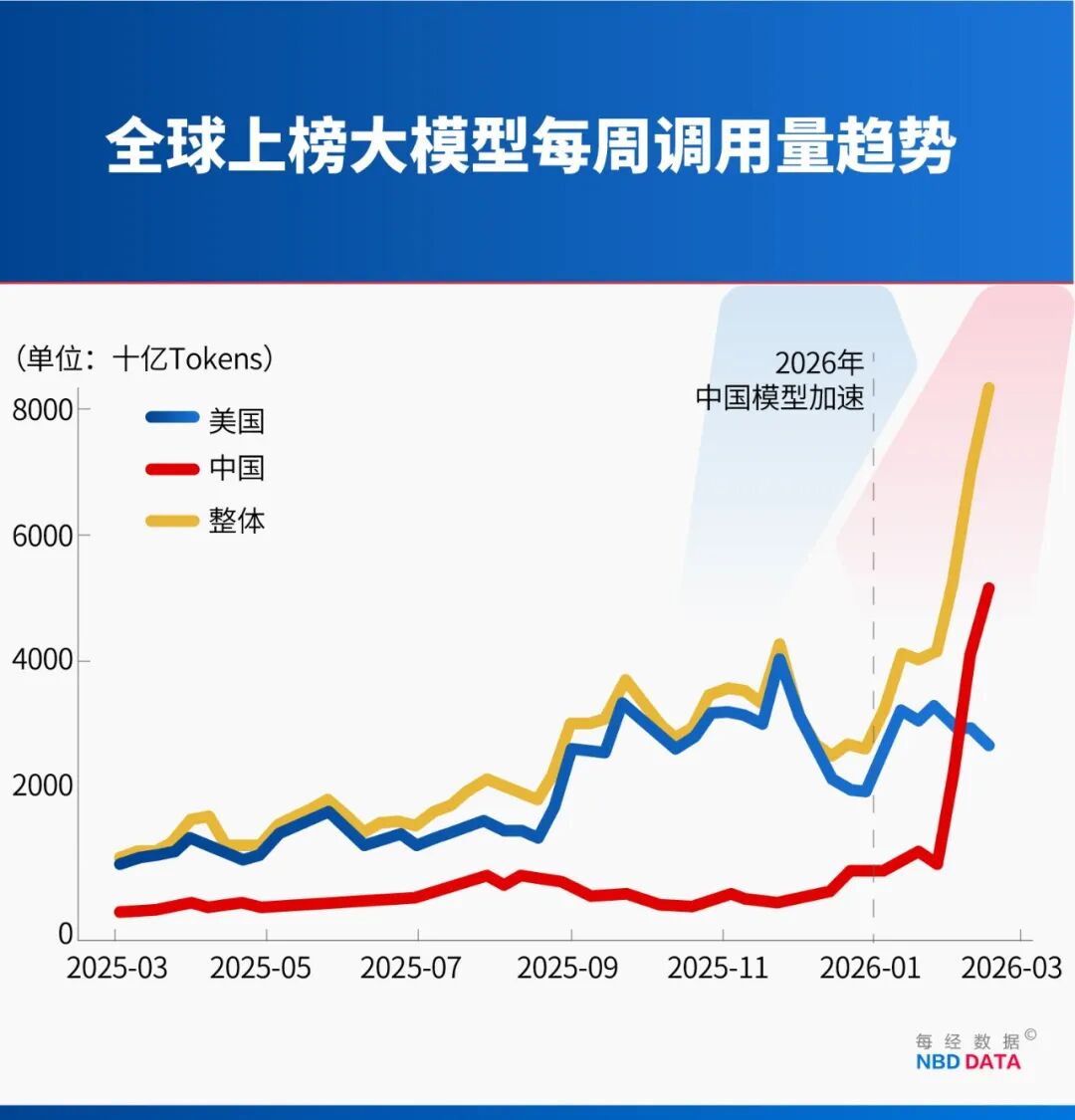
Core Insights - The Chinese large model market has seen a significant surge, with token usage reaching 41.2 trillion, surpassing the U.S. models for the first time [1][2] - Major Chinese models dominate the top five in usage, indicating a shift in the competitive landscape [1][2] - The market is bifurcating, with established players like BAT focusing on integrating models into existing services, while new entrants like Kimi and MiniMax are expanding their developer ecosystems [1][2] Token Usage and Developer Insights - The 41.2 trillion tokens are primarily driven by global developers, with U.S. developers accounting for 47.17% of usage compared to only 6.01% from China [2] - The surge in token usage reflects real demand from developers who are willing to invest in models that deliver performance and cost efficiency [2][6] - MiniMax M2.5 and Kimi K2.5 are highlighted for their competitive performance and cost advantages, with MiniMax achieving the highest usage in coding and search tasks [2][3] Cost Efficiency and Performance - Chinese models are significantly cheaper, costing only 1/10 to 1/20 of their U.S. counterparts, which is reshaping the economic calculations for developers [3][4] - The cost structure of models like MiniMax and Kimi allows for substantial savings in computational expenses, making them attractive options for developers [3][4] - The introduction of the "Mixture of Experts" (MoE) architecture has optimized engineering efficiency, contributing to lower costs [3] Demand Dynamics and Token Consumption - The emergence of agent-based scenarios has changed the token consumption logic, leading to exponential increases in token usage for complex tasks [5][6] - Over 70% of token consumption comes from large internet companies and professional developers, indicating a strong demand for these models in production environments [6] Business Model Evolution - The industry is shifting towards a "Results-as-a-Service" (RaaS) model, where payment is based on outcomes rather than token usage [8][9] - This transition requires a rethinking of pricing structures, moving from token-based to results-based billing, which aligns better with client expectations [9][10] - The challenge remains in accurately attributing results to AI contributions, complicating the implementation of this new model [18][19] Market Trends and Future Outlook - The current landscape shows a growing willingness among businesses to pay for quantifiable results, driven by changes in procurement processes [16][20] - The financial sustainability of new players is under scrutiny, as they face high computational costs that can exceed revenue [8][26] - The ability to successfully implement results-based pricing will be crucial for the survival and growth of these new entrants in the market [26][27]
2月井喷!中国AI调用量首超美国 四款大模型霸榜全球前五 国产算力需求正经历指数级增长
Mei Ri Jing Ji Xin Wen· 2026-02-26 11:40
Core Insights - In February, China's AI model API call volume surged, surpassing that of the United States for the first time, with 41.2 trillion tokens compared to the U.S.'s 29.4 trillion tokens during the week of February 9-15 [1][7] - The following week, China's model call volume increased to 51.6 trillion tokens, marking a 127% growth over three weeks, while U.S. model calls dropped to 27 trillion tokens [1][7] - Four out of the top five models in global API call volume are from Chinese companies, indicating a collective rise of Chinese AI manufacturers rather than reliance on a single product [1][10] Token Call Volume Growth - The global model token call volume has experienced explosive growth, increasing from 12.4 trillion tokens in the week of March 3-9, 2025, to 139.5 trillion tokens by mid-February 2026, a tenfold increase in less than a year [6] - In early February 2026, China's model call volume reached 22.7 trillion tokens, signaling a strong competitive push against U.S. models [6][7] Leading Models and Their Performance - The top five models by call volume during the week of February 16-22, 2026, included four from Chinese manufacturers, contributing 85.7% of the total call volume [10] - MiniMax's M2.5 model, launched on February 13, 2026, quickly became the top model, contributing 14.4 trillion tokens to the total call volume of 32.1 trillion tokens during the week of February 9-15 [10] Cost Competitiveness - Chinese models are significantly cheaper than their U.S. counterparts, with MiniMax's M2.5 and Zhiyu's GLM-5 priced at $0.3 per million tokens for input, compared to $5 for Claude Opus 4.6, making Chinese models approximately 16.7 times cheaper [15][16] - For output, MiniMax's M2.5 costs $1.1 per million tokens, while Claude Opus 4.6 costs $25, representing a cost difference of about 22.7 times [16][17] Technological Innovations - The "Mixture-of-Experts" (MoE) architecture is a key factor in reducing inference costs for Chinese models, allowing for significant reductions in memory usage and increases in throughput [18] - Chinese AI companies are also pursuing vertical integration to optimize costs further, combining model algorithms, cloud infrastructure, and AI chips for better efficiency [19] Market Trends and Future Projections - The demand for tokens is expected to grow exponentially, with a projected compound annual growth rate of 330% from 2025 to 2030 in China [19] - The concept of "Token inflation" reflects a structural increase in token consumption per user, driven by deeper engagement with AI tools for complex tasks [20] - Future AI service pricing is anticipated to become highly customized and flexible, influenced by task complexity and resource consumption [22]

春节成为C端AI全民普及拐点,国产大模型跻身全球第一梯队
Zhong Guo Neng Yuan Wang· 2026-02-24 01:43
Group 1 - The core viewpoint is that the Spring Festival marks a turning point for the widespread adoption of AI among consumers, with applications evolving from Chat to Agent [1][2] - The competition among internet giants for AI traffic entry is intensifying, and the integration of multiple business lines along with AI empowerment may drive performance and valuation [1][2] - Recommended companies include Alibaba-W and Baidu Group-SW, which are expected to benefit from the continuous improvement of open-source model capabilities and the rapid growth of domestic AI chips [2][5] Group 2 - OpenAI's revenue is projected to exceed its previous target, with a potential valuation of $850 billion following a $100 billion funding round [3] - Google's Gemini3.1Pro has significantly improved its performance in abstract reasoning tests, surpassing competitors like GPT-5.2 and Claude Opus4.6 [3] - Domestic AI companies like Zhiyu and MiniMax have seen substantial stock price increases, reflecting market recognition of their new large models [4] Group 3 - The investment recommendation emphasizes the commercialization of AI and the expansion of application scenarios, with a focus on companies benefiting from IT spending in state-owned enterprises [5] - In the automotive and autonomous driving sectors, the approval of domestic L3-level pilot licenses is expected to accelerate the commercialization of advanced driving technologies [5]

“AI恐慌”出现,美股网络安全概念集体跳水
Guo Ji Jin Rong Bao· 2026-02-22 01:27
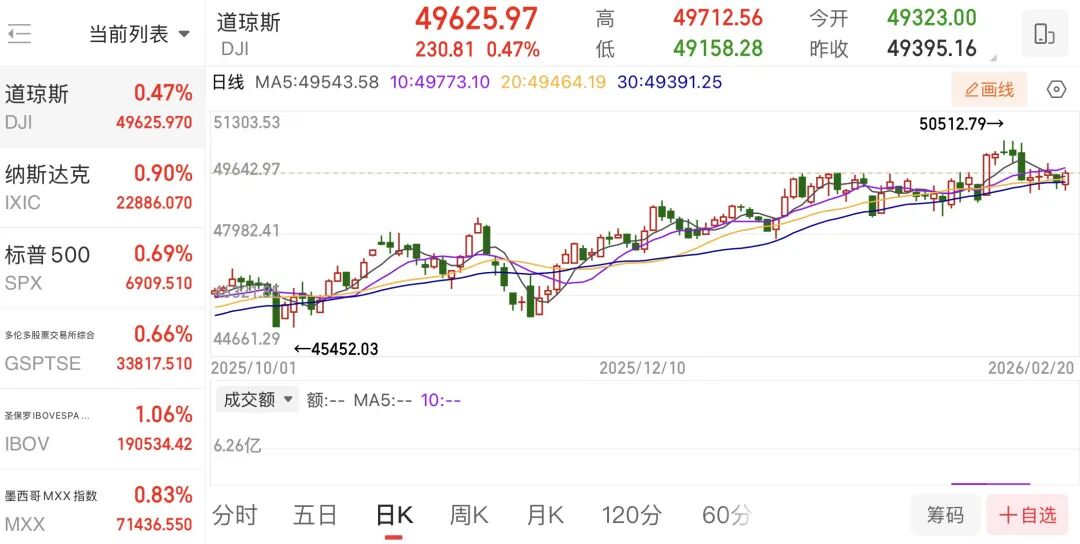
Market Overview - On February 20, US stock indices opened lower but rebounded during the day, with the Dow Jones up 0.23%, Nasdaq up 0.93%, and S&P 500 up 0.54% [1] Technology Sector - Major tech stocks showed mixed performance, with Google rising by 3.5% following the release of its new foundational model, Gemini 3.1 Pro, which has doubled the inference performance compared to the previous version released in November [3] - The Nasdaq China Golden Dragon Index also opened lower but turned positive, currently up 0.06% [3] Cybersecurity Sector - Cybersecurity stocks experienced a significant decline, with SailPoint down 9.44%, Okta down 9.18%, Cloudflare down 8.05%, Crowdstrike down 7.95%, and Zscaler down 5.47% [3] - The Global X Cybersecurity ETF fell nearly 5%, marking its lowest closing record since November 2023 [3] New AI Tools in Cybersecurity - Anthropic PBC launched a new AI tool, Claude Code Security, designed to scan code repositories for vulnerabilities and suggest fixes. This tool can read code like a human security researcher and identify subtle logical flaws often missed by traditional scanners [3][4] - During internal testing, the Claude Opus 4.6 model identified over 500 vulnerabilities in production open-source code repositories, which had evaded detection for decades [4] Market Sentiment - Concerns have arisen among investors regarding the potential impact of AI-native tools on existing enterprise security suites, as these tools shift the focus from passive monitoring to proactive automated remediation [5] - Dennis Dick from Triple D Trading noted a stable sell-off in the software sector, with cybersecurity stocks experiencing a mini flash crash due to the news about Anthropic PBC's findings [5]
震惊AI圈!OpenClaw之父加入OpenAI!
Zhong Guo Ji Jin Bao· 2026-02-16 07:14
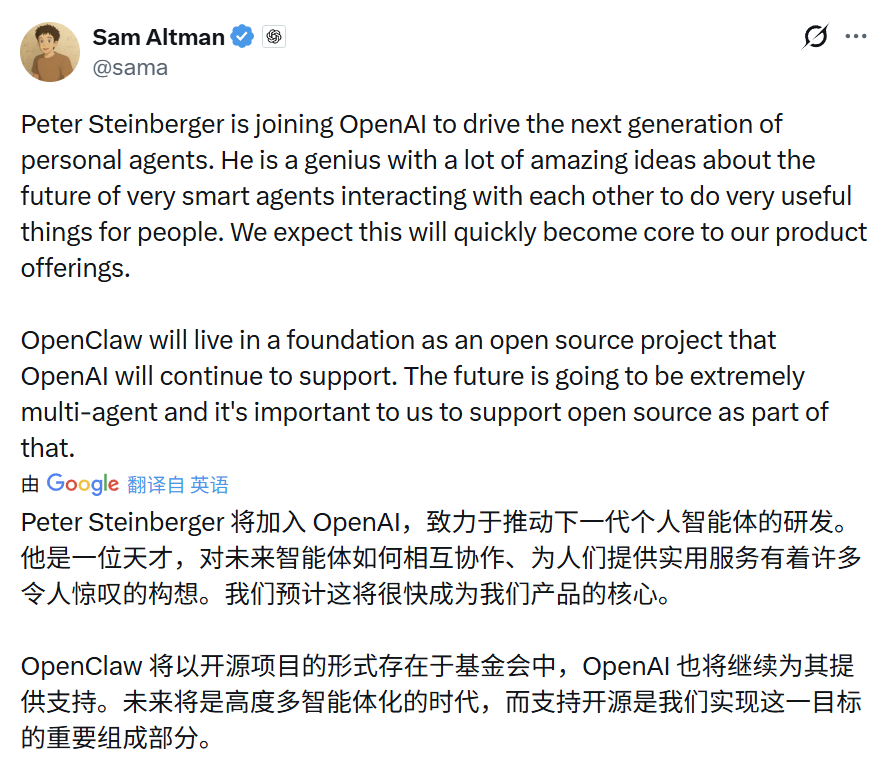
Core Insights - Peter Steinberger, founder of the popular AI open-source project OpenClaw, is joining OpenAI to drive the development of next-generation personal agents [1][2] - OpenAI CEO Sam Altman confirmed that OpenClaw will remain an open-source project supported by OpenAI [1] - Steinberger emphasized the importance of keeping OpenClaw open-source and believes OpenAI is the best platform to advance his vision [2] Group 1: OpenClaw and Its Development - OpenClaw, launched by Peter Steinberger, gained significant attention due to the demand for autonomous products that can operate without human guidance [4] - The project allows users to connect it to messaging platforms like WhatsApp for direct control of the agents [4] - Steinberger aims to create an agent that is user-friendly enough for anyone to use, which requires deeper changes and thorough security considerations [4] Group 2: Security Concerns - OpenClaw faces security concerns, with reports of the agent misbehaving after gaining access to iMessage, sending hundreds of spam messages [4] - Cybersecurity experts warn of high risks associated with the tool, as it can access private data and communicate externally, which are considered "the deadly three elements" in AI [4] Group 3: Competitive Landscape - OpenAI is actively recruiting top talent, having spent over $6 billion to acquire AI hardware startup io, founded by iPhone designer Jony Ive [5] - OpenAI's valuation has reached $500 billion, but it faces intense competition from Google and Anthropic in the generative AI market [5] - Anthropic's Claude has shown strong performance with its recent model Claude Opus4.6, and the company's valuation has reached $380 billion following recent funding [6]
震惊AI圈!刚刚,OpenClaw之父加入OpenAI!
Zhong Guo Ji Jin Bao· 2026-02-16 07:12
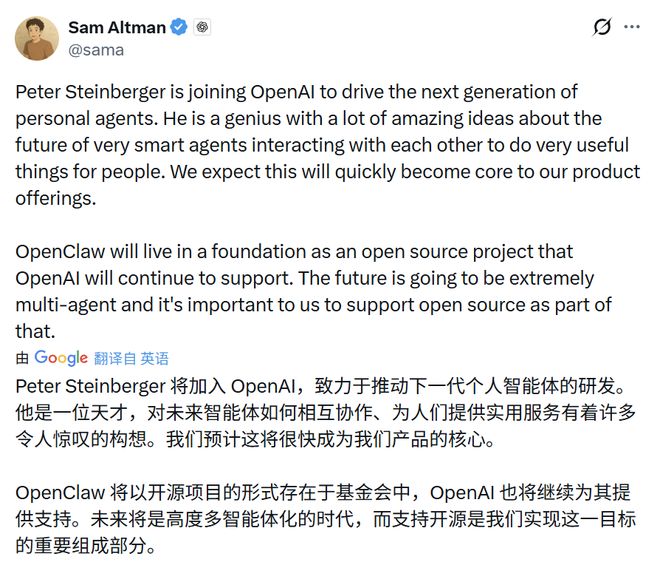
Core Insights - Peter Steinberger, the founder of the popular AI open-source project OpenClaw, is joining OpenAI to drive the development of next-generation personal agents [1][3] - OpenAI CEO Sam Altman confirmed that OpenClaw will remain an open-source project supported by OpenAI [1] - Steinberger emphasized the importance of keeping OpenClaw open-source and believes that OpenAI is the best platform to expand his vision [3][5] Company Developments - OpenClaw, launched by Peter Steinberger, gained significant attention due to the rising demand for autonomous products that can perform tasks without human intervention [7] - The project allows users to connect it to messaging platforms like WhatsApp for direct control of the AI agent [7] - Steinberger's next goal is to create an AI agent that is user-friendly enough for anyone to use, which requires deeper considerations of safety and access to cutting-edge models [7] Industry Context - The recruitment of top talent, including Steinberger, is part of a broader trend where AI giants like OpenAI are investing heavily to attract leading developers and researchers [8] - OpenAI's recent valuation has reached $500 billion, while it faces intense competition from companies like Google and Anthropic in the generative AI market [8] - Anthropic's recent funding round has valued the company at $380 billion, highlighting the competitive landscape in AI development [8]
招商证券国际:国产模型迭加速助港股科技板块估值修复 首选阿里巴巴-W等
Zhi Tong Cai Jing· 2026-02-13 07:08
Core Viewpoint - The report from China Merchants Securities International highlights significant advancements in the AI models of leading internet companies in mainland China, indicating a strengthening investment logic in the AI sector, which is expected to aid in the valuation recovery of the Hong Kong technology sector [1] Group 1: Company Developments - ByteDance's "Seedance 2.0" and Kuaishou-W's (01024) "Keling 3.0" have shown substantial improvements in film generation capabilities [1] - Alibaba-W (09988) has introduced "Qwen-Image-2.0," which benchmarks against "Nano Banana," and its desktop agent tool "Qoder Work" is compared to "Claude Cowork" [1] - OpenRouter's "Pony Alpha" is nearing the capabilities of Anthropic's "Claude Opus 4.6," while "Kimi K2.5" has topped OpenRouter [1] Group 2: Investment Insights - The investment logic surrounding AI in leading internet companies has significantly strengthened, which is expected to support the valuation recovery of the Hong Kong technology sector [1] - Upcoming major models such as DeepSeek-V4, Alibaba's Qwen 3.5, Doubao 2.0, and Mini Max M2.2 are anticipated to act as catalysts for the next phase of growth [1] - Preferred stocks for investment include Alibaba, Tencent Holdings (00700), and Kuaishou [1]




招商证券国际:国产模型迭加速助港股科技板块估值修复 首选阿里巴巴-W(09988)等
智通财经网· 2026-02-13 07:05
Core Insights - The report from China Merchants Securities International highlights significant advancements in the AI models of leading internet companies in mainland China, including ByteDance's "Seedance 2.0" and Kuaishou's "Keli 3.0," which have greatly improved film generation capabilities [1] - Alibaba's "Qwen-Image-2.0" is positioned against "Nano Banana," while its desktop agent tool "Qoder Work" competes with "Claude Cowork" [1] - The global model service platform OpenRouter's "Pony Alpha" is nearing the capabilities of Anthropic's "Claude Opus 4.6," and "Kimi K2.5" has topped OpenRouter [1] Investment Logic - The investment logic surrounding AI in leading internet companies in mainland China has significantly strengthened, aiding in the valuation recovery of the Hong Kong tech sector [1] - Upcoming major models such as DeepSeek-V4, Alibaba's Qwen 3.5, Doubao 2.0, and Mini Max M2.2 are expected to act as catalysts for the next phase of growth [1] - Preferred stocks include Alibaba, Tencent Holdings, and Kuaishou [1]
20cm速递|AI变革深化,巨头持续加码,创业板人工智能ETF国泰(159388)涨超2.5%
Mei Ri Jing Ji Xin Wen· 2026-02-12 04:48
Group 1 - The core viewpoint highlights the continuous upgrades in large models, with Anthropic launching Claude Opus 4.6, which features an "AI agent team" capability and can handle a context window of millions of tokens, leading the industry in financial analysis tests [1] - OpenAI has released its strongest programming model, GPT-5.3-Codex, which has performed excellently in multiple benchmark tests [1] - North American tech giants such as Alphabet, Meta, Amazon, and Microsoft have reported strong earnings, with significant capital expenditure plans set to increase by 2026 [1] Group 2 - Domestic tech companies in China, including Tencent, Alibaba, ByteDance, and Baidu, are entering an AI competition ahead of the Spring Festival, investing resources to promote AI applications [1] - The Guotai Artificial Intelligence ETF (159388) tracks the entrepreneurial board AI index (970070), which has a daily price fluctuation limit of 20%, focusing on AI-related companies listed on the entrepreneurial board [1] - The index includes component stocks from sectors such as software development, information technology services, and smart hardware, aiming to reflect the overall performance of companies engaged in AI technology research and application [1]

