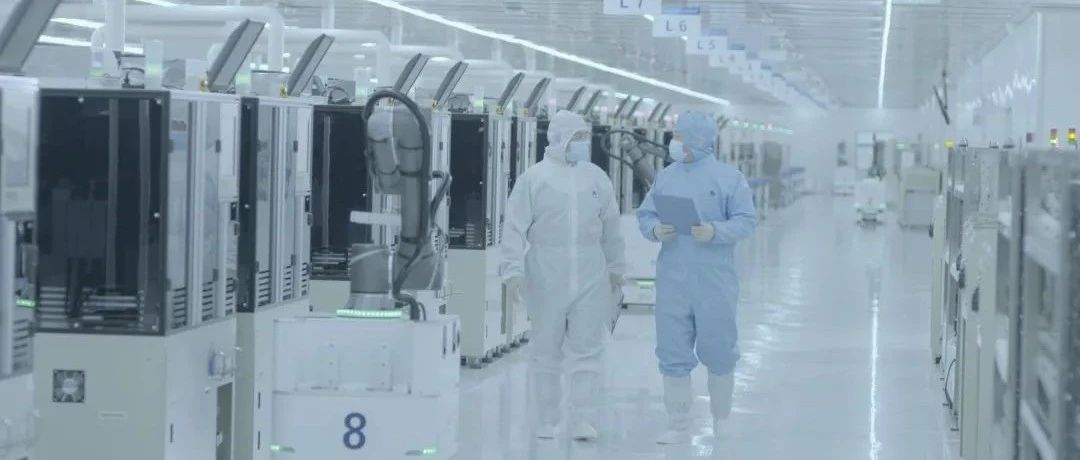
CloudRobo平台

Search documents
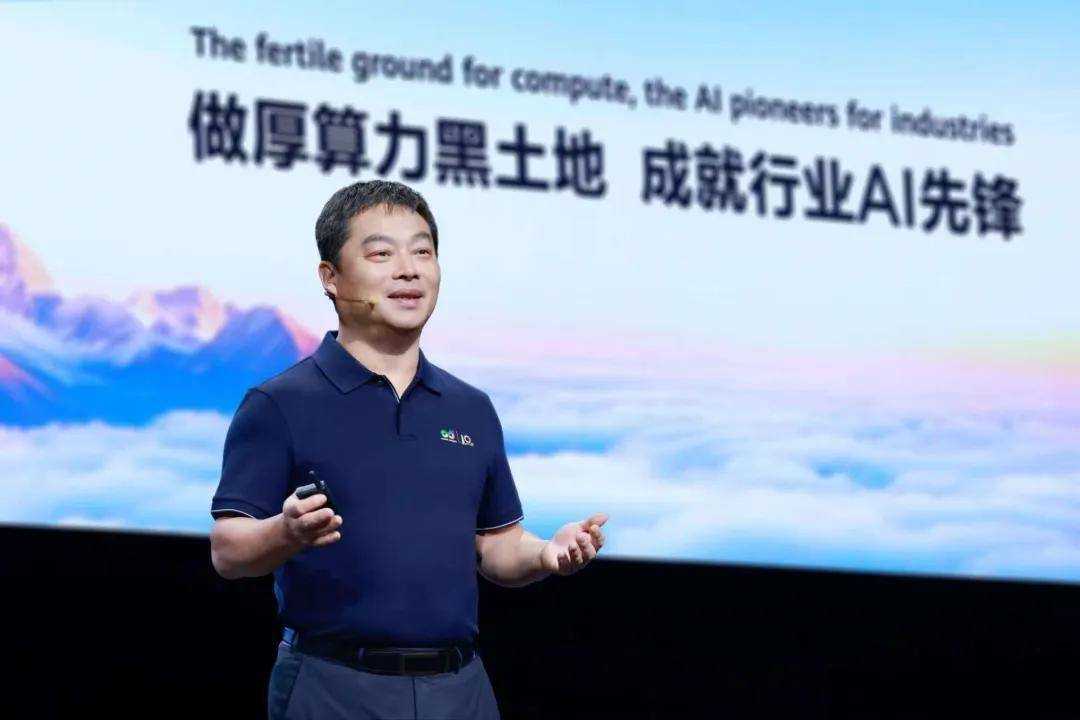
四年打造“算力黑土地”,张平安升任董事长,开启华为云AI新篇章
Sou Hu Cai Jing· 2025-12-05 06:59
Core Insights - Huawei Cloud's organizational adjustments signal a transition from a "business breakthrough phase" to an "ecosystem deepening phase" as it aims to enhance its cloud services and infrastructure [1] - Under the leadership of Zhang Pingan, Huawei Cloud has successfully navigated the critical phase of China's cloud computing evolution, focusing on foundational infrastructure, core technology innovation, and industry ecosystem development [1][3] Infrastructure Development - The concept of "black land" introduced by Huawei's founder emphasizes the importance of ICT infrastructure as the foundation for growth in cloud services [3] - Huawei Cloud has established three major computing hubs in Gui'an, Ulanqab, and Wulanchabu, achieving ultra-low latency coverage across China [3] - By 2025, Huawei Cloud has built 34 regions and 101 availability zones globally, supporting services in over 170 countries, effectively realizing the concept of a "global computing network" [3] Core Technology Innovation - The launch of the CloudMatrix384 super node in April 2025, integrating 384 Ascend NPUs and 192 Kunpeng CPUs, achieves a computing power of 300 PFlops, with plans for future upgrades to support massive clusters [4] - Huawei Cloud's GaussDB database has broken the dominance of foreign vendors in the financial sector, achieving the highest security certification and enabling significant performance improvements for major banks [7][9] Industry Applications - GaussDB supports daily transaction processing of 2 billion, with peak transactions reaching 67,000 per second, significantly reducing recovery time from 30 minutes to 2 minutes [7] - In the public sector, GaussDB has been successfully implemented in various government systems, demonstrating its reliability and effectiveness in complex scenarios [9] - The deployment of the Pangu model across over 30 industries and 500 scenarios showcases Huawei Cloud's ability to empower digital transformation in enterprises [11] Strategic Directions - Huawei Cloud's three strategic focuses include building a more fertile "black land" through organizational changes, fostering an open ecosystem for collaborative growth, and deepening integration with ICT solutions to drive business growth [18][19] - The company aims to meet the anticipated exponential growth in computing demand over the next decade by enhancing performance, service quality, and cost-effectiveness through its AI cloud services [19]

“感知无锡”调研行 | 科创赋能创新突围 无锡现代化产业体系建设加速推进
Xin Hua Cai Jing· 2025-11-12 12:38
Core Viewpoint - Wuxi is leveraging technological innovation to drive the development of a modern industrial system, focusing on key industries such as the Internet of Things (IoT), integrated circuits, and biomedicine, while also fostering future industries like artificial intelligence and aerospace [1][2][9]. Group 1: Technological Innovation and Industry Development - Wuxi has successfully developed the first domestically produced 28-nanometer electron beam measurement equipment, marking a significant breakthrough in semiconductor technology [1]. - The city has established itself as a global leader in the IoT sector, with over 3,500 IoT companies and an industry revenue exceeding 250 billion yuan [2]. - Wuxi's integrated circuit industry has over 600 companies, generating a total output value of 251.2 billion yuan, ranking second in the country [3]. Group 2: Major Projects and Collaborations - At the 2025 World Internet of Things Expo, Wuxi showcased significant innovations and signed 26 major projects worth over 32 billion yuan [2]. - The establishment of key innovation platforms has been crucial for the development of Wuxi's landmark industries, including the creation of national and provincial manufacturing innovation centers [4]. Group 3: Digital Transformation and Upgrading - Wuxi is focusing on digital transformation in traditional industries, emphasizing high-end equipment, textiles, and new energy sectors to enhance competitiveness [6][7]. - The city has implemented action plans to support the digital transformation of manufacturing, aiming to reduce costs and improve efficiency [6]. Group 4: Future Industry Development - Wuxi is strategically targeting future industries such as artificial intelligence, quantum technology, and commercial aerospace, with specific measures to promote the aerospace sector [9][10]. - The establishment of a 12 billion yuan fund for low-altitude economy and aerospace industries aims to support long-term development in these sectors [11]. Group 5: Ecosystem and Collaboration - Wuxi is fostering a collaborative ecosystem involving government, industry, academia, and finance to enhance innovation and industrial support [11]. - The integration of technology research, market operations, and talent development is being emphasized to create a sustainable innovation model [8][11].
合作金额超320亿元 2025世界物联网博览会成果发布
Yang Zi Wan Bao Wang· 2025-11-03 14:55
Group 1 - The 2025 World Internet of Things (IoT) Expo resulted in the signing of 26 major projects with a total cooperation amount exceeding 32 billion yuan, including 18 projects valued over 1 billion yuan each [1] - The expo featured four major theme pavilions with nearly 400 participating companies from 20 countries and regions, including over 20 Fortune 500 companies and more than 40 listed companies, with a first-time participation rate of 20% [1] - Significant product launches included the global debut of the terahertz near-field communication smart computing terminal and channel camera by Huatai Jiguang, and the full series of logistics robots by JD Logistics [1] Group 2 - During the expo, several key facilities were inaugurated, including the Jiangsu MEMS Sensor and Integrated Circuit Manufacturing Technology Key Laboratory and the Industrial Internet Platform Empowerment Center [2] - China Telecom launched a one-stop global connection management platform and an "Industrial + AI" integrated service platform, while China Mobile unveiled a passive IoT innovation demonstration zone [2] - The establishment of the National IoT Advanced Manufacturing Cluster Expert Advisory Committee, comprising seven academicians and 50 industry experts, was announced [2] Group 3 - The 2025 IoT Technology and Application International Forum attracted international academicians and facilitated high-level intellectual collaboration for technology integration and industrial implementation [3] - The expo emphasized the theme "Everything Connected, Endless Frontiers," focusing on the dual empowerment of artificial intelligence and IoT, and showcased a high-level event with extensive influence [3] - Wuxi aims to leverage the outcomes of the expo to strengthen its core IoT industry, promote the evolution of the industry, and build a world-class IoT industrial cluster [3]



总投资超320亿元 2025世界物联网博览会成果丰硕
Zhong Guo Jin Rong Xin Xi Wang· 2025-11-03 11:51
Core Insights - The 2025 World Internet of Things Expo concluded in Wuxi, showcasing the latest achievements and trends in the IoT sector, with a focus on the synergy between artificial intelligence and IoT [1][2] Group 1: Event Overview - The expo attracted nearly 400 companies from 20 countries, including over 20 Fortune 500 companies, with more than 50,000 attendees and 26 major project signings totaling over 32 billion yuan [1][2] - The event featured various activities such as exhibitions, high-level forums, project matchmaking, and authoritative releases, emphasizing the importance of Wuxi in the global IoT landscape [1][2] Group 2: Project Signings and Collaborations - A total of 26 significant projects were successfully signed, with 18 projects exceeding 1 billion yuan, contributing to a total cooperation amount of over 32 billion yuan [2] - Strategic collaborations were established in key areas such as vehicle-road-cloud integration and integrated circuits, enhancing the synergy between upstream and downstream sectors [2] Group 3: Innovations and Exhibits - The expo showcased nearly 400 domestic and international enterprises, with 20% being first-time exhibitors, highlighting innovative products such as terahertz communication terminals and AI-powered solutions [3] - Interactive exhibits like autonomous minibuses and AI coffee robots demonstrated the potential of IoT technologies in enhancing daily life [3] Group 4: Industry Insights and Reports - Several authoritative reports were released, outlining the evolution trends of the IoT industry, including the "2024-2025 China IoT Development Annual Report" and insights from leading organizations [4] - The event featured a project evaluation activity that collected over 800 global projects, with over 60% focusing on the intersection of IoT and AI [4] Group 5: Intellectual Exchange and Consensus - The expo gathered nearly 6,000 attendees, including academicians and industry experts, fostering discussions on the future of IoT, particularly the transition towards an intelligent internet of things [5] - The establishment of the National IoT Advanced Manufacturing Cluster Expert Advisory Committee aims to provide ongoing intellectual support for high-quality industry development [5] Group 6: Ecosystem Development - The expo marked the launch of several high-level platforms to enhance the IoT industry's public service capabilities, including testing centers and innovation platforms [6][7] - International cooperation was emphasized, with participation from over 20 foreign companies and various international forums promoting global collaboration in IoT technologies [7] Group 7: Future Directions - Wuxi aims to leverage the outcomes of the expo to further implement national digital economy strategies, focusing on core technology advancements and optimizing the innovation ecosystem [7]
人形机器人7月报:三季度关注国产链催化
Xin Lang Cai Jing· 2025-07-11 08:33
Industry Overview - The A-share SW robotics sector experienced a decline of 9% from April to June 2025, underperforming the SW machinery equipment sector by 12.5 percentage points [1] - Huawei's developer conference introduced a robotics foundational model, indicating a new paradigm for domestic robotics embodied intelligence [1] Comments - Huawei's CloudRobo platform offers cloud-based intelligence for robots, featuring three core modules: embodied multimodal generative models, embodied planning models, and embodied execution models, enabling end-to-end capability integration [1] - The platform has signed R2C agreements with robots, attracting industrial, medical, and collaborative robots, while Huawei Cloud focuses on providing cloud computing support, alleviating partnership concerns [1] - In the Hong Kong stock market, robotics companies showed a valuation premium over A-shares in Q2 2025 due to new IPOs in humanoid, collaborative, and AMR sectors, and improved liquidity from inclusion in Hong Kong Stock Connect and indices [1] - The Hong Kong robotics sector is expected to continue expanding in the second half of 2025, with attention on A+H dynamics [1] Company Developments - Zhiyuan Robotics announced the acquisition of at least 63.62% of Upwind New Materials, aiming for a target of 1,000 robot shipments in 2025 [2] - Shou Cheng Holdings' subsidiary increased investment in Yushu Technology, a leading global quadruped robot company, projected to capture 70% of the global market share by 2024 [2] - Tesla's Optimus mass production plan may be delayed due to hardware challenges such as motor overheating and short battery life, with a postponed target for 2025 [2] Valuation and Recommendations - The company maintains its target prices, profit forecasts, and ratings, with a focus on domestic chain opportunities, particularly recommending Daotong Technology and Yihua Da for their quality and sufficient stock price adjustments [3] - In the Hong Kong robotics sector, attention is advised on the logistics automation segment represented by AMR [3]

人形机器人下半场开始了?
机器人大讲堂· 2025-07-02 06:08
Core Insights - The humanoid robot industry is entering a "second half," with recent developments indicating a shift towards new industry consensus and practical applications [1][2][10] - Huawei's Cloud Robo platform introduces a distributed architecture for embodied intelligence, allowing for more flexible and efficient task execution by integrating various robot forms [2][3][10] Group 1: Industry Trends - The humanoid robot market is facing challenges, including reduced orders for Tesla's Optimus and high market valuations leading to layoffs in some companies [1][2] - The focus is shifting from humanoid robots to specialized robots that can better meet the specific demands of industrial applications, emphasizing efficiency, cost, and reliability [5][10][25] Group 2: Technological Advancements - The Cloud Robo platform utilizes large models to provide a "smart brain" for robots, enhancing their operational intelligence and efficiency through edge-cloud collaboration [2][3] - The platform's architecture allows for real-time processing and task optimization, improving the robots' adaptability to complex environments [3][10] Group 3: Practical Applications - Specialized robots are proving to be more effective in industrial settings, as they can be designed for specific tasks, such as semiconductor manufacturing, where precision and reliability are critical [6][14][20] - The integration of various robot forms under a unified intelligent platform enables companies to maximize production efficiency without extensive facility modifications [13][25] Group 4: Future Directions - The industry is moving towards a model where multiple robot forms collaborate under a single intelligent system, rather than relying solely on humanoid robots [11][25] - The focus on "function determines form" suggests that robots should be designed based on the specific requirements of their tasks, rather than merely imitating human shapes [22][25]