CogVideoX

Search documents
港股速报 | 恒指小幅高开 港股调整到位了吗?
Mei Ri Jing Ji Xin Wen· 2026-02-11 02:21
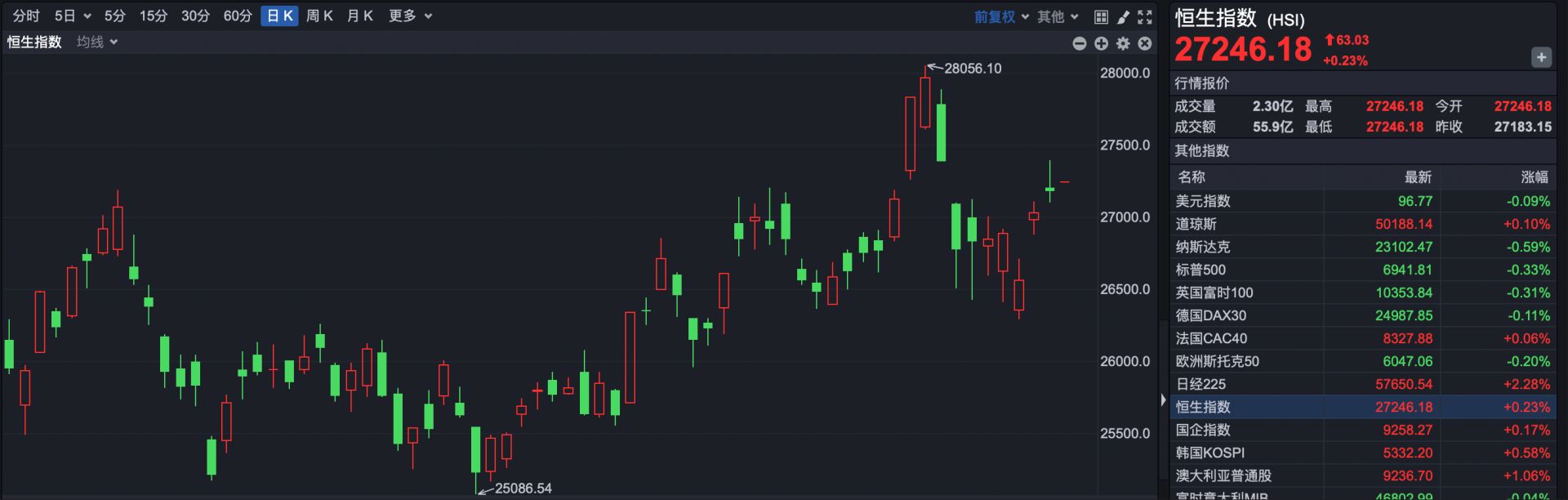
Market Overview - The Hong Kong stock market opened slightly higher on February 11, with the Hang Seng Index at 27,246.18 points, up 63.03 points, a gain of 0.23% [1] - The Hang Seng Tech Index opened at 5,462.70 points, increasing by 11.67 points, a rise of 0.21% [2] Company Focus - The stock of Zhipu AI (HK02513), referred to as the first large model stock, opened over 4% higher and has accumulated a gain of over 60% this week [3] - Zhipu's core competitive advantages include a fully self-developed technology system, leading model performance, an open-source ecosystem, and deep adaptation to domestic computing power. The company has a high proportion of R&D personnel at 74%, with a core team from Tsinghua KEG Laboratory, showcasing strong academic accumulation in natural language processing [5] - The GLM series has rapidly iterated, with GLM-4.7 performing exceptionally well in programming scenarios. The AutoGLM enables AI to autonomously operate smartphones and computer GUIs, marking a new paradigm in agent technology. Multi-modal capabilities cover text-to-image, text-to-video, and visual understanding, with CogView-4 and CogVideoX ranking highly in open-source evaluations. These technological advantages have been translated into practical applications across various sectors, including technology, finance, government, healthcare, and manufacturing [5] Other Company Updates - Shanghai Xiaonanguo (HK03666) saw a decline of over 16% in early trading. The company announced a strategic restructuring, confirming the temporary suspension of operations for 10 of its Shanghai restaurants. It clarified that claims regarding non-refundable deposits and prepaid cards were incorrect, as it is processing refunds for customers [7] - The market showed mixed performance among tech stocks, with Baidu, Kuaishou, and Bilibili rising over 1%, while Tencent fell over 1%. Innovative drug concept stocks were active, with Zai Lab rising over 3%, and automotive stocks also saw some increases, with BYD up over 1% [7] Market Outlook - CICC's latest view indicates that the recent pullback in the Hong Kong stock market is a result of weak fundamentals, concerns over tightening liquidity, and a decline in the attractiveness of Hong Kong's unique market structure. The overall credit cycle is experiencing turbulence, limiting the market index's potential, with the Hang Seng Index expected to range between 28,000 and 29,000 points [8] - In the short term, the market may have overreacted to various factors, including the nomination of Waller as the next Fed chair and concerns over AI bubbles and the collapse of old technology applications. There may be potential for upward correction after a pullback. In the medium term, a 3% to 4% growth in earnings for Hong Kong stocks is anticipated, which could drive the Hang Seng Index higher [8] - CICC suggests that the main investment focus should follow the direction of credit expansion, particularly in AI technology, cyclical sectors, consumption, and dividends, with AI technology and cyclical sectors being the primary focus of current credit expansion [8]

智谱再涨超4% 公司冲刺A股IPO 旗舰模型GLM4.7编程场景表现突出
Zhi Tong Cai Jing· 2026-01-27 01:56
Group 1 - The core viewpoint of the article highlights that Zhiyun (02513) has seen a stock price increase of over 4%, currently trading at 227 HKD with a transaction volume of 70.62 million HKD [1] - The China Securities Regulatory Commission has updated its information indicating that CICC (601995) submitted the third phase IPO guidance progress report for Zhiyun on January 15, as the company continues to advance its A-share listing plan, aiming for a dual listing in both A and H shares [1] - Zhiyun recently released its flagship model GLM-4.7, which has been positively evaluated by Dongwu Securities for its rapid iteration and strong performance in programming scenarios, utilizing an interleaved thinking mechanism for stability in real software engineering tasks [1] Group 2 - The AutoGLM feature enables AI to autonomously operate smartphones and computer GUIs, introducing a new paradigm for agents [1] - The multi-modal capabilities of Zhiyun's models cover various fields including text-to-image, text-to-video, and visual understanding, with CogView-4 and CogVideoX ranking highly in open-source evaluations [1]
港股异动 | 智谱(02513)再涨超4% 公司冲刺A股IPO 旗舰模型GLM4.7编程场景表现突出
Zhi Tong Cai Jing· 2026-01-27 01:56
Core Viewpoint - The stock of Zhiyu (02513) has increased by over 4%, currently trading at 227 HKD with a transaction volume of 70.62 million HKD, indicating positive market sentiment towards the company amid its ongoing IPO plans [1] Group 1: IPO Progress - The China Securities Regulatory Commission has updated its information, revealing that CICC submitted the third phase IPO guidance report for Zhiyu on January 15, indicating progress in the company's A-share listing plan [1] - Zhiyu is advancing towards its goal of dual listing in both A-share and H-share markets [1] Group 2: Product Development - The company recently launched its flagship model GLM-4.7, which has been positively received by East Wu Securities for its rapid iteration and strong performance in programming scenarios [1] - GLM-4.7 utilizes an interleaved thinking mechanism, demonstrating strong stability in real software engineering tasks [1] - The AutoGLM feature enables AI to autonomously operate smartphones and computer GUIs, marking a new paradigm in agent technology [1] - Zhiyu's multimodal capabilities cover text-to-image, text-to-video, and visual understanding, with CogView-4 and CogVideoX ranking highly in open-source evaluations [1]
全球大模型第一股智谱上市!雷军、徐新押中暴赚
Xin Lang Cai Jing· 2026-01-08 10:17
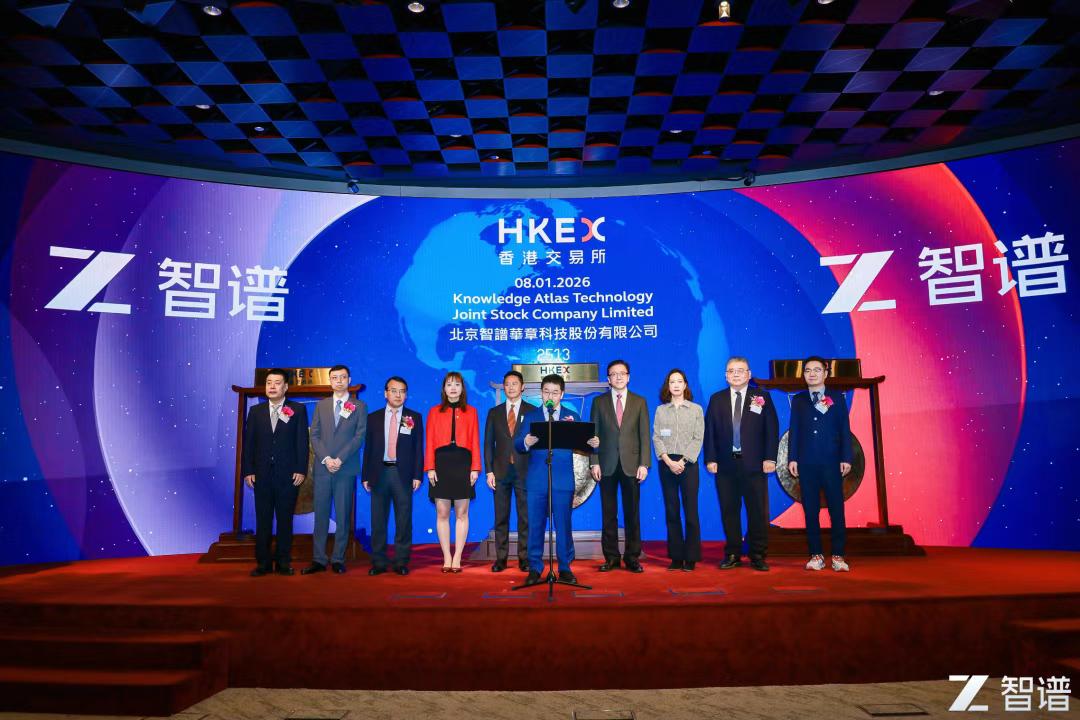
Core Viewpoint - The company Zhiyuan Huazhang has become the first publicly listed company in the global large model sector, achieving a market capitalization of HKD 57.9 billion, with significant returns for early investors, but faces challenges due to rising costs and increasing losses [1][2]. Group 1: IPO and Market Performance - Zhiyuan Huazhang's IPO was priced at HKD 116.2 per share, raising a total of HKD 4.348 billion, ranking fourth in terms of fundraising scale among Hong Kong IPOs in 2026 [2]. - The company's market valuation post-IPO was approximately HKD 579 billion, reflecting a 2.1 times increase from its last funding round valuation of HKD 244 billion [2][3]. - The stock price rose by 13.17% on its first trading day, indicating strong market interest despite initial fluctuations [1]. Group 2: Financial Performance and Growth - Revenue for Zhiyuan Huazhang grew from HKD 57.4 million in 2022 to HKD 312 million in 2024, with a projected revenue of HKD 1.33 billion for 2025 [15][17]. - The company has a significant number of institutional clients, increasing from 48 in 2022 to over 12,000 by mid-2025, driven by its cloud deployment services [18][19]. - The revenue from localized deployment, which serves B2B clients, has maintained a gross margin above 50%, while cloud deployment revenue has rapidly increased, contributing to overall growth [17][18]. Group 3: Investment and Valuation - The company has attracted substantial investment, with 11 cornerstone investors subscribing to nearly 70% of the new shares, resulting in an overall floating profit of 3.4 times for 57 external investors [3][4]. - The valuation of Zhiyuan Huazhang corresponds to a price-to-sales ratio of approximately 147 times based on 2024 revenue, which is higher than some competitors [3][4]. - The company has completed 14 rounds of financing, raising over HKD 8.36 billion, with a valuation increase of 60 times since its inception [31][32]. Group 4: Research and Development - Zhiyuan Huazhang's R&D expenditure significantly exceeds its revenue, with R&D costs reaching HKD 21.95 billion in 2024, which is seven times its revenue for that year [22][23]. - The company employs a large R&D team, comprising 74.4% of its total workforce, emphasizing its commitment to innovation [23]. - The company holds numerous patents and has a strong technical foundation, collaborating closely with Tsinghua University's research teams [20][21]. Group 5: Challenges and Risks - Despite rapid revenue growth, the company faces challenges with rising operational costs, particularly in computing services, which have surged to over HKD 15 billion [24][25]. - The gross margin for cloud deployment has declined significantly, indicating potential profitability issues in a competitive market [18][24]. - The company's total liabilities reached HKD 112.52 billion, with a net asset value of -HKD 61.51 billion, raising concerns about its financial sustainability [1].

四问智谱上市
3 6 Ke· 2026-01-08 09:31
Core Viewpoint - The company Zhipu AI has officially listed on the Hong Kong Stock Exchange, marking a significant transition from a privately held entity to a publicly traded company, amidst scrutiny regarding its business model and financial performance [1][3]. Group 1: Company Overview - Zhipu AI was founded six years ago and has recently completed its IPO, with an opening price of HKD 120 per share and a market capitalization of HKD 52.828 billion [1]. - The IPO was highly successful, with a subscription rate of 1159.46 times for the public offering and 15.28 times for the international offering, raising over HKD 4.3 billion [1]. Group 2: Market Position and Identity - Zhipu AI is often referred to as "China's OpenAI," a label that has both propelled its narrative and created expectations that may be difficult to meet [4][5]. - The company has been recognized in various reports and discussions as a leading player in the AI space, with its CEO acknowledging the influence of OpenAI on its development [5][6]. Group 3: Business Model Analysis - Zhipu AI's revenue has shown significant growth, with figures of HKD 57.4 million, HKD 124.5 million, and HKD 312.4 million from 2022 to 2024, reflecting a compound annual growth rate of 130% [21]. - The revenue structure is heavily reliant on localized deployments, contributing 84.5% of total revenue, while cloud revenue remains low at 15.5% [21]. - The company has faced criticism for its "heavy delivery" model, which may lead to a perception of being an outsourcing firm rather than a technology innovator [22]. Group 4: Financial Performance and Challenges - Zhipu AI has reported substantial net losses, with figures of HKD 143 million, HKD 788 million, and HKD 2.958 billion from 2022 to 2024, and an adjusted net loss of HKD 1.752 billion in the first half of 2025 [23]. - The average collection period for receivables has increased significantly, from 21 days in 2023 to 112 days in the first half of 2025, indicating potential cash flow issues [24][25]. Group 5: Future Directions and Strategies - Post-IPO, Zhipu AI is exploring various avenues for revenue generation, including B2B2C strategies and a shift towards standardized API services, although the latter has shown negative gross margins [30][31]. - The company is also pursuing international collaborations through the "Sovereign Large Model International Co-Building Alliance," aiming to establish AI infrastructure in partnership with countries along the Belt and Road [34][35]. - Zhipu AI's leadership acknowledges the need to focus on core technological and business logic to ensure sustainable cash flow and address real market demands [38][39].
四问智谱上市|甲子光年
Sou Hu Cai Jing· 2026-01-08 08:42
Core Viewpoint - Zhiyu AI is not and does not need to become "China's OpenAI," as it faces unique challenges and opportunities in the AI landscape, particularly after its IPO in Hong Kong [2][4]. Group 1: IPO and Market Reception - Zhiyu AI officially listed on the Hong Kong Stock Exchange on January 8, 2026, with an opening price of HKD 120 per share, resulting in a market capitalization of HKD 52.828 billion [2]. - The IPO was highly successful, with the Hong Kong public offering receiving 1,159.46 times subscription and the international offering receiving 15.28 times subscription, raising over HKD 4.3 billion [2]. Group 2: Identity and Market Positioning - The label "China's OpenAI" has been a significant narrative for Zhiyu AI, influencing its identity and market perception since the launch of ChatGPT [5][6]. - Despite the label, there is a growing recognition that this association may limit Zhiyu AI's potential and create unrealistic expectations regarding its business model and financial performance [4][22]. Group 3: Business Model Analysis - Zhiyu AI's revenue from 2022 to 2024 showed a compound annual growth rate of 130%, with revenues of CNY 57.4 million, CNY 124.5 million, and CNY 312.4 million respectively [25]. - The company has a heavy reliance on localized deployments, which accounted for 84.5% of its revenue, while cloud revenue was only 15.5% [25]. - The company has faced significant losses, with net losses of CNY 143 million, CNY 788 million, and CNY 2.958 billion from 2022 to 2024 [27]. Group 4: Future Financial Strategies - Post-IPO, Zhiyu AI must find sustainable revenue streams to support its high cash burn rate, with cash and equivalents reported at CNY 2.552 billion [29]. - The company is exploring B2B2C strategies and partnerships with major tech firms to enhance its market presence, while also attempting to transition to standardized API services [33]. - Zhiyu AI is also focusing on international collaborations to build AI infrastructure in Southeast Asia and other regions, with early signs of revenue growth from these markets [34].

智谱(02513):从清华实验室到港股AI新贵,关注模型迭代与生态飞轮
Soochow Securities· 2026-01-07 13:06
Investment Rating - The report does not provide a specific investment rating for the company [1]. Core Insights - The company, Zhipu AI, is a leading independent general large model developer in China, established in 2019, and has developed a unique General Language Model (GLM) framework that excels in long text understanding and logical reasoning [6][12]. - Zhipu AI's flagship products, GLM-4.5 and GLM-4.7, have achieved top rankings in international benchmark tests and have gained significant recognition in the global developer community [6][14]. - The company has a strong market position, ranking first among independent general large model developers in China with a market share of 6.6% as of 2024 [6][15]. - Zhipu AI plans to go public on the Hong Kong Stock Exchange on January 8, 2026, with an IPO price of HKD 116.20 per share, aiming to raise approximately HKD 4.3 billion [6][15]. Summary by Sections 1. Company Overview - Zhipu AI is built on technology from Tsinghua University and aims to compete with OpenAI, focusing on a self-regressive fill-in-the-blank GLM framework [12][16]. - The company has released several significant models, including the GLM-130B, which marked its entry into the mainstream large language model market [12][16]. 2. Business Model and Operations - The business model is centered around Model as a Service (MaaS), offering both localized and cloud deployment options [21][24]. - Localized deployment accounts for a significant portion of revenue, with high margins, while cloud deployment is rapidly growing and aims to capture a larger market share [24][25]. 3. Historical Financial Analysis - Revenue has shown rapid growth, with projections indicating revenues of CNY 785 million in 2025 and CNY 1.55 billion in 2026, reflecting a compound annual growth rate of over 130% from 2022 to 2024 [1][30]. - The company has been operating at a loss due to substantial R&D investments, with cumulative R&D expenses exceeding CNY 4.4 billion from 2022 to 2024 [6][30]. 4. Core Competitiveness - Zhipu AI's competitive edge lies in its fully self-developed technology system, leading model performance, and a robust open-source ecosystem [38][39]. - The GLM series models have demonstrated significant advantages in various applications, including multi-modal understanding and generation [39][40]. 5. Profitability Forecast and Investment Suggestions - The company is expected to achieve revenues of CNY 7.9 billion in 2025, CNY 15.5 billion in 2026, and CNY 32.2 billion in 2027, with a gradual shift towards cloud-driven revenue [6][7]. - The overall gross margin is projected to reach 50% by 2025, with improvements in cloud margins as the business scales [6][7].
Manus被收购,智谱也定了8天后上市
Sou Hu Cai Jing· 2025-12-30 04:12
Core Viewpoint - The company Zhiyu Huazhang Technology Co., Ltd. (智谱) has officially launched its IPO process in Hong Kong, aiming to raise approximately HKD 4.3 billion with an expected market capitalization exceeding HKD 51.1 billion upon listing [2][3]. Group 1: IPO Details - Zhiyu plans to issue a total of 37.42 million H shares, with 1.87 million shares available for public offering in Hong Kong and 35.55 million shares for international offering [3]. - The IPO price is set at HKD 116.20 per share, leading to an estimated fundraising scale of around HKD 4.3 billion after deducting related issuance costs [3]. - The company has raised a cumulative financing amount of approximately CNY 8.34 billion in the private market, with a latest valuation of CNY 24.38 billion, indicating a near doubling of its market value as it approaches listing [3]. Group 2: Investor Participation - The cornerstone investor lineup is notable, with total subscriptions amounting to HKD 2.98 billion, accounting for nearly 70% of the total issuance scale [4]. - Participating cornerstone investors include 11 institutions such as JSC International Investment Fund SPC, JinYi Capital Multi-Strategy Fund SPC, and others [4]. Group 3: Market Context and Challenges - The high proportion of cornerstone subscriptions comes amid a challenging environment for tech assets in the Hong Kong stock market, highlighting the significance of this IPO in the context of the "global large model first stock" race [5]. - The company faces ongoing challenges in the AI large model sector, with some competitors opting to exit the foundational model competition and focus on vertical applications [7]. - Zhiyu primarily targets enterprise-level solutions (to B), having already implemented services in various industries including finance, internet, smart devices, and healthcare [7]. Group 4: Financial Performance - In the first half of the year, Zhiyu reported revenues of CNY 191 million but incurred a significant loss of CNY 2.36 billion, with R&D costs reaching CNY 1.6 billion [7]. - The market is shifting towards a clearer focus on model capabilities and commercialization pathways, which poses challenges even for leading companies in the sector [7]. Group 5: Technological Advancements - Zhiyu's technology framework is centered around the GLM model, which integrates autoregressive generation and masked prediction for unified modeling of understanding and generation tasks [11]. - The company has released several iterations of its GLM series, with the latest GLM-4.7 model showing significant improvements in various benchmarks compared to its predecessors [12][16]. - The company has also developed multimodal models and an AI agent model named AutoGLM, which supports over 8,000 institutional clients and approximately 80 million devices [17]. Group 6: Future Outlook - The transition to the public market is seen as a critical test for the company, as it will face scrutiny regarding its high R&D investments, rising computing costs, and the still-evolving commercialization path for general large models [17].

智谱定档大模型第一股,1月8日挂牌上市,IPO预募资43亿港元
量子位· 2025-12-30 03:57
Core Viewpoint - Zhipu AI, known as the "Chinese version of OpenAI," is set to become the world's first publicly listed large model company, with its IPO scheduled for January 8, 2026, on the Hong Kong Stock Exchange under the stock code 2513 [7][8]. Group 1: IPO Details - Zhipu AI has officially launched its IPO, aiming to raise approximately HKD 4.3 billion, with a post-listing market valuation expected to exceed HKD 51.1 billion [3][11]. - The IPO will issue a total of 37,419,500 H-shares, with 1,871,000 shares available for public sale in Hong Kong and 35,548,500 shares for international sale [6][10]. - The offering price is set at HKD 116.20 per share, with the subscription period running from December 30, 2025, to January 5, 2026 [9][11]. Group 2: Financial Performance - Zhipu AI has achieved significant revenue growth, with revenues of RMB 57.4 million, RMB 124.5 million, and RMB 312.4 million from 2022 to 2024, representing a compound annual growth rate of 130% [27]. - The company reported a revenue of RMB 191 million in the first half of 2025, marking a year-on-year increase of 325% [27]. - Zhipu AI has maintained a gross margin above 50% over the past three years, outperforming the industry average of approximately 40% [31][32]. Group 3: R&D Investment - The company has heavily invested in research and development, with R&D expenses rising to RMB 844 million, RMB 5.289 billion, and RMB 21.954 billion from 2022 to 2025, indicating a significant commitment to innovation [35]. - At its peak, R&D spending reached eight times the company's revenue for the period, highlighting the financial pressures associated with high R&D costs in the AI sector [36]. Group 4: Market Position and Strategy - Zhipu AI has established a strong market presence, with over 12,000 enterprise clients and more than 80 million end-user devices powered by its models [26]. - The company has successfully implemented a MaaS (Model as a Service) business model, which has attracted over 270,000 enterprises and application developers in China, with nine of the top ten internet companies utilizing its models [25][26]. - The latest flagship model, GLM-4.7, has achieved top rankings in various AI performance evaluations, further solidifying Zhipu's position in the competitive landscape [18][19]. Group 5: Founding and Leadership - Zhipu AI was founded in 2019, originating from Tsinghua University's technology transfer, with a leadership team composed of experts from the university's Knowledge Engineering Laboratory [41][53]. - The CEO, Zhang Peng, and Chief Scientist, Tang Jie, are both prominent figures in the AI research community, contributing to the company's technological advancements and strategic direction [46][51].

AAAI 2026|教会视频扩散模型「理解科学现象」:从初始帧生成整个物理演化
机器之心· 2025-11-15 01:37
Core Insights - The article discusses the limitations of existing video generation models like Stable Diffusion and CogVideoX in accurately simulating scientific phenomena, highlighting their tendency to produce physically implausible results [2][3] - A new framework proposed by a research team from Dongfang University and Shanghai Jiao Tong University aims to enable video diffusion models to learn "latent scientific knowledge," allowing them to generate scientifically accurate video sequences from a single initial frame [3][4] Methodology - The proposed method consists of three main steps: latent knowledge extraction, pseudo-language prompt generation, and knowledge-guided video generation [8] - The first step involves extracting "latent scientific knowledge" from a single initial image, which is crucial for inferring subsequent dynamic evolution [9] - The second step generates pseudo-language prompts by leveraging the CLIP model's cross-modal alignment capabilities, allowing the model to "understand" the underlying structural rules in the initial image [10] - The third step integrates these pseudo-language prompts into existing video diffusion models, enabling them to simulate scientific phenomena while adhering to physical laws [11] Experimental Results - The research team conducted extensive experiments using fluid dynamics simulation data and real typhoon observation data, demonstrating that the new model generates videos that are not only visually superior but also more scientifically accurate [13][18] - The model was tested on various fluid simulation scenarios, including Rayleigh-Bénard Convection, Cylinder Flow, DamBreak, and DepthCharge, as well as real satellite data from four typhoon events [13][18] - Quantitative evaluations showed significant improvements in physical consistency metrics, with the new model outperforming mainstream methods in all tested scenarios [18] Future Implications - This research represents a meaningful exploration of generative AI in scientific modeling, suggesting that AI can evolve from merely visual generation to understanding and simulating physical processes [19][20] - The potential applications of this technology could extend to meteorological forecasting, fluid simulation, and Earth system modeling, positioning AI as a valuable tool for scientists [20]