CogVLM

Search documents
智谱启动招股,估值超500亿港元
Tai Mei Ti A P P· 2025-12-30 08:06
Core Viewpoint - The company Zhiyu Huazhang Technology Co., Ltd. ("Zhiyu") is set to launch its IPO, aiming to raise approximately HKD 4.3 billion, marking it as the first publicly listed company focused on general large models in the AI sector, providing a quantifiable valuation benchmark for the industry [2][6]. Company Overview - Zhiyu is a typical "Tsinghua system" AI company, originating from the knowledge engineering laboratory of Tsinghua University's computer science department, and focuses on developing its own General Language Model (GLM) series [3]. - The company has developed a comprehensive model matrix covering language, code, multimodal, and intelligent agents, positioning itself against OpenAI's technology [3]. Revenue and Financial Performance - Zhiyu's revenue structure has shifted from a heavy reliance on localized deployment (97.6% in 2022) to a more diversified model, with localized deployment accounting for 69.4% and cloud deployment for 30.6% in the latest reporting period [4]. - The company reported revenues of RMB 57.409 million in 2022, projected to grow to RMB 312.414 million by 2024, while also incurring significant losses, with adjusted net losses of RMB 974.17 million in 2022 and projected losses of RMB 2.466 billion in 2024 [5][6]. Market Position and Client Base - Zhiyu has accumulated over 12,000 enterprise clients and 45 million developers, establishing a business model centered around Model as a Service (MaaS), with localized deployment making up 84.8% of its revenue [6]. - The company holds a 6.6% market share among independent general model developers in China, ranking first in the country and second globally [3]. IPO and Fund Utilization - The IPO proceeds will allocate approximately 70% (around HKD 2.9 billion) for AI model research and development, 10% for optimizing the MaaS platform, and the remaining 20% for business partnerships and operational expenses [8]. - The IPO is seen as a means to continue investing heavily in R&D and scaling operations, aiming to establish a clear path to profitability within the next 2-3 years [8]. Challenges and Industry Outlook - The company faces challenges in transitioning from a "high growth + significant loss" model to a profitable one, while also needing to optimize cost structures and enhance operational efficiency [9]. - The industry may enter a consolidation phase as leading model companies successfully IPO, potentially concentrating resources among firms with both technological and capital advantages [9].


智谱定档大模型第一股,1月8日挂牌上市,IPO预募资43亿港元
量子位· 2025-12-30 03:57
Core Viewpoint - Zhipu AI, known as the "Chinese version of OpenAI," is set to become the world's first publicly listed large model company, with its IPO scheduled for January 8, 2026, on the Hong Kong Stock Exchange under the stock code 2513 [7][8]. Group 1: IPO Details - Zhipu AI has officially launched its IPO, aiming to raise approximately HKD 4.3 billion, with a post-listing market valuation expected to exceed HKD 51.1 billion [3][11]. - The IPO will issue a total of 37,419,500 H-shares, with 1,871,000 shares available for public sale in Hong Kong and 35,548,500 shares for international sale [6][10]. - The offering price is set at HKD 116.20 per share, with the subscription period running from December 30, 2025, to January 5, 2026 [9][11]. Group 2: Financial Performance - Zhipu AI has achieved significant revenue growth, with revenues of RMB 57.4 million, RMB 124.5 million, and RMB 312.4 million from 2022 to 2024, representing a compound annual growth rate of 130% [27]. - The company reported a revenue of RMB 191 million in the first half of 2025, marking a year-on-year increase of 325% [27]. - Zhipu AI has maintained a gross margin above 50% over the past three years, outperforming the industry average of approximately 40% [31][32]. Group 3: R&D Investment - The company has heavily invested in research and development, with R&D expenses rising to RMB 844 million, RMB 5.289 billion, and RMB 21.954 billion from 2022 to 2025, indicating a significant commitment to innovation [35]. - At its peak, R&D spending reached eight times the company's revenue for the period, highlighting the financial pressures associated with high R&D costs in the AI sector [36]. Group 4: Market Position and Strategy - Zhipu AI has established a strong market presence, with over 12,000 enterprise clients and more than 80 million end-user devices powered by its models [26]. - The company has successfully implemented a MaaS (Model as a Service) business model, which has attracted over 270,000 enterprises and application developers in China, with nine of the top ten internet companies utilizing its models [25][26]. - The latest flagship model, GLM-4.7, has achieved top rankings in various AI performance evaluations, further solidifying Zhipu's position in the competitive landscape [18][19]. Group 5: Founding and Leadership - Zhipu AI was founded in 2019, originating from Tsinghua University's technology transfer, with a leadership team composed of experts from the university's Knowledge Engineering Laboratory [41][53]. - The CEO, Zhang Peng, and Chief Scientist, Tang Jie, are both prominent figures in the AI research community, contributing to the company's technological advancements and strategic direction [46][51].

“大模型第一股”要来?
证券时报· 2025-12-18 09:09
Core Viewpoint - Both Zhipu and MiniMax, two AI model unicorns, have reportedly passed the Hong Kong Stock Exchange hearing, indicating their readiness for public listing [1][2]. Group 1: Zhipu Overview - Zhipu, established in 2019, is one of the "Six Little Tigers" in large models, having developed the GLM-130B bilingual pre-trained model and the ChatGLM dialogue model [4]. - The company has generated over 100 million RMB (approximately 14 million USD) in annual recurring revenue (ARR) from its software tools and model business [4]. - Zhipu aims for over 100% revenue growth by 2025 and is diversifying its revenue structure, targeting a 50% contribution from its API business [4]. - The API platform currently serves over 2.7 million paying customers, including major Chinese tech firms [4]. - In September, Zhipu launched an AI-driven coding tool subscription plan priced at 20 RMB per month, significantly lower than competitors [5]. - The company has completed 17 rounds of financing, with the latest round in July raising 1 billion RMB [5][6]. Group 2: MiniMax Overview - MiniMax, founded in 2021, has developed a series of multimodal general models, showcasing strong capabilities in code and agent functions [9]. - The MiniMax M2 model ranks among the top five globally on the Artificial Analysis (AA) leaderboard, establishing itself in the first tier of text models [10]. - MiniMax's investor base includes prominent firms such as Alibaba, Hillhouse Capital, and Tencent, with a recent C round financing in July raising nearly 300 million USD, leading to a valuation of 4 billion USD [10].

万字长文总结多模态大模型最新进展(Modality Bridging篇)
自动驾驶之心· 2025-11-15 03:03
Core Insights - The article discusses the emergence of Multimodal Large Language Models (MLLMs) as a significant research focus, highlighting their capabilities in performing multimodal tasks such as story generation from images and mathematical reasoning without OCR, indicating a potential pathway towards general artificial intelligence [2][4]. Group 1: MLLM Architecture and Training - MLLMs typically undergo large-scale pre-training on paired data to align different modalities, using datasets like image-text pairs or automatic speech recognition (ASR) datasets [2]. - The Perceiver Resampler module maps variable-sized spatiotemporal visual features from a vision encoder to a fixed number of visual tokens, reducing computational complexity in visual-text cross-attention [6][8]. - The training process involves a two-phase strategy: the first phase focuses on visual-language representation learning from frozen image encoders, while the second phase guides visual-to-language generation learning from frozen LLMs [22][24]. Group 2: Instruction Tuning and Data Efficiency - Instruction tuning is crucial for enhancing the model's ability to follow user instructions, with the introduction of learned queries that interact with both visual and textual features [19][26]. - The article emphasizes the importance of diverse and high-quality instruction data to improve model performance across various tasks, including visual question answering (VQA) and OCR [44][46]. - Data efficiency experiments indicate that reducing the training dataset size can still maintain high performance, suggesting potential for further improvements in data utilization [47]. Group 3: Model Improvements and Limitations - LLaVA-NeXT shows improvements in reasoning, OCR, and world knowledge, surpassing previous models in several benchmarks [40]. - Despite advancements, limitations remain, such as the model's inability to handle multiple images effectively and the potential for generating hallucinations in critical applications [39][46]. - The article discusses the need for efficient sampling methods and the balance between data annotation quality and model processing capabilities to mitigate hallucinations [48].

智谱否认上市前夕裁员,47个岗位需求待招
3 6 Ke· 2025-10-11 02:51
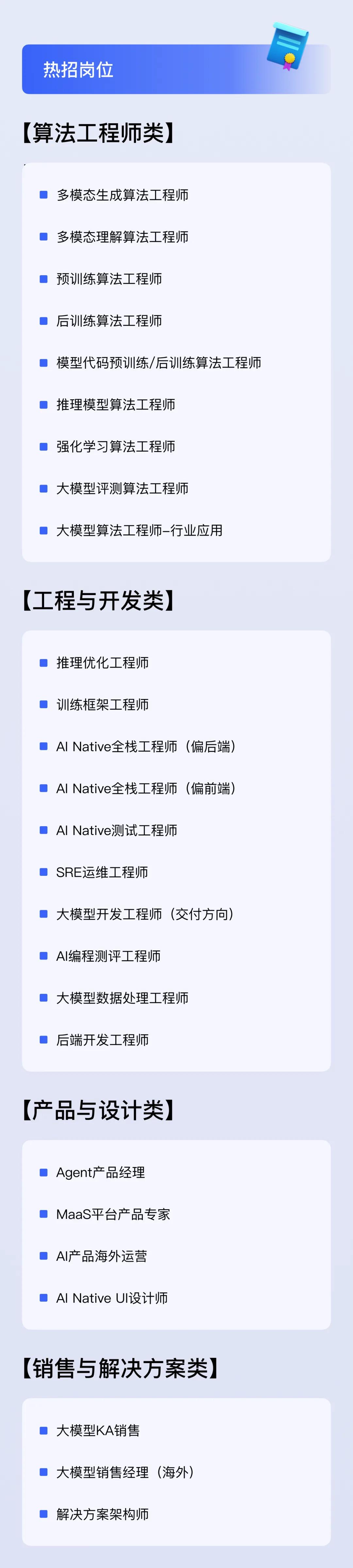
Core Insights - The company Zhiyu, one of the "AI Six Dragons," is facing layoffs ahead of its IPO, but it claims that these rumors are isolated incidents and that there are currently around 50 job openings available [1] - Zhiyu has submitted its listing guidance to the Beijing Securities Regulatory Bureau, with China International Capital Corporation as its advisory firm [1] - The company has recently posted job openings for various positions, including algorithm engineers, product managers, and sales roles, totaling 47 positions [1][7] Company Overview - Zhiyu, officially known as Beijing Zhiyu Huazhang Technology Co., Ltd., was established in 2019 and is headquartered in Beijing, originating from the technology transfer of Tsinghua University's Knowledge Engineering Laboratory [7] - The founding team includes notable figures such as Chief Scientist Tang Jie, Chairman Liu Debing, CEO Zhang Peng, and President Wang Shaolan, with Tang having previously served as a professor at Tsinghua University [7] Product Development - The company has developed a product matrix that includes AIGC models such as Zhiyu Qingyan, CodeGeeX, CogVLM, and CogView, and has launched a large model MaaS open platform [8] - On September 30, Zhiyu released and open-sourced its next-generation large model GLM-4.6, which reportedly achieved a 27% improvement in core capabilities compared to its predecessor GLM-4.5 [8] Financial Background - In March, Zhiyu completed a strategic financing round exceeding 1 billion RMB, with participation from various investment firms, indicating strong financial backing [8] - The company has completed over 10 rounds of financing, attracting investments from well-known institutions such as Meituan, Ant Group, Alibaba, Tencent, Xiaomi, and Sequoia [8] Industry Challenges - Domestic large model startups, including Zhiyu, are facing multiple challenges, including difficulties in transitioning technology from labs to real-world applications and low consumer willingness to pay [9] - The company must navigate pressures from larger tech giants like Baidu, Alibaba, and Huawei, which have advantages in data, scenarios, and funding [9] - Industry predictions suggest that only a few foundational large models will survive, emphasizing the need for Zhiyu to differentiate itself in technology and application [9]
“AI六小龙”之一智谱否认上市前夕裁员
Xin Lang Cai Jing· 2025-10-11 02:45
Core Viewpoint - The company Zhiyu, one of the "AI Six Dragons," is facing rumors of layoffs before its IPO, but it claims to have nearly 50 job openings available, indicating ongoing recruitment efforts [2][12]. Company Overview - Zhiyu, officially known as Beijing Zhiyu Huazhang Technology Co., Ltd., was established in 2019 and is headquartered in Beijing. It is a leading player in the domestic large model sector and the first among the "AI Six Dragons" to apply for an IPO [12]. - The founding team includes notable figures such as Chief Scientist and Founder Tang Jie, Chairman Liu Debing, CEO Zhang Peng, and President Wang Shaolan, with backgrounds in Tsinghua University [12]. Recruitment and Job Openings - Zhiyu has recently announced 47 job openings across various categories, including algorithm engineers, engineering and development roles, product and design positions, and sales and solutions roles [2][12]. Financial Background - In March, Zhiyu completed a strategic financing round exceeding 1 billion RMB, with participation from several well-known investment firms, indicating strong financial backing [13]. - The company has completed over 10 rounds of financing, attracting investments from major players such as Meituan, Ant Group, Alibaba, Tencent, Xiaomi, and Sequoia [13]. Product Development - Zhiyu has developed a product matrix that includes AIGC models such as Zhiyu Qingyan, CodeGeeX, CogVLM, and CogView. Recently, it released and open-sourced a new generation large model, GLM-4.6, which reportedly shows a 27% improvement in core capabilities compared to its predecessor [13]. Industry Challenges - Domestic large model startups, including Zhiyu, are facing multiple challenges, such as the difficulty of transitioning models from laboratory settings to real-world applications, low consumer willingness to pay, and the pressure from larger tech companies like Baidu, Alibaba, and Huawei [14]. - The founder of Zero One Wanwu, Li Kaifu, predicts that only a few companies, including DeepSeek, Alibaba, and ByteDance, will remain in the competitive landscape of foundational large models [14].

多模态大模型存在「内心预警」,无需训练,就能识别越狱攻击
机器之心· 2025-07-21 08:43
Core Viewpoint - The rise of multimodal large models (LVLMs) has led to significant advancements in tasks such as image-text question answering and visual reasoning, but they are more susceptible to "jailbreaking" attacks compared to pure text models [2][5]. Group 1: Multimodal Model Security Challenges - LVLMs, such as GPT-4V and LLaVA, integrate images and text, enhancing their capabilities but also exposing them to security vulnerabilities [2]. - Existing methods to enhance model security, including cross-modal safety fine-tuning and external discriminator modules, face challenges such as high training costs and poor generalization [3]. Group 2: HiddenDetect Methodology - Researchers from CUHK MMLab and Taotian Group introduced HiddenDetect, a novel jailbreak detection method that does not require training [5]. - The core finding is that LVLMs retain rejection signals in their hidden states even when they generate inappropriate content, particularly in intermediate layers [5][9]. Group 3: Analysis of Rejection Signals - The study constructs a "rejection semantic vector" (RV) from frequently occurring tokens that indicate refusal, allowing for the measurement of rejection signal strength across model layers [9]. - Experimental results show significant differences in rejection signal strength between safe and unsafe inputs, with intermediate layers being more sensitive to safety concerns [9][10]. Group 4: Input Type Sensitivity - The analysis reveals that different input modalities activate distinct safety pathways, with text inputs showing quicker rejection signal activation compared to image-text inputs [17][19]. - The presence of visual modalities can delay the model's rejection response, weakening its safety mechanisms [19]. Group 5: Experimental Results and Effectiveness - The HiddenDetect method was evaluated across multiple mainstream LVLMs, demonstrating robust performance against various attack types while maintaining good generalization capabilities [23]. - The method achieved high detection effectiveness, with the proposed approach outperforming existing methods in terms of robustness and generalization [24]. Group 6: Future Directions - The research emphasizes the importance of safety in deploying large models in real-world applications and aims to expand the capabilities of the detection method while exploring the relationship between modality information and model safety [28].

中国AI六小虎「智谱」,传同时准备A股、香港上市,A股IPO的概率可能高些
Sou Hu Cai Jing· 2025-07-12 07:26
Group 1 - Beijing Zhiyu Huazhang Technology Co., Ltd. (referred to as "Zhiyu") is considering moving its IPO plan from mainland China to Hong Kong, potentially raising around $300 million (approximately HKD 2.34 billion) [1] - Zhiyu is preparing for both Hong Kong and A-share listings, with a higher probability of an A-share listing [1] - The company is one of several Chinese startups attempting to compete globally with OpenAI [1] Group 2 - Zhiyu focuses on developing a new generation of cognitive intelligent large models, including the bilingual pre-trained model GLM-130B and the dialogue model ChatGLM [2] - The company has created a matrix of AIGC models and products, including AI efficiency assistant Zhiyu Qingyan, CodeGeeX, CogVLM, and CogView [2] - Zhiyu promotes a "Model as a Service" (MaaS) market concept, providing a platform for efficient and generalized AI development [2] Group 3 - Zhiyu has undergone several rounds of financing, with investors including Meituan, Ant Group, Alibaba, Tencent, Xiaomi, Sequoia, Hillhouse, and others [3]

智谱正式启动A股IPO:B、C两端业务齐发力,今日再开源性能顶尖模型
IPO早知道· 2025-04-15 01:18
作者| Stone Jin 微信公众号|ipozaozhidao 第一家正式启动IPO流程的"大模型创业公司"。 本文为IPO早知道原创 据 IPO早知道消息, 北京智谱华章科技股份有限公司 (以下简称 " 智谱 ")于2025年3月31日同中 金公司签署辅导协议,正式启动 A 股 IPO进程。 这意味着,智谱成为 "大模型创业公司"中第一家正式启动上市流程的企业 。 成立于 2019年的智谱 致力于打造新一代认知智能大模型 。早在 2020年 年 底 ,智谱就研 发 了 GLM预训练架构, 并于 2021年训练完成百亿参数模型GLM-10B,同年利用MoE架构成功训练出收 敛的万亿稀疏模型,2022年研发了中英双语千亿级超大规模预训练模型GLM-130B并开源。2023 年,智谱推出千亿基座对话模型ChatGLM并两次升级,开源版本的ChatGLM-6B让大模型开发者的 本地微调和部署成为可能 。 2024年1月,智谱推出新一代基座大模型GLM-4,整体性能相比上一代大幅提升;6月开源GLM-4- 9B及视觉模型GLM-4V-9B,多模态能力媲美GPT-4V;7 月推出视频生成模型CogVideoX,推理速 ...
AI功能延期被指虚假宣传,苹果面临集体诉讼;段永平豪掷925万美元买入英伟达!黄仁勋演讲没能拯救公司股价丨AI周报
创业邦· 2025-03-23 10:17
Core Insights - The article highlights significant developments in the AI industry, including major investments, product launches, and strategic shifts by leading companies [2][24]. Domestic Developments - Alibaba is reportedly aiming for full "AI integration" across its business by 2025, with all departments evaluated on their AI utilization for growth [4][5]. - Notable investor Duan Yongping purchased $9.25 million worth of Nvidia shares, but Nvidia's stock fell by 3.43% on the day of the announcement [5]. - Manus has registered its generative AI service Monica in Beijing, with the city leading in the number of registered large model products [5]. - The Step-Video-TI2V model was released, capable of generating 5-second videos with controllable motion [5]. - Yushutech showcased its humanoid robot and quadruped robot at AWE2025, attracting significant attention [6]. - The AI service Deepseek will assist users in estimating repair costs, enhancing transparency in pricing [8]. - Xiaomi's AI search and writing tools were among 34 newly registered generative AI services in Beijing [14]. International Developments - OpenAI launched new voice models aimed at developing voice AI agents, marking a significant advancement in the field [14]. - Elon Musk's xAI is collaborating with BlackRock to establish an AI infrastructure investment fund, indicating a competitive stance against OpenAI [15]. - Apple is restructuring its AI leadership to revitalize its AI initiatives, particularly focusing on improving Siri [15][16]. - Nvidia introduced the GROOT N1, an open-source humanoid robot model, which is expected to accelerate the development of humanoid robots [19][21]. - Google announced a $32 billion acquisition of cloud security company Wiz, enhancing its cloud capabilities in the AI era [21]. Investment and Financing Overview - This week, there were 7 disclosed AI financing events globally, totaling approximately 563 million RMB, with an average investment of 94 million RMB [25][31]. - The majority of domestic AI financing events were concentrated in Zhejiang and Beijing, with 4 and 3 events respectively [28]. - Zhihui AI, a developer of AI knowledge technology, completed a 300 million RMB D++ round financing, focusing on large model innovations [31].