Copilot Pro

Search documents
外媒热议中美AI路径分野:一个精英获益,一个普通人得利
Guan Cha Zhe Wang· 2026-02-04 02:46
Core Insights - The article discusses the shift in the US-China AI competition from "parameter height" to "livelihood depth," emphasizing the concept of "AI Tax" and how China's AI applications are becoming a global influence due to their infrastructure-like characteristics [1][3]. Group 1: AI Tax and Subscription Models - The term "AI Tax" is introduced, highlighting the financial burden of AI subscriptions in the US, where major companies charge around $20 per month for AI services [4][6]. - In contrast, Chinese AI services, such as Alibaba's Qwen and Ant Group's Ant AQ, are offered for free, showcasing a significant disparity in accessibility [6][7]. - The average annual AI expenditure for a typical American middle-class family can exceed 720-1000 USD, while the equivalent in China is projected to be nearly zero by 2026 [8]. Group 2: Healthcare Sector Disparities - The article notes that the US healthcare expenditure reached 5.3 trillion USD in 2024, with a per capita spending of 15,474 USD, which constitutes 18% of GDP [9]. - Despite the introduction of AI, the US healthcare system remains expensive and inaccessible, with many Americans concerned about unexpected medical costs [10][12]. - In China, AI applications like Ant A-fu are transforming healthcare access, allowing users to consult AI for health inquiries without the need for expensive consultations [13][14]. Group 3: AI Accessibility and Social Impact - The article emphasizes that China's approach to AI mirrors its historical focus on improving societal efficiency, akin to the development of high-speed rail and mobile payments [19][20]. - The accessibility of AI in China is seen as a means to empower lower-income groups, contrasting with the US model that prioritizes high-end, subscription-based services [19][21]. - The competition between the US and China in AI is framed as a battle between protecting technological "premium rights" and ensuring widespread "accessibility" of technology [20][21].

OpenAI联手AMD,节后主线看AI,关注通信ETF(515880)、半导体设备ETF(159516)
Sou Hu Cai Jing· 2025-10-09 02:18
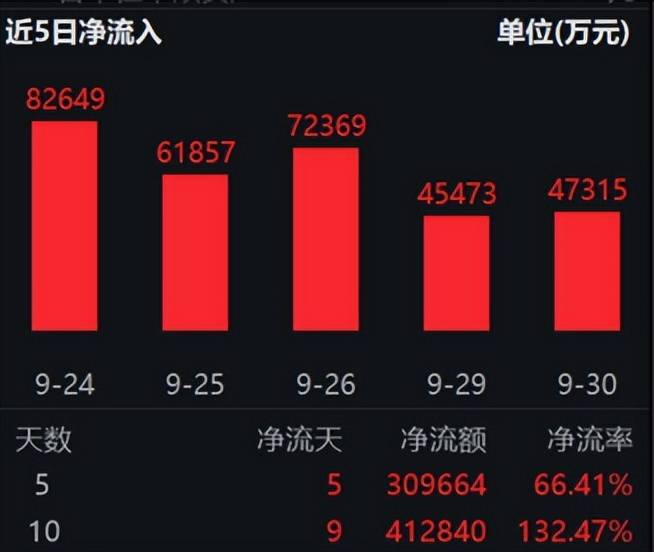
Core Insights - The AI industry is experiencing significant catalysts during the National Day holiday, with AMD and OpenAI signing a multi-billion dollar chip procurement agreement, Microsoft integrating AI features into its Office ecosystem, and OpenAI launching the new AI video model Sora2, boosting investor confidence in the tech growth sector [1][2][3]. Group 1: AMD and OpenAI Collaboration - OpenAI and AMD announced a multi-billion dollar partnership to develop AI data centers based on AMD processors, with AMD supplying hundreds of thousands of AI chips over four years [2]. - OpenAI will purchase AMD chips worth 6 gigawatts, starting with the MI450 chip next year, enhancing AMD's competitive position in the high-end AI chip market [2]. - This collaboration not only strengthens AMD's market position against Nvidia but also helps OpenAI diversify its computing resources and reduce reliance on a single supplier [2]. Group 2: Microsoft and OpenAI Developments - Microsoft announced the full integration of Copilot Pro AI chat service into Microsoft 365 and introduced a new subscription tier called "365 Premium" [3]. - OpenAI launched the Sora2 AI video model and a short video platform, which quickly gained popularity, topping the free charts on the US App Store within three days [3]. Group 3: AI Industry Trends and Market Outlook - The AI industry is expected to see significant growth, with ASICs contributing to increased capacity and GPUs continuing to expand rapidly [4]. - North American cloud providers' capital expenditures approached $100 billion in Q2, reflecting over 60% year-on-year growth, indicating a strong market demand for AI capabilities [4]. - The domestic semiconductor industry is also advancing, with efforts to overcome production challenges and expand capacity, positioning itself for growth in the AI sector [4]. Group 4: Investment Opportunities - Investors are encouraged to focus on communication ETFs (515880) and semiconductor equipment ETFs (159516) as potential investment opportunities in the AI sector [6]. - The communication ETF has a scale exceeding 11.5 billion, with over 77% of its portfolio in "optical modules, servers, copper connections, and optical fibers," indicating a strong fundamental basis for computing hardware [6][8]. - The semiconductor equipment ETF has a scale exceeding 8 billion, with significant net inflows, highlighting investor interest in domestic semiconductor equipment as the industry continues to develop [6][8].

与ChatGPT正面硬刚!微软宣布将AI服务整合入Office【附全球人工智能行业发展趋势】
Qian Zhan Wang· 2025-10-03 07:49
Core Insights - Microsoft announced a new higher-priced subscription plan for Microsoft 365, integrating AI features such as chatbots and image generation into existing Office applications [2] - The new "Microsoft 365 Premium" plan will be priced at $19.99 per month, slightly cheaper than ChatGPT Plus and the soon-to-be-discontinued Copilot Pro [7] - The global AI industry market size reached $538.1 billion in 2023, with a projected compound annual growth rate (CAGR) of 19.21% [5] Company Developments - Microsoft is transitioning users of the Copilot Pro chatbot to the new subscription plan, which will include AI research assistant features and additional image generation capabilities [2][7] - The standard version of Microsoft 365 will continue to be offered at $10 per month for individuals and $13 per month for families, with no changes to the enterprise version of productivity software [7] Industry Trends - The AI services market accounted for the largest share of the global AI market in 2023, representing 38.7% of the total market [5] - Major tech companies, including Google, Meta, and Intel, are heavily investing in AI software and hardware, indicating a competitive landscape in the AI sector [3]


微软(MSFT.US)将AI服务全面整合至Office,正面交锋OpenAI
Zhi Tong Cai Jing· 2025-10-02 08:44
Core Insights - Microsoft is integrating its consumer-focused AI subscription service into the Office suite to better compete with OpenAI's ChatGPT [1] - The new Microsoft 365 subscription plan, priced at $19.99 per month, includes AI research assistants and enhanced image generation features [2] Group 1: Product Integration and Competition - Microsoft is betting that its widely used productivity suite will help it compete more effectively with OpenAI's ChatGPT [1] - The integration of AI features into existing Office applications like Word, Excel, and Outlook is part of Microsoft's strategy to enhance user experience and functionality [1] - The competition between Microsoft and OpenAI is intensifying, particularly in the consumer market where Microsoft's Copilot application is directly competing with ChatGPT [1] Group 2: Pricing and User Base - The new Microsoft 365 plan is priced at $19.99 per month, which is just $0.01 lower than ChatGPT Plus and the soon-to-be-discontinued Copilot Pro [2] - Microsoft continues to offer a basic version of Microsoft 365 at $10 per month and a family plan at $13 per month, while the enterprise version remains unaffected by these changes [2] - Microsoft has nearly 90 million personal paid users for Microsoft 365, although specific user numbers for Copilot Pro have not been disclosed [2]
微软将人工智能服务融入Office 以增加与ChatGPT的竞争优势
Ge Long Hui A P P· 2025-10-01 16:51
Core Viewpoint - Microsoft is integrating AI subscription services into Office to enhance its competitive edge against OpenAI's ChatGPT [1] Group 1: Product Offering - Microsoft announced the launch of a higher-priced Microsoft 365 subscription that includes integrated AI features such as chatbots and image generation capabilities [1] - The new Microsoft 365 Premium version is offered at a price of $19.99 per month [1] Group 2: Customer Transition - Customers currently using Copilot Pro, which is based on mobile and web chatbots, will eventually be migrated to the new subscription package [1]
Microsoft launches AI and productivity software bundle for consumers
CNBC· 2025-10-01 16:00
Group 1 - Microsoft has introduced a new category of PC that integrates generative artificial intelligence tools into Windows [1] - The company will cease promoting a consumer subscription for AI services and has launched a bundle that combines AI features with traditional productivity applications [1] - The new Microsoft 365 Premium tier, which combines features of Copilot Pro and Microsoft 365 Family, is priced at $19.99 per month [2] Group 2 - Copilot Pro remains available at a subscription cost of $20 per month, while Microsoft 365 Family is offered at $12.99 per month [2] - Microsoft emphasizes that its AI tools provide more than just chat capabilities, offering a broader range of functionalities [2] - The technology sector is actively seeking to leverage the growing interest in generative AI for various applications, including document composition and video creation [3]

速递|GitHub Copilot计划涨价,已成为Github收入最大业务
Z Potentials· 2025-04-06 04:55
Core Insights - GitHub Copilot, an AI programming assistant under Microsoft, is set to become more expensive for certain users due to the introduction of "premium requests" which impose rate limits on advanced AI models [1][2] - The Copilot Pro subscription will provide 300 premium requests monthly starting May 5, while Copilot Business and Enterprise users will receive 300 and 1000 requests respectively between May 12 and May 19 [1] - Users can purchase additional premium requests at $0.04 each or upgrade to the new Copilot Pro+ plan, which starts at $39 per month and offers 1500 premium requests with access to advanced models like OpenAI's GPT-4.5 [2] Pricing and Model Changes - The price increase for Copilot's more powerful models coincides with a rate hike from AI programming platform Devin, indicating higher computational costs associated with advanced models [2] - Models like Anthropic's 3.7 Sonnet require more time for verification, making them more reliable but also increasing the computational demands [2] Business Impact - GitHub Copilot accounted for over 40% of GitHub's revenue growth in 2024, indicating its significant role in the company's financial performance [2]