Cosmos Reason

Search documents
英伟达拿出推理版VLA:Alpamayo-R1让自动驾驶AI更会动脑子
机器之心· 2025-12-02 00:17
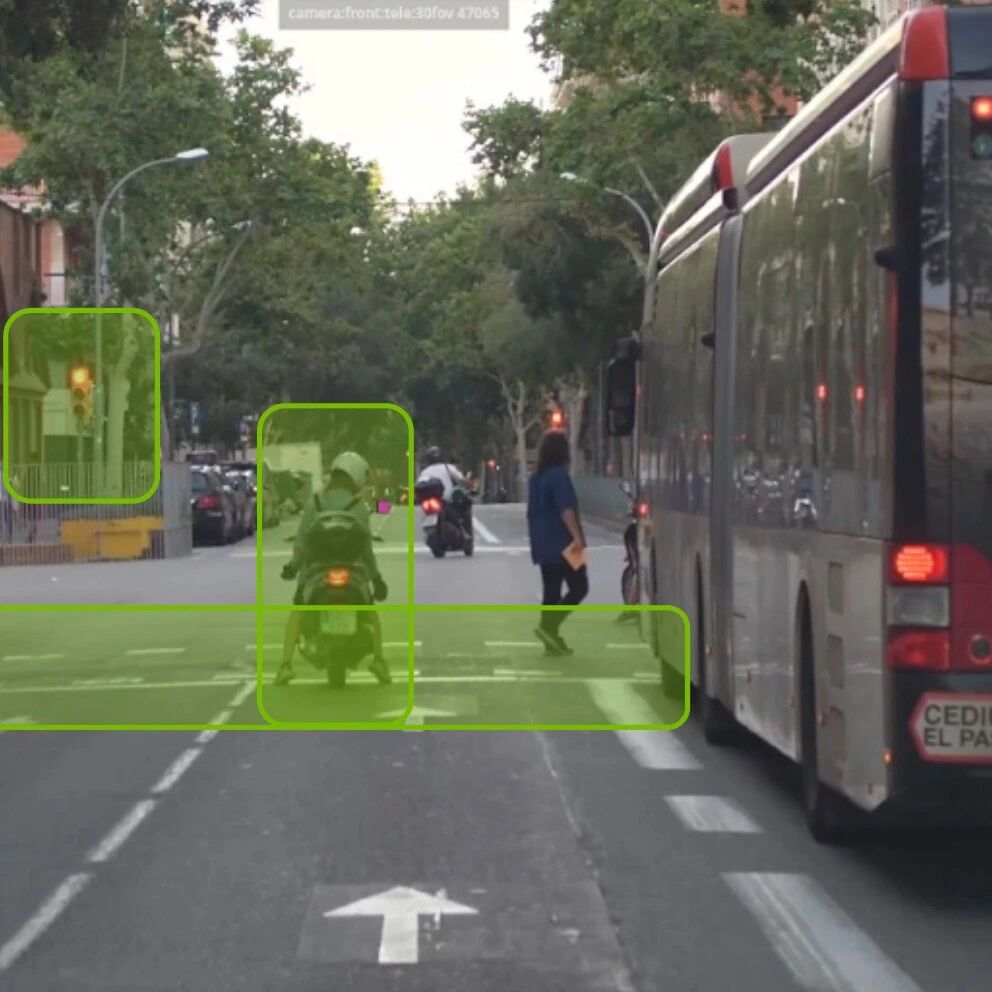
Group 1 - The core challenge in autonomous driving is not just perception but understanding the reasoning behind actions taken by the model [1] - Traditional end-to-end systems struggle with rare but critical scenarios, leading to potential accidents [1][2] - NVIDIA's Alpamayo-R1 introduces a reasoning capability that allows vehicles to infer causal relationships before making decisions [1][6] Group 2 - Alpamayo-R1 features a new dataset called Chain of Causation (CoC), which includes not only actions taken but also the reasons for those actions [2][3] - The model employs a diffusion-based trajectory decoder to generate feasible driving trajectories under real-time constraints [5] - A multi-stage training strategy is utilized, starting with basic mapping from vision to action, followed by supervised fine-tuning on CoC data, and concluding with reinforcement learning for optimization [6][15] Group 3 - The performance of Alpamayo-R1 shows significant improvements, particularly in long-tail scenarios where traditional models often fail [6][20] - The model's input consists of multi-camera and temporal observations, allowing for integrated multi-modal semantic understanding [8] - The CoC dataset employs a human-machine collaborative annotation mechanism, resulting in improved planning accuracy and reduced error rates [10][11] Group 4 - The training process of Alpamayo-R1 is divided into three phases: supervised fine-tuning, CoC supervision, and reinforcement learning-based post-training optimization [15][17] - The model incorporates a multi-dimensional reward mechanism to enhance reasoning accuracy and action consistency [17] - The design of AR1 represents a shift from "black box" to "white box" in autonomous driving, enabling the model to explain its decisions [19][20] Group 5 - The significance of Alpamayo-R1 lies not only in performance enhancement but also in establishing a closed loop between AI reasoning and physical actions [20][21] - The model aims to ensure safety and build trust in autonomous driving by providing explanations for its decisions [21]


物理AI解答“把大象放进冰箱需要几步?”
3 6 Ke· 2025-10-27 10:14
Core Insights - The article explores the capabilities of physical AI in bridging the gap between the information world and the physical world, using the metaphor of getting an elephant into a refrigerator to illustrate the complexities involved in robotic task execution [1][12]. Group 1: Virtual Environment Construction - The first step involves creating a virtual model of the "elephant-refrigerator" scenario, which serves as a testing ground for technology validation. NVIDIA's Omniverse allows for the construction of digital twin spaces that accurately replicate physical laws, ensuring reliable AI training and reasoning [2][3]. - Omniverse is not just a 3D modeling tool; it is a real-time collaboration and simulation platform based on OpenUSD standards, capable of millimeter-level replication of the physical world [2][3]. - The integration of NVIDIA Cosmos enables rapid generation of training environments by allowing engineers to input text or reference images, significantly reducing the time required for virtual scene construction [3][4]. Group 2: AI Understanding and Reasoning - The next step is to teach AI to comprehend the physical attributes of the elephant and the refrigerator, which requires a model capable of physical understanding and logical reasoning. NVIDIA's Cosmos Reason is designed to enable robots to think through task processes rather than merely executing preset commands [5][6]. - Cosmos Reason is a customizable visual language model (VLM) with 7 billion parameters, allowing robots to interpret complex commands and break them down into executable actions [6][7]. - The model can analyze the dimensions of the elephant and the refrigerator in real-time, generating a sequence of actions to accomplish the task while considering potential mechanical failures [7]. Group 3: Training and Deployment - NVIDIA proposes a "three-computer" concept to support the entire lifecycle of physical AI, which includes a DGX system for training, an AGX platform for deployment, and the Omniverse+Cosmos for simulation and data generation [8][9]. - The DGX system provides the necessary computational power to process vast amounts of virtual scene data for training, optimizing the task breakdown logic and enhancing the model's robustness through reinforcement learning [9]. - The AGX platform is designed for real-time deployment, allowing the trained model to operate in real-world scenarios by quickly processing sensor data and issuing action commands [10]. Group 4: Simulation and Data Generation - Omniverse serves as a crucial link in the "three-computer" framework, enabling the simulation of extreme scenarios to gather training data for physical AI, which is otherwise costly and time-consuming to obtain in reality [11][12]. - The ability to simulate thousands of extreme scenarios in Omniverse allows for the generation of extensive datasets necessary for training physical AI, thereby reducing the costs and risks associated with real-world data collection [12]. - The successful execution of the "elephant into the refrigerator" task signifies a pivotal step in the application of physical AI, with NVIDIA's technology poised to impact various industries, expanding the influence of computing from a $5 trillion information industry to a $100 trillion physical world market [12][13].
英伟达具身机器人“新大脑”即将揭晓
自动驾驶之心· 2025-08-25 23:34
Core Insights - Nvidia is preparing for a significant announcement related to robotics, scheduled for August 25, 2025, as indicated by a teaser post on their social media [1][3] - The company has recently introduced an open-source physical AI application and a robot vision reasoning model called Cosmos Reason, which enables robots to reason like humans and take actions in the real world [3][5] Group 1: Physical AI Development - Nvidia's CEO Jensen Huang has emphasized that the next wave of AI will be Physical AI, which involves using motion skills to understand and interact with the real world [5] - Physical AI models are typically embedded in autonomous machines such as robots and self-driving cars, allowing them to perceive, understand, and execute complex operations in real-world scenarios [5][6] Group 2: Market Potential and Industry Trends - At the 2025 World Robot Conference, Nvidia's VP highlighted that Physical AI could unlock a trillion-dollar market, with advancements in technology and industry standards driving growth in the robotics sector [6] - Major companies, both domestically and internationally, including Huawei, ByteDance, BYD, Xiaomi, and Tesla, are intensifying their focus on embodied intelligence, indicating a competitive landscape in the humanoid robot industry [6] Group 3: Humanoid Robot Applications - The humanoid robot industry is entering a phase of rapid development, with a clear trend towards commercialization and practical applications in industrial settings [6] - Analysts suggest that the emergence of companies like DeepSeek is facilitating the development of general-purpose humanoid robot models, leading to a flourishing ecosystem in the humanoid robotics sector [6]
英伟达重磅消息!3499美元 “机器人大脑”芯片开售
Mei Ri Jing Ji Xin Wen· 2025-08-25 17:00
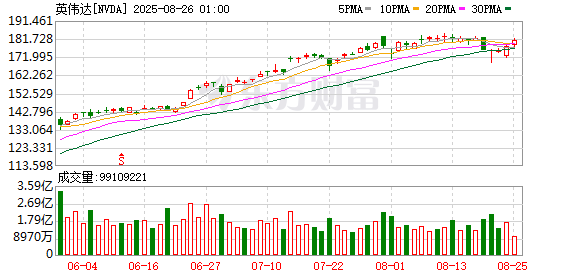
Group 1 - Nvidia announced the launch of its Jetson AGX Thor robotics chip module, referred to as the "robot brain," which will start shipping next month [2] - The new Jetson AGX Thor developer kit is priced at $3,499 and is now available for global customers, including those in China [2] - Nvidia's stock price rose by 1.75% following the announcement [5] Group 2 - Nvidia's CEO Jensen Huang teased the launch on social media, hinting at a significant event on August 25, 2025, with a promotional video featuring a humanoid robot [5][8] - At the SIGGRAPH conference on August 12, Nvidia introduced an open-source AI application and robotics vision reasoning model called Cosmos Reason, which enables robots to reason like humans [10] - Huang expressed optimism about the future of robotics, predicting significant advancements in the next two to three years, with humanoid robots becoming as common as cars [10]

重磅催化!英伟达(NVDA.US)机器人“新大脑”即将揭晓 或将受益标的一览(附概念股)
Zhi Tong Cai Jing· 2025-08-25 05:06
Core Insights - Nvidia has introduced an open-source physical AI application and robot vision reasoning model called Cosmos Reason, which enables robots to reason like humans and take actions in the real world based on understanding [1] - The physical AI market is projected to reach trillions of dollars, as emphasized by Nvidia's executives at industry conferences [1] - Nvidia's founder, Jensen Huang, has stated that the next wave of AI is physical AI, following perception AI, generative AI, and agentic AI [1] Group 1: Nvidia's Robotics Strategy - Nvidia began its foray into robotics a decade ago with the launch of the Jetson TK1 robot brain module in 2014, marking a significant step in robot intelligence [2] - Over the past ten years, Nvidia has built a comprehensive robotics technology matrix through hardware iterations, software upgrades, and ecosystem development [2] Group 2: Collaborations and Market Trends - Nvidia has established partnerships with leading humanoid robot companies in China, including Yushu Technology and Galaxy General [3] - The humanoid robot industry is experiencing a vibrant development phase, with emerging players like DeepSeek driving the advancement of general-purpose robot models [5] - Analysts suggest that the humanoid robot industry is on the verge of large-scale commercialization, with significant advancements in intelligent decision-making and motion collaboration [5] Group 3: Investment Opportunities - Companies like UBTECH Robotics have raised substantial capital, with a recent placement raising 2.41 billion HKD, marking the largest placement in the humanoid robot sector [6] - Horizon Robotics is projected to achieve a compound annual growth rate of 57.5% from 2025 to 2027, with a target price of 7.45 HKD [6] - Portai Robotics has signed a groundbreaking order for 10,000 humanoid robots, setting a new industry standard for large-scale commercialization [7] - SUTENG Juchuang has showcased its new Active Camera platform at the World Robot Conference, highlighting its leadership in the global lidar market [8] - Tsugami Machine Tool China is expanding its production lines and actively entering the humanoid robot sector, with significant growth potential in high-end machine tools driven by the demand for humanoid robots [8]
机器人板块盘中走强,机器人ETF易方达(159530)延续“吸金”势头,日内净申购达4000万份
Mei Ri Jing Ji Xin Wen· 2025-08-25 04:52
Group 1 - A-shares saw a collective rise in the three major indices, with the National Robot Industry Index increasing by 2.6% as of 10:25 AM, driven by strong performance in technology stocks [1] - Notable stocks included昊志机电 with a 20% limit-up, 奥比中光-UW rising over 10%, and 格灵深瞳 increasing over 7%, indicating robust investor interest in the robotics sector [1] - The ETF 易方达 (159530) experienced a net subscription of 40 million units during the session, with a total net inflow of nearly 1 billion yuan over the past five trading days, making it the leading product in the robotics-related ETF space [1] Group 2 - NVIDIA's robot account on social media teased a new robot "brain" ahead of the SIGGRAPH conference, where it unveiled open-source AI applications and a robot vision reasoning model called Cosmos Reason [1] - 东吴证券 expressed optimism regarding the humanoid robot sector, highlighting advancements in products, orders, and capital, and maintaining a positive outlook on key suppliers and core supply chains in humanoid robotics [1] - The National Robot Industry Index emphasizes humanoid robots and core components, with related stocks accounting for nearly 80% of the index, making it a focused investment vehicle for humanoid robot development opportunities [1]
英伟达将发布机器人大脑产品,深市规模最大机器人ETF(159770)涨超2%,最新规模创历史新高
2 1 Shi Ji Jing Ji Bao Dao· 2025-08-25 03:29
Group 1 - The A-share market is experiencing a strong performance, with the ChiNext Index rising over 3%, driven by the robotics sector [1] - The Robotics ETF (159770) has seen a 2.11% increase, with a trading volume exceeding 270 million yuan, indicating active trading [1] - The ETF has attracted over 50 million yuan in net inflows over two consecutive days, reaching a record high of 7.577 billion yuan in total assets [1] Group 2 - Nvidia is set to launch a new robotic brain product, which has generated significant anticipation in the robotics sector [2] - UTree Technology is preparing to unveil a humanoid robot named "Ballet Dancer," showcasing advanced joint flexibility with 31 degrees of freedom [2] - The 27th China Robot and Artificial Intelligence Competition has commenced, attracting over 6,000 students from nearly 400 universities, focusing on real-world applications of humanoid robots [2] Group 3 - CITIC Securities highlights that major players like Nvidia are advancing humanoid robot development, signaling a shift from technology exploration to large-scale commercialization [3] - Dongfang Securities notes that optimism regarding the industry's future growth is prevalent among manufacturers, with a focus on production challenges and companies with strong manufacturing capabilities [3]
英伟达今日公布人形机器人“新大脑”
Di Yi Cai Jing· 2025-08-25 03:10
Core Viewpoint - Nvidia is set to unveil a new humanoid robot featuring advanced AI capabilities, referred to as the "new brain" for robots, indicating a significant advancement in physical AI technology [3][6]. Group 1: Product Launch and Features - Nvidia's upcoming humanoid robot is being promoted through a social media campaign, including a video featuring the robot reading a card from CEO Jensen Huang [3][4]. - The new brain technology is designed to be compatible with various humanoid robot models, suggesting a versatile application across different platforms [6]. Group 2: Physical AI Development - Nvidia is accelerating its deployment in the physical AI sector, which is seen as the next wave following generative and agent AI technologies [6]. - The company emphasizes that physical AI relies on neural graphics, synthetic data generation, physical modeling, reinforcement learning, and AI reasoning technologies, which are crucial for modern robotics and autonomous vehicles [6]. Group 3: Market Position and Ecosystem - Nvidia is actively seeking more applications for its GPUs in industrial and robotic fields, where physical AI is increasingly relevant [6]. - The company has established a strong ecosystem for humanoid robots, with many manufacturers opting for Nvidia's solutions due to their comprehensive support, which reduces development time [6]. Group 4: Recent Product Introductions - In January, Nvidia introduced the foundational world model Cosmos at CES, aimed at generating synthetic scenarios for autonomous driving and supporting physical AI system development [7]. - At SIGGRAPH, Nvidia launched an open-source 7 billion parameter visual language model (VLM) called Cosmos Reason, designed to help robots and visual AI agents understand and interact with the physical world [7]. - Nvidia also announced new hardware solutions, including servers equipped with RTX PRO 6000 Blackwell GPUs, targeting enterprise workloads in agent AI, industrial applications, and physical AI [7].

英伟达今日公布人形机器人“新大脑”
第一财经· 2025-08-25 03:07
Core Viewpoint - Nvidia is set to unveil a new humanoid robot "black technology," which is a significant advancement in the field of robotics, particularly focusing on a new brain for robots [3][5]. Group 1: Product Launch and Features - The upcoming product is described as a "new brain" for robots, indicating a focus on enhancing robotic intelligence and capabilities [5]. - A promotional video showcased a humanoid robot interacting with a gift box, suggesting that the new brain is compatible with various humanoid robot models [7]. - Nvidia's CEO Jensen Huang emphasized that the next wave of innovation will be in physical AI, which relies on advanced technologies such as neural graphics and reinforcement learning [8]. Group 2: Market Position and Applications - Nvidia is accelerating its deployment of physical AI, particularly in industrial and robotics sectors, which are closely related to the new product [8]. - The company has been actively seeking more applications for its GPUs, with a notable presence in the robotics field through its Jetson Thor GPU onboard computer [8]. - Market research indicates that while many chips meet performance requirements, there are limited solutions for humanoid robots, with Nvidia's offerings being favored due to their comprehensive ecosystem [8]. Group 3: Recent Developments and Innovations - Nvidia has introduced several products related to physical AI, including the Cosmos model for generating synthetic environments and the open-source 70 billion parameter visual language model, Cosmos Reason [9]. - The company is also launching new server versions equipped with RTX PRO GPUs for enterprise workloads related to AI and physical applications [9]. - Upcoming hardware releases include RTX PRO 4000 and RTX PRO 2000 GPUs, aimed at engineering, AI, and 3D visualization applications [9].

英伟达重大发布,人形机器人「新大脑」要来了
2 1 Shi Ji Jing Ji Bao Dao· 2025-08-25 02:16
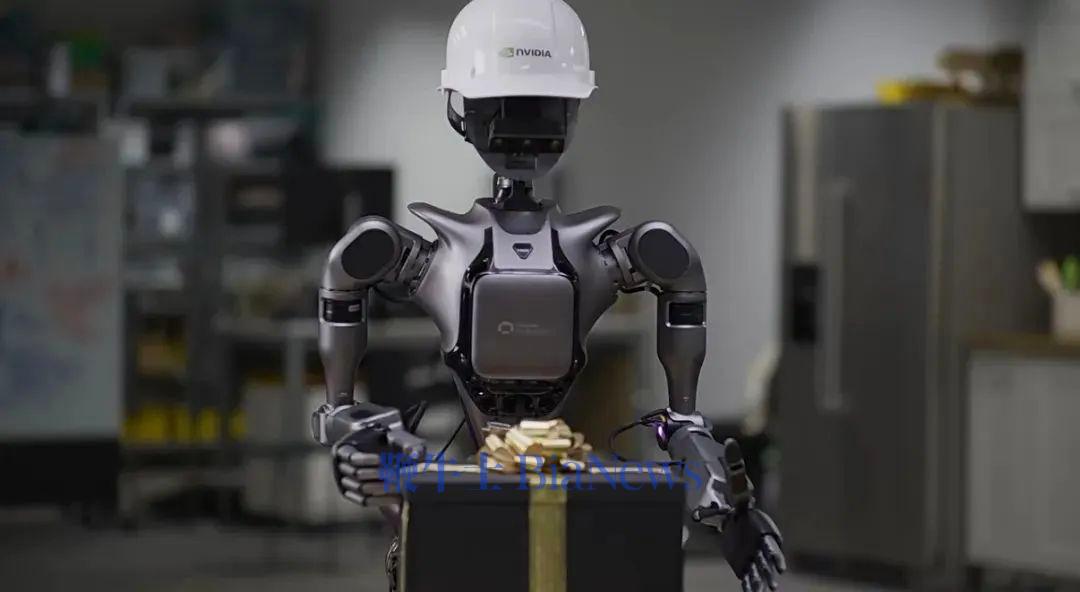
Group 1 - Nvidia is set to unveil its latest humanoid robot technology, referred to as the "new brain" for robots [1][3] - The product launch was teased with a social media post featuring a black gift box and a signed card from founder Jensen Huang [2] - The new brain is designed to enhance the capabilities of various humanoid robots, as indicated by the presence of multiple arm models in the promotional video [5][6] Group 2 - At the recent SIGGRAPH conference, Nvidia introduced the NVIDIA Omniverse library and NVIDIA Cosmos foundational model to accelerate robot solution development [8] - The Cosmos Reason is a new open-source, customizable 70 billion parameter reasoning VLM aimed at enabling robots to understand and interact with the physical world like humans [8] - Nvidia's collaboration with leading Chinese robotics companies, such as Fourier and others, highlights the strong potential of China's robotics industry [9] Group 3 - Nvidia is scheduled to release its Q3 financial report, which is anticipated to stabilize market concerns regarding AI spending [10][11] - Analysts remain optimistic about Nvidia's performance, with at least nine analysts raising their target prices recently, indicating a potential upside of approximately 9% [11] - Melius Research predicts Nvidia's market value could reach $9 trillion by 2030, driven by significant demand for AI infrastructure [11]