Cursor 2.0

Search documents
惊了!AI开发不用PRD,零代码Demo跑通全流程,效率直接暴涨40%
Sou Hu Cai Jing· 2025-12-05 23:06
Core Insights - The traditional PRD (Product Requirement Document) is failing in AI product development due to the unpredictable nature of AI and the chaotic business processes involved [5][10] - The emergence of AI programming tools in 2025 allows product managers to create functional demos without needing coding skills, transforming the concept of "code as requirement" into reality [12][22] Group 1: PRD Limitations - Traditional PRD struggles with AI projects because AI's behavior is unpredictable and business processes are irregular [5] - AI's unpredictable responses make it difficult to define requirements in a document, as nuances in tone and interaction cannot be captured accurately [6] - The complexity of AI interactions leads to convoluted business processes that are hard to document, making traditional flowcharts ineffective [8] Group 2: Tool Revolution - AI programming tools like Cursor 2.0 enable product managers to generate runnable prototypes by simply describing their needs, making the development process more efficient [12][13] - Tools such as Trae 2.0 allow for full AI-led development, significantly reducing the time required to create functional prototypes [12] - Google's Gemini 3.0 enhances code generation efficiency, allowing for better integration of design and functionality [13] Group 3: Delivery Upgrades - The concept of "code as requirement" is not about replacing PRD but restructuring delivery standards in the AI era, combining demos, documentation, and evaluation sets [15] - Demos help address soft logic issues, allowing for real-time adjustments based on feedback from stakeholders [15][17] - Clear documentation of hard logic, such as data mapping and API definitions, remains essential for successful AI project execution [17][20] Group 4: Compliance and Performance - Product managers must include non-functional requirements in their deliverables to ensure compliance with regulations like GDPR while transitioning from demo to production [20] - The production environment must be designed to handle real-world demands, such as simultaneous requests and cost optimization, which are often overlooked in demo versions [20]


老外傻眼,明用英文提问,DeepSeek依然坚持中文思考
3 6 Ke· 2025-12-03 09:14
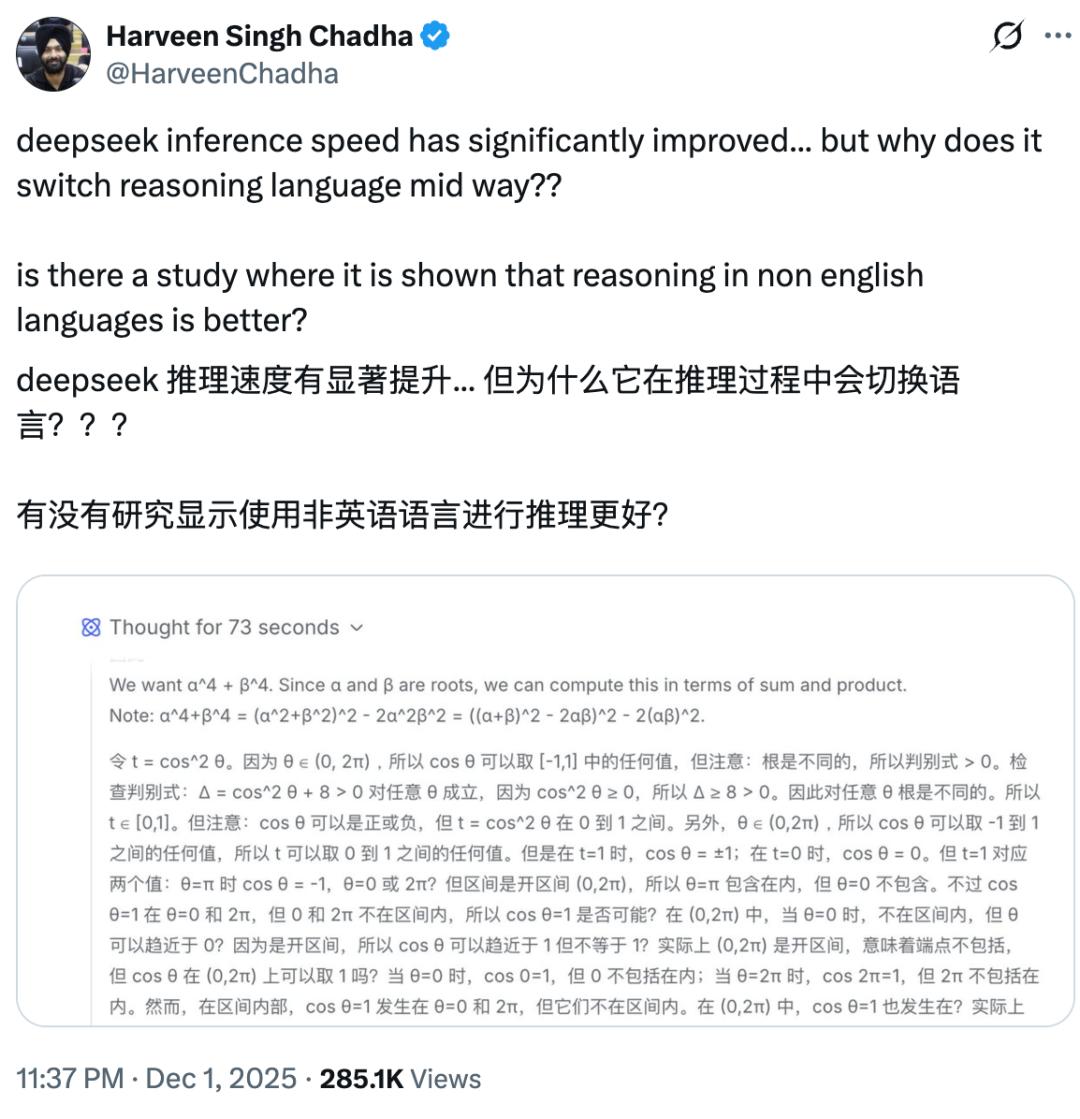
Core Insights - DeepSeek has launched two new models, DeepSeek-V3.2 and DeepSeek-V3.2-Speciale, which show significant improvements in reasoning capabilities, with DeepSeek-V3.2 competing directly with GPT-5 and Speciale performing comparably to Gemini-3.0-Pro [1] - There is a notable phenomenon where even when queries are made in English, the model sometimes reverts to using Chinese during its reasoning process, leading to confusion among overseas users [3][5] - The prevalent belief is that Chinese characters have a higher information density, allowing for more efficient expression of the same textual meaning compared to English [5][9] Model Performance and Efficiency - Research indicates that using non-English languages for reasoning can lead to a 20-40% reduction in token consumption without sacrificing accuracy, with DeepSeek R1 showing token reductions ranging from 14.1% (Russian) to 29.9% (Spanish) [9] - A study titled "EfficientXLang" supports the idea that reasoning in non-English languages can enhance token efficiency, which translates to lower reasoning costs and reduced computational resource requirements [6][9] - Another study, "One ruler to measure them all," reveals that English is not the best-performing language for long-context tasks, ranking sixth among 26 languages, with Polish taking the top spot [10][15] Language and Training Data - The observation that Chinese is frequently used in reasoning by models trained on substantial Chinese datasets is considered normal, as seen in the case of the AI programming tool Cursor's new version [17] - The phenomenon of models like OpenAI's o1-pro occasionally using Chinese during reasoning is attributed to the higher proportion of English data in their training, which raises questions about the language selection process in large models [20] - The increasing richness of Chinese training data suggests that models may eventually exhibit more characteristics associated with Chinese language processing [25]

老外傻眼!明用英文提问,DeepSeek依然坚持中文思考
机器之心· 2025-12-03 08:30
Core Insights - DeepSeek has launched two new models, DeepSeek-V3.2 and DeepSeek-V3.2-Speciale, which show significant improvements in reasoning capabilities, with the former being comparable to GPT-5 and the latter performing similarly to Gemini-3.0-Pro [1][4] - There is a notable phenomenon where DeepSeek switches to Chinese during reasoning, even when queries are made in English, leading to discussions about the efficiency of Chinese in processing information [4][6] Group 1: Model Performance - The new models exhibit enhanced reasoning speed, attracting interest from overseas researchers [1] - The comment section reflects a consensus that Chinese characters have a higher information density, requiring fewer characters to express the same meaning compared to English [4][6] Group 2: Cross-Lingual Reasoning - Research indicates that using non-English languages for reasoning can lead to better performance and reduced token consumption, as shown in the paper "EfficientXLang" [7][8] - The study found that reasoning in non-English languages can achieve a token reduction of 20-40% without sacrificing accuracy, with DeepSeek R1 showing reductions from 14.1% (Russian) to 29.9% (Spanish) [11] Group 3: Language Efficiency - Although Chinese can save reasoning token costs compared to English, it is not the most efficient language; Polish ranks highest in long-context tasks [12][14] - The performance of models varies significantly based on the language used for instructions, with English not being the top performer in long-context tasks [14][18] Group 4: Training Data Influence - The prevalence of Chinese training data in domestic models explains the tendency for these models to think in Chinese [20][21] - The phenomenon of models like OpenAI's o1-pro occasionally using Chinese during reasoning raises questions about the influence of training data composition [24][25]

Z Product | Product Hunt最佳产品(10.27-11.2),Cursor 与 Vercel 霸榜
Z Potentials· 2025-11-09 03:01
Core Insights - The article highlights the top 10 AI tools and platforms that have gained significant traction in the market, showcasing their unique features and target audiences [2][3]. Group 1: Cursor 2.0 - Cursor 2.0 is an AI code editor that integrates self-developed coding models and multi-agent collaboration, aimed at enhancing coding efficiency for developers [3][6]. - It addresses issues of fragmented AI programming assistant functionalities and inefficient collaboration by providing a unified interface [6][7]. - The product has received 689 Upvotes and 42 comments, indicating strong user interest [8]. Group 2: v0 by Vercel - v0 by Vercel is a collaborative AI full-stack development platform designed to assist development teams in application design and delivery [9][11]. - It offers real-time AI assistance for UI generation and code iteration, significantly improving front-end and back-end collaboration [11][12]. - The platform has garnered 589 Upvotes and 44 comments, reflecting its popularity [13]. Group 3: Postiz - Postiz is an AI-powered scheduling tool for social media, capable of managing content across over 20 platforms [14][16]. - It automates the scheduling process, addressing the complexities of multi-platform operations and enhancing marketing efficiency [16][18]. - The tool has achieved 561 Upvotes and 61 comments, showcasing its effectiveness [19]. Group 4: Sentra by Dodo Payments - Sentra is an automated payment and billing solution tailored for AI, SaaS, and digital products [20][21]. - It simplifies the integration of multiple payment channels and automates billing management, catering to the needs of digital product companies [21][23]. - The platform has received 531 Upvotes and 64 comments, indicating strong market interest [24]. Group 5: Superinbox - Superinbox is an AI-based email management tool designed to enhance communication efficiency for busy professionals [25][29]. - It learns user writing styles to draft replies and organizes inboxes, saving users significant time [29][31]. - The tool has garnered 513 Upvotes and 86 comments, highlighting its utility [31]. Group 6: Dynal.AI - Dynal.AI is an intelligent content generation tool focused on transforming various media into LinkedIn posts [32][33]. - It automates the content creation process, helping users maintain a strong social media presence [33][34]. - The platform has achieved 461 Upvotes and 80 comments, reflecting its appeal [35]. Group 7: Parallax by Gradient - Parallax is a distributed AI computing platform that enables users to build multi-device AI clusters [37][40]. - It addresses the limitations of single-device deployments by allowing collaborative work across different hardware [40][41]. - The platform has received 444 Upvotes and 60 comments, indicating user interest [43]. Group 8: Base44 - Base44 is a no-code application building platform that integrates intelligent search and automation [44][45]. - It allows non-technical users to create applications quickly and intuitively, reducing the reliance on traditional coding [45][47]. - The platform has garnered 448 Upvotes and 21 comments, showcasing its effectiveness [48]. Group 9: Animation Builder by Unicorns Club - Animation Builder is a free tool that helps entrepreneurs create animated videos to showcase milestones [49][50]. - It simplifies the content creation process, enhancing visibility and engagement on social media platforms [50][51]. - The tool has achieved 439 Upvotes and 69 comments, reflecting its popularity [52]. Group 10: Peakflo AI Voice Agents - Peakflo AI Voice Agents are intelligent voice assistants designed to automate business calls [53][54]. - They enhance customer communication efficiency and automate operational processes, reducing costs and errors [54][55]. - The platform has received 438 Upvotes and 79 comments, indicating strong market interest [56].
微软瞄准“超级智能”新赛道,科创AIETF(588790)回调迎布局时点
Xin Lang Cai Jing· 2025-11-07 03:08
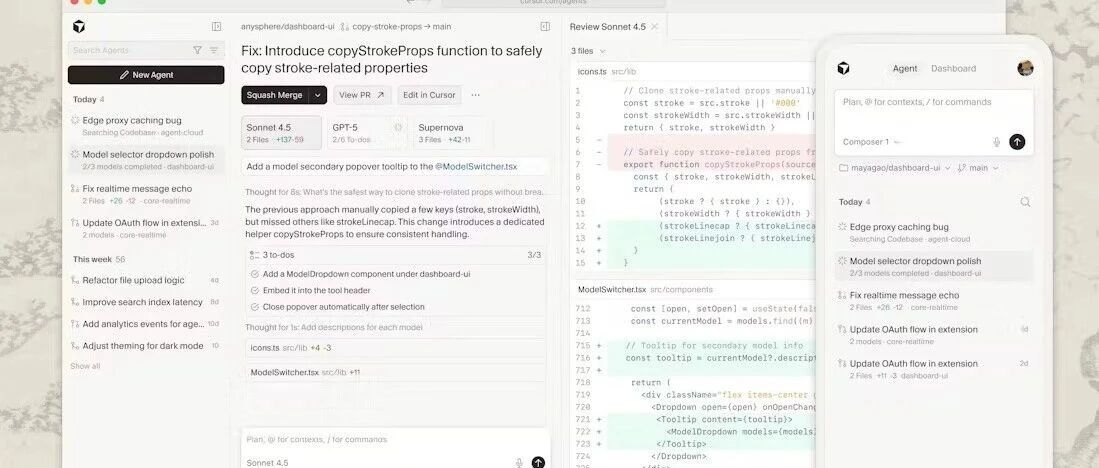
Core Insights - The Shanghai Stock Exchange Sci-Tech Innovation Board Artificial Intelligence Index has decreased by 1.86% as of November 7, 2025, with notable declines in stocks such as Fudan Microelectronics and Chipone Technology [3] - Microsoft is pursuing a more advanced form of AI called "superintelligence," aiming for breakthroughs in fields like medicine and materials science, led by Mustafa Suleyman [3] - The AI programming platform Cursor has upgraded to version 2.0, introducing a self-developed model called Composer, which significantly enhances coding efficiency and speed [4] Market Performance - The Sci-Tech AI ETF (588790) has seen a decline of 1.88%, with the latest price at 0.78 yuan, but has accumulated a 22.73% increase over the past three months [3] - The Sci-Tech AI ETF has experienced a significant growth in scale, increasing by 32.46 billion yuan over the past six months, ranking it among the top 10 comparable funds [4] - The ETF's recent weekly share growth was 14.4 million shares, placing it second among comparable funds [5] Fund Flow and Composition - The latest net outflow for the Sci-Tech AI ETF was 23.71 million yuan, but it has seen net inflows on four out of the last five trading days, totaling 140 million yuan [5] - The index tracks 30 large-cap stocks that provide foundational resources and technology for the AI sector, with the top ten stocks accounting for 70.92% of the index [5]
AI News: 1x Neo Robot, Extropic TSU, Minimax M2, Cursor 2, and more!
Matthew Berman· 2025-10-30 20:16
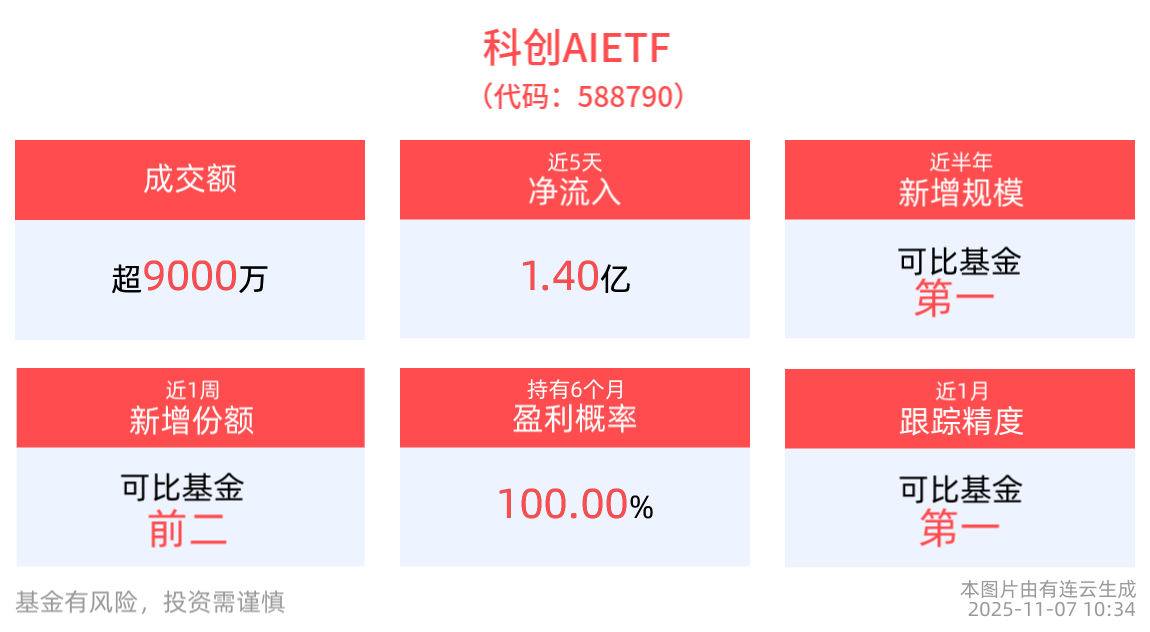
Robotics & Automation - 1X's Neo robot is available for pre-order at $20,000 or $4.99% per month, with availability expected in early 2026 [1][2] - Neo weighs 66 pounds and can lift 150 pounds, featuring 22 degrees of hand movement and operating at 22 dB [2][3] - The promise of humanoid robots is to be autonomous and run 24 hours a day [4] Computing & AI - Extropic is developing a thermodynamic computing platform (TSU) that claims to be up to 10,000 times more efficient than traditional CPUs and GPUs [7][8] - Miniax's M2, an open-source model from China, achieved a new high intelligence score with only 10 billion active parameters out of a 200 billion total [10] - IBM released Granite 4.0% Nano, a family of small language models (LLMs) with 1.5 billion and 350 million parameters, designed for edge and on-device applications [19][20] - Cursor 2.0% introduces Composer, a faster model for low-latency agentic coding, and a multi-agent interface [26][27] Semiconductor Industry - Substrate, a US-based startup, is building a next-generation foundry using advanced X-ray lithography to enable features printed at the 2 nanometer node and below [30][31] Corporate Strategy & Employment - Nvidia took a billion-dollar stake in Nokia, leading to a 22% increase in Nokia's shares, and the companies are partnering to develop 6G technology [17] - Amazon is undergoing layoffs of 14,000 corporate employees, partly attributed to efficiency gains from AI, but also seen as a correction for overhiring [34][37] - Tesla could potentially leverage the compute power of its idle cars, estimated at 1 kilowatt per car, to create a giant distributed inference fleet [23][24]

老黄亲自站台,英伟达编程神器,Cursor 2.0自研模型狂飙4倍
3 6 Ke· 2025-10-30 07:33
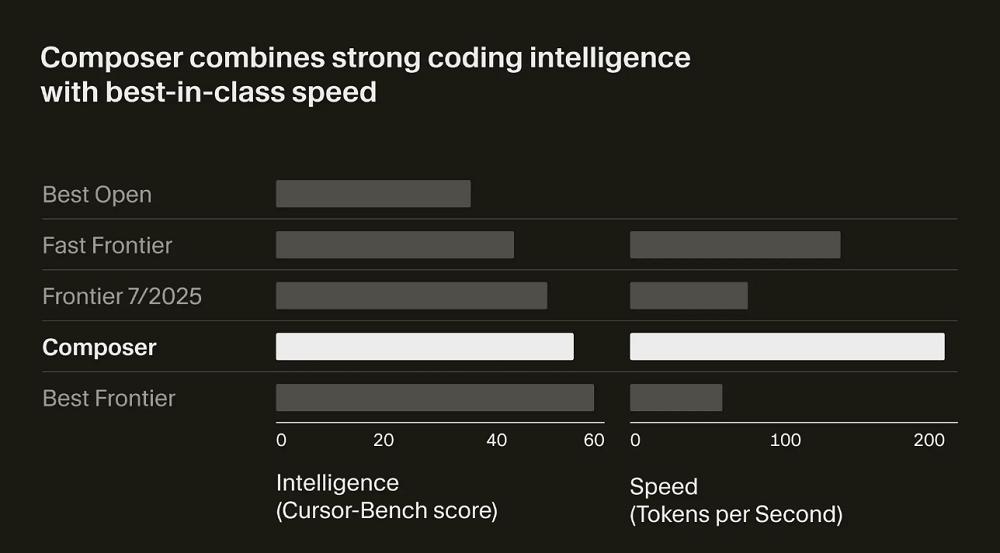
Core Insights - Cursor has launched its self-developed coding model, Composer, which is reported to be four times faster than comparable models, designed for low-latency intelligent coding tasks that can be completed in under 30 seconds [1][6][9]. Group 1: Product Features - Composer achieves a speed of 200 Tokens per second and allows for the parallel operation of up to eight intelligent agents, utilizing git worktrees or remote machines to prevent file conflicts [2][6]. - The update introduces a new code review feature that simplifies the process of viewing changes across multiple files without switching back and forth [3]. - A voice mode has been added, enabling voice-activated programming, along with improvements in context-aware copy/paste prompts [5][6]. Group 2: Market Position and Strategy - Cursor, valued at over $10 billion, has historically relied on external models like Claude, which limited its innovation and profitability. The release of Composer marks a strategic shift towards self-reliance in AI model development [6][22]. - The recent updates indicate a move away from dependence on external models, with Composer being tested alongside open-source alternatives rather than proprietary models like GPT and Claude [22][30]. Group 3: User Experience and Feedback - Early testers have reported that Cursor 2.0 is significantly faster, with results generated in mere seconds, enhancing the overall user experience [16][26]. - Some developers have expressed that while Composer is fast, its intelligence may not match that of competitors like Sonnet 4.5 and GPT-5, indicating a competitive landscape in AI programming tools [30][34].


Cursor 2.0来了,多agent并行,自研模型30秒跑完多数任务,MXFP8训练
3 6 Ke· 2025-10-30 04:35
Core Insights - Cursor has announced the upgrade to version 2.0, introducing its self-developed programming model, Composer, and 15 other enhancements aimed at improving the programming experience with AI agents [1][41]. Group 1: Model Performance - The Composer model is designed for low-latency Agentic programming, achieving speeds four times faster than comparable intelligent models, with a token output exceeding 200 tokens per second [1]. - Internal evaluations indicate that Composer surpasses leading open-source programming models in intelligence and outperforms lightweight models in speed, although it still lags behind GPT-5 and Claude Sonnet 4.5 in intelligence [1][3]. Group 2: User Interface Enhancements - The UI of Cursor 2.0 has been redesigned to focus on agents rather than files, allowing developers to concentrate on specific goals and enabling up to 8 agents to run in parallel without interference [3][7]. - A new native browser feature allows agents to automatically test their work and iterate until correct results are produced, enhancing the user experience by enabling direct modifications to web elements [5][10]. Group 3: Code Review and Management - The code review functionality has been improved to aggregate all modifications into a single interface, eliminating the need to switch between files [13]. - Team command features have been introduced, allowing team leaders to set custom commands and rules that automatically apply to all members, streamlining management [19][24]. Group 4: Performance and Reliability - Cursor's cloud agents now boast a reliability rate of 99.9%, with improvements in the user interface for sending agents to the cloud [28]. - The performance of code execution has been enhanced, particularly for Python and TypeScript, with dynamic memory allocation based on available RAM [22]. Group 5: Self-Developed Model Insights - The Composer model is a mixture of experts (MoE) model that supports long-context generation and understanding, optimized through reinforcement learning for software engineering tasks [31][35]. - Cursor's training infrastructure has been customized to support asynchronous reinforcement learning at scale, utilizing low-precision training methods to enhance efficiency [40]. Group 6: Future Implications - The advancements in Cursor's self-developed models indicate a strategic shift towards reducing reliance on external models, potentially positioning the company favorably in the competitive landscape of AI IDEs [41].
刚刚,Cursor 2.0携自研模型Composer强势登场,不再只做「壳」
机器之心· 2025-10-30 01:41
Core Insights - Cursor has officially launched its own large language model, Composer, marking a significant evolution from being a platform reliant on third-party models to becoming an AI-native platform [2][4][3] - The release of Composer is seen as a breakthrough that enhances Cursor's capabilities in coding and software development [4][3] Summary by Sections Composer Model - Composer is a cutting-edge model that, while not as intelligent as top models like GPT-5, boasts a speed that is four times faster than comparable intelligent models [6] - In benchmark tests, Composer achieved a generation speed of 250 tokens per second, which is double that of leading fast inference models and four times that of similar advanced systems [9] - The model is designed for low-latency coding tasks, with most interactions completed within 30 seconds, and early testers have found its rapid iteration capabilities to be user-friendly [11] - Composer utilizes a robust set of tools for training, including semantic search across entire codebases, significantly enhancing its ability to understand and process large codebases [12] - The model is a mixture of experts (MoE) architecture, optimized for software engineering through reinforcement learning, allowing it to generate and understand long contexts [16][19] Cursor 2.0 Update - Cursor 2.0 introduces a multi-agent interface that allows users to run multiple AI agents simultaneously, enhancing productivity by enabling agents to handle different parts of a project [21][24] - The new version focuses on an agent-centric approach rather than a traditional file structure, allowing users to concentrate on desired outcomes while agents manage the details [22] - Cursor 2.0 addresses new bottlenecks in code review and change testing, facilitating quicker reviews of agent changes and deeper code exploration when necessary [25] Infrastructure and Training - The development of large MoE models requires significant investment in infrastructure, with Cursor utilizing PyTorch and Ray to create a customized training environment for asynchronous reinforcement learning [28] - The team has implemented MXFP8 MoE kernels to train models efficiently across thousands of NVIDIA GPUs, achieving faster inference speeds without the need for post-training quantization [28] - The Cursor Agent framework allows models to utilize various tools for code editing, semantic searching, and executing terminal commands, necessitating a robust cloud infrastructure to support concurrent operations [28] Community Feedback - The major update has garnered significant attention, with early users providing mixed feedback, highlighting both positive experiences and areas for improvement [30][31]
Cursor发布首个编程大模型!代码生成250tokens/秒,强化学习+MoE架构
量子位· 2025-10-30 01:06
Core Insights - Cursor has officially released its first in-house coding model, named Composer, as part of the Cursor 2.0 update [1][2] - Composer is reported to complete complex tasks in just 30 seconds, achieving a speed increase of 400% compared to competitors [3][12] Model Features - The new Cursor 2.0 includes a native browser tool that allows the model to test, debug, and iterate code autonomously until achieving correct results [4] - Voice code generation enables users to convert their thoughts into code without typing [5] - The interface has shifted from a file-centric to an agent-centric model, allowing multiple agents to run simultaneously without interference [6][7] Performance Metrics - Composer generates code at a speed of 250 tokens per second, which is approximately twice as fast as the current leading models like GPT-5 and Claude Sonnet 4.5 [19][20] - The model demonstrates enhanced reasoning and task generalization capabilities, comparable to mid-tier leading models [21] Training Methodology - Composer's performance is attributed to reinforcement learning, which allows the model to learn from real programming tasks rather than static datasets [22][26] - The training process involves the model working directly within a complete codebase, utilizing production-level tools to write, test, and debug code [27][28] Practical Application - Cursor 2.0 is designed to provide a practical AI system that aligns closely with developers' daily workflows, enhancing its usability in real-world scenarios [35][36] - The model has shown emergent behaviors, such as running unit tests and autonomously fixing code format errors [31] Transparency and Model Origin - There are concerns regarding the transparency of Composer's foundational model, with questions about whether it is based on pre-existing models or entirely self-trained [37][40] - Cursor has previously developed an internal model named Cheetah, which was used for testing speed and system integration [42]