FSD V14

Search documents
X @Tesla Owners Silicon Valley
Tesla Owners Silicon Valley· 2026-04-01 21:39
RT Bradford G Smith (Brad) (@ALScyborg)🚀 Tesla Owners Are Secretly DOMINATING the Game! ⚡💥Just dropped my latest Future Link Podcast interview with @TOSV_Silicon founder John Stringer – the visionary behind one of the biggest Tesla communities on the planet!We dive deep into building epic events like X Takeover, interviewing @elonmusk for 6.5 hours, riding Robotaxi & FSD V14, Cybertruck thrills, Vegas Loop adventures, massive philanthropy, and why the Tesla tribe is unstoppable. Raw, honest, and straight fi ...

自动驾驶元年,一二级市场或将迎来估值重塑
Huan Qiu Wang· 2026-01-30 03:02
Group 1 - The Shanghai government has launched the "Mosu Zhixing" action plan aiming for large-scale implementation of high-level autonomous driving scenarios by 2027, emphasizing "cross-domain connectivity" and "scene integration" [1] - The focus of autonomous driving development has shifted from mere vehicle intelligence to a spatial service network deeply integrated with urban functions [1] Group 2 - Citic Securities notes that Tesla's FSD V14 may have reached near Level 4 autonomy, with expectations for a relaxed regulatory environment, making 2026 a potential year for commercializing autonomous driving [2] - The industry is undergoing a paradigm shift, moving from "transportation technology validation" to "scaled scene services and sustainable operations" [2][3] - Nvidia's launch of the "Alpamayo" platform aims to accelerate the development of autonomous vehicles and support new-generation robots, indicating a shift towards a composite model of "space services + high-frequency operations" [2] Group 3 - The competitive landscape is evolving from a focus on "chip-algorithm-data" self-research to an ecosystem collaboration, with Nvidia's open-source approach lowering R&D barriers for second-tier automakers and tech companies [3] - Companies like PIX are exemplifying new business models by launching commercial operations such as the "WonderLoop" project, which integrates smart transportation into urban infrastructure [3] Group 4 - The changing industry dynamics are leading to a revaluation in the capital markets, with companies like Joyson Electronics being recognized for their role in integrating open-source models into production [4] - Joyson Electronics has seen its market value increase from 24 billion on January 28, 2025, to 44 billion on January 28, 2026, reflecting market recognition of its upgraded positioning as "automotive + robotics Tier 1" [4] Group 5 - The competition in the second half of the autonomous driving sector will hinge on understanding specific scenarios, building sustainable business models, and enhancing collaborative efficiency within the open industry ecosystem [5][6] - Innovative companies like PIX are focusing on "urban robots" to avoid saturated competition, leveraging modular chassis for flexible configurations and efficient integration into the open industry ecosystem [6]


中信建投:风险偏好提升、悲观预期见底 自动驾驶及机器人持续催化汽车板块
智通财经网· 2026-01-27 07:09
Group 1: Automotive Sector Overview - The automotive sector is currently experiencing a weak performance during the off-season, but market pessimism regarding sales is gradually stabilizing, indicating a potential bottoming out of negative expectations [1] - The outlook for the automotive sector remains weak, with ongoing internal competition and improving export expectations. Recent sales data shows pressure on market sentiment, but the market may be less sensitive to February sales figures [1] Group 2: Autonomous Driving - The year 2026 is anticipated to be a pivotal year for the commercialization of autonomous driving, with Tesla's FSD V14 potentially reaching near Level 4 capabilities and expectations for more lenient policies strengthening [2] - Recent legislative discussions in the U.S. and the release of Shanghai's action plan for high-level autonomous driving by 2027 indicate a growing focus on the sector. Companies with integrated hardware and software solutions are expected to benefit from this trend [2] Group 3: Commercial Vehicles - Major domestic manufacturers are resuming AIDC construction tenders, with recent large orders being finalized. The acceleration of domestic replacement for computing cards is expected to expand tender sizes through 2027-2028, boosting growth expectations for core components [3] - Yutong Bus is highlighted as a key opportunity due to its strong performance in new energy exports and clear mid-term trends driven by export growth. The current PE ratio for 2026 is only 12 times, with a dividend yield close to 5% [3] Group 4: Recommended Stocks - Recommended stocks include Hengbo Co., Longsheng Technology, Weichai Power, Yutong Bus, Cao Cao Mobility, and Jianghuai Automobile [4]

英伟达-特斯拉FSD深度体验交流
2026-01-20 01:50
Summary of Conference Call on Robotaxi Developments Industry Overview - The conference discusses the developments in the Robotaxi industry, focusing on key players such as Waymo, Tesla, and Nvidia, along with their respective technologies and market strategies [1][2][3][4][5][6][7][8][9][10][11][12][13][14][15][16][17][18][19][20][21][22][23][24][25][26]. Key Players and Their Developments Waymo - Waymo is currently the largest Robotaxi operator globally with a fleet of 2,500 vehicles, although this number is significantly lower than expected [2]. - The company excels in software application, response speed, and supply matching, providing a comprehensive user experience [2]. - Waymo's system is based on rules and high-definition maps, which limits its scalability outside designated areas [1][5]. - The transition to an end-to-end model poses challenges, including regulatory pressures and the complexity of changing its existing technology stack [10]. Tesla - Tesla's Robotaxi does not rely on high-definition maps but uses open-source map data, allowing it to cover more routes and provide a more complete end-user experience [4][5]. - Currently, Tesla operates a limited number of vehicles (150) in Texas and has begun testing fully autonomous operations [4][11][12]. - The cost of Tesla's Robotaxi service is significantly lower than competitors like Uber, with fares from San Francisco to Nvidia headquarters costing under $30 compared to Uber's $50-$60 [4]. - Tesla faces challenges with software stability and low failure rates, which are critical for the success of its Robotaxi operations [13][14]. Nvidia - Nvidia showcased an end-to-end autonomous driving model using the Mercedes CLA, which exceeded expectations during testing [9]. - The company plans to cover all of California by Q1 2026 and gradually expand across North America, although it has decided not to enter the Chinese market for autonomous driving [3][9][23]. - Nvidia continues to offer lidar technology options to clients but has not released a formal Robotaxi solution [3][20]. Competitive Landscape - Other notable competitors in the North American market include Amazon's Zoox, which, despite being a significant player, is lagging in progress compared to Waymo and Tesla [6]. - The performance of competitors like Lucid and Pony.ai is also mentioned, with Waymo being favored due to its strong AI integration and operational experience [8]. Regulatory and Market Challenges - The regulatory environment in the U.S. and China is described as aggressive, with both countries making significant strides in autonomous driving regulations [3][26]. - Local government support varies, with some regions in China showing superficial support for Robotaxi initiatives, while the U.S. faces challenges due to the autonomy of individual states [24]. User Experience and Technology Differences - Waymo offers a more polished user experience, including features like music integration and user onboarding, while Tesla leverages its existing ecosystem for a familiar experience [15]. - Differences in remote takeover capabilities between Waymo and Tesla are noted, with Waymo allowing remote monitoring and control of vehicles [16]. Conclusion - The Robotaxi industry is rapidly evolving, with key players like Waymo and Tesla leading the charge. However, challenges related to scalability, regulatory compliance, and technology integration remain significant hurdles for all companies involved in this space [1][2][3][4][5][6][7][8][9][10][11][12][13][14][15][16][17][18][19][20][21][22][23][24][25][26].
国联民生证券:2025智驾平权加速 2026智驾&机器人&全球化共振
智通财经网· 2026-01-18 02:00
Core Insights - The report from Guolian Minsheng Securities highlights the transformation in the automotive industry driven by smart electric vehicles and global expansion, indicating a positive outlook for the supply chain of domestic and new energy vehicle manufacturers, as well as the growth of the smart and robotics sectors [1][2]. Group 1: Market Outlook - By 2026, the acceleration of smart and global trends is expected to lead to significant growth in humanoid robots, with the domestic wholesale vehicle sales projected to reach 30.3 million units, a year-on-year increase of 1.0% [2]. - The automotive parts sector's revenue is anticipated to grow by 8.3% year-on-year, driven by the increase in sales of domestic brands and the impact of vehicle replacement policies [2]. Group 2: Investment Strategy - The competitive landscape is being reshaped by the smart electric transformation, with a focus on high-quality customers from domestic brands and new energy vehicle manufacturers [3]. - The preferred investment tracks are identified as those with large market potential and favorable competitive dynamics [3]. Group 3: Customer Dynamics - Domestic manufacturers with significant sales growth, such as Geely and BYD, are favored, while the global expansion of Chinese automotive parts is supported by increasing production capacity and technological advantages [4]. Group 4: Product Dynamics - The trend towards smart driving is accelerating, with expectations for high-level autonomous driving to penetrate the mass market by 2026, driven by policy support and technological advancements [5]. - Humanoid robots are entering a production phase in 2026, with major tech companies leading the charge, and the industry is expected to shift from conceptual themes to long-term growth [5]. Group 5: Investment Recommendations - The report recommends focusing on the smart and new energy vehicle supply chain, highlighting specific companies in smart driving, smart cockpit, and tire sectors, as well as robotics-related firms [6].

【智能汽车主线周报】特斯拉FSD V14无接管横穿美国,看好智能化
东吴汽车黄细里团队· 2026-01-05 13:30
Market Overview - The smart car index decreased by 6.2%, while the index excluding Tesla increased by 0.2%. As of December 31, 2025, the smart car index PS (TTM) is 14.1x, ranking in the 96th percentile since the beginning of 2023. The index excluding Tesla has a PS (TTM) of 6.4x, ranking in the 90th percentile since the beginning of 2023 [4][12][17]. Industry Core Changes - Pony.ai's Robotaxi fleet has surpassed 1,159 vehicles, exceeding the target of 1,000 Robotaxis by 2025. Tesla's FSD version 14.2 completed a 2-day, 20-hour journey across the U.S. without human intervention [6][12][21]. Investment Recommendations - The company maintains a strong outlook for the L4 RoboX theme in 2026, favoring B-end software stocks over C-end hardware stocks. Preferred H-shares include Xpeng Motors, Horizon Robotics, Pony.ai, WeRide, and Cao Cao Mobility. A-shares recommendations include Qianli Technology, Desay SV, and Jingwei Hirain [6][12][21]. Downstream Application Targets - For Robotaxi perspectives, the integrated model includes Tesla and Xpeng Motors, while the technology provider and operational sharing model includes Horizon Robotics, Baidu, Pony.ai, WeRide, and Qianli Technology. The transformation of ride-hailing and taxi services involves Didi, Cao Cao Mobility, Ruqi Mobility, and others [6][12][21]. Upstream Supply Chain Targets - Key targets in the B-end unmanned vehicle OEM sector include BAIC BluePark, GAC Group, Jiangling Motors, and others. Core upstream suppliers include testing services (China Automotive Research), chips (Horizon Robotics, Black Sesame Technology), domain controllers (Desay SV, Jingwei Hirain), sensors (Sunny Optical Technology, Hesai Technology), and others [6][12][21].

智能汽车主线周报:特斯拉FSDV14无接管横穿美国,看好智能化-20260104
Soochow Securities· 2026-01-04 14:15
Investment Rating - The industry investment rating is "Overweight," indicating an expected outperformance of the industry index relative to the benchmark by more than 5% over the next six months [29]. Core Insights - The smart car index decreased by 6.2%, while the index excluding Tesla increased by 0.2%. As of December 31, 2025, the smart car index PS (TTM) is 14.1x, placing it in the 96th percentile since the beginning of 2023. The PS (TTM) for the index excluding Tesla is 6.4x, in the 90th percentile since early 2023 [2][10]. - Key developments in the industry include the achievement of over 1,159 Robotaxi units by Xiaoma Zhixing, surpassing the 1,000-unit target for 2025, and Tesla's FSD V14.2 completing a 2-day, 20-hour cross-country drive without human intervention [2][14]. - The investment recommendation emphasizes a strong outlook for the L4 RoboX segment in 2026, favoring B-end software companies over C-end hardware companies. Preferred stocks include Xiaopeng Motors, Horizon Robotics, Xiaoma Zhixing, and others in the H-share market, as well as Qianli Technology and Desay SV in the A-share market [2][14]. Summary by Sections Industry Performance Review - The smart car index has shown a significant decline of 6.2%, while the index excluding Tesla has seen a slight increase of 0.2% [2][8]. - The top five performers in the smart car index include Youjia Innovation, Wenyan Zhixing, Xiaoma Zhixing, Hesai, and Xiaopeng Motors [2]. Key Changes in the Industry - Xiaoma Zhixing has exceeded its 2025 target for Robotaxi units, achieving a total of 1,159 vehicles [14]. - Tesla's FSD V14.2 has successfully completed a cross-country drive without human intervention, marking a significant milestone in autonomous driving technology [14][18]. Investment Recommendations - The report suggests focusing on B-end software companies, with specific recommendations for H-shares and A-shares in the smart car sector [2][14]. - Downstream application perspectives include integrated models like Tesla and Xiaopeng Motors, as well as technology providers and operational sharing models involving companies like Horizon Robotics and Baidu [2]. Upstream Supply Chain Insights - Key upstream supply chain companies include those involved in B-end unmanned vehicle manufacturing and core suppliers for testing services, chips, domain controllers, sensors, and more [2].
X @Elon Musk
Elon Musk· 2025-12-09 21:40
Autonomous Driving Technology - Tesla FSD V14 performed expertly during an hour-long trip, handling lane changes without dangerous maneuvers [1] - The system drove the entire way without jerks or issues [1] Public Opinion - Jason Cammisa, a previous critic of Tesla FSD, acknowledged the significant improvement and expressed surprise at its performance [1]
毒舌車評人 試駕FSD後崩潰 #FSD #Tesla #自動駕駛 #ElonMusk #打臉
大鱼聊电动· 2025-12-09 11:23
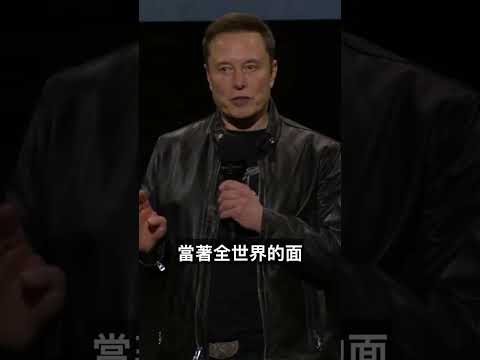
讓一個視汽油 為生命的老派 車評人跪下 唱征服 需要幾步? 特斯拉 只用了一步 讓他坐進 FSD V14 的駕駛艙! Jason Cammisa 車評界 出了名的毒舌 以前噴特斯拉 那是毫不留情 但這兩天 他在體驗完 最新版 FSD 後 當著全世界的面 說了一句髒話 「I had to eat my s**t. 」 沒錯 他承認自己 被打臉了 為什麼? 因為在這 一個小時裡 這輛車自己換道 自己避讓 自己倒車入庫 全程絲滑得 像個開了 二十年車 的老司機 而不是一個 只會畫龍的 AI 他給出的評價 是兩個字 Beautifully Smooth 美得絲滑 這意味著 FSD 已經跨過了 一個恐怖的門檻 它不再是讓 司機緊張的 輔助工具 它已經開始征服 那些最挑剔的 專業大腦了 Robotaxi的 時代還會遠嗎?. ...
【Tesla每日快訊】 Optimus 邁阿密「自殺」真相!那個詭異的「摘頭盔」動作暴露了什麼?🔥FSD V14再進化(2025/12/9-2)
大鱼聊电动· 2025-12-09 10:28
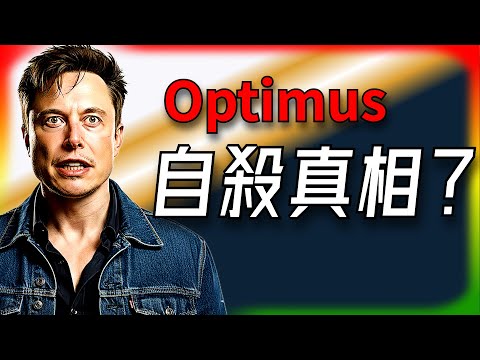
Optimus Robot Analysis - The Optimus robot's "falling" incident was likely due to a tele-operation sync error, where the human operator's actions were replicated by the robot [1] - Tesla uses tele-operation to collect data for AI training, which is a common practice in the industry [1] - The market's reaction to the Optimus incident was an overreaction, with media using it as a sensational headline [1] - The incident highlights the need for Tesla to improve its human-machine switching logic [1] Tesla's FSD and Technology Advancements - FSD V14 has reached a point where it drives smoothly like an experienced driver [2] - Tesla's Holiday Update includes a dashcam feature that overlays data like speed and gear, providing strong evidence in case of accidents [2] - Tesla is gamifying the charging experience with features like Charging Passport and badges [2] - Tesla is developing a specialized battery for the Roadster, indicating that the delay is due to waiting for advanced battery technology [2] - Tesla is expanding FSD testing in Europe, paving the way for potential software revenue growth [2] Market Expansion and Infrastructure - Tesla's sales in Japan have exceeded 10,000 units in the first 11 months of the year, achieving a 30% market share in the standard-size EV market [2] - Tesla plans to expand its supercharger network in Japan to 1,000 units by 2027 [2]