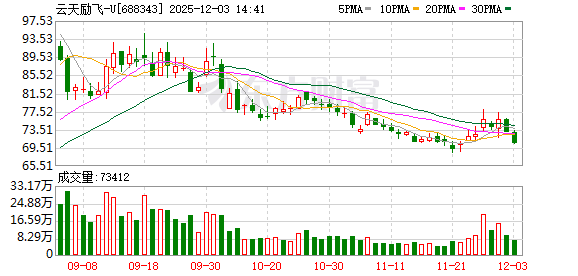
GPNPU架构

Search documents
【点金互动易】大飞机+特斯拉+飞行汽车,配套商飞C919、C909,空客A220等机型,特斯拉为其客户,这家公司为小鹏汇天提供零部件产品
财联社· 2026-01-20 01:10
Group 1 - The article emphasizes the importance of timely and professional information interpretation in investment, focusing on extracting investment value from significant events and analyzing industry chain companies [1] - It highlights the collaboration between major aircraft manufacturers like COMAC's C919 and C909, Airbus A220, and Tesla, indicating a supply relationship where Tesla provides components to companies like XPeng Huitian [1] - The article discusses advancements in NPU (Neural Processing Unit) and space computing, noting that a company is supporting autonomous satellite computing for deep space exploration, which has passed acceptance tests for a major project by the Ministry of Science and Technology [1]


云天励飞:公司以NPU为核心,将推出GPNPU架构
Zheng Quan Ri Bao· 2026-01-19 14:17
Core Viewpoint - The company emphasizes the importance of computational efficiency in the next phase of AI development, aiming to significantly reduce the cost of generating tokens through innovative architecture [2] Group 1: Company Strategy - The company is entering the era of large models and intelligent agents, where computational costs are rapidly increasing [2] - The company plans to launch a GPNPU architecture centered around NPU, focusing on a "reasoning-first architecture" approach [2] - The goal is to reduce the cost of generating 1 million tokens from approximately $1 to $0.01, achieving a hundredfold efficiency improvement [2] Group 2: Future Directions - The company aims to develop "efficient AI" and "inclusive AI" as its future direction [2] - It intends to actively participate in the global restructuring of computational power systems and the establishment of standards [2] - The company will continue to focus on three main areas: new computational systems, security governance, and inclusive applications [2]

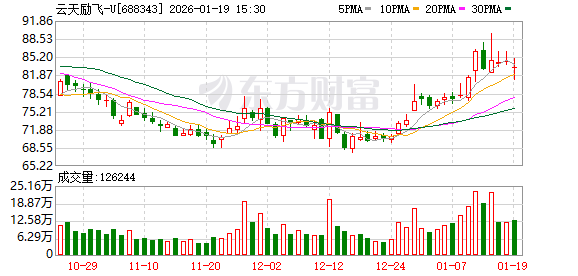
云天励飞:锚定算力架构创新 破解AI规模化应用难题
Zhong Guo Zheng Quan Bao· 2026-01-07 20:50
Core Insights - The artificial intelligence industry is shifting its focus from "training competitions" to "inference efficiency," with companies needing to convert technological advantages into market success [1][2] - YunTianLiFei aims to establish itself as a leading AI chip enterprise in China by focusing on inference capabilities and developing a domestic version of TPU [2][5] Technological Implementation and Ecosystem Development - The company emphasizes the importance of "scalable delivery" capabilities, which require deep integration of technology, products, and real-world applications [1][2] - YunTianLiFei's strategy includes a framework of "one goal and three paths" to meet the demand for large model inference, focusing on R&D collaboration, scenario-driven development, and ecosystem building in the Guangdong-Hong Kong-Macao Greater Bay Area [2][3] Application and Market Penetration - The company has successfully implemented its technology across various sectors, including AI inference servers and smart robots, achieving 1.6 billion yuan in smart computing orders [3][4] - In the transportation sector, AI products equipped with self-developed chips have been deployed in over a thousand buses in Shenzhen, enhancing urban commuting efficiency [3][4] Cost Optimization in Inference - The company aims to break through the "cost wall" that limits the scalability of AI applications, focusing on making model inference affordable and efficient [4][5] - The "computing power building block" architecture and GPNPU technology are designed to adapt to diverse computational needs, from lightweight edge applications to large model inference [4][5] Future Development Strategy - YunTianLiFei envisions a dual-engine growth model targeting cloud AI inference and embodied intelligent robots, supported by a product matrix of DeepEdge, DeepVerse, and DeepXbot [5] - The company plans to leverage its innovative architecture to provide competitive inference support for large-scale model applications and integrate its chips into robots to capitalize on future market opportunities [5]
云天励飞董事长:打造中国版TPU
2 1 Shi Ji Jing Ji Bao Dao· 2026-01-02 14:38
Core Viewpoint - The article discusses the evolution of AI technology and the shift towards AI inference chips, highlighting the insights of Chen Ning, Chairman of Yuntian Lifei, on the future of AI and its implications for the industry [3][4][10]. Group 1: AI Development and Market Trends - Over the past five years, the focus of Yuntian Lifei has shifted from AI solutions to AI inference chips, which are seen as having long-term value [3][4]. - The AI landscape is evolving, with large models moving from labs to everyday applications, and computational power becoming a central competitive factor [3][4]. - Chen Ning believes that the current AI investment may appear bubble-like from a local perspective, but historically, it represents the beginning of a new era [3][4]. Group 2: Inference Chips vs. Training Chips - Chen Ning emphasizes the importance of inference chips, predicting that their market potential will far exceed that of training chips, which are primarily for innovation [11][14]. - The global market for training chips is expected to reach approximately $1 trillion by 2030, while the inference chip market could reach at least $4 trillion [14]. - The separation of training and inference processes is anticipated to occur by 2025, leading to a more specialized and efficient approach to inference chip development [15][24]. Group 3: Yuntian Lifei's Strategy and Innovations - Yuntian Lifei's GPNPU architecture is positioned as a Chinese equivalent to TPU, offering significant optimizations in inference efficiency and cost control [16]. - The company is focused on building a complete stack that integrates applications, algorithms, and chips, ensuring the practical value of their chips is validated through real-world deployment [6][19]. - The demand for inference chips is primarily driven by major internet companies and AI startups, indicating a robust market for Yuntian Lifei's products [17][18]. Group 4: Industry Landscape and Future Outlook - The AI hardware market is experiencing rapid growth, with many new companies emerging, particularly in Shenzhen, which is seen as a hub for AI product innovation [28]. - The Guangdong province is strategically promoting the integration of AI and semiconductor industries, which is expected to enhance the demand for chips [26][27]. - The article suggests that the AI industry is entering a new phase, with a focus on practical applications and the need for efficient inference chips to support widespread adoption [10][28].

云天励飞董事长:打造中国版TPU
21世纪经济报道· 2026-01-02 14:33
Core Viewpoint - The article discusses the evolution of AI technology and the shift in focus from AI solutions to AI inference chips, highlighting the long-term value and market consensus around this transition [3][4]. Group 1: AI Development and Market Trends - Over the past five years, the boundaries of artificial intelligence have expanded significantly, with large models moving from laboratories to everyday applications, making computing power a central competitive factor in the industry [4]. - The current era is seen as a historical window for the AI inference chip market, with a consensus forming around the importance of this segment [4]. - There are concerns about a potential bubble in AI investments, but the perspective is that AI represents the beginning of a new era, akin to the steam engine's introduction [4]. Group 2: AI Chip Development Cycles - The company has experienced three development cycles that align with the global AI industry's evolution: the intelligent perception era (2012-2020), the large model era (2020-2024), and the computing power-driven phase [8][9]. - The current focus is on inference chips, which are expected to have a much larger market potential compared to training chips, with projections estimating the global inference chip market could reach at least $4 trillion by 2030 [12][13]. Group 3: Strategic Positioning and Differentiation - The company emphasizes the importance of inference chips, arguing that they are crucial for scaling AI applications across various industries, similar to how the electric motor revolutionized industry [12]. - The GPNPU architecture proposed by the company aims to optimize inference efficiency and cost control significantly compared to traditional GPGPU architectures [15]. - The company is preparing to launch the Nova500 chip, which is expected to compete with leading global firms while maintaining a cost advantage [15]. Group 4: Market Demand and Clientele - Current demand for the company's chips primarily comes from leading internet companies, major telecom operators, and AI startups focused on large model development [16][18]. - The company anticipates that as the inference chip market grows, it will increasingly shift its revenue structure towards chip sales, aligning with the industry's development stages [20]. Group 5: Challenges and Future Outlook - The company faces challenges in hardware complexity, software ecosystem development, and the rapid evolution of AI technology, which requires forward-looking and flexible chip designs [22]. - The semiconductor market is expected to see increased merger and acquisition activity as AI applications and inference ecosystems rapidly develop, indicating a shift from small, fragmented markets to larger, more dynamic ones [23].

云天励飞董事长陈宁:打造“中国版TPU”
2 1 Shi Ji Jing Ji Bao Dao· 2025-12-27 15:15
Core Insights - The article discusses the evolution of AI and the shift in focus from AI solutions to AI inference chips, highlighting the long-term value of this transition [4][5] - Chen Ning, the chairman of Yuntian Lifei, emphasizes that the AI industry is at a historical turning point, with significant opportunities in the inference chip market [4][5][10] Industry Trends - The AI landscape has expanded significantly over the past five years, with large models moving from labs to everyday applications, and computational power becoming a central competitive factor [4][5] - The inference chip market is projected to reach at least $4 trillion by 2030, significantly larger than the training chip market, which may reach around $1 trillion [12] Company Strategy - Yuntian Lifei has consistently focused on chip development since its inception, with a strategic emphasis on creating a complete ecosystem that integrates applications, algorithms, and chips [6][8] - The company is developing a new architecture called GPNPU, which aims to optimize inference efficiency and cost, positioning itself competitively against global leaders [14] Market Dynamics - The demand for inference chips is primarily driven by major internet companies and AI startups, with significant order volumes expected as the market matures [15][17] - The company anticipates a major turning point in 2025, where training and inference will become distinct, leading to specialized and efficient inference solutions [13] Regional Insights - Guangdong province is highlighted as a key area for AI and semiconductor development, with a focus on practical applications driving the growth of the chip industry [26][27] - Shenzhen is recognized as a hub for AI hardware innovation, fostering a deep understanding of market needs and user demands, which is crucial for developing practical AI products [28]

21专访|云天励飞董事长陈宁:打造“中国版TPU”
2 1 Shi Ji Jing Ji Bao Dao· 2025-12-27 14:40
Core Insights - The article discusses the evolution of AI technology and the shift towards AI inference chips, highlighting the long-term value and market consensus around this transition [1][2][4] - Chen Ning, the chairman of Yuntian Lifei, emphasizes the importance of inference chips over training chips, predicting a significant market potential for inference chips by 2030 [7][8][10] Group 1: AI Development Phases - The AI industry has experienced three distinct phases: the intelligent perception era (2012-2020), the large model era (2020-2024), and the computing power-driven phase [4][5] - The intelligent perception era focused on computer vision applications, while the large model era saw breakthroughs in natural language processing, particularly with the rise of models like ChatGPT [4][5] - The current phase emphasizes the need for specialized inference chips, as the demand for computing power has surged [4][5][10] Group 2: Market Dynamics and Opportunities - The global market for training chips is projected to reach approximately $1 trillion by 2030, while the inference chip market could exceed $4 trillion [8][10] - Chen Ning argues that the real opportunity lies in inference chips, which are crucial for deploying AI models across various industries [7][8][10] - The Chinese strategy focuses on accelerating the market application of AI, with a goal of achieving over 70% penetration of new intelligent terminals by 2027 [5][6] Group 3: Yuntian Lifei's Position and Strategy - Yuntian Lifei is developing a new architecture called GPNPU, which aims to optimize inference efficiency and cost significantly compared to traditional GPGPU [11][12] - The company anticipates that its Nova500 chip, based on the GPNPU architecture, will be ready for production next year, targeting competitive performance and pricing [13][14] - Current demand for Yuntian Lifei's chips primarily comes from leading internet companies and AI startups, indicating a robust market interest [14][15] Group 4: Challenges and Future Outlook - The development of inference chips faces challenges, including hardware complexity, software ecosystem building, and the rapid evolution of AI technology [19][20] - The article suggests that 2025 will be a pivotal year as the separation of training and inference processes becomes more pronounced, leading to a more specialized approach in chip design [10][19] - The semiconductor market is expected to see increased merger and acquisition activity as AI applications and inference ecosystems grow [21][22]
专访云天励飞董事长陈宁:AI推理时代已至,推理芯片崛起将是中国科技复兴巨大机遇
Mei Ri Jing Ji Xin Wen· 2025-12-24 08:35
Core Insights - The article discusses the ongoing transformation in the AI industry, highlighting the shift from training to inference as a pivotal moment for the sector, with 2025 anticipated as a year of significant AI application growth [2][3]. Industry Overview - The AI industry is evolving through three distinct phases: 1. The "Intelligent Perception" era (2012-2020), characterized by fragmented solutions driven by small models [3]. 2. The "AIGC" era (2020-2025), where large models demonstrate impressive content generation capabilities but struggle to find profitable business models [3]. 3. The upcoming "Agentic AI" era, where intelligent agents will integrate large models, operating systems, and hardware to perform complex tasks independently, marking a true industrial revolution [3][4]. Market Dynamics - The transition to inference-focused computing is seen as a fundamental shift, requiring a focus on cost-effectiveness and market economics rather than just performance [3][4]. - The emergence of dedicated inference chips is expected to disrupt Nvidia's dominance established during the training era, as companies like Google and Broadcom pivot towards specialized inference solutions [5][6]. Opportunities for China - China is positioned to capitalize on the inference chip market, as it faces fewer barriers compared to the training sector, where it lags behind Nvidia due to advanced process limitations and high CUDA ecosystem barriers [5][6]. - The rise of inference chips is viewed as a significant opportunity for China's technological resurgence, aligning with its strengths in providing high-cost performance products [5][6]. Technological Innovations - The introduction of the GPNPU architecture aims to address the unique demands of inference tasks, optimizing performance, storage bandwidth, and capacity while reducing costs [6]. - The goal is to lower the total cost of ownership (TCO) for users by enhancing energy efficiency and minimizing operational costs through innovative chip technologies [6]. Future Projections - The demand for inference computing is expected to surge, with projections indicating that the daily token processing volume could reach 100 trillion by mid-next year, necessitating significant infrastructure investments [7]. - Companies are urged to reduce the comprehensive cost of processing "million tokens" to one cent, which will require architectural and technological innovations [7].
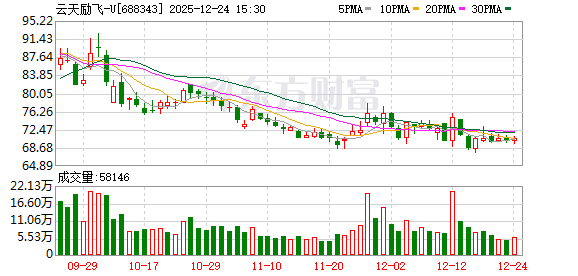
云天励飞:目前在研Nova 500系列将全面升级GPNPU架构
Ju Chao Zi Xun· 2025-12-10 13:37
Core Insights - The company is among the first globally to propose and commercialize NPU-driven AI inference chips, having completed four generations of NPU development and commercialization [1] - The upcoming Nova 500 series will upgrade the GPNPU architecture, enhancing compatibility, performance, and energy efficiency for AI inference applications [1] - The IPU-X6000 accelerator card, set to launch in 2024, is already in development with multiple clients, aiming to integrate AI inference capabilities into broader enterprise digital processes [1] Industry Trends - Inference heterogeneity has become an industry trend, prompting the company to develop the fifth generation GPNPU architecture, which combines GPU versatility with NPU energy efficiency [2] - The core innovation focuses on "computing power building blocks" design and 3D stacked storage, aiming to enhance capital and operational expenditure token conversion rates [2] - The goal is to provide core computing power support for large model applications and composite intelligent agent deployments, achieving "extreme cost-effectiveness for millions of tokens" [2]
云天励飞陈宁对话Hinton:推理时代来临 GPNPU架构如何破局?
Zheng Quan Ri Bao· 2025-12-03 06:41
Core Insights - The dialogue at the 2025 GIS Global Innovation Summit highlighted the need for advancements in AI computing efficiency and the importance of making AI accessible to a broader audience [2][4] AI Chip Market Outlook - The global AI chip industry is projected to reach approximately $5 trillion by 2030, with training chips accounting for about $1 trillion and inference/processing chips expected to reach $4 trillion, representing around 80% of the market [3] - AI processing chips are anticipated to be widely integrated into various devices such as glasses, headphones, smartphones, laptops, home appliances, and enterprise equipment, becoming as ubiquitous as utilities like water and electricity [3] AI Research and Ethical Considerations - Geoffrey Hinton emphasized the real risks associated with AI and the need for proactive measures to address these risks [4] - Chen Ning stressed that meaningful AI must be affordable and accessible to a larger population, not just a select few, to truly be considered beneficial [4] GPNPU Architecture Innovation - The company is set to launch the GPNPU (General-Purpose Neural Processing Unit) architecture, focusing on optimizing matrix/vector units, storage hierarchy, and bandwidth utilization to achieve a hundredfold increase in inference efficiency [5] - The trend of "inference heterogeneity" is emerging, requiring chip architectures to flexibly allocate computing power, bandwidth, and storage [6] Competitive Advantages and Industry Positioning - The company has been involved in parallel computing instruction set and chip architecture design since 2005, giving it a foundational advantage in algorithm chip optimization [7] - The company has established strong customer relationships and possesses capital and brand advantages, enabling it to attract global talent [7] - The Guangdong-Hong Kong-Macau Greater Bay Area offers a comprehensive AI and mechatronics industry chain, allowing the company to quickly respond to market changes and drive chip development based on demand [7]