推理芯片

Search documents
马斯克造芯片,黄仁勋“反对”
汽车商业评论· 2026-03-25 23:07
Core Viewpoint - Elon Musk announced the establishment of a chip factory named "Terafab" with a budget of $20-25 billion, aiming to achieve full control over Tesla's computing power and integrate the semiconductor supply chain under one roof [10][12][15]. Group 1: Project Overview - Terafab is described as the largest chip manufacturing project in history, utilizing 2nm process technology, which is currently only produced by TSMC [13]. - The factory will have two production lines: one for Tesla's automotive and robotics chips, and another for aerospace-grade D3 chips [13]. - The initial monthly wafer output target is set at 100,000, with a long-term goal of reaching 1 million wafers per month, equating to approximately 70% of TSMC's current global output [18][22]. Group 2: Strategic Importance - Terafab aims to produce 1 terawatt of computing power annually, requiring the production of 100-200 billion custom AI and storage chips for various Tesla projects [22]. - Approximately 80% of the computing power will be dedicated to space-based AI satellites, leveraging the advantages of the space environment for heat dissipation [22]. - The project is seen as a response to the limitations of external chip suppliers like TSMC and Samsung, which Musk predicts will reach capacity limits within three to four years [15][18]. Group 3: Challenges - The project faces significant challenges, including the need to procure high-NA EUV lithography machines from ASML, which are in high demand and costly [24][26]. - Tesla has a $16.5 billion multi-year contract with Samsung to produce next-generation AI chips, which is crucial for knowledge transfer before Tesla operates its own foundry [26][28]. - Recruiting a specialized team of engineers with expertise in semiconductor manufacturing processes is essential, as Tesla has no prior experience in this field [28][29]. - Musk's unconventional cleanroom theory, which suggests that traditional cleanroom standards are outdated, has raised skepticism within the semiconductor industry [29][31]. Group 4: Industry Reactions - The semiconductor industry has expressed skepticism regarding Terafab, with industry leaders like NVIDIA's CEO warning about the complexities of building advanced chip manufacturing facilities [31][33]. - Analysts believe that achieving the production capacity of TSMC will be extremely challenging for Tesla, given its lack of experience in semiconductor manufacturing [33][37]. - Despite the challenges, the announcement of Terafab has prompted the semiconductor industry to take Musk's supply chain ambitions seriously, reflecting a broader trend of companies seeking to secure their supply chains amid geopolitical tensions [38].



AI计算迎来重大变革,英伟达押注的“推理”是什么?
Feng Huang Wang· 2026-03-17 02:15
Core Insights - The AI industry is undergoing a significant transformation, shifting focus from training large language models to inference, which allows trained AI models to respond to user queries [2][3]. Group 1: Shift in Investment Focus - Global capital expenditure on inference infrastructure is expected to surpass that of training for the first time this year, with projections indicating that by 2029, spending on inference will reach $72 billion, nearly double the $37 billion allocated for training [3]. - This shift in focus will lead to a change in the types of chips purchased by tech companies, as those expecting to perform more inference tasks can benefit from chips optimized for inference [4]. Group 2: Chip Manufacturers and Market Dynamics - Companies specializing in inference chips, such as Google, Cerebras Systems, and SambaNova, are rapidly securing multi-billion dollar contracts, while Nvidia is preparing to launch its own inference-specific processors after acquiring technology from Groq for $20 billion [4]. - The demand for inference chips is driven by the need for efficient performance in responding to user queries, with a focus on metrics like "tokens generated per watt per second" and "tokens generated per dollar per second" [10]. Group 3: Technical Differences Between Training and Inference - Training requires powerful chips capable of processing vast amounts of data over extended periods, while inference is performed on-demand and must be completed quickly, typically within seconds [11]. - Inference chips need larger high-bandwidth memory and must be located near user clusters to minimize latency, with companies like Ayar Labs adopting fiber-optic connections for faster data transmission and reduced cooling needs [11].


英伟达(NVDA.US)GTC大会前瞻:AI霸主能否守住江山,市场紧盯“后训练时代”新战略
Zhi Tong Cai Jing· 2026-03-13 12:31
Core Insights - The upcoming NVIDIA GTC developer conference is expected to showcase the company's strategies to maintain its leadership in the AI chip market amidst increasing competition [1] - Analysts anticipate that NVIDIA will introduce new products optimized for inference workloads, particularly a chip integrating technology from the recently acquired AI startup Groq [2] - The rise of custom ASIC chips from major clients like OpenAI and Meta poses a long-term threat to NVIDIA's dominance in the GPU market, especially in inference applications [3] Group 1: Conference Highlights - The GTC conference serves as a critical platform for NVIDIA to present advancements in chips, data centers, and AI software, while investors seek reassurance on the effectiveness of the company's AI ecosystem strategy [1] - Market research indicates that NVIDIA will likely update its full-stack roadmap and emphasize areas such as inference, AI agents, and AI factory infrastructure [1] Group 2: Competitive Landscape - The transition from AI model training to inference is reshaping the competitive landscape, with NVIDIA currently holding over 90% market share in both training and inference but expected to face market share erosion, particularly in inference [1][3] - The CEO of d-Matrix highlights that while NVIDIA will maintain its lead in training, the inference market presents different challenges, as developers can easily switch to competitors for running AI models [2] Group 3: Strategic Responses - To counteract competition, NVIDIA is enhancing its defenses through acquisitions and investments, including a $2 billion investment in optical communication companies to advance co-packaged optics technology [3] - Analysts predict that co-packaged optics will be a key breakthrough for NVIDIA's next-generation chip architecture [3][4] Group 4: Market Trends - The resurgence of CPUs in AI tasks is noted, with analysts suggesting that NVIDIA may showcase server products utilizing only its CPUs to address new performance bottlenecks [4] - The potential of AI agents and robotics is seen as a significant driver for future growth, with NVIDIA reporting approximately $6 billion in robotics-related revenue last quarter [6] Group 5: Geopolitical Factors - Geopolitical factors are increasingly influencing NVIDIA's future, with U.S. export restrictions on AI chips and limited access to key markets like China reshaping its global sales strategy [7] - The investment in AI infrastructure in regions like the Middle East is crucial for NVIDIA, although uncertainties related to regional conflicts and energy costs may impact demand [7]
两会|AI赋能产业发展存在哪些堵点痛点?
券商中国· 2026-03-04 05:37
Core Viewpoint - The article discusses the urgent need for the integration of artificial intelligence (AI) with economic and social development in China, emphasizing the importance of computing power as a core infrastructure for AI advancement [2]. Group 1: Computing Power Development - Computing power should be categorized into training and inference computing. The demand for inference computing is expected to grow exponentially as the industry transitions into the "AI+" application era [3]. - There is a current gap in the supply of intelligent computing power that meets the demands of the times. It is suggested to establish an open platform for AI large model training computing power, dynamically allocating resources based on user needs [3]. Group 2: AI Technology Application - The transition from "computing power infrastructure" to "commercial closed-loop and governance collaboration" is critical. There is a tendency to focus on construction rather than application, leading to isolated innovations that fail to create scalable commercial value [4]. - Recommendations include accelerating the implementation of "AI + scenario closed-loop" demonstration projects in key areas like industrial manufacturing and smart finance, and establishing a governance system for AI [4]. Group 3: Talent Development and Data Governance - There is a need to reshape the talent cultivation system for the intelligent era, promoting educational reforms and establishing interdisciplinary programs to address the talent shortage in AI [5]. - A systematic approach to building an industrial data governance framework is essential to remove barriers for AI empowerment in manufacturing. This includes organizing technology breakthroughs and pilot demonstrations [5].

LPU落地,PCB设备迎增量爆发期!
摩尔投研精选· 2026-03-03 10:16
Group 1: Cyclical Stocks Analysis - The article reviews the cyclical stock performance since 2000, identifying five typical upward cycles characterized by a 1-2 quarter resonance between PPI increases and production expansion [1] - The rotation sequence of cyclical sectors is summarized as "resources first → manufacturing follows → comprehensive rebound," with key sectors including non-ferrous metals, coal, basic chemicals, shipping + oil transportation, and engineering machinery [1] - In the current cycle (2020-present), some strong non-ferrous metal stocks have seen price increases exceeding 1000%, indicating continued investment value [1] Group 2: Sector-Specific Insights - Coal sector performance is driven by "supply assurance and price stability" along with energy security logic, though demand validation is still pending [1] - The basic chemicals sector is experiencing significant internal differentiation, with traditional bulk chemical products facing oversupply issues, while new materials (e.g., electronic chemicals, new energy materials) are leading the growth [1] - The shipping and oil transportation sectors are at the beginning of a new cycle, catalyzed by geopolitical conflicts, suggesting potential for further price increases [2] Group 3: PCB Equipment and Drill Demand - Nvidia plans to release a new inference chip with integrated LPU technology by March 2026, marking a shift in AI computing from large-scale training to real-time interaction and low-latency applications [4] - The LPU's design will require significantly larger PCB board areas compared to pure GPU solutions, potentially expanding the market for PCB equipment and materials [4] - The introduction of high-layer PCB boards (52 layers) will increase the demand for high-precision drilling tools, leading to potential shortages and price increases for PCB drill bits [4][6] Group 4: Industry Upgrades and Equipment Demand - In PCB manufacturing, high-precision drilling, exposure, and electroplating are critical for ensuring the yield of 52-layer boards, indicating a capital expenditure expansion period for related equipment suppliers [6] - The integration of GPUs and LPUs will impose stringent requirements on high-precision assembly processes, enhancing the value of the supply chain from simple area expansion to technology-intensive high-value segments [6]

周鸿祎两会提案曝光:聚焦AI安全、应用等核心议题,建言别盲目对标“英伟达训练芯片”
Xin Lang Cai Jing· 2026-03-02 04:28
Group 1 - The core focus of the upcoming National People's Congress is on AI safety, application, and training, as highlighted by Zhou Hongyi, the founder and CEO of 360 [5][8] - Zhou emphasizes the importance of AI agents in enhancing security, noting that 360 has developed tens of thousands of AI security agents that can identify software vulnerabilities and provide real-time protection for over two million small and medium-sized enterprises in China [3][7] - The distinction between training and inference computing power is crucial, with Zhou suggesting that while training power has room for growth, the potential for inference power is limitless, urging local governments to prioritize the development of inference chips [3][7] Group 2 - Zhou proposes the creation of an open platform for AI agents, allowing ordinary businesses and individuals to easily establish their own agents, which can transform computing power into specialized intelligence [4][8] - He stresses the need for nationwide training programs for AI agents, as the development and management of these agents differ significantly from traditional software, requiring business experts to lead rather than AI specialists [4][8] - The strategic value of inference chips, including edge and IoT chips, is highlighted, with a call for policies that do not solely chase high-end training chips like those from Nvidia, as the future will see a vast network of computing power [3][7]


英伟达的“神秘芯片”背后--推理时代开启“四大算力新趋势”
Hua Er Jie Jian Wen· 2026-03-01 11:33
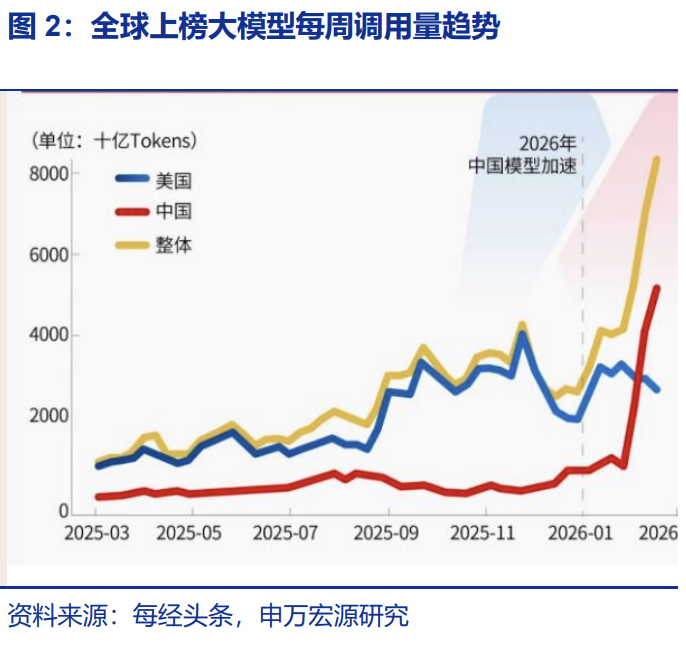
Core Insights - Nvidia is shifting the AI computing competition focus from training to inference, integrating LPU technology and collaborating with OpenAI for dedicated inference capabilities [1][2] - The demand for inference computing is surging, driven by the monetization of large models and the acceleration of agent deployment in real-world applications [3][6] Group 1: Inference Computing Trends - The report identifies four major trends in inference computing: increased deployment of pure CPU scenarios, the rise of specialized architectures like LPU challenging GPU dominance, accelerated breakthroughs in domestic computing chips, and a shift in demand structure from single training to mass token consumption [2][10] - Companies providing high-performance, cost-effective inference chips will benefit the most, as breakthroughs in CPU, LPU, and domestic chips reshape the computing landscape [2][10] Group 2: Demand and Usage Statistics - The demand for inference has exploded, with significant increases in token consumption during the Chinese New Year, including 63.3 billion tokens processed in a single day by a leading model [3][10] - Data from OpenRouter indicates that Chinese models surpassed U.S. models in token calls, with a notable increase of 127% in three weeks, highlighting the growing prominence of Chinese AI models [3][10] Group 3: Technological Developments - Nvidia's acquisition of Groq's core technology for $20 billion signifies the recognition of pure inference chips' importance by top players in the industry [6][10] - The architecture of LPU differs from traditional GPUs, providing efficiency advantages in inference scenarios, particularly in addressing latency and memory bandwidth issues [6][10] Group 4: System-Level Innovations - The evolution from single chips to system-level innovations is crucial for the upgrade of inference computing, with a three-layer network architecture emerging to meet the demands of low latency and high throughput [8][10] - Nvidia is expanding its collaboration with Meta Platforms to support large-scale pure CPU deployments, indicating a shift away from a single GPU sales model [8][10] Group 5: Domestic Chip Advancements - Domestic inference chips are experiencing significant technological upgrades, including support for low-precision data formats and increased interconnect bandwidth, with expectations for a new version to launch in Q1 2026 [10] - The growth of domestic packaging companies reflects the increasing supply capability of domestic computing chips, with revenues from high-performance computing chip packaging services projected to rise significantly [10]
英伟达“滞涨”数月,本周“全球最重要财报”拉得动吗?
Hua Er Jie Jian Wen· 2026-02-23 01:26
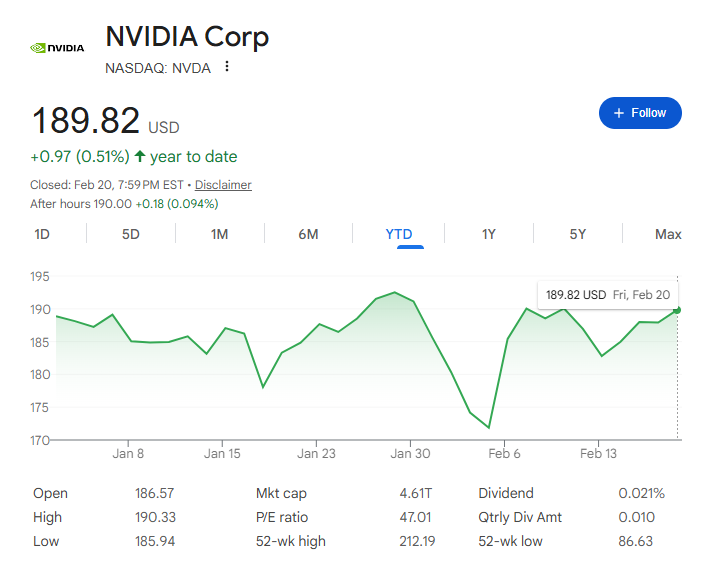
Core Viewpoint - Nvidia's stock has been stagnant, with a slight increase of 1.7% since Q4 of last year, underperforming the S&P 500 by 3.3% during the same period, raising concerns about whether strong earnings will be sufficient to meet market expectations [1][3] Group 1: Earnings Expectations - Nvidia is set to release its highly anticipated Q4 and annual earnings report, with Wall Street consensus expecting strong performance that may exceed analyst predictions [1] - Investors are facing a "expectation paradox," as historical data shows Nvidia's stock has faced sell-offs following its last two earnings reports, despite strong earnings [3] - Concerns exist that even if Nvidia's official earnings and guidance are solid, they may not meet heightened expectations, leading to potential stock declines [3] Group 2: Market Sentiment and Competition - The technology sector, particularly the "Magnificent Seven," has seen a nearly 1% decline since Q4 of last year, underperforming the S&P 500, reflecting cautious investor sentiment regarding AI capital expenditures translating into actual profits [4] - Nvidia's forward P/E ratio has dropped below 24, nearing a five-year low and significantly lower than its five-year average of 38, which may present a buying opportunity [7] - The competitive landscape is shifting as companies like AMD, Amazon, Broadcom, and Alphabet introduce chips for generative AI models, raising questions about Nvidia's ability to maintain market share [7] Group 3: Macro Environment - The macroeconomic environment for 2026 is uncertain, with geopolitical tensions and mixed economic data contributing to market volatility [5][6] - Recent economic indicators show a slowdown in growth and persistent inflation, leading traders to bet that the Federal Reserve will adopt a cautious stance on further rate cuts [5]
技术破局|爱芯元智港股上市:角逐边缘推理主战场,旗舰智驾芯片M97回片成功
Mei Ri Jing Ji Xin Wen· 2026-02-12 10:06
Core Insights - The rise of AI agents is expected to significantly impact the chip industry, with a focus on inference capabilities becoming paramount as companies like Nvidia invest heavily in this area [1][2] - Aixin Yuanzhi has emerged as a leading player in the edge and endpoint inference chip market, recently becoming the first Chinese edge AI chip company to be listed on the Hong Kong Stock Exchange [1][5] Industry Trends - The demand for AI chips is shifting from training to inference, with a projected compound annual growth rate (CAGR) of 31.0% for global AI inference chips from 2024 to 2030 [5][6] - The edge inference segment is expected to grow at a CAGR of 42.2%, indicating a substantial market opportunity [5] Company Positioning - Aixin Yuanzhi's unique "dual-track development model" focuses on both vertical IP core technology upgrades and horizontal application expansion, supported by its proprietary AXNeutron NPU and AXProton AI-ISP [3][4] - The AXNeutron NPU is designed to address the "impossible triangle" of performance, power consumption, and cost, achieving a throughput improvement of up to 10 times compared to traditional GPU-based solutions [4] Market Performance - Aixin Yuanzhi is projected to ship over 900 million chips in 2024, capturing a market share of 6.8%, and leading the mid-to-high-end chip segment with a 24.1% share [6][8] - The company ranks third in the domestic edge AI market, with an expected shipment of 100,000 units in 2024 and a market share of 12.2% [6] Future Outlook - The global market for edge inference chips is forecasted to reach 726.2 billion yuan by 2030, while endpoint inference chips are expected to reach 886.1 billion yuan, totaling over 1.5 trillion yuan [6] - Aixin Yuanzhi aims to leverage its high-performance, cost-effective platform capabilities to strengthen its position in the AI perception and edge computing sectors, potentially reshaping the global edge computing landscape [8]

高通,遭受重创
半导体芯闻· 2026-02-05 10:19
Core Viewpoint - Qualcomm warns that rising memory prices will slow down growth in the smartphone industry, causing a significant drop in its stock price by 11% [2] Group 1: Financial Performance - Qualcomm reported record revenue of $12.3 billion for Q1 2026, driven by strong sales of high-end smartphones and growing interest in smart glasses, automotive, and IoT products [2] - The company forecasts Q2 revenue to be between $10.2 billion and $11 billion, down from $11 billion in the same quarter last year, with smartphone chip sales expected to decline from $6.9 billion to $6 billion [3] Group 2: Market Dynamics - The cautious approach of smartphone manufacturers does not indicate a decline in market demand but rather reflects concerns over insufficient memory supply, leading to reduced production plans [3] - Qualcomm's CEO believes that the current turmoil will result in short-term losses but does not foresee long-term difficulties in the market [3] Group 3: Future Prospects - Qualcomm is diversifying its revenue streams through developments in robotics, automotive, and patent licensing, aiming to reduce its dependence on smartphone revenue by 2029 [4] - The company is also venturing into AI chip development, with initial deliveries made to its confirmed customer, Humane, and expects revenue from AI chips to materialize next year [3]