Galaxy S25 Edge

Search documents
三星电子(SSNLF.US)高管:尚未决定是否推出下一代超薄手机及三折叠手机
智通财经网· 2026-02-27 03:57
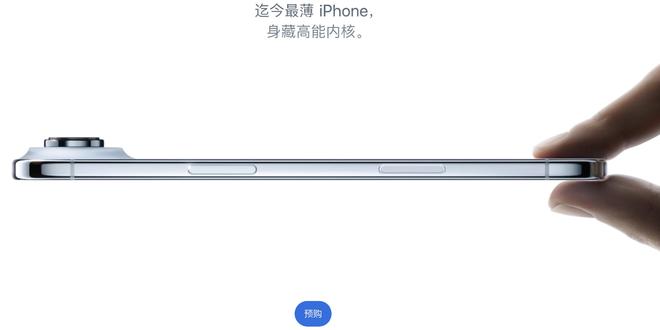
Core Insights - Samsung Electronics is evaluating the future of its ultra-thin smartphone line, particularly after the Galaxy S25 Edge's sales were described as "relatively low" compared to other models [1][2] - The company has not committed to releasing the next generation of its TriFold foldable phone, which is priced at nearly $3,000 and features two hinges [1][3] - Samsung is focusing on developing a wider version of the standard Galaxy Z Fold to compete with Apple's upcoming foldable phone [1][3] Ultra-Thin Smartphone Line - The Galaxy S25 Edge, launched last year with a thickness of only 5.8 mm, has not performed well in terms of battery life compared to Samsung's high-end models, leading to a reassessment of the product line's future [2] - The company has not yet decided when to launch the next generation of ultra-thin smartphones, indicating ongoing consideration of consumer preferences and needs [2] Foldable Phone Development - Samsung remains committed to the foldable phone category, having launched the TriFold in the U.S. earlier this year, which quickly sold out [3] - The TriFold's high price limits its market appeal to a niche luxury consumer group, and its future remains uncertain due to its weight and thickness in the folded state [3] - A new Galaxy Fold model is set to be released this summer, with potential plans for a wider book-style foldable device to offer a more affordable alternative [3] Privacy Display Feature - The Galaxy S26 Ultra will feature a new Privacy Display that makes it harder for others to view the screen from the side, a feature that was delayed by a year due to technical challenges [4] - The idea for the Privacy Display originated from a Samsung engineer about three to four years ago, and the project was officially synchronized with Samsung Display Co. three years ago [4] - Currently, this feature is limited to flagship models, but there are indications that it may be extended to more devices in the future [4] S-Pen Development - The S-Pen, a signature feature of the Galaxy Note series and later Ultra models, is undergoing development for a next-generation version, although it has not been a focal point in the S26 series [6] - The company is working on advanced technology for the S-Pen to create a new display structure that reduces the costs associated with supporting the S-Pen [6]
三星(SSNLF.US)定档2月26日发布Galaxy S26系列手机 AI战略全面升级迎战苹果(AAPL.US)iPhone
智通财经网· 2026-02-11 01:39
Core Viewpoint - Samsung Electronics is set to launch its latest flagship Galaxy smartphone series, the Galaxy S26, on February 25, aiming to stimulate user upgrade demand and enhance its competitive position against Apple and other Android rivals [1] Group 1: Product Launch and Features - The Galaxy S26 series is positioned as a significant step into the "AI era," promising a more personalized and adaptive smart experience [1] - The design of the new models is expected to be similar to previous Galaxy S series, contrasting with Apple's recent iPhone 17 series, which has seen record demand due to significant redesigns [1] - Samsung is focusing on new AI features and hardware upgrades for 2026, including a privacy screen technology that prevents onlookers from viewing the screen content from certain angles [1] Group 2: AI Integration and Market Strategy - Samsung is expanding its Galaxy AI software capabilities, integrating features from Google’s Gemini and actively pursuing partnerships with OpenAI and Perplexity AI [2] - The company remains open to all competitive AI assistants that enhance user experience, as stated by the President and COO of Samsung Mobile [2] - The update for Samsung's foldable devices is expected later this year, with the Galaxy Z Fold 7 having achieved breakthroughs in thinness, while the Galaxy Z TriFold is noted for its engineering design despite limited practicality for most users [2] Group 3: Market Importance - The sales of foldable phones are significantly lower than traditional smartphones, making each Galaxy S series launch critical for Samsung [2] - The upcoming Unpacked event is also anticipated to feature new wireless earbuds and other accessories [2]
Edge机型惨败后救场!三星Galaxy S26+回归,屏幕参数基本不变
Huan Qiu Wang· 2026-01-16 03:19
Core Insights - Samsung is making urgent adjustments to its S26 flagship lineup due to poor market performance of the Galaxy S25 Edge, which has led to the cancellation of the S26 Edge model and the reintroduction of the Galaxy S26+ to fill the mid-range gap [1][4] Group 1: Product Adjustments - The S26+ will feature only minor modifications and will retain the 6.66-inch screen size from the previous generation [1][4] - The S25 Edge, which was marketed with a 5.8mm ultra-thin body, faced criticism for its short battery life, resulting in sales of less than 1 million units, only one-fifth of the standard version [1] Group 2: Production and Strategy - Samsung's initial plan was to incorporate a high-quality screen from the S26 Edge into the S26+, but due to compressed development cycles and insufficient component production time, the old specifications were retained [4] - The S26 Ultra has already begun mass production with a planned output of 3.6 million units, while the combined production for the S26+ and standard version is slightly over 500,000 units, indicating a clear strategic focus on high-end flagship models [4]

iPhone Air销量惨淡引发连锁反应:三星砍掉Galaxy S26 Edge超薄旗舰
Huan Qiu Wang Zi Xun· 2025-12-24 08:15
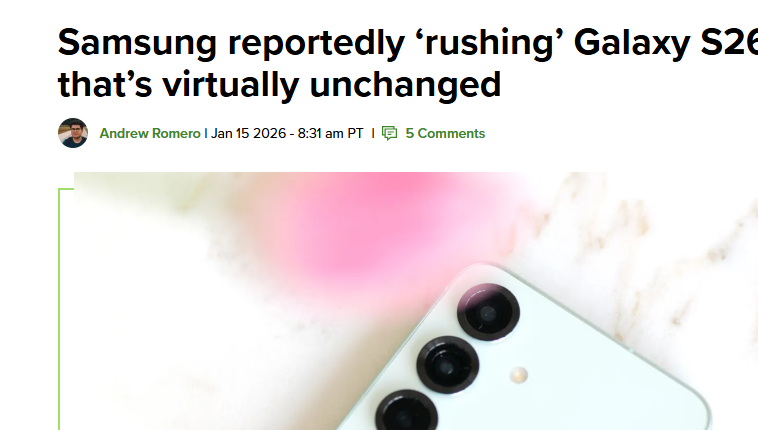
Core Viewpoint - Samsung Electronics has officially terminated the development of the next-generation "Galaxy S26 Edge" due to weak global consumer demand for ultra-thin flagship smartphones, following Apple's significant production cuts for the iPhone Air [1] Group 1: Samsung's Decision - Samsung planned to replace the "S26+" model with the Galaxy S26 Edge, continuing the product line from the Galaxy S25 Edge launched in 2025 [1] - The Galaxy S25 Edge experienced disappointing sales, becoming a public commercial failure, partly due to its 3900mAh battery's poor performance in high-demand scenarios [1] - Despite initial plans for the S26 Edge to feature a larger battery and improved thermal management, ongoing weak market feedback led Samsung to reassess the long-term viability of this product category [1] Group 2: Market Context - Apple's significant reduction in iPhone Air production targets and potential postponement of a new model in 2026 have influenced Samsung's decision [1] - The iPhone Air, which emphasizes a lightweight design, has not gained mainstream consumer appeal since its launch, indicating a consumer preference for practicality over thinness [1]

超轻薄手机遇冷,真“AI手机”登场? 聊聊2025年手机行业的新玩意
Xin Lang Cai Jing· 2025-12-18 14:23
Core Insights - The mobile market in 2025 is witnessing significant changes, including the introduction of ultra-thin designs, emergency communication technologies, new folding phone forms, and AI-integrated smartphones, all impacting industry development [1][38]. Ultra-Thin Design - Major manufacturers like Samsung and Apple have launched ultra-thin smartphones, with Samsung's Galaxy S25 Edge at 5.8mm and 163g, and Apple's iPhone Air at 5.6mm and 165g, both priced from 7999 yuan [3][40]. - Despite the hype, sales for these ultra-thin models have been disappointing due to a mismatch between product definition and market positioning, sacrificing essential features for thinness [5][42]. - The ultra-thin design captures a niche market focused on portability and aesthetics, but it is not a mainstream demand, indicating a need for balance between functionality and design [7][45]. Emergency Communication Technology - Huawei's Mate 80 series introduced a "black technology" called emergency communication, allowing point-to-point communication without external networks, crucial for disaster scenarios [9][46]. - This technology operates on a 700MHz frequency, enabling communication over distances of up to 13km and penetrating obstacles like concrete walls, making it vital for rescue operations in extreme conditions [11][50]. - Huawei's approach to emergency communication is distinct from other manufacturers, focusing on critical situations like natural disasters, thus creating a new category of mobile communication [18][55]. New Folding Phone Forms - The folding phone market sees competition with Huawei's Mate XT and Samsung's Galaxy Z TriFold, which have different folding mechanisms and design philosophies [20][57]. - Both devices offer large screens around 10 inches, with Samsung's design providing better protection for the inner screen, while Huawei allows for more flexible screen usage [23][60]. - The emphasis is on software ecosystem development to maximize the advantages of larger screens, as both companies aim to enhance user experience through innovative designs [27][64]. AI-Integrated Smartphones - The introduction of the "Doubao AI phone" marks a significant advancement in AI integration within smartphones, featuring a deep system-level AI assistant capable of multi-modal interactions and automated operations [28][65]. - This AI assistant can perform complex tasks like price comparisons across platforms and provide contextual information, representing a leap towards AI agents in mobile technology [30][70]. - However, concerns regarding execution efficiency and user privacy persist, highlighting the need for ongoing exploration in balancing innovation with data security [35][72].


中国电子:科技新闻
Haitong Securities International· 2025-11-12 00:51
Investment Rating - The report does not explicitly state an investment rating for the industry Core Insights - The AI server market is experiencing a power supply revolution with the adoption of Battery Backup Units (BBUs) equipped with supercapacitors, driven by increasing demand from AI applications [1][13] - The ultra-slim smartphone market is polarized, with traditional bar-type models facing declining sales while foldable models are gaining traction, particularly from Chinese brands like OPPO [2][15] - Qualcomm is expected to maintain a dominant position in the Galaxy S26 series, supplying approximately 75% of the processors, indicating strong market confidence [3][16][17] - China's flexible export controls and exemptions are strategically aimed at managing supply chain disruptions while protecting its interests, reflecting a dual approach in international trade dynamics [4][18][19] Summary by Sections AI Server Power Supply - The BBU with supercapacitors is becoming a key component in AI servers, with demand increasing due to the AI server wave [1][13] - Major international players, including companies from the U.S., Japan, and South Korea, are actively developing supercapacitor products [2][14] Ultra-Slim Smartphone Market - The market is showing a split trend, with bar-type models like Apple's iPhone Air struggling, while foldable models are gaining popularity [2][15] Semiconductor Market - Qualcomm's Snapdragon is projected to dominate the Galaxy S26 series, maintaining a significant market share [3][16][17] Trade and Export Controls - China's Ministry of Commerce is using export controls and exemptions to navigate international trade challenges, aiming to protect domestic interests while engaging with global partners [4][18][19]
机圈“Air”大战,苹果已经折戟
Hua Er Jie Jian Wen· 2025-11-11 12:00
Core Viewpoint - The introduction of the "Air" smartphone trend, initiated by Apple's iPhone Air, has not met market expectations, leading to a delay in the next generation's release due to poor sales performance [2][3][4]. Group 1: Market Performance - Apple's iPhone Air, despite its innovative design, has seen disappointing sales, with initial sales in China reported at over 50,000 units during its first week [3]. - Analysts indicate that the demand for iPhone Air is lower than anticipated, resulting in supply chain reductions of over 80% by Q1 2026 [2][3]. - The iPhone Air's pricing starts at 7,999 yuan, which may contribute to its lackluster sales performance [5]. Group 2: Product Features and Competition - The iPhone Air is noted for its extreme thinness at 5.6 mm and weight of 165g, but compromises on battery life and camera capabilities [4][5]. - Competing brands like Samsung and Huawei have also launched their own "Air" models, with Huawei's Mate 70 Air focusing on balancing thinness with performance by offering a larger screen and better battery life [9][10]. - The trend of ultra-thin smartphones has attracted various manufacturers, but the overall market response has been tepid, with Xiaomi's president acknowledging the challenges of maintaining user experience with such designs [12][13]. Group 3: Future Outlook - The success of the "Air" smartphone segment will depend on finding a balance between lightweight design and practical usability [14]. - Current technological limitations make it difficult for ultra-thin smartphones to provide a satisfactory user experience, leading to skepticism about further market entries [13].
“轻薄”成手机新战场:iPhone Air遇冷 华为Mate 70 Air接棒入局
Mei Ri Jing Ji Xin Wen· 2025-11-06 06:32
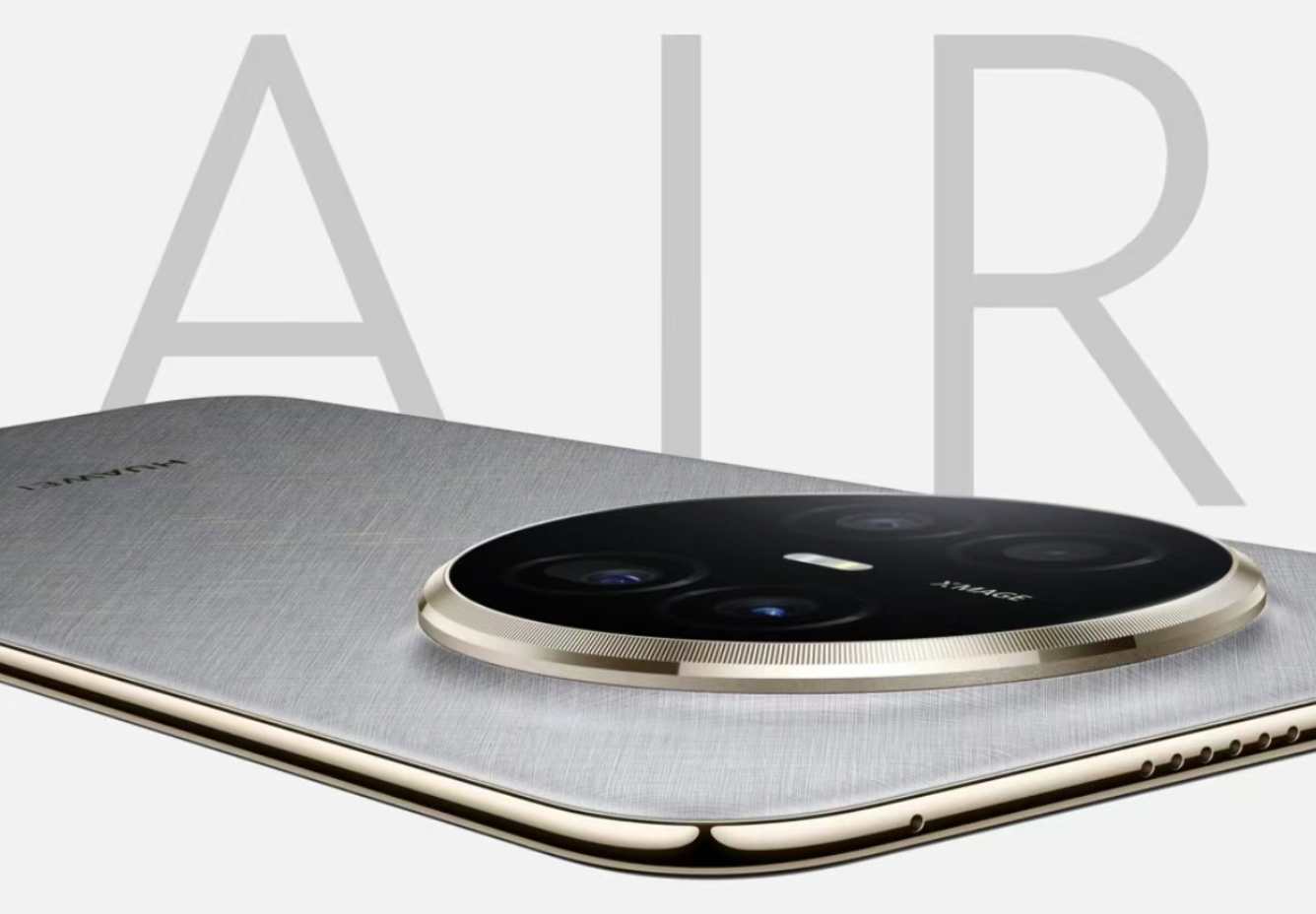
Core Viewpoint - The smartphone industry is witnessing a trend towards ultra-thin devices, with major brands like Samsung and Apple launching models with thicknesses between 5.5mm and 6mm, aiming to differentiate in a saturated market [1] Group 1: Market Trends - Huawei has launched the Mate 70 Air, which is 6.6mm thick and weighs 208g, featuring a 6500mAh silicon-carbon battery and a 7-inch screen, priced from 4199 yuan [1] - The iPhone Air initially saw strong pre-sale demand, selling out in five minutes, but has since experienced a decline in sales [1][2] Group 2: Product Challenges - Apple is reducing iPhone Air production by approximately 1 million units due to underwhelming market performance, despite the overall iPhone 17 series exceeding expectations [2] - The iPhone Air's reliance on eSIM technology has limited its appeal in the Chinese market, where traditional SIM cards are preferred [2][3] Group 3: Industry Insights - The pursuit of extreme thinness in smartphones has led to compromises in practical features, such as battery life and camera capabilities, with the iPhone Air featuring only a single 48MP main camera [2] - Samsung's Galaxy S25 Edge, another ultra-thin model, faced similar issues, leading to its discontinuation after five months due to problems like reduced battery life and overheating [3] - Innovations such as silicon-carbon batteries and advanced thermal management are being explored to balance performance, pricing, and thinness in future smartphone designs [3]
One Month With the iPhone Air: Design and Function Really Can Coexist | All Things Mobile
CNET· 2025-10-20 12:01
Camera Performance - The iPhone Air features a single 48-megapixel wide-angle rear camera with 2x optical quality zoom, a departure from multi-camera systems [3] - Image quality is comparable to other new Apple phones, excluding zoom capabilities, but may not meet expectations for a phone in the $1,000 price range [5] Battery Life - The iPhone Air's battery generally lasts a full day with moderate use on Wi-Fi, with approximately 20% remaining at bedtime [7] - Heavier usage with cellular data may require recharging during the day [7] - A 30-minute charging test showed the phone going from dead to 54% [10] - Wireless charging increased the battery from 17% to 64% in 30 minutes [10] Durability - The iPhone Air is durable and can withstand bending forces without damage [13] - Some users reported scratches potentially caused by material transfer from old in-store MagSafe displays, which can be wiped away [14] Audio Quality - The iPhone Air has a single speaker at the top, unlike the dual stereo speakers found in other iPhones [16] - The single speaker can result in lopsided audio when watching videos, which is a notable shortcoming given the phone's price [16][17]

苹果“最薄iPhone”开售后大卖 但据称今年将减产
Jing Ji Guan Cha Wang· 2025-10-18 02:23
Core Points - Apple has launched pre-orders for its "thinnest iPhone," the iPhone Air, which sold out within five minutes of availability on October 17, with over 330,000 reservations on JD.com by the afternoon of the same day [2] - The iPhone Air was initially scheduled for release on September 19 but faced delays due to regulatory cooperation in China, with official sales now confirmed [2] - Mizuho Securities reported that Apple plans to cut iPhone Air production by 1 million units due to poor sales, while increasing production of all other models by 2 million units, raising the total production forecast for the iPhone 17 series from 88 million to 94 million units by early 2026 [2] Industry Insights - Samsung has reportedly canceled plans for the successor to its Galaxy S25 Edge, which was intended to compete with the iPhone Air, due to low sales [3]