Grok 聊天机器人

Search documents
刚刚,马斯克回应AI核心团队集体跑路:6天流失9人,高中毕业生火速上位
Sou Hu Cai Jing· 2026-02-12 01:50
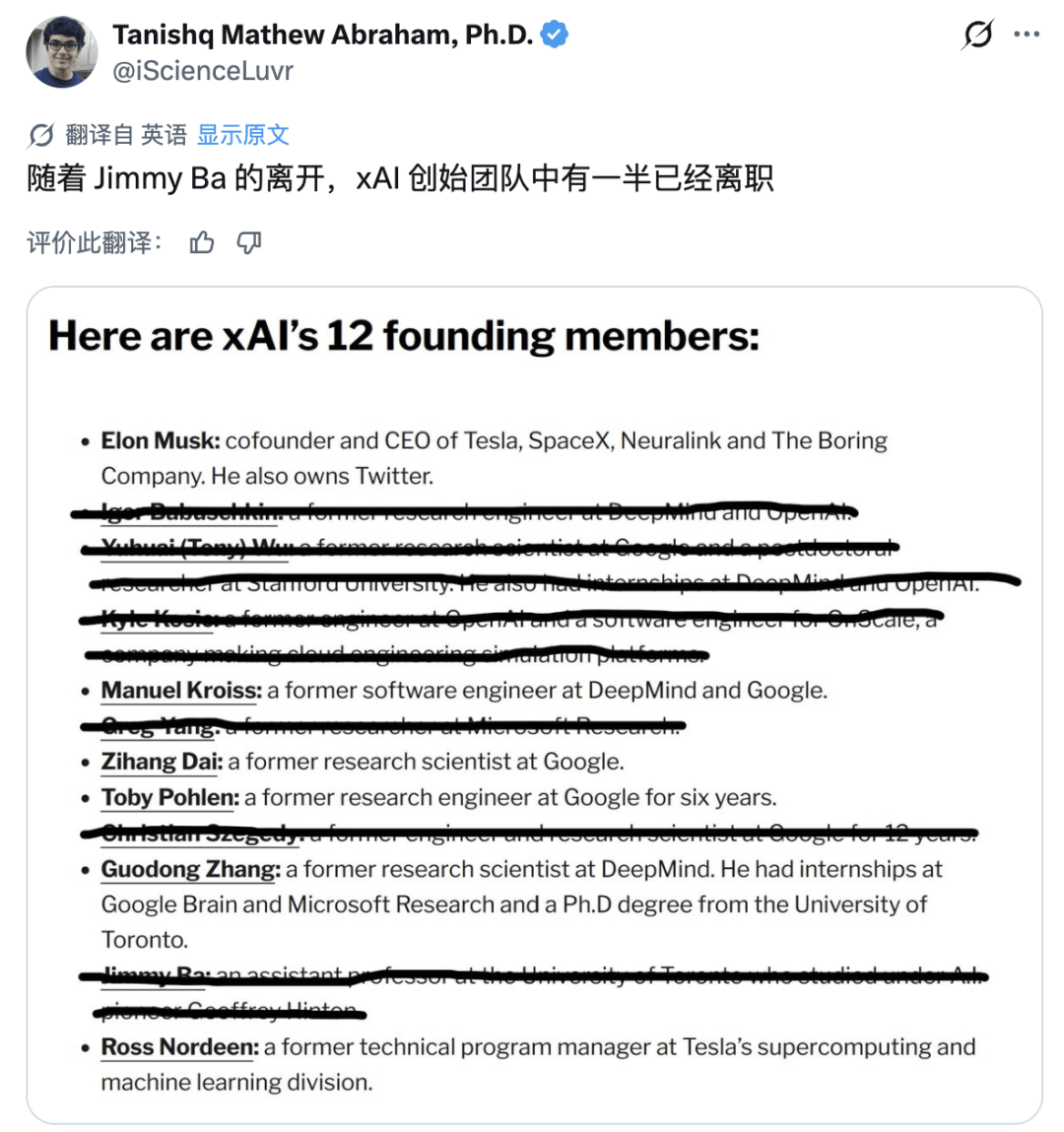
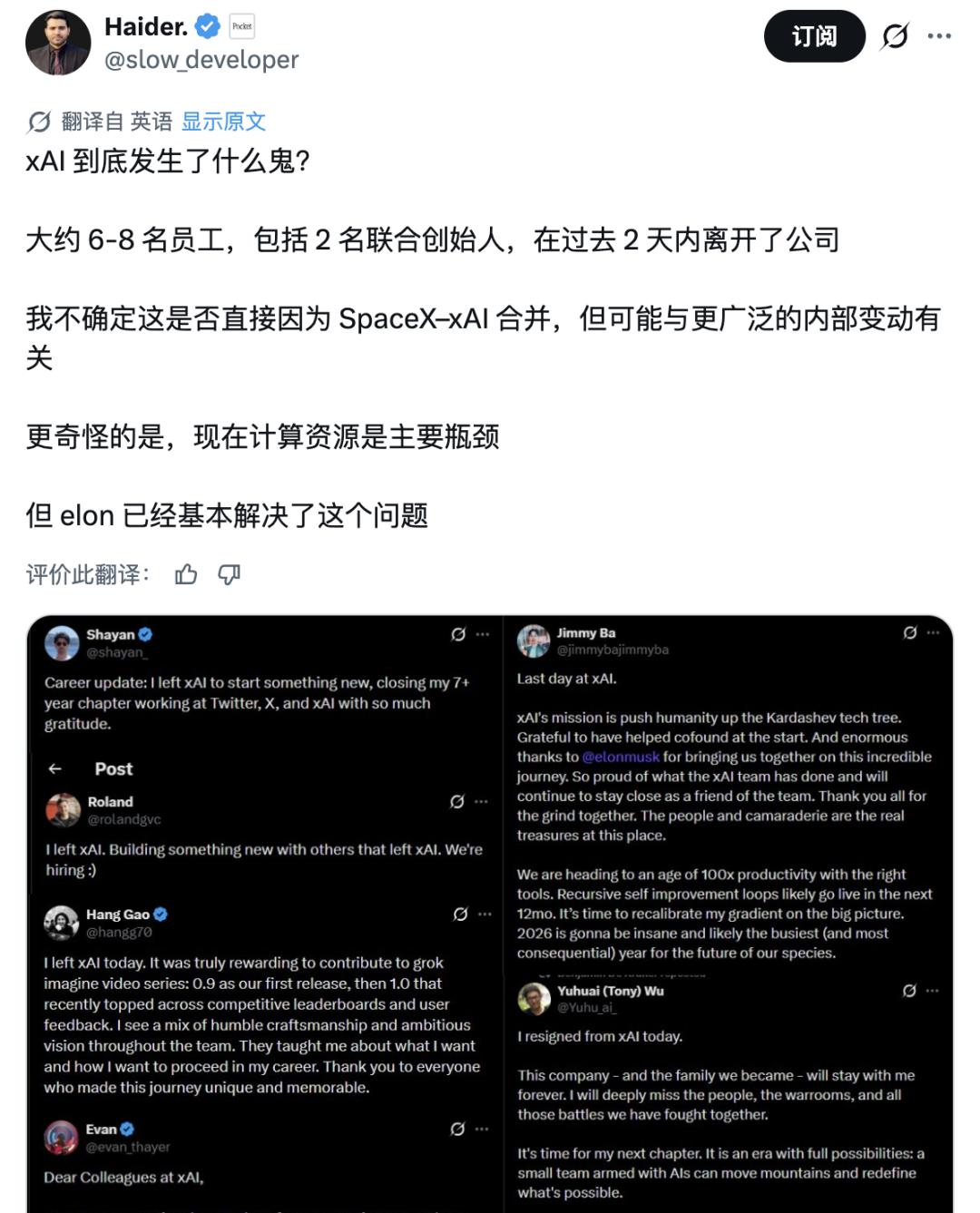
Core Insights - A significant personnel shakeup occurred at Elon Musk's AI company xAI, with half of the 12 co-founders leaving and at least 9 engineers publicly announcing their departures, indicating potential issues within the company's direction or team fit [1][3][17] - Musk attributed the departures to necessary organizational restructuring for scaling, suggesting that some employees were not suited for the company's later stages [3][5] - The departures coincided with a sensitive period for xAI, as the company faced regulatory scrutiny and challenges related to its data center expansion, which may have contributed to the leadership changes [8][17] Company Developments - The restructuring led to the formation of four new teams within xAI, focusing on different areas such as Grok chatbot, programming AI models, image generation, and a project humorously named Macrohard [9][10][13] - Notable departures included co-founders Tony Wu and Jimmy Ba, who expressed their desire to pursue new ventures, indicating a potential shift in vision among the leadership [6][8] - Musk's ambitious plans include establishing a factory on the Moon to produce AI satellites, aiming to leverage superior computational power and energy resources compared to Earth-based data centers [15][17] Market Context - xAI's recent merger with SpaceX has resulted in a combined valuation of $1.25 trillion, with plans for an IPO as early as June, highlighting the strategic importance of the merger in advancing Musk's vision for a "space data center" [15][17] - The rapid turnover of key personnel in a competitive AI landscape raises concerns about the company's stability and reputation, despite Musk's claims of unmatched speed in execution [17]

刚刚,马斯克回应AI核心团队集体跑路
3 6 Ke· 2026-02-12 01:35
Core Viewpoint - The recent mass departure of key personnel from Elon Musk's AI company xAI raises questions about the company's direction and organizational structure, as multiple co-founders and engineers have left, citing various reasons for their departure [1][4][12]. Group 1: Personnel Changes - xAI experienced a significant shake-up with the departure of 12 co-founders and at least 9 engineers, including key figures Tony Wu and Jimmy Ba, who announced their exits on social media [1][4]. - The reasons for leaving varied, with some employees expressing a desire to work in smaller teams or dissatisfaction with the direction of AI research, indicating potential misalignment with xAI's goals [4][6]. - The timeline of departures highlights a rapid succession of exits, with notable figures leaving between February 6 and February 10, suggesting a coordinated movement among staff [11]. Group 2: Organizational Restructuring - Musk described the departures as part of a necessary organizational restructuring to enhance efficiency as the company scales, implying that some employees may not have been suited for the company's evolving needs [6][8]. - The restructuring led to the formation of four new teams focused on different aspects of AI development, including a chatbot, programming AI models, image generation, and a project humorously named "Macrohard" [13][16]. Group 3: Future Plans and Innovations - Musk's ambitious plans include establishing a factory on the Moon to produce AI satellites, which would leverage lunar resources for enhanced computational power [17][20]. - The merger between xAI and SpaceX, valued at $1.25 trillion, aims to create a "space data center," further intertwining the two companies' futures [20][22]. - Musk's vision extends beyond the Moon, with aspirations for self-sustaining cities and exploration of other star systems, indicating a long-term strategy that may influence xAI's direction [18][20].
国防军工行业空天系列:SpaceX宣布收购xAI,擘画太空数据中心愿景
GF SECURITIES· 2026-02-05 04:48
Investment Rating - The report provides a "Buy" rating for the defense and aerospace industry, indicating an expected performance that will exceed the market by more than 10% over the next 12 months [8]. Core Insights - SpaceX announced the acquisition of AI startup xAI to integrate rocket, satellite internet, AI technology, and social media platforms, aiming to create a comprehensive technology chain from Earth to space. This move is driven by the increasing demand for advanced AI systems, which is approaching the limits of traditional ground data centers [4]. - SpaceX plans to deploy up to 1 million satellites to establish an orbital data center system, which will support large-scale AI reasoning and data center applications. The satellites will be positioned in orbits ranging from 500 to 2000 kilometers, utilizing solar energy to reduce reliance on traditional batteries [4]. - The report emphasizes the importance of focusing on leading companies in the supply chain, such as Ruichuang Micro-Nano, Minshida, Guobo Electronics, and others, as potential investment opportunities [4]. Summary by Sections Industry Overview - The report highlights the significant advancements in commercial aerospace, particularly through SpaceX's integration of AI and satellite technology, marking a new phase in global satellite internet [4]. Company Valuation and Financial Analysis - Key companies in the industry are evaluated with their respective stock prices, expected earnings per share (EPS), price-to-earnings (PE) ratios, and return on equity (ROE) metrics. For instance, Ruichuang Micro-Nano has a target price of 141.24 CNY per share for 2025E, with an EPS of 2.40 CNY and a PE ratio of 47.05 [5]. - Other companies such as Minshida and Guobo Electronics also show promising valuations, with target prices of 54.34 CNY and 75.93 CNY respectively, indicating strong growth potential [5]. Investment Recommendations - The report suggests a focus on key players in the rocket, satellite, and terminal sectors, recommending investments in companies like Ruichuang Micro-Nano, Minshida, and Guobo Electronics, among others, due to their strong market positions and growth prospects [4].
中银晨会聚焦-20260204-20260204
Bank of China Securities· 2026-02-03 23:30
Group 1: Computer Industry Insights - The merger of SpaceX and xAI aims to integrate space and AI businesses, with plans for an IPO before June 2026 [8] - Meta plans to significantly increase its capital expenditure to $115-135 billion in 2026, nearly doubling its 2025 spending, to support AI infrastructure and core business growth [9][10] - Nvidia, Amazon, and Microsoft are negotiating to invest up to $60 billion in OpenAI, with SoftBank considering an additional $30 billion investment [10] Group 2: Real Estate Industry Insights - New home transaction area saw a significant increase, with a 15.9% month-on-month rise and a 240.1% year-on-year increase, attributed to the previous year's Spring Festival [14] - Second-hand home transaction area decreased by 5.6% month-on-month but increased by 793.2% year-on-year, indicating a shift in market dynamics [14] - The inventory of new homes increased by 0.2% month-on-month but decreased by 5.9% year-on-year, with a de-stocking cycle of 17.6 months [15] Group 3: Investment Recommendations - The report suggests focusing on companies related to space computing, such as Jiayuan Technology and Shanghai Huanxun, due to the anticipated growth from the SpaceX and xAI merger [11] - In the real estate sector, it is recommended to pay attention to firms with stable fundamentals in core cities, such as China Resources Land and China Merchants Shekou, as well as smaller firms that have shown significant breakthroughs in sales and land acquisition [18]
xAI员工赢麻了!全员换股SpaceX,AI月烧10亿美元终于有人兜底了
AI前线· 2026-02-03 07:36
Core Viewpoint - The acquisition of xAI by SpaceX is a strategic move to create a vertically integrated innovation engine that combines space technology with AI capabilities, aiming to revolutionize computational power in space [2][8][20]. Group 1: Acquisition Details - SpaceX plans to acquire xAI, with a combined company valuation of approximately $1.25 trillion, significantly higher than xAI's current valuation of around $250 billion [2][20]. - The acquisition is structured as an all-stock transaction, with xAI investors receiving 0.1433 shares of SpaceX for each share of xAI they hold [2]. - The merger aims to leverage SpaceX's resources and infrastructure to enhance xAI's capabilities and address its financial challenges [19][21]. Group 2: Strategic Vision - Elon Musk envisions a future where AI computation costs are lowest in space, driven by the unique advantages of the space environment, such as reduced cooling needs and abundant solar energy [9][12]. - The integration of xAI into SpaceX is expected to transform AI from merely a model development company into a system-level capability that supports various applications, including communication and real-time world modeling [19][23]. - Musk's ambition includes deploying a significant number of satellites to create a "orbital data center system," which could provide vast computational power [12][20]. Group 3: Financial Implications - SpaceX's revenue is projected to grow from $8.7 billion in 2023 to $15 billion by 2025, with a significant portion coming from Starlink [21]. - The merger is seen as a way to stabilize xAI's financial situation, which has been characterized by high cash burn rates and ongoing losses [21][22]. - The combined entity is positioned to present a more compelling narrative for an upcoming IPO, potentially raising up to $50 billion with a valuation target of $1.5 trillion [20][23].
马斯克AI帝国痛失大将,就像“送孩子上大学后开车离开”
Hu Xiu· 2025-08-15 02:32
Core Insights - xAI, founded in 2023 by Elon Musk, has rapidly developed cutting-edge AI models comparable to OpenAI and Google DeepMind within two years [1] - Igor Babuschkin, co-founder of xAI, recently announced his departure to establish a new venture focused on AI safety [2][16] Group 1: Igor Babuschkin's Background - Igor Babuschkin previously worked at Google DeepMind from 2017 to 2020, contributing to the groundbreaking AlphaStar project, which defeated top players in StarCraft II [3][4] - He was also a member of the OpenAI technical team, involved in key research prior to the launch of ChatGPT [4] - Babuschkin has a background in physics, having pursued a master's degree at Dortmund University and spent time at CERN [6][8] Group 2: Achievements at xAI - xAI faced skepticism initially, but Babuschkin and Musk aimed to achieve the seemingly impossible by building a top-tier AI company from scratch [10] - Within just 120 days, xAI constructed an AI supercomputer cluster in Memphis, Tennessee, dedicated to data processing and training the Grok chatbot [12] - The team overcame significant technical challenges during the supercomputer's construction, with Musk personally involved in troubleshooting [13][14] Group 3: Future Endeavors - Babuschkin plans to launch Babuschkin Ventures, a venture capital firm focused on AI safety and autonomous intelligent systems [16] - He emphasizes the importance of ensuring AI is developed safely for future generations, inspired by discussions with experts in the field [16] Group 4: xAI's Current Challenges - xAI's Grok chatbot has faced controversies, including outputs reflecting Musk's personal views and generating extreme content, raising questions about the company's AI safety capabilities [17][18][20] - Despite these challenges, Babuschkin's departure appears amicable, with Musk and other xAI colleagues expressing gratitude for his contributions [20][25]

马斯克宣布推出文本转视频AI工具Grok Imagine
Sou Hu Cai Jing· 2025-08-03 01:21
Core Insights - Elon Musk announced the launch of Grok Imagine, an AI text-to-video generator, on the X social platform, describing it as the "AI version of Vine" [1][3] Group 1: Product Features - Grok Imagine is a new feature of the Grok chatbot, currently in testing, allowing users to input text descriptions to generate video clips with sound effects [3] - The service is gradually being made available to SuperGrok subscribers, who pay $30 per month, while any user on the X platform can apply to join a waiting list [3] Group 2: Historical Context - Vine was a popular short video service that allowed users to create and upload 6-second videos, launched in 2012 and acquired by Twitter, before being shut down in 2017 [3] - Musk revealed that they have recently discovered Vine video archives, previously thought to be deleted, and are working on restoring user access to these videos [3]