Grok5

Search documents
马斯克再次预言!2026年AGI降临,中国电力领跑,AI算力竞争
Sou Hu Cai Jing· 2026-01-19 13:11
Group 1 - Elon Musk predicts that AGI will fully arrive by 2026, emphasizing that the true battleground for AI is not chips but electricity, with China poised to dominate this hidden arena [3][13] - Musk states that the future currency will essentially be watts, indicating that electricity will become the hard currency of the future, surpassing Bitcoin and gold [4][13] - The construction of xAI's Colossus2 data center in Tennessee took a year just to secure power access, highlighting the challenges in electricity infrastructure [6][11] Group 2 - China is expected to have three times the power generation capacity of the U.S. by 2026, giving it a significant advantage in the upcoming "power race" [13][44] - The U.S. electrical grid is largely outdated, with many systems dating back to the 1960s and 70s, making it difficult to keep pace with China's advancements [11][44] - The efficiency of AI in processing information poses a threat to white-collar jobs, as AI can perform tasks traditionally requiring human intelligence at a much lower cost and higher efficiency [15][17] Group 3 - Musk predicts that by 2040, the number of robots will reach 10 billion, leading to a significant reduction in production costs and a potential shift towards universal basic income [25][44] - The upcoming Grok5 AI model from xAI will have a parameter count of 60 trillion, indicating a significant leap in AI capabilities [27][29] - Neuralink plans to launch large-scale production of brain-machine interfaces by 2026, which could revolutionize human interaction with technology [31][44] Group 4 - The transition to a new technological era will require individuals to acquire hard skills related to AI collaboration and renewable energy, as traditional educational pathways may become obsolete [40][44] - Companies must focus on electricity, computing power, models, and applications to remain relevant in the face of rapid technological change [46][48] - The urgency of preparing for the impending changes is emphasized, as the countdown to AGI has already begun [48]



马斯克科技生态链系列之国内深度绑定解码
Xin Lang Cai Jing· 2026-01-13 11:54
Core Insights - Elon Musk's technological ecosystem is rapidly evolving, integrating six key industries: commercial space (SpaceX), brain-machine interfaces (Neuralink), humanoid robots (Optimus), autonomous driving (FSD), artificial intelligence (X AI), and hyperloop (The Boring Company) [1][19] - The technological advancements and mass production efforts are reshaping the global tech industry landscape and presenting certain investment opportunities for domestic companies in related sectors [1][19] Group 1: Deep Binding from Components to System Integration - The production of Tesla's Optimus robot is set to begin, with a target of 100,000 units by 2026, but the localization rate of core components is still below 30%, leaving significant market penetration opportunities for domestic high-barrier companies [21] - Top Group is a core supplier for Tesla's vehicle chassis and has entered the testing phase for Optimus's rotating joints, showcasing strong system integration capabilities [21] - Greentech Harmonic is a leading global harmonic reducer supplier, with its Y series products passing Tesla's extreme conditions test and set to deliver 10,000 units by 2025 [21] - Sanhua Intelligent Control is leveraging its experience in automotive thermal management to quickly enter the robot electromechanical actuator and thermal management systems market [21] - Mingzhi Electric is one of the few companies capable of mass-producing hollow cup motors, which are critical for achieving human-like dexterity in robotic hands [21] Group 2: L5 Autonomous Driving - Hardware and Software Integration - Tesla's Full Self-Driving (FSD) is accelerating its rollout, with deep participation from the Chinese supply chain in hardware iteration and software adaptation [22] - Desay SV is supplying the autonomous driving domain controller to Tesla's North American supply chain, with FSD-related orders expected to reach 1.2 billion yuan by 2025 [22] - Lianchuang Electronics is the main supplier of vehicle-mounted lenses for Tesla's HW4.0, holding approximately 60% market share [22] - Zhongke Chuangda, as a leading vehicle operating system provider, is continuously optimizing AI model efficiency on Tesla's platform to support smooth FSD software deployment [22] Group 3: Technical Collaboration - Patent Sharing and Capability Building - Some companies, while not supplying on a large scale, are building long-term barriers through technical cooperation [23] - Changying Precision has reached a cross-licensing agreement with Tesla regarding flexible sensors, enhancing its technological moat in robot perception [23] - Sanhua Intelligent Control is jointly developing actuator efficiency optimization solutions to enhance Optimus's operational endurance [24] - Yanshan Technology's pure vision autonomous driving solution aligns closely with FSD technology, currently supporting Tesla indirectly through international Tier 1 suppliers [24] Group 4: Potential Tracks - From Benchmarking to Entry - In commercial space, Chinese companies are gaining certification in key areas as SpaceX's Starlink accelerates deployment [25] - Tongyu Communication has developed a microwifi antenna module that has passed SpaceX interface certification, expected to supply 60% of Starlink's dedicated modules starting Q3 2025 [25] - Xinyi Communication's subsidiary is the exclusive supplier of high-frequency connectors for Starlink ground terminals, with annual revenue projected to exceed 1.5 billion yuan [25] - Blue Arrow Aerospace is the only domestic company mastering reusable liquid oxygen-methane rocket technology, establishing a significant barrier in low-cost, high-frequency launches [25] Group 5: Brain-Machine Interfaces - Complementary Paths for Cooperation - Neuralink focuses on invasive methods, while Chinese companies are exploring non-invasive and clinical translation paths [30] - Yanshan Technology's non-invasive BCI technology complements Neuralink's approach, indicating clear cooperation potential if Neuralink expands into consumer products [30] - Hanwei Technology's subsidiary has developed ultra-flexible sensors that are cost-competitive and have entered the international supply chain [30] - Sanbo Brain Science is the only private hospital in China with clinical implantation qualifications for brain-machine interfaces, performing over 30,000 surgeries annually [30] Group 6: Indirect Competition and Strategic Value - Some companies, while not directly collaborating with Musk's ecosystem, play a crucial role in national projects, fulfilling "domestic substitution" responsibilities [31] - China Satellite and China Satcom are leading the "Star Network Project," competing with Starlink in satellite manufacturing and operations [31] - Cambrian is developing AI chips that meet xAI's computational needs, presenting potential entry points if Tesla or xAI expands their supply chains [32] - Four-dimensional Map has over 60% market share in high-precision mapping, providing core positioning services for Tesla in China [33] Group 7: Selection Logic for "Invisible Champions" - Companies that meet the criteria of "technological leadership, low public recognition, high industry relevance, and sustained innovation barriers" have emerged as key players [34] - Mingzhi Electric is a global leader in hollow cup motors, essential for dexterous robotic hands [34] - Sanhua Intelligent Control is a dual leader in thermal management and actuators, validated by Tesla [34] - Top Group excels in system integration from chassis to joint assembly, showcasing deep binding [34] - Industrial Fulian is the largest server manufacturer globally, benefiting directly from xAI's computational expansion [34] - Blue Arrow Aerospace is the only player in liquid oxygen-methane reusable rockets, shaping the future of China's commercial space industry [34]
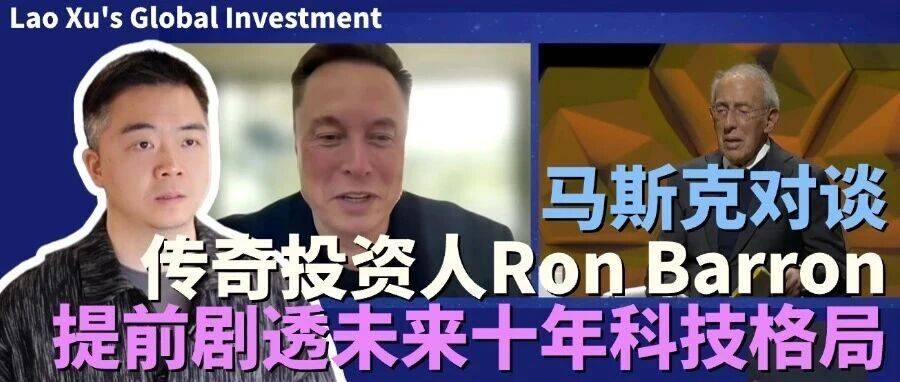
哈佛老徐:2026年是AI格局重排之年,英伟达很快会反超谷歌
老徐抓AI趋势· 2025-12-28 08:45
Core Viewpoint - The article discusses the evolving landscape of AI and computing power, emphasizing that while Google's TPU has gained temporary advantages, NVIDIA's upcoming Blackwell architecture is expected to reclaim dominance in the AI model training space by 2026 [4][6][7]. Group 1: Google's TPU and NVIDIA's Blackwell - Google's TPU has recently outperformed competitors with its Gemini 3 model, leading to speculation about the end of NVIDIA's dominance [6]. - Gavin Baker argues that the advantages of Google's TPU are temporary, as NVIDIA's Blackwell architecture has not yet been fully deployed [6]. - The transition from NVIDIA's H200 to Blackwell represents a significant leap in performance, necessitating extensive infrastructure changes [6][7]. Group 2: Predictions for 2026 - The first quarter of 2026 is predicted to be a turning point in the AI landscape, with the potential emergence of leading models utilizing Blackwell technology [7][8]. - Key indicators to watch for include the performance of Grok5, advancements from OpenAI and Anthropic, and the widening gap between companies that adopt Blackwell technology and those that do not [8][10]. Group 3: AI Monetization - Contrary to the belief that AI is a high-cost, low-return investment, the first non-tech Fortune 500 company has begun to see quantifiable benefits from AI implementation [11][12]. - The case of CH Robinson illustrates how AI can enhance revenue by automating processes rather than merely reducing costs, shifting the focus from cost-cutting to revenue generation [12][16]. Group 4: Future of Computing Infrastructure - The article posits that future computing power centers should be established in space rather than on Earth, due to advantages in energy efficiency, cooling costs, and transmission speeds [18][19][21]. - Space-based computing centers can leverage constant solar energy, reduce cooling costs, and utilize faster transmission methods, making them a more optimal solution for future AI needs [19][21][23]. Group 5: Strategic Implications - Companies like Tesla, SpaceX, and xAI are positioned to create a synergistic ecosystem that enhances their competitive advantages in AI and computing [27]. - The article suggests that the next two decades will be defined by AI and computing advancements, with significant opportunities for those who can recognize and act on emerging trends [28][30].


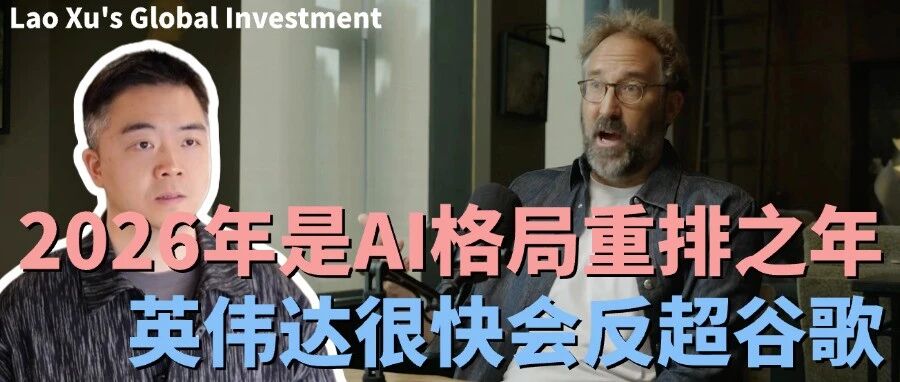
哈佛老徐:马斯克对谈82岁传奇投资人Ron Barron,提前剧透未来十年科技格局
老徐抓AI趋势· 2025-12-07 09:55
Core Insights - The conversation between Ron Barron and Elon Musk provides a preview of the technological landscape for the next decade, emphasizing AI as the central theme across Musk's ventures [4] - Musk's long-term vision revolves around three key elements: a 100GW space computing cluster, a 6 trillion parameter model named Grok5, and a significant increase in Tesla's sales over the next three years [4] Group 1: OpenAI's Origins - Musk played a pivotal role in the establishment of OpenAI, driven by concerns over AI's potential risks to humanity, contrasting Google's profit-driven approach with OpenAI's non-profit and open-source model [9][12] - Musk's initial contributions included funding, strategic direction, and assembling a key team, which laid the foundation for OpenAI's development [10][12] Group 2: xAI's Strategy - Musk identifies three critical components for AI companies: talent, computing power, and data, asserting that these are the core elements that drive success in the AI sector [14][15] - The Colossus2 computing cluster, developed by xAI, aims to be the first in history to exceed 1GW of computing power, setting a new standard in the industry [17] Group 3: Grok5 Model - Grok5 is projected to be a groundbreaking model with 6 trillion parameters, doubling the capacity of its predecessor, Grok4, and is expected to launch in the first quarter of next year [20] - The model's capabilities are anticipated to significantly enhance visual understanding, multi-modal processing, and tool utilization, which are essential for advancements in autonomous driving and robotics [22] Group 4: Space Computing Vision - Musk proposes the construction of a 100GW computing center in space to address the limitations of terrestrial power and cooling, leveraging SpaceX's capabilities for transportation [23] - This ambitious plan could revolutionize AI model training, enabling unprecedented advancements in capabilities and efficiency [25] Group 5: Tesla's Future - Tesla plans to manufacture its own AI chips to meet the anticipated surge in demand from its electric vehicles and robots, aiming for performance comparable to Nvidia's offerings at a fraction of the cost [26][27] - Musk's confidence in Tesla's growth over the next three years is underscored by the urgency to establish in-house production capabilities, reflecting a significant strategic commitment [27] Group 6: Competitive Landscape - Musk's ability to execute on ambitious projects is highlighted as a key differentiator, positioning him at the forefront of the AI and technology competition [29] - The future of AI is seen as a critical battleground, with companies needing to accelerate their efforts in AI and chip development to remain competitive [34]
马斯克Grok5挑战人类电竞高手 约战《英雄联盟》顶尖战队
Sou Hu Cai Jing· 2025-11-26 02:41
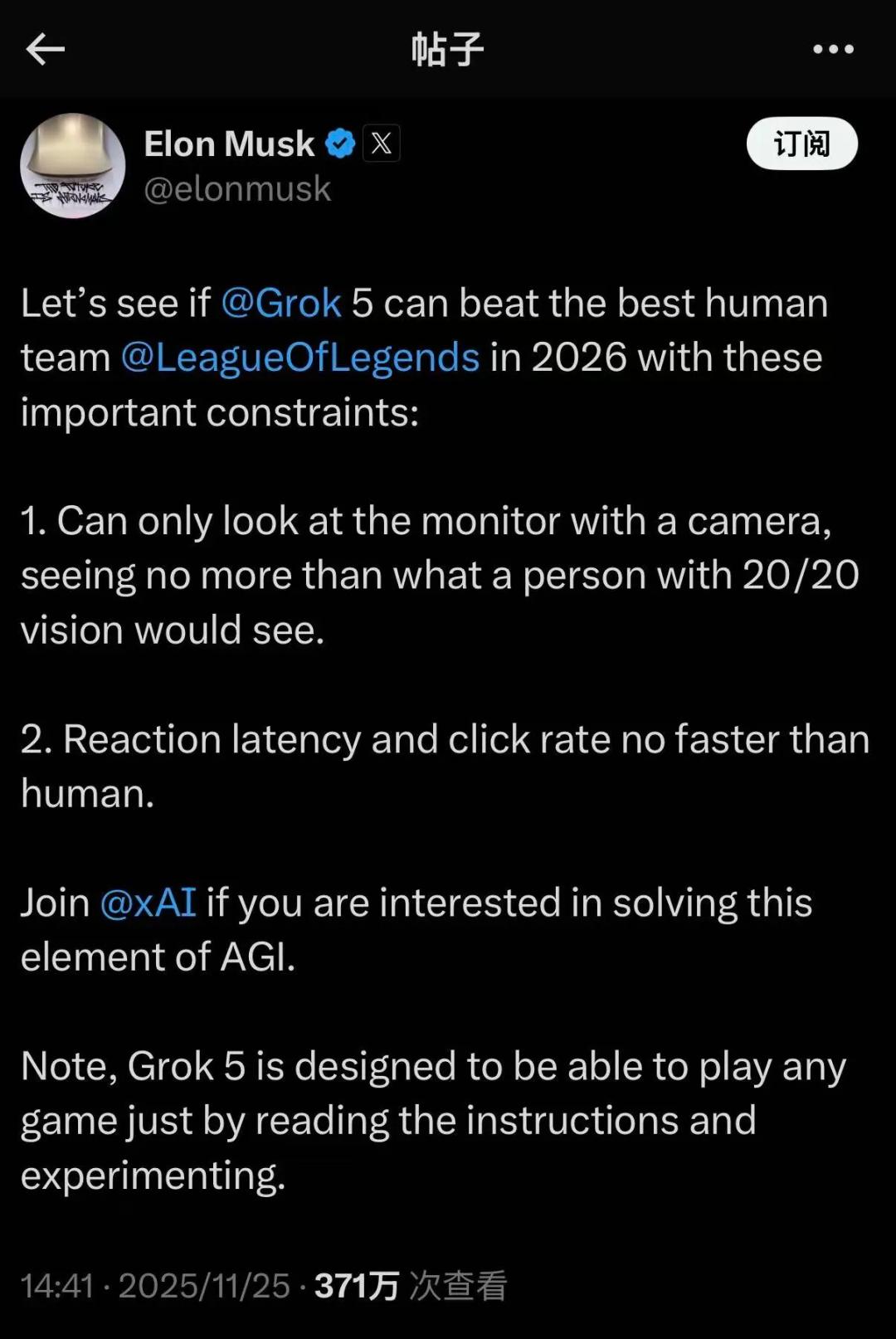
Core Insights - Elon Musk announced that xAI's AI model Grok5 will challenge top human teams in League of Legends in 2026, aiming to test its general capabilities under specific constraints [1][2] - Grok5 will operate under two main constraints: it can only observe the display through a camera with a field of view limited to that of a normal human (20/20 vision), and its response time and click rate must not exceed human levels [1] - The model's release has been postponed to 2026, with a parameter scale of 6 trillion, which is double that of Grok3 and Grok4, and approximately 30 times that of leading models [1] Company Developments - xAI is expanding its supercomputing nodes in Memphis, planning to increase the number of GPUs to 1.5 million to support the training needs of Grok5 [1] - Grok5's design aims to master any game by reading instructions and conducting experiments, marking a significant test for its general intelligence capabilities [1][2] Industry Context - The choice of League of Legends as a challenge is linked to the game's high demands for strategic planning, real-time decision-making, and multi-character collaboration, which are seen as critical benchmarks for assessing artificial general intelligence (AGI) [2] - Previous AI breakthroughs in competitive gaming have relied on algorithm optimization and hardware advantages, but Grok5's challenge will focus on validating its human-like cognitive and decision-making abilities under simulated human physiological constraints [2]
马斯克约战 Faker?Grok5 要带着大的来了
3 6 Ke· 2025-11-25 12:15
Core Points - Elon Musk has issued a challenge for Grok5 to compete against top human teams in League of Legends, marking a potential first for AI in a 5v5 format [1] - The challenge is seen as a promotional strategy for the upcoming release of Grok5 in January 2026 [3][10] Group 1: Challenge Details - Grok5 will face two significant limitations: it can only view the game through a camera with a vision equivalent to 20/20, and its reaction time and clicking speed cannot exceed that of humans [3] - These restrictions aim to push Grok5 to evolve in cognitive and reasoning capabilities rather than relying on speed and direct data reading [3] Group 2: Required Capabilities for Grok5 - Grok5 must possess advanced end-to-end visual perception, enabling it to recognize over 160 game elements amidst complex visuals [5] - It needs to demonstrate strong interference resistance, managing various visual noise factors such as resolution changes and screen reflections [5] - The AI must exhibit multimodal learning and generalization, allowing it to adapt strategies based on game updates without extensive retraining [7] - Strategic prediction and game theory capabilities are essential for Grok5 to compete effectively against seasoned human players [7] Group 3: Implications and Future Outlook - The challenge is viewed as a significant test for Grok5's potential in achieving general artificial intelligence (AGI) [10] - Musk's comments suggest a competitive spirit in the AI landscape, hinting at Grok's ambition to rank first among large models by January [10]
AI芯片独角兽一年估值翻番,放话“三年超英伟达”,最新融资53亿超预期
3 6 Ke· 2025-09-18 08:15
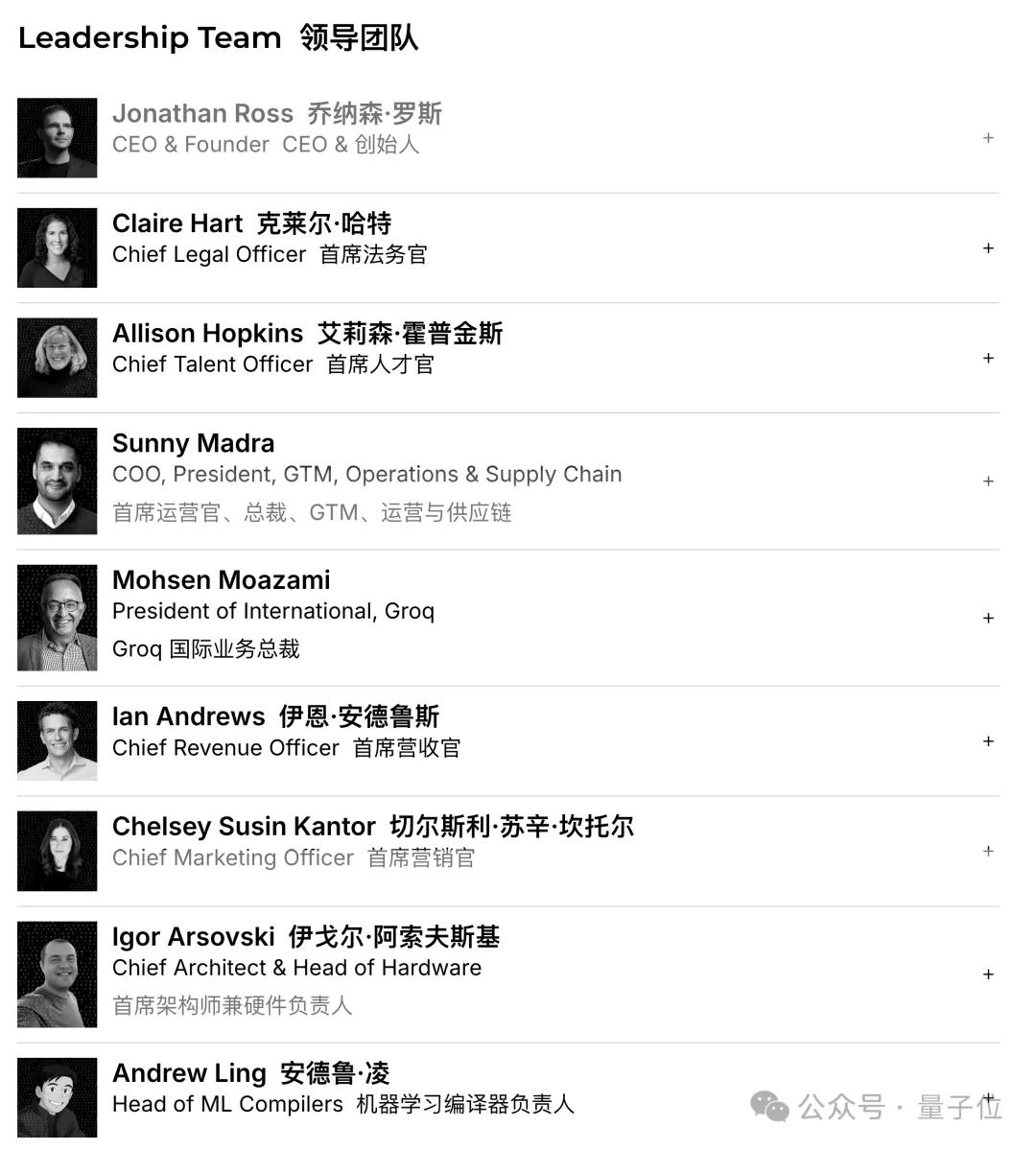
Core Insights - Groq, an AI chip startup, has raised $750 million in funding, exceeding the initial expectation of $600 million, bringing its valuation to $6.9 billion [1][4][5] - The company's valuation has more than doubled in one year, from $2.8 billion to $6.9 billion [2][4][5] - Groq's CEO, Jonathan Ross, emphasizes the importance of inference in the current AI era and the company's goal to build infrastructure for high-speed, low-cost delivery [3][4] Funding and Valuation - The recent funding round was led by Disruptive, with significant investments from BlackRock, Luminus Management, and Deutsche Telekom Capital Partners, among others [6][9] - Groq has raised over $3 billion in total funding to date [6][9] Company Strategy and Operations - Groq plans to use the new funds to expand its data center capacity, including announcing its first Asia-Pacific data center location this year [7][9] - The company has received requests from clients for higher capacity that it currently cannot meet [8] Product and Technology - Groq is known for producing AI inference chips optimized for pre-trained models, with a founding team that includes many former Google TPU engineers [9][10] - The company has developed the world's first Language Processing Unit (LPU) and refers to its hardware as "inference engines," designed for efficient AI model operation [12] - Groq claims its inference acceleration solution is ten times faster than NVIDIA's GPUs while reducing costs to one-tenth [14]
马斯克回应特斯拉将解散Dojo超算团队;硅谷AI人才战的最终赢家?Anthropic吸引力远高于Meta和谷歌丨AIGC日报
创业邦· 2025-08-09 01:09
Group 1 - Microsoft CEO Satya Nadella announced the launch of GPT-5 across multiple platforms, including Microsoft 365 Copilot, GitHub Copilot, and Azure AI Foundry, highlighting significant breakthroughs in reasoning, coding, and chatting capabilities [2] - Elon Musk warned that OpenAI could potentially "swallow" Microsoft, indicating a competitive landscape in AI development [2] - xAI's co-founder Yuhuai Wu claimed that despite a smaller team, they are leading in many aspects, with Grok4 being the first unified model globally and outperforming GPT-5 in benchmark tests [2][2] - Musk expressed support for xAI's progress and mentioned that Grok5 is expected to launch by the end of the year [2] Group 2 - Reports indicated that Tesla is disbanding its Dojo supercomputer team and will rely on external technology partners like NVIDIA, AMD, and Samsung, with Musk stating that focusing resources on different AI chip designs is not practical [2] - Research from SignalFire revealed that Anthropic's engineering team is expanding at a rate significantly higher than competitors, with a hiring-to-loss ratio of 2.68, compared to OpenAI's 2.18, Meta's 2.07, and Google's 1.17 [2]