
IGBT产品

Search documents
时代电气(03898) - 海外监管公告-株洲中车时代电气股份有限公司2025年年度报告摘要
2026-03-27 11:35
香港交易及結算所有限公司及香港聯合交易所有限公司對本公告的內容概不負責, 對 其 準 確 性 或 完 整 性 亦 不 作 任 何 聲 明,並 明 確 表 示 概 不 就 因 本 公 告 全 部 或 任 何 部 分內容而產生或因依賴該等內容而引致的任何損失承擔任何責任。 (於中華人民共和國註冊成立的股份有限公司) (股份代號:3898) 海外監管公告 本 公 告 乃 由 株 洲 中 車 時 代 電 氣 股 份 有 限 公 司(「本公司」)根 據 香 港 聯 合 交 易 所 有 限 公司證券上市規則第13.10B條而作出。 茲 載 列 本 公 司 在 上 海 證 券 交 易 所 網 站 刊 登 之《株 洲 中 車 時 代 電 氣 股 份 有 限 公 司2025 年 年 度 報 告 摘 要》,僅 供 參 閱。 承董事會命 公司代码:688187 公司简称:时代电气 株洲中车时代电气股份有限公司 2025 年年度报告摘要 株洲中車時代電氣股份有限公司 董事長 李東林 中國,株洲,二零二六年三月二十七日 於本公告日期,本公司董事長兼執行董事為李東林;副董事長兼執行董事為尚敬; 其他執行董事為徐紹龍;獨立非執行董事為李開 ...

电子元器件,涨声一片!
是说芯语· 2026-01-29 06:47
Price Increases in Semiconductor and Electronic Components Industry - Resonac announced a price increase of 30% for copper-clad laminates and adhesive films starting March 1, 2026, due to tight supply and rising costs of raw materials and labor [3] - Nanya Plastics will raise prices for all CCL products and PP by 8% starting November 20, 2025, citing increases in international copper prices and raw material costs [7] - TrendForce predicts that the average capacity utilization rate of global 8-inch wafer foundries will rise to 85%-90% in 2026, leading to price increases of 5%-20% for wafer foundry services across the board [8] - TSMC plans to increase prices for advanced technology nodes (5nm, 4nm, 3nm, 2nm) by 8%-10%, with a 50% increase for 2nm wafers starting in 2026 [10] - SMIC has implemented a price increase of approximately 10% for certain capacities [11] - Several packaging and testing companies have begun raising prices, with increases nearing 30% due to high demand and full capacity utilization [13] Memory Chip Price Increases - Samsung has raised NAND flash prices by over 100% and plans to increase server DRAM prices by 60%-70% in Q1 2026 [15] - SK Hynix is also raising server DRAM prices by 60%-70% and has negotiated significant price increases for LPDDR memory used in iPhones, approaching 100% [16] - Micron has announced a general price increase of approximately 20% across its product lines [17] - NAND flash wafer prices increased by over 10% in December 2025, with SSD prices rising by 15%-20% [24] Passive Components Price Adjustments - Various passive component manufacturers, including Yageo and Panasonic, have announced price increases for capacitors and resistors ranging from 8% to 30% [26][31] - ROHM Semiconductor has raised prices for thick film resistors by 8%-20% [38] - Multiple manufacturers are adjusting prices due to rising raw material costs and supply chain pressures [47] Power Devices and Other Electronics - Huazhong Microelectronics confirmed price increases for certain IGBT products due to rising copper and raw material costs [48] - Several semiconductor companies, including Jiangxi Tianyi and Wuxi Zongxiang Technology, have raised prices for specific products by 10%-20% [82][83] CPU and GPU Price Trends - AMD and Intel are planning to increase server CPU prices by up to 15% due to high demand from large enterprises [62] - NVIDIA and AMD are expected to raise GPU prices in early 2026, with multiple price adjustments anticipated throughout the year [79]



沛城科技改道北交所 营收三连降 曾遭比亚迪“退单”
Xin Lang Cai Jing· 2026-01-05 09:24
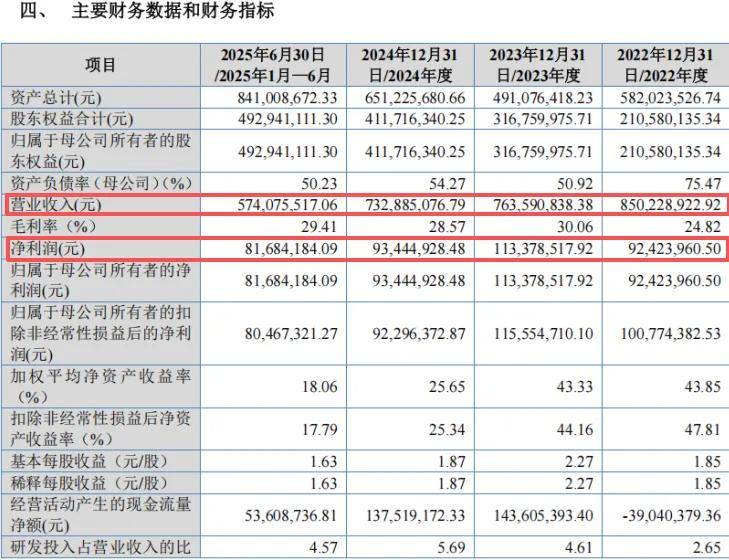
Core Viewpoint - The Beijing Stock Exchange (BSE) will review Shenzhen Peicheng Electronic Technology Co., Ltd. for listing on December 30, 2025, after the company shifted its listing plan from the Shanghai Stock Exchange due to industry cycle fluctuations and tightened regulations [1][3]. Financial Performance - Peicheng's revenue declined from 850 million yuan in 2022 to 733 million yuan in 2024, while net profit remained relatively stable, fluctuating between 92 million yuan and 93 million yuan during the same period [1][3]. - In the first three quarters of 2025, Peicheng experienced a significant turnaround, with revenue increasing by 76.49% year-on-year to 886 million yuan and net profit doubling to 129 million yuan [1][3]. Customer Dynamics - The sales proportion to BYD decreased from 10.62% in 2022 to 5.19% in 2024, and BYD's ranking among Peicheng's top five customers fell from first to fourth place [2][4]. - By the first half of 2025, BYD was no longer among Peicheng's top five customers [2][4]. Listing Conditions and Advantages - The BSE's listing standards, which require a minimum market value of 200 million yuan, net profits of at least 15 million yuan in the last two years, and an average return on equity of no less than 8%, align better with Peicheng's current scale [2][4]. - The average listing time on the BSE was 339 days in 2024, the shortest among major exchanges, providing Peicheng with a potential opportunity to capitalize on market conditions [2][5]. Future Outlook - As 2026 approaches, the ability of Peicheng, described as a "small giant" in the lithium battery sector, to convert its technological advantages into sustainable profitability will be a key factor for market evaluation [2][5].

突击分红7750万募6200万补流的沛城电子:退货后BYD已退出前五大客户
Xin Lang Cai Jing· 2025-12-29 03:28
Core Viewpoint - The company, Shenzhen Peicheng Technology Co., Ltd., initially aimed for an IPO on the Shanghai Stock Exchange but shifted its target to the Beijing Stock Exchange, facing scrutiny from regulators regarding its performance volatility, customer stability, and the necessity of its fundraising projects [4][20]. Group 1: Performance and Customer Stability - The company's revenue from battery power control systems showed a "V-shaped" curve from 2022 to the first half of 2025, with figures of 389 million, 472 million, 401 million, and 372 million respectively, highlighting a significant 123.78% year-on-year increase in the first half of 2025 after a decline of 15.13% the previous year [5][21]. - The company attributed its revenue fluctuations to "downstream market demand rotation," with European market subsidy reductions leading to weak demand, while emerging markets in Africa and Southeast Asia surged [5][21]. - The customer base is heavily skewed towards small and medium-sized clients, with 90% of customers generating less than 1 million in sales, contributing only 15.93% of revenue in the first half of 2025 [6][22]. Group 2: Fundraising Projects and Feasibility - The company plans to raise 500 million yuan, with 294 million allocated for enhancing battery and power control system production capacity, 144 million for a research and development center, and 62 million for working capital [30]. - The transition to a fully self-produced model raises questions about the rationale, as the average processing costs of outsourced production are similar to in-house production [30]. - Concerns exist regarding the ability to absorb increased production capacity, with projected sales of 964,400 units in 2024, significantly lower than the anticipated capacity of 1.9935 million units post-fundraising [30][31]. Group 3: Legal and Compliance Issues - The company faced a lawsuit from Changfeng Intelligent Technology Co., Ltd. over product quality issues, resulting in a compensation payment of approximately 2.08 million yuan [11][27]. - There were compliance issues related to exceeding environmental assessment production capacity, which the company claims has been rectified [11][27]. - The company has also experienced a decline in procurement from major clients, notably BYD, whose purchases dropped from 90.3 million yuan in 2022 (10.62% of revenue) to 38.1 million yuan in 2024 (5.19% of revenue) [25].
沛城科技IPO:被比亚迪”退单”,6200万元募资额用于补流遭质疑
Sou Hu Cai Jing· 2025-12-29 02:55
Core Viewpoint - Shenzhen Peicheng Technology Co., Ltd. is preparing for its IPO on the Beijing Stock Exchange, aiming to raise 500 million yuan, with significant concerns regarding its declining revenue and the impact of the BYD order cancellation incident on its growth potential [1][2]. Financial Performance - Peicheng Technology's revenue from 2022 to 2024 showed a downward trend, with figures of 850 million yuan, 764 million yuan, and 733 million yuan respectively, indicating a decline of 4.02% and 17.58% in 2024 compared to the previous year [2]. - Net profit for the same period was 92 million yuan, 113 million yuan, and 93 million yuan, reflecting a similar decline in profitability [2]. - The company's total assets increased from approximately 582 million yuan in 2022 to about 841 million yuan by June 2025, while shareholder equity rose from 210 million yuan to nearly 493 million yuan during the same period [3]. Customer Dynamics - The BYD order cancellation incident in 2023 led to a significant drop in sales to BYD, from 90 million yuan in 2022 to 38 million yuan in 2024, causing its ranking among Peicheng's customers to fall from first to fourth [4][7]. - Another major customer, Keda Technology, also saw a decline in sales from 60 million yuan in 2022 to 46 million yuan in 2023, eventually dropping out of the top five customers by 2024 [7]. IPO Fundraising and Allocation - The IPO plans to allocate 294 million yuan for battery and power control system capacity enhancement, 144 million yuan for R&D center construction, and 62 million yuan for working capital [1][9]. - The 62 million yuan for working capital has raised concerns about potential "money-grabbing" allegations, as it is perceived as excessive financing [8][10]. Operational Metrics - Peicheng Technology's liquidity ratios indicate strong short-term solvency, with current ratios of 1.55, 2.85, and 2.69 over the past three years [10]. - The company reported cash dividends totaling 77.5 million yuan from 2022 to 2023, which covers the planned working capital raise of 62 million yuan [10]. Future Projections - The company anticipates a conservative revenue growth of 10% over the next three years, projecting a working capital shortfall of approximately 102.7 million yuan, with the current fundraising plan addressing part of this need [11][13].
“荷兰政府违反了2001年与中国签署的协定”
Xin Lang Cai Jing· 2025-12-22 21:13
Core Viewpoint - The ongoing dispute between the Dutch government and Wingtech Technology over the control of Nexperia has raised significant concerns regarding global semiconductor supply chains, with potential implications for the automotive and consumer electronics industries [1][3]. Group 1: Company Actions and Statements - Wingtech Technology's Chairman, Yang Mu, claims that the Dutch government's actions against the company violate the 2001 investment protection agreement signed with China, describing the intervention as premeditated and unjustified [1][5]. - Yang Mu emphasized that the global supply chain disruptions are directly caused by the Netherlands' unexpected supply cut, warning that the longer the dispute continues, the more it will damage the global industry chain and investor confidence [1][5]. - Wingtech has submitted a dispute notice on October 15, 2023, and may consider international arbitration if the issue is not resolved within six months, potentially seeking compensation for an estimated valuation of $8 billion for Nexperia [5]. Group 2: Industry Impact - The internal conflict at Nexperia has raised alarms about the stability of key component supplies for the automotive and consumer electronics sectors, with Honda warning of temporary factory shutdowns due to chip shortages [3][4]. - The dispute has led to a split within Nexperia, creating two parallel operational systems: one controlled by the Dutch court-appointed management in Europe and the other aligned with Wingtech in China, resulting in a supply chain deadlock [4][10]. - Nexperia (China) has secured wafer production capacity for IGBT products from local suppliers, indicating a shift in sourcing strategies amid the ongoing dispute [9]. Group 3: Government and Legal Proceedings - The Dutch government has faced criticism for its handling of the situation, with parliamentary members questioning the foresight of the economic affairs minister, who claimed the decision was well-considered [6][7]. - The Dutch court has temporarily suspended the CEO position of Wingtech's founder, Zhang Xuezheng, and transferred shareholder voting rights to a court-appointed trustee, further complicating the situation [3][4]. - The Dutch media has criticized the government's intervention as reckless, highlighting the diplomatic tensions that have arisen as a result of the actions taken against Wingtech [8].


闻泰董事长发声:荷兰政府违反了与中国签署的投资保护协定
Guan Cha Zhe Wang· 2025-12-22 16:01
Core Viewpoint - The ongoing dispute between the Dutch government and Wingtech Technology over the control of Nexperia has raised significant concerns about global chip supply stability, particularly affecting the automotive and consumer electronics sectors [3][4]. Group 1: Company Actions and Statements - Yang Mu, the chairperson of Wingtech Technology, stated that the Dutch government's actions against the company violate the 2001 investment protection agreement signed with China, characterizing the intervention as premeditated and unjustified [1][5]. - Yang emphasized that the global supply chain is at risk unless Wingtech regains control of Nexperia, warning that each day of the dispute further damages the global industry chain and investor confidence [1][5]. - Wingtech has submitted a dispute notice on October 15, 2023, indicating that if the issue is not resolved within six months, the company may consider international arbitration to seek damages, potentially amounting to an estimated valuation of $8 billion for Nexperia [5]. Group 2: Industry Impact - The internal conflict at Nexperia has led to concerns about the stability of key component supplies for the automotive and consumer electronics industries, with Honda warning of temporary shutdowns in some factories due to chip shortages [3][4]. - The dispute has resulted in a split within Nexperia, creating two parallel operational systems: one controlled by the Dutch court-appointed management in Europe and the other aligned with Wingtech in China, leading to a supply chain deadlock [4]. - Nexperia (China) has begun securing local suppliers for IGBT products, indicating a shift in strategy to ensure supply continuity amid the ongoing dispute [9]. Group 3: Government and Legal Developments - The Dutch government has faced criticism for its handling of the situation, with parliamentary discussions highlighting the perceived recklessness of the intervention and questioning the government's foresight regarding potential Chinese countermeasures [6][7]. - The Dutch Ministry of Economic Affairs has refrained from commenting on the case, stating that it has been handed over to the corporate court, while the court's decision to suspend Wingtech's CEO has been met with legal challenges [6][8]. - The Chinese Ministry of Commerce has called for negotiations to restore control and supply chain stability, attributing the root cause of the issue to improper administrative intervention by the Dutch government [10].

荷兰不给晶圆,闻泰有新招
Guan Cha Zhe Wang· 2025-12-20 00:43
Core Viewpoint - The ongoing conflict between Nexperia Netherlands and its Chinese subsidiary continues, with Nexperia China securing local silicon wafer supplies to meet its production needs for IGBT power chips by 2026, despite the Dutch parent company halting wafer supplies to the Chinese entity [1][2]. Group 1: Supply Chain Developments - Nexperia China has locked in silicon wafer supply with local companies to cover its IGBT chip production needs for 2026, ensuring continued production of these critical components for electric vehicles and industrial equipment [1]. - The Chinese subsidiary is accelerating the validation of wafer products from Wingsky Semi to ensure "sufficient supply" [1]. - Nexperia China has informed local distributors that its wafer inventory is low due to the lack of supply from the Netherlands, leading to a potential chip shortage for local automotive companies [4][5]. Group 2: Legal and Corporate Governance Issues - Nexperia Netherlands has stated there is currently "no communication" with its Chinese subsidiary and has no intention of negotiating a short-term solution to restore chip supply [2]. - The legal battle over control of Nexperia continues, with the Chinese subsidiary and its parent company engaged in ongoing litigation, and the Dutch court's decision to strip control from the subsidiary is being appealed [6][7]. - Nexperia China has accused Nexperia Netherlands of obstructing business operations and misleading the public regarding their relationship and supply chain issues [7]. Group 3: Market Impact - The revenue from IGBT products is projected to account for only about 0.1% of Nexperia's total revenue in 2024, indicating limited financial impact from the current supply chain disruptions [2]. - The chip shortage has already affected major automotive manufacturers, including Honda, which has had to temporarily halt production in some factories due to the lack of chips [5].
比亚迪订单缩水,“小巨人”IPO改道,补流合理性存疑
IPO日报· 2025-11-29 12:04
Core Viewpoint - The article discusses the recent inquiries from the Beijing Stock Exchange regarding Shenzhen Peicheng Technology Co., Ltd. (Peicheng Technology) and its collaboration stability with BYD, highlighting the company's declining revenue and profit trends, as well as its changing IPO targets [1][13]. Group 1: Company Overview - Peicheng Technology, established in 2004, specializes in value-added services for circuit boards in the lithium battery new energy sector and is recognized as a national high-tech enterprise [6]. - The company serves notable clients including BYD, Desay Battery, and Yiwei Lithium Energy, focusing on the development, production, and sales of battery-related products [6]. Group 2: Financial Performance - During the reporting period from 2022 to 2024, Peicheng Technology's revenue decreased from 850 million yuan to 733 million yuan, while net profit fluctuated, peaking at 113 million yuan in 2023 before dropping to 93 million yuan in 2024 [7]. - The comprehensive gross profit margins for the same period were 24.82%, 30.06%, and 28.57%, with changes attributed to shifts in product revenue structure [8]. Group 3: Legal and Quality Issues - In 2021, Peicheng Technology faced a lawsuit from Shaanxi Changfeng Intelligent Technology Co., Ltd. over product quality issues, resulting in a compensation ruling of 2.08 million yuan against Peicheng [10]. - In 2023, the company had to return IGBT products to BYD due to quality concerns, but it did not incur any compensation costs as the responsibility was attributed to Huazhong Microelectronics [11][12]. Group 4: Customer Dependency and Sales Decline - Sales to BYD significantly decreased, with revenues of 90 million yuan in 2022 dropping to 37.97 million yuan in 2024, leading to a decline in sales contribution from 10.62% to 5.19% [17]. - BYD's ranking as a customer for Peicheng Technology fell from the largest in 2022 to the fourth largest in 2024, with a new top customer being Xinnengda [18]. Group 5: IPO and Fundraising - Peicheng Technology initially aimed for an IPO on the Shanghai Stock Exchange but shifted its target to the Beijing Stock Exchange in December 2024 [2]. - The company plans to raise 500 million yuan through an IPO, with 62 million yuan allocated for working capital, raising questions about the necessity of this funding given its strong cash flow and liquidity [22][24]. Group 6: Cash Flow and Financial Health - The company reported a significant improvement in cash flow, with net cash flow from operating activities turning from a negative 39 million yuan in 2022 to positive amounts exceeding 140 million yuan in 2023 and 2024 [24]. - Peicheng Technology's cash reserves at the end of 2024 reached 230 million yuan, with no short-term debt, indicating strong solvency and liquidity [24].
华润微:IGBT产品快速增长 功率器业务稳中向好
Quan Jing Wang· 2025-11-04 09:37
Core Viewpoint - The event "Capital 'X' Gravity, Innovation High Ground - Wuxi's First Investor Reception Day for Listed Companies" was successfully held, highlighting the positive outlook for the IGBT product market and the company's growth potential [1] Company Summary - Huazhong Microelectronics (688396) reported that its IGBT product structure and market structure are continuously optimizing, leading to rapid year-on-year growth [1] - The company expressed a cautiously optimistic attitude towards maintaining growth in the power device market, which has entered a stable and improving phase [1]
