Instant Checkout

Search documents
OpenAI revamps shopping experience in ChatGPT after struggling with Instant Checkout offering
CNBC· 2026-03-24 17:32
Core Insights - OpenAI is launching a new shopping experience within ChatGPT to enhance product discovery and comparison after the previous Instant Checkout feature did not succeed [1][2] Product Discovery and Features - Users can now find products by uploading images or describing items along with criteria such as budget and preferences, leading to more visual results for comparison [1] - The new update improves speed, relevance, and product coverage, making results more current and useful [2] Transition from Instant Checkout - OpenAI has shifted focus from Instant Checkout, which allowed direct purchases from retailers, due to challenges in onboarding merchants and providing accurate product data [3][4] - The initial version of Instant Checkout lacked flexibility, prompting OpenAI to allow merchants to use their own checkout processes while enhancing product discovery [4] Merchant Integration - Merchants can now share product feeds and promotions with OpenAI, ensuring their products are fully represented in ChatGPT [5] - Retailers such as Target, Sephora, and Nordstrom are already supporting the new product discovery experience [5] Custom Apps and Enhanced Control - Merchants interested in deeper integrations can develop custom apps within ChatGPT, a feature introduced at OpenAI's annual developer conference [6] - Triggering an app within the chatbot provides companies with more control over customer experience and transaction processes [7] Collaborations and Upgrades - Walmart has introduced an in-app ChatGPT service that supports linking, loyalty, and payments [7] - Shopify is upgrading the shopping experience in ChatGPT, allowing merchants to connect their storefronts and complete purchases via an in-app browser [7]


OpenAI's first crack at online shopping stumbled. It's preparing for the next wave
CNBC· 2026-03-20 17:18
Core Insights - OpenAI is shifting its e-commerce strategy from Instant Checkout to dedicated apps within ChatGPT, allowing users to complete purchases on retailers' websites, which enhances control over the customer experience [2][4][14] Group 1: OpenAI's Strategy Shift - OpenAI's initial Instant Checkout feature faced challenges, leading to a pivot towards dedicated retail apps to improve transaction processes [2][4] - The company aims to enhance product discovery and search capabilities within ChatGPT, areas where it has seen user adoption [3][4] - Analysts suggest that OpenAI underestimated the complexities of enabling transactions, raising questions about the readiness of shopping bots [3][4] Group 2: Retailer Partnerships and Challenges - Retailers like Etsy, Walmart, and Shopify are adapting to OpenAI's new approach, with Walmart confirming plans to integrate its Sparky AI assistant into ChatGPT [15][16] - The onboarding process for merchants has proven difficult, with only about 30 Shopify merchants available via Instant Checkout and Walmart offering around 200,000 products [10] - Retailers are expected to gain more control over the shopping experience and data collection through the new app-based model [17][22] Group 3: Market Competition - Competitors like Google are enhancing their shopping platforms, introducing features that OpenAI has yet to fully implement, such as real-time product data and multi-item cart additions [6][19] - OpenAI's new app-based approach may facilitate partnerships with larger retailers like Amazon, which has recently invested significantly in OpenAI [22][23] - Despite the challenges, analysts believe that the AI shopping landscape is still evolving, with no clear leader yet established [25]

eBay禁止AI智能体自动购物丨合规周报(第223期)
2 1 Shi Ji Jing Ji Bao Dao· 2026-01-26 05:31
Group 1: AI Security Discussions - During the Davos World Economic Forum, AI security was highlighted as a core technological risk facing enterprises, with concerns about the rapid proliferation of AI Agents impacting deployment rhythms [2] - EY's Raj Sharma emphasized the need for industrial-grade security systems for AI agents, which currently lack clear identity and tracking mechanisms, contrasting with traditional IT systems [2] - KPMG's Tim Walsh noted that AI has become a central topic in cybersecurity discussions, leading some companies to slow down AI project progress to ensure security systems are robust before data migration [2] Group 2: Meta's AI Role Restrictions - Meta Platforms announced a temporary ban on underage users accessing its AI roles while updating its platform, although they can still use the AI assistant with age-appropriate protections [3] - This decision follows previous measures introduced in October to protect underage users from inappropriate content and sensitive topics [3] Group 3: eBay's Policy on AI Shopping - eBay updated its user agreement to prohibit third-party generative AI from interacting with its platform for automatic shopping without permission, effective February 20, 2026 [4] - This move comes as various AI companies have launched automatic shopping features, highlighting eBay's intent to control AI interactions on its platform [4] Group 4: Douyin's Account Recovery Efforts - Douyin's 2025 governance white paper revealed a 60% increase in the coverage of its "anchor health score" mechanism, with 370,000 accounts being indefinitely recovered for violations [5] - The AI model improved violation handling efficiency by 31%, leading to a 37% reduction in overall violation exposure [5] Group 5: OpenAI's Revenue Growth - OpenAI reported over $1 billion in new annual recurring revenue in the past month, entirely from its API business, marking a significant milestone for the company [6][7] - The growth is attributed to the API team's efforts, indicating a shift from a consumer subscription model to a comprehensive AI service provider [7] Group 6: Apple's Advertising Expansion - Apple confirmed the introduction of more advertising placements in App Store search results starting March 3, 2024, with plans to expand globally by the end of March [8] - This expansion aims to provide advertisers with more opportunities to reach users, as approximately 65% of app downloads occur after a search [8] Group 7: Vivo's AI Glasses Project Cancellation - Vivo has reportedly halted its AI glasses project, which had been in development for six months, due to concerns about differentiation in the current market [9] - Following the cancellation, Vivo will refocus its efforts on mixed reality (MR) technology [9]
当AI接管购物车,你的产品在ChatGPT里隐身了吗?
3 6 Ke· 2026-01-22 05:11
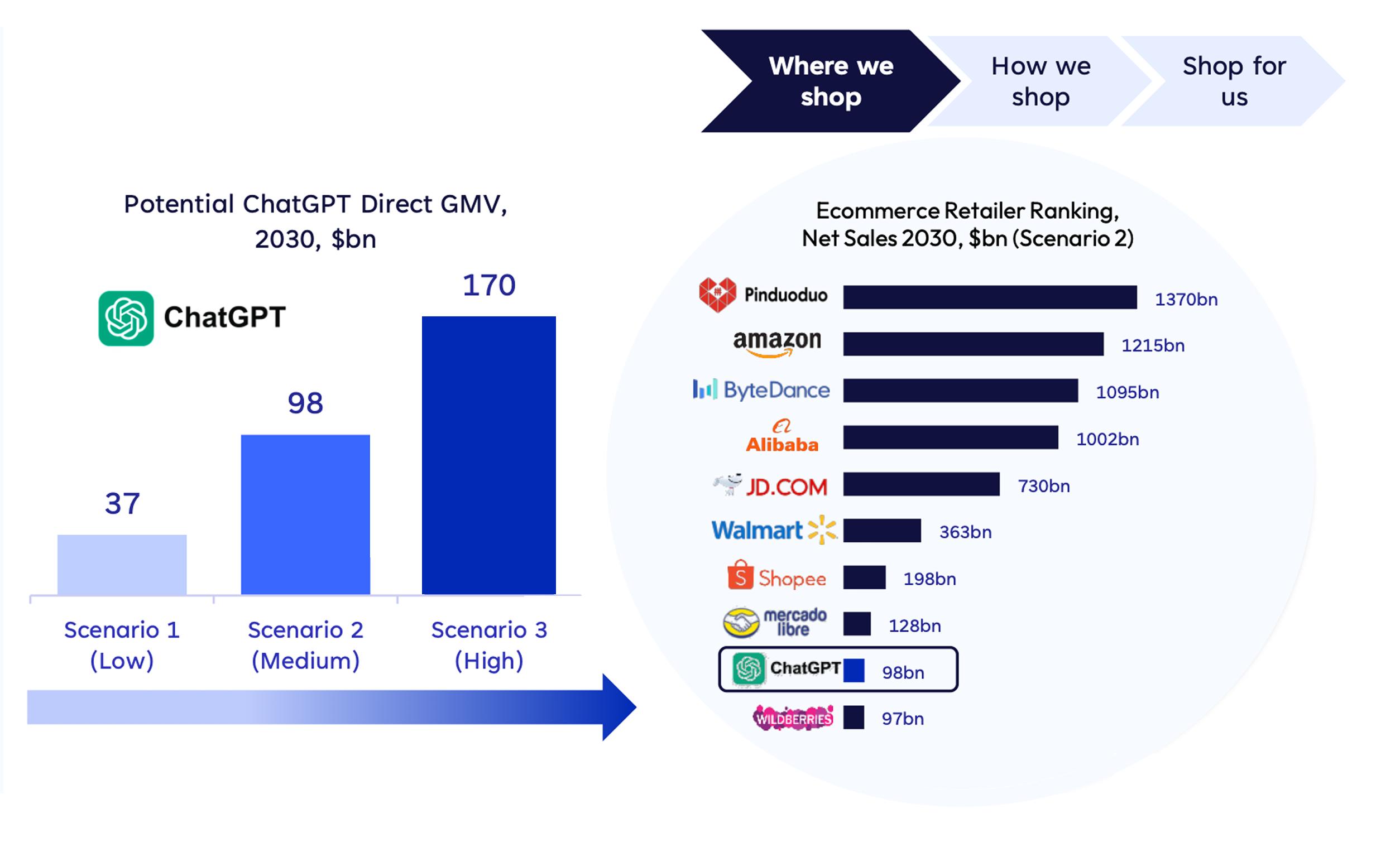
Core Insights - The article discusses the evolution of ChatGPT from a search tool to a potential transaction gateway in e-commerce, indicating a shift in consumer purchasing decision-making power towards AI agents [1][2] - The introduction of Instant Checkout by OpenAI allows users to complete purchases directly within ChatGPT, marking a significant change in the shopping experience [2] - The future growth paths for ChatGPT in e-commerce suggest it could become a major player, potentially reaching a Gross Merchandise Volume (GMV) of over $170 billion by 2030 [3] Group 1: Evolution of Shopping Experience - ChatGPT is transitioning from a search tool to a direct purchasing platform, allowing users to browse and buy products within the chat interface [2] - Major retailers like Target and Instacart are exploring ways to integrate full shopping experiences into ChatGPT, indicating a trend towards conversational commerce [2] Group 2: Future Growth Projections - Three potential growth scenarios for ChatGPT are outlined: 1. A conservative growth path where it becomes a significant traffic and recommendation source but does not disrupt existing platforms [4] 2. A moderate growth scenario where it competes with regional e-commerce giants, with 20% of transactions occurring within the chat [5] 3. A high growth scenario where it could rank among the top ten global e-commerce platforms, with 30% of transactions completed in conversation [6] Group 3: Shift in Product Discovery - The article highlights a shift in product discovery from traditional search engines to generative engines, emphasizing the need for brands to adapt their strategies to be recognized by AI [8] - Consumers are increasingly asking specific questions to AI rather than performing generic searches, which necessitates a new approach to product information [8] Group 4: Brand Strategy in the Age of AI - The rise of Agentic Commerce signifies that brands must now focus on optimizing for AI recommendations rather than traditional advertising methods [9] - Brands are encouraged to understand AI's recommendation logic and ensure product information consistency across platforms to enhance visibility [11] - Companies should prepare for the integration of AI as a retail channel and develop internal capabilities to leverage AI effectively [11]
After ChatGPT, Walmart Now Teams Up With Google Gemini To Introduce AI Shopping Tool For Faster Shopping - Walmart (NASDAQ:WMT)
Benzinga· 2026-01-12 09:16
Core Insights - Walmart has partnered with Google's AI platform, Gemini, to enhance product discovery and purchasing for customers [1][2] - The collaboration was announced at the National Retail Federation's Big Show and will initially launch in the U.S. before expanding internationally [2] - This partnership is part of Walmart's strategy to adapt to the increasing use of AI chatbots by consumers [3] Company Developments - Walmart's incoming CEO, John Furner, and Google CEO, Sundar Pichai, highlighted the significance of this collaboration in the retail sector [3] - Walmart previously collaborated with OpenAI's ChatGPT to introduce "Instant Checkout," allowing purchases through the AI chatbot [3] Industry Trends - The partnership signifies a broader trend of AI's growing influence in the retail industry, with AI becoming a crucial intermediary in shopping experiences [4] - Adobe reported an 805% year-over-year increase in AI-driven traffic, indicating the rising importance of AI tools in helping consumers find deals [4] Competitive Landscape - Microsoft has also launched a suite of "agentic AI" tools aimed at automating retail tasks, showcasing the competitive push towards AI integration in retail [5] - Walmart ranks in the 93rd percentile for quality and 74th percentile for momentum according to Benzinga's Edge Rankings, indicating strong performance metrics [5] Stock Performance - Over the past year, Walmart's stock has increased by 24.76%, closing at $114.53 after a 1.29% rise on the last trading day [6]


Google bolsters bet on AI-powered commerce with new platform for shopping agents
CNBC· 2026-01-11 15:00
Core Insights - Google aims to establish the Universal Commerce Protocol (UCP) as an industry standard for AI tools in retail, facilitating a unified shopping experience from discovery to payment [1][6] - The e-commerce sector is becoming a competitive arena for generative AI, with Google competing against OpenAI, Perplexity, and Amazon for consumer engagement [2] Group 1: Universal Commerce Protocol (UCP) - UCP is designed to allow retailers to utilize AI agents and systems without the need to develop their own tools, promoting efficiency and integration across various functions [1][6] - The protocol was co-developed with major companies like Shopify, Etsy, Wayfair, and Target, and will support a new checkout feature in Google's AI Mode or Gemini App [6] Group 2: Competitive Landscape - OpenAI has introduced Instant Checkout, enabling purchases through ChatGPT, which may compete with UCP [3] - Perplexity is collaborating with PayPal to facilitate direct purchases within its chat platform, indicating a trend towards integrated shopping experiences [4] - Amazon's "Shop Direct" feature allows consumers to browse and purchase items from other brands directly on its platform, showcasing its competitive strategy [5] Group 3: Consumer Engagement and Advertising - Google has launched a feature called Business Agent, enabling shoppers to interact with brands in a conversational manner, reflecting a shift towards conversational commerce [7] - The company is testing "Direct Offers," allowing retailers to provide unique discounts based on user intent, enhancing the advertising ecosystem [8]


Walmart teams up with Google's Gemini to make it easier for shoppers to find and buy products
CNBC· 2026-01-11 15:00
Core Insights - Walmart and Google are collaborating to integrate Google's AI assistant Gemini into Walmart's shopping experience, enhancing product discovery and purchasing for customers [1][2] - The partnership was announced at the National Retail Federation's Big Show, with plans for the feature to launch first in the U.S. before expanding internationally [2] - This collaboration is part of Walmart's broader strategy to adapt to changing consumer behaviors, particularly the increasing use of AI chatbots for shopping [3][4] Group 1: Partnership Details - The collaboration aims to create a seamless shopping experience that is more intuitive and personalized for customers [4] - Walmart previously partnered with OpenAI's ChatGPT to implement an "Instant Checkout" feature, allowing purchases directly through the AI chatbot [3] - Walmart's own AI chatbot, Sparky, is also part of its digital strategy to enhance customer engagement [4] Group 2: Strategic Implications - The shift towards AI-driven commerce is seen as a significant evolution in retail, with Walmart positioning itself as a leader in this transition [4] - Walmart's digital strategy is evolving to meet customers earlier in their shopping journey, leveraging AI to enhance product discovery [4] - The impact of AI on the workforce is a concern for Walmart, as it is the largest private employer in the U.S., with leadership acknowledging that AI will transform job roles across the company [5]

当ChatGPT开始“建群”和“带货”,AI还是要把超级平台走过的路再走一遍
3 6 Ke· 2025-12-29 04:18
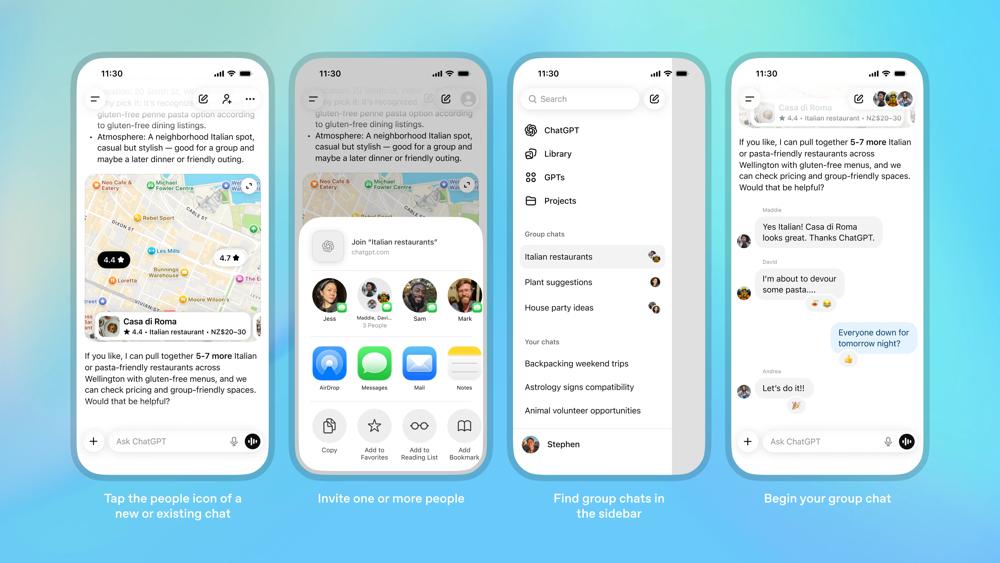
Core Insights - ChatGPT is evolving from a single conversation assistant to a comprehensive platform that includes social interaction, community collaboration, and shopping decision-making [1][2] Group 1: Social Interaction and Community Features - OpenAI launched a group chat feature in late 2025, allowing multiple users to interact with ChatGPT in a shared space, enhancing collaborative planning and decision-making [3] - The group chat feature ensures privacy by separating group conversations from personal chats, allowing users to invite 1 to 20 participants and customize group settings [3][5] - OpenAI introduced "Projects," a workspace for users to organize multiple chats and files, enabling continuous context retention and collaboration, particularly for enterprise and educational users [5][7] Group 2: Integration into Shopping Decisions - ChatGPT is increasingly used as a shopping advisor, with millions of users seeking product recommendations weekly [8] - OpenAI partnered with Shopify to access real-time product data, allowing ChatGPT to provide relevant product suggestions based on user queries [11] - The introduction of the "Instant Checkout" feature enables users to complete purchases directly within the chat interface, streamlining the shopping experience [13][14] Group 3: Platformization and Super App Development - OpenAI aims to establish ChatGPT as a central hub for information, communication, and consumption, competing with traditional giants like Google and Meta [17][18] - The platform integrates various functionalities, including chat, search, collaboration, and shopping, positioning ChatGPT as a potential "super app" similar to WeChat [19] - The platformization strategy enhances OpenAI's competitive edge by accumulating user data and third-party applications, creating a robust ecosystem [20] Group 4: Monetization Models and Valuation Logic - OpenAI is exploring diverse monetization strategies, including subscription services, enterprise API access, and potential revenue from app distribution and e-commerce commissions [21][22] - The company reported significant revenue growth, with approximately $4.3 billion in revenue in the first half of 2025, surpassing the total revenue of 2024 [21] - OpenAI's valuation reached $500 billion in October 2025, with aspirations for a trillion-dollar IPO, driven by the potential of ChatGPT as a new digital platform [25]
Amazon faces 'leader's dilemma' — fight AI shopping bots or join them
CNBC· 2025-12-24 12:00
Core Insights - Amazon is adapting to the rapid evolution of AI in e-commerce, with CEO Andy Jassy highlighting the potential of AI agents to transform shopping experiences [1][2] - The company is actively seeking to establish strategic partnerships in "agentic commerce" to maintain its competitive edge [2] - Amazon's defensive strategies include blocking external AI agents from accessing its website and pursuing legal action against competitors [8][9] Group 1: AI and E-commerce Trends - AI-powered shopping agents are emerging as a significant trend, with consulting firm McKinsey projecting that agentic commerce could generate $1 trillion in U.S. retail revenue by 2030 [4] - Morgan Stanley anticipates that nearly half of American shoppers will use AI agents by 2030, potentially adding $115 billion to U.S. e-commerce spending [10] - Current consumer behavior shows that a mid-single digit percentage of purchases begin through AI, with a significant increase expected over time [11] Group 2: Competitive Landscape - Competitors like Walmart and Shopify are adopting a "frenemy" strategy, partnering with AI companies while developing their own tools [6] - Amazon's recent legal actions against Perplexity highlight the competitive tensions in the market, as the company seeks to protect its data and customer relationships [9] - Some companies are experimenting with allowing AI agents to access their platforms while setting boundaries to protect proprietary data [15][17] Group 3: Amazon's AI Initiatives - Amazon has launched its own AI shopping chatbot, Rufus, which has been enhanced to suggest products from various sites and auto-buy items for Prime members [19] - The company is testing new features for Rufus, including creating custom shopping guides, indicating a commitment to developing its AI capabilities [19] - Amazon's approach reflects a "leader's dilemma," where its significant market share presents both opportunities and risks in the evolving landscape of AI-driven commerce [20]


ChatGPT三周年,那个“对话模型”如何重构我们的世界
3 6 Ke· 2025-12-01 10:22
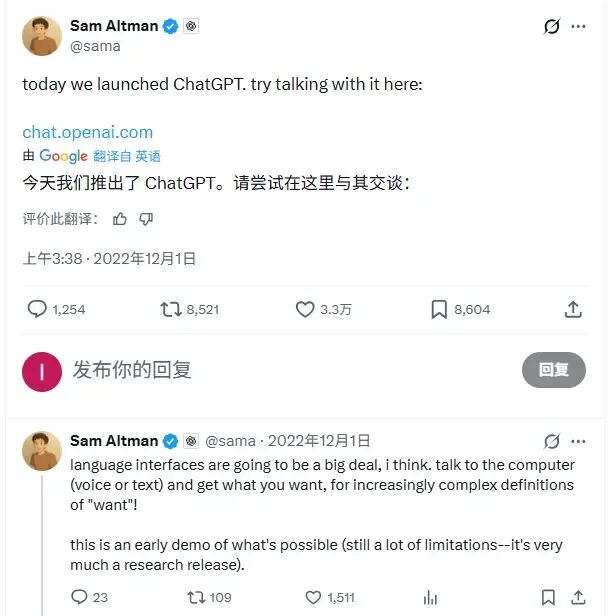
Core Insights - The launch of ChatGPT by OpenAI on November 30, 2022, marked the beginning of a transformative journey in AI, impacting various sectors including technology, business, education, and geopolitics [1] - The rapid user adoption of ChatGPT, reaching 1 million users within five days and 100 million in two months, highlights its unprecedented growth compared to other platforms like TikTok and Instagram [2] - The evolution of ChatGPT from a simple conversational model to a sophisticated platform with multimodal capabilities and real-time voice interaction signifies a major leap in AI technology [2][3] User Growth and Engagement - By the end of 2024, ChatGPT had 300 million weekly active users, growing to 800 million by November 2025, indicating a significant penetration into global markets [5][6] - The mobile revenue surpassed $2 billion in August 2025, with an average revenue per installation of $2.91, showcasing its commercial viability [6] Business Model and Strategy - ChatGPT's pricing strategy evolved from a free model to a tiered subscription model, including a $20/month Plus plan and a $200/month Pro plan, aiming to capture various market segments [6] - The platform's enterprise customer base exceeded 1 million by 2025, making it the fastest-growing business platform in history [6] Technological Advancements - The introduction of GPT-4 and GPT-5 brought significant enhancements, including the ability to perform complex tasks, manage calendars, and generate comprehensive applications [5][10] - The shift from interactive AI to agent-based AI indicates a transformation in how users interact with technology, moving towards more autonomous functionalities [5][10] Market Dynamics and Competition - The competitive landscape has shifted dramatically, with emerging players like DeepSeek challenging OpenAI, prompting a return to open-source models [10] - The stock prices of major tech companies, including Nvidia, have surged significantly, reflecting the capital market's enthusiasm for AI technologies [10] Ethical and Legal Challenges - The rapid growth of ChatGPT has raised concerns regarding safety, with incidents of inappropriate content generation and lawsuits related to mental health issues [8][9] - Ongoing legal battles over copyright infringement and the ethical implications of AI training data highlight the complexities of integrating AI into society [9] Future Outlook - As ChatGPT approaches its third anniversary, questions about its limits and the sustainability of its growth emerge, particularly regarding energy consumption and societal impacts [11][12] - The potential for AI to redefine personal health markets and other sectors indicates a continuous evolution of its applications, while also raising concerns about the implications for future generations [12][13]