
Kinect

Search documents
苹果芯片,凭啥?
半导体行业观察· 2026-03-09 01:07
Core Insights - The article discusses Apple's acquisition of Israeli AI startup Q.ai for nearly $2 billion, marking a significant move in Apple's strategy to enhance its technology capabilities, particularly in voice recognition and human-computer interaction [2][3] - Aviad Maizels, the founder of Q.ai, previously sold another company, PrimeSense, to Apple for approximately $350 million, which became foundational for Apple's Face ID technology [3][6] - The narrative highlights Apple's strategic approach to acquisitions, focusing on advanced underlying technologies rather than established brands, which has been a consistent theme in its growth and innovation strategy [10][12] Group 1: Acquisition Details - Apple's acquisition of Q.ai is its second-largest deal in history, emphasizing the importance of Maizels' technology in the company's future [3][8] - Q.ai's technology enables silent voice recognition, which could significantly enhance user interaction with devices like Vision Pro and AirPods, aligning with Apple's design philosophy of privacy and elegance [16][18] - The acquisition reflects Apple's ongoing need to diversify its product offerings beyond the iPhone, which currently accounts for nearly 60% of its revenue [18][19] Group 2: Historical Context and Strategy - The article traces Maizels' journey from military technology to founding PrimeSense, which developed a 3D sensing system that was pivotal for Microsoft's Kinect [4][5] - Apple's acquisition strategy is characterized by a focus on small-scale, technology-driven deals, contrasting with other tech giants that pursue larger, brand-focused acquisitions [11][12] - Historical lessons from Apple's reliance on external suppliers, particularly the failure of the PowerPC alliance, have shaped its commitment to in-house technology development and strategic acquisitions [14][15] Group 3: Future Implications - The integration of Q.ai's technology is expected to facilitate new product developments, such as smart glasses and enhanced wearable devices, which require innovative interaction methods [16][19] - Apple's lag in AI capabilities compared to competitors highlights the urgency of this acquisition, as it seeks to enhance its AI assistant's interaction quality through advanced human-computer communication [19][20] - The article suggests that the ecosystem of former Apple engineers, like Maizels, is creating a unique entrepreneurial environment that aligns with Apple's technological needs, potentially leading to future acquisitions [22]


一个人,赚走苹果160亿
36氪· 2026-03-04 14:40
Core Viewpoint - The article discusses the entrepreneurial journey of Aviad Maizels, highlighting his success in the tech industry, particularly with his companies PrimeSense and Q.ai, and the significant acquisitions by major players like Apple and Microsoft [6][27]. Group 1: Aviad Maizels' Entrepreneurial Journey - Aviad Maizels successfully sold his first company, PrimeSense, to Apple for $350 million, which developed the technology behind Kinect, a leading motion-sensing device [14][16]. - His second venture, Q.ai, focuses on advanced computer vision technology that interprets subtle facial movements, leading to a $2 billion acquisition by Apple, marking one of its largest deals in a decade [6][27]. - Maizels' journey reflects the changing landscape of entrepreneurship, where success is often tied to timing and market needs rather than just individual talent [9][24]. Group 2: Impact of Technology and Market Trends - The article emphasizes how the internet era has democratized entrepreneurship, allowing younger individuals to create billion-dollar companies with innovative ideas [8][9]. - PrimeSense's Kinect became a cultural phenomenon, selling over 10 million units and setting records for the fastest-selling consumer electronics product [14][22]. - Q.ai's technology aims to revolutionize user interaction with devices, potentially allowing for control through subtle facial movements, which aligns with current trends in wearable technology [27][28]. Group 3: Challenges and Market Dynamics - Maizels faced significant challenges, including market misjudgments and the need for strategic pivots, particularly during the development of new technologies [19][22]. - The article discusses the pressures of maintaining independence versus the benefits of being acquired by larger companies, suggesting that sometimes collaboration leads to greater success [34][35]. - The narrative illustrates the balance between innovation and market demands, highlighting that even successful entrepreneurs must navigate complex industry dynamics [24][30].


一个人,赚走苹果160亿
投中网· 2026-03-04 06:46
Core Viewpoint - The article discusses the entrepreneurial journey of Aviad Maizels, highlighting his success in the tech industry, particularly with companies acquired by major players like Apple and Microsoft, and the implications of his story on the startup ecosystem [7][28]. Group 1: Entrepreneurial Journey - Aviad Maizels, a notable entrepreneur, successfully sold his first company, PrimeSense, to Apple for $360 million and later founded Q.ai, which Apple is set to acquire for $2 billion, marking Apple's largest acquisition in a decade [7][28]. - Maizels' journey reflects the changing landscape of entrepreneurship in the internet age, where age and background are less significant, allowing young entrepreneurs to achieve remarkable success [9][11]. Group 2: Company Development - PrimeSense developed the Kinect technology for Microsoft, which became a significant success, selling over 10 million units and revolutionizing the gaming experience [17][24]. - The acquisition of PrimeSense by Apple in 2013 was driven by the need for innovative technology to enhance their product offerings, leading to the development of Face ID [19][28]. Group 3: Investment and Market Dynamics - The article emphasizes the importance of timing and market conditions in Maizels' success, noting that he capitalized on the post-bubble recovery and the demand for innovative tech solutions [27][30]. - Q.ai's technology, which allows devices to interpret subtle facial movements, is positioned to significantly enhance Apple's product capabilities in wearable technology [28][30]. Group 4: Personal Attributes and Challenges - Maizels' story is characterized by a blend of luck and strategic thinking, as he navigated various challenges and opportunities throughout his career [27][29]. - His cautious approach to entrepreneurship, including a reluctance to overestimate potential success, reflects a more grounded perspective compared to other tech entrepreneurs [29][30].

苹果史上第二大收购案,目标却不是手机
3 6 Ke· 2026-01-31 01:57
Core Viewpoint - Apple is evolving from a product-centric company to an investment company focused on future technologies, exemplified by its recent acquisition of the Israeli human-computer interaction company Q.ai for an estimated $1.6 to $2 billion, marking one of its largest investments in the AI sector [3][4][30]. Group 1: Acquisition Details - Apple has acquired Q.ai, a company specializing in technology that reads facial movements and understands silent communication, although specific details of the acquisition have not been disclosed [3][4]. - This acquisition is projected to be Apple's second-largest in history, following the $3 billion purchase of Beats in 2014 [4]. - Q.ai's technology is based on machine learning algorithms that analyze facial muscles and micro-expressions to interpret silent commands, distinguishing it from conventional AI companies [4][11]. Group 2: Background of Q.ai and Its Founder - Q.ai was founded by Aviad Maizels, who previously co-founded PrimeSense, known for its 3D sensing technology that powered Microsoft's Kinect [6][9]. - After Apple acquired PrimeSense for approximately $350 million in 2013, its technology became foundational for Apple's TrueDepth camera and ARKit, leading to the development of Face ID [9][11]. - Maizels left Apple in 2022 to establish Q.ai, which has now returned to Apple through this acquisition, suggesting a strategic plan behind his career moves [20][22]. Group 3: Strategic Implications for Apple - The acquisition of Q.ai aligns with Apple's need for innovative interaction methods for future products, particularly smart glasses expected to launch by 2027 [13][30]. - Q.ai's technology could enable silent command input through facial gestures, addressing privacy concerns associated with voice commands in public settings [14][30]. - The integration of Q.ai's technology may also lead to advancements in Face ID, potentially allowing for under-display implementations [16][30]. Group 4: Financial Context and Market Position - Apple reported a record revenue of $143.76 billion for the 2026 fiscal year, with a gross margin of 48% and a net profit of $42.1 billion, yet the stock price reaction was muted, indicating market concerns about reliance on iPhone sales [26][28]. - iPhone sales contributed nearly 60% of total revenue, highlighting a potential vulnerability in Apple's business model as the market seeks new growth avenues [28][30]. - The acquisition of Q.ai is seen as a long-term investment strategy, emphasizing Apple's commitment to enhancing human-computer interaction and diversifying its product offerings [32].

苹果FaceID缔造者为“物理AI”打造端到端的感知系统,融资1.07亿美元
3 6 Ke· 2026-01-14 10:38
Core Insights - "Physical AI" has emerged as the next major development direction in AI, with industry consensus recognizing its potential despite previous challenges such as a lack of embodied intelligence data and immature world models [1][17] - Lyte, a startup founded by key architects behind Microsoft's Kinect and Apple's FaceID, aims to create an end-to-end perception system that integrates advanced 4D sensing, RGB imaging, and motion perception into a single platform [2][12] Company Overview - Lyte was co-founded by Alexander Shpunt (CEO), Arman Hajati, and Yuval Gerson, who have extensive backgrounds in depth sensing and perception technology [2][4] - The company recently secured $107 million in early-stage funding from investors including Avigdor Willenz, Fidelity, and Atreides Management [1] Technology and Innovation - Lyte's core technology, "coherent vision," captures both position and speed simultaneously, eliminating delays associated with traditional perception systems [9][10] - The LyteVision system is designed to provide a unified perception technology stack, integrating sensors, computing units, software, and algorithms into a single module [12][13] - The system is capable of real-time processing and understanding of dynamic environments, making it suitable for various applications including autonomous robots and self-driving vehicles [16][18] Market Potential - The AI robotics market is projected to reach $125 billion by 2030, yet over 60% of industrial companies lack the internal capabilities for autonomous robot automation [7] - As "Physical AI" evolves, the demand for perception capabilities is shifting from static and singular to generalized and real-time, presenting numerous opportunities for innovation [17][19]
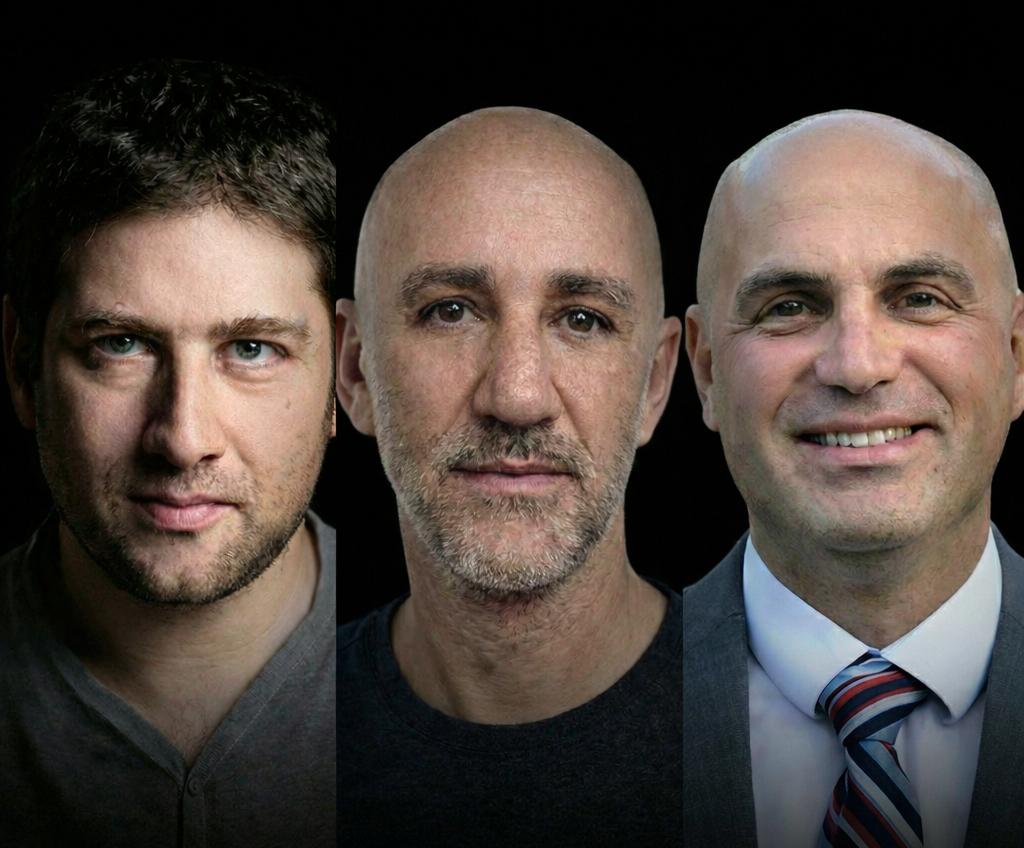
苹果面部识别核心团队创业项目曝光,打造机器人视觉大脑,融资超1亿美元
Sou Hu Cai Jing· 2026-01-06 10:27
Core Insights - Lyte AI Inc., a robotics vision startup founded by former Apple Face ID engineers, has officially launched after four years in stealth mode, raising approximately $107 million in funding to enhance robotic perception and safety [1][4][7] Company Overview - Lyte was co-founded in 2021 by Alexander Shpunt, Arman Hajati, and Yuval Gerson, who played key roles in developing the core technology for Face ID, focusing on depth sensing and perception systems [1][4] - The company aims to create a unified "visual brain" platform to simplify perception layer development for robot manufacturers, addressing challenges in existing sensor systems [4][6] Product Development - Lyte's flagship product, LyteVision, integrates 4D sensing, RGB imaging, and motion perception into a single system, providing spatial and visual data through one interface [4][6] - The platform is designed to support various AI physical platforms, including mobile robots, robotic arms, humanoid robots, and autonomous taxis, enhancing robustness in complex real-world environments [6][7] Market Context - According to McKinsey, the AI robotics market is projected to reach $125 billion by 2030, yet 60% of industrial companies currently lack the internal capabilities for implementing robotic automation, including sensor integration [7] - The robotics industry faces significant challenges in sensor integration, often taking years to complete, which Lyte aims to address with its plug-and-play solutions [6][7] Future Plans - The company plans to utilize its existing funds to refine its core product, expand its team, and grow its business, with expectations of making substantial progress in robotic safety within the next three to five years [7]


Z Potentials|顾嘉唯,从百度技术少帅到两次创业,AI硬件的黄金时机不是技术顶峰,而是商业静默期
Z Potentials· 2025-11-17 14:38
Core Insights - The article discusses the evolution of AI hardware, emphasizing the importance of a "gentle penetration" approach rather than radical replacement in the market [2][5] - The founder of Ling Universe, Gu Jiawei, shares his unique entrepreneurial philosophy shaped by his experiences in both academia and the tech industry [2][4] Personal Journey - Vision and Refinement - Gu Jiawei's career has consistently focused on the next generation of human-computer interaction, with varying responsibilities and mindsets at different stages [4][5] - The transition from a scientist to an entrepreneur involves facing real-world challenges and balancing idealism with practical business needs [8][9] Industry and Product - Essence and Future of AI Hardware - Ling Universe is developing a product called "Xiaofangji," which serves as the first AI terminal for the "Gen Alpha" generation, aiming to create a new operating system called LingOS [15][18] - The product is designed to be a container for AI capabilities, moving away from traditional smartphone functionalities [15][20] Barriers and Moats - Standing Out in a Crowded Market - The primary distinction of Xiaofangji compared to other AI hardware is its focus on being a multi-functional AI terminal rather than a simple interactive toy [19][20] - The company leverages existing user data from previous products to enhance its AI capabilities and create a competitive edge [20][21] Timing and Market Readiness - Timing is crucial in technology commercialization, with the need to identify the right moment when technology is mature and user demand is activated [13][14] - Gu Jiawei emphasizes the importance of breaking down large goals into smaller, manageable steps to ensure gradual progress in product development [14][24]

Ceva Appoints Former Microsoft AI and Hardware Leader Yaron Galitzky to Accelerate Ceva's AI Strategy and Innovation at the Smart Edge
Prnewswire· 2025-09-17 11:00
Core Insights - Ceva, Inc. strengthens its leadership in edge AI solutions with the appointment of Yaron Galitzky as Executive Vice President of Artificial Intelligence [1][3] - Galitzky brings extensive experience from Microsoft, where he defined edge AI roadmaps and contributed to major consumer devices [2][3] - The company aims to enhance its AI strategy and product innovation, leveraging its NeuPro NPU family to solidify its position in the Smart Edge AI supply chain [1][3] Company Overview - Ceva, Inc. is a leading licensor of silicon and software IP, focusing on Smart Edge technologies [1][4] - The company has a broad portfolio that includes wireless communications, sensing, and Edge AI technologies, powering over 20 billion smart edge products globally [3][4] - Ceva's mission is to deliver silicon and software IP that enables a smarter, safer, and more interconnected world [3][4]


机器人的眼睛:3D视觉
2025-08-12 15:05
Summary of 3D Vision Technology in Robotics Industry Overview - The global machine vision market exceeds 100 billion RMB, with the Chinese market around 20 billion RMB, primarily focused on 2D processing. The demand for 3D technology is rapidly increasing, especially in industrial applications that require depth information for workpiece inspection and in consumer markets like Face ID [11][12]. Key Technologies and Their Characteristics - **3D Vision Technologies**: The main hardware routes for achieving 3D functionality include: - **Stereo Vision**: Low cost but sensitive to ambient light [1][4]. - **Structured Light**: Good anti-interference but poor performance at long distances [1][4]. - **Time of Flight (TOF)**: Simple structure but low resolution [1][4]. - **LiDAR**: Long detection range but high cost and low pixel resolution [1][4]. - **Core Components**: The essential components of robotic vision hardware include lenses, light sources, and cameras. Stereo cameras do not require active light sources, while other methods do [8]. Advantages and Challenges - **Advantages**: 3D vision technology allows for accurate 3D modeling of the physical world, enhances visual detection precision, and improves resistance to ambient light interference compared to traditional 2D vision [2]. - **Challenges**: Transitioning from 2D to 3D requires significantly enhanced backend algorithm processing capabilities, with challenges in aligning large point cloud data accurately. Each technology has its limitations, such as susceptibility to environmental interference and varying measurement accuracy [2][4]. Application Scenarios - **Industrial Applications**: The primary applications in the industrial sector focus on recognition, positioning, measurement, and detection, with detection being the most demanding due to the complexity of identifying physical defects [12]. - **Consumer Applications**: Consumer-grade applications, such as Apple's Face ID and gesture recognition in electronic devices, are driving the development of 3D vision technology [13][14]. Market Trends and Future Outlook - The market for 3D vision technology in robotics is expected to continue expanding, driven by increasing safety requirements and technological advancements. Companies like Orbbec are gaining attention due to their competitive performance compared to international products [19][17]. - The demand for stereo structured light modules in robotics is significant, with each module costing around 1,000 RMB, and each robot typically requiring 3 to 5 modules, leading to a total cost of approximately 3,000 to 5,000 RMB per robot [18]. Key Suppliers - Major domestic suppliers of 3D vision technology include Orbbec, Cansee, Autel, and Hikrobot, with Orbbec leading in technical strength and product advantages [17]. Conclusion - The integration of various 3D vision technologies is likely to enhance overall system stability and accuracy in robotics. The combination of stereo vision with structured light and the use of TOF with LiDAR in advanced applications will optimize performance across different working conditions [5][6].
