MOSFET芯片

Search documents
商道创投网·会员动态|长飞先进·完成超10亿元A+轮融资
Sou Hu Cai Jing· 2026-02-09 10:01
Core Insights - Changfei Advanced has completed an A+ round financing exceeding 1 billion yuan, led by Jiangcheng Fund and Changjiang Industrial Group, with participation from multiple institutions [2] - The company specializes in silicon carbide (SiC) power semiconductors, focusing on the research and mass production of a full range of SiC SBD and MOSFET chips [2] - Changfei Advanced has established a production capacity of 420,000 silicon carbide wafers annually, with its Wuhu base operating at full capacity and the Wuhan base expected to reach international leading levels by May 2025 [2] Financing Purpose - The funds from this round of financing will be primarily used to deepen the technological layout of the silicon carbide power semiconductor industry chain, increase R&D investment, accelerate product iteration and process optimization [3] - The company aims to enhance production capacity at its Wuhu and Wuhan bases, expand into high-end application markets such as main drive chips for electric vehicles, and strengthen strategic cooperation with core enterprises in the industry chain [3] Investment Rationale - Jiangcheng Fund's chairman highlighted that silicon carbide is a key material for third-generation semiconductors, essential for supporting national strategic industries like renewable energy and 5G [3] - The alignment of Changfei Advanced's 360,000 wafer production capacity project in Wuhan with the city's strategy to build a trillion-yuan industrial cluster in optoelectronic information is emphasized [3] Industry Context - Recent policies from various government departments have created a favorable development environment for the semiconductor industry, particularly for silicon carbide and other third-generation semiconductors [3] - The investment reflects the confidence of venture capital institutions in the hard technology sector, with a focus on identifying high-growth potential projects [3] - The semiconductor industry is characterized by rapid technological iteration and intense competition, necessitating strategic focus and continuous innovation from companies [4]

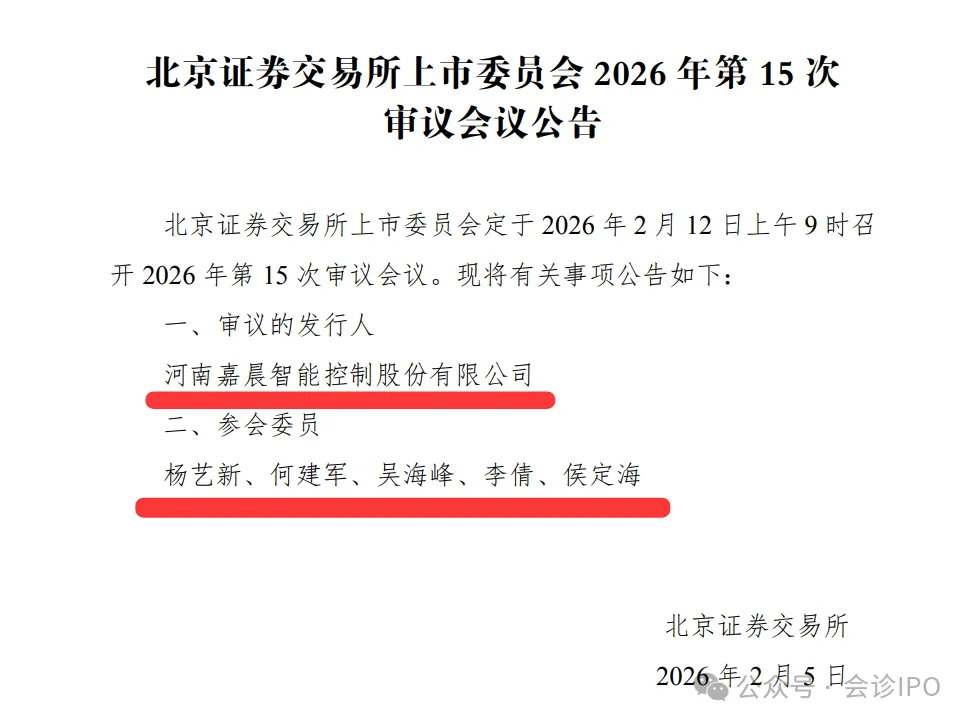
嘉晨智能:关键芯片依赖进口,要完成对飒派约定量的采购
Xin Lang Cai Jing· 2026-02-06 11:26
Core Viewpoint - The company, Henan Jiachen Intelligent Control Co., Ltd., is preparing for an IPO with plans to raise 260 million yuan for production and R&D, but faces significant operational contradictions and risks, including declining capacity utilization, reliance on imported chips, and a high dependency on government subsidies for profits [2][6][28]. Group 1: Business Relationships - The presence of Hangcha Group as both the second-largest shareholder (22.22%) and the largest customer raises concerns about potential conflicts of interest in business dealings [17][18]. - Sales revenue from Hangcha Group for Jiachen Intelligent was 178 million yuan, 168 million yuan, and 161 million yuan from 2022 to 2024, accounting for 52.95%, 44.69%, and 42.16% of total revenue respectively, indicating a significant reliance on this customer [18][19]. Group 2: Supplier Agreements - Jiachen Intelligent's core raw material, the motor controller, is primarily sourced from Sapai Group, with procurement ratios of 45.94%, 69.96%, and 53.10% from 2022 to 2024 [4][19]. - A unique clause in the procurement agreement requires Jiachen Intelligent to pay 10% of the difference between the agreed procurement target and actual purchases if targets are not met, which raises concerns about the fairness of procurement conditions [4][19]. Group 3: Profitability and Subsidies - Government subsidies contributed significantly to Jiachen Intelligent's profits, with amounts of 13.78 million yuan, 14.25 million yuan, and 16.96 million yuan from 2022 to 2024, representing 22.79%, 27.90%, and 27.81% of total profits [5][20]. - In 2024, the net profit was 57 million yuan, with nearly 17 million yuan coming from government subsidies, highlighting a concerning reliance on external support for profitability [6][21]. Group 4: Capacity Utilization - The company's capacity utilization has declined from 110.22% in 2022 to 82.33% in 2024, raising questions about the rationale for expanding production capacity while current utilization is decreasing [7][22]. - The North Exchange has requested clarification on the necessity of new capacity projects given the declining utilization rates [22]. Group 5: Supply Chain Risks - Jiachen Intelligent relies heavily on imported chips, with procurement amounts fluctuating between 5.96% and 9.86% of total purchases during the reporting period, indicating vulnerability to international trade dynamics [8][23]. - The company has acknowledged the challenge of transitioning to domestic suppliers, which poses a risk to its production operations if trade policies change unfavorably [8][23]. Group 6: Market Share and Competition - The company's market share has shown significant volatility, with shares in different categories of Hangcha Group's forklifts fluctuating dramatically, indicating instability in its core customer base [9][24]. - For instance, the share in category I forklifts dropped from 58.20% in 2022 to 34.80% in 2023, before recovering to 52.14% in 2024, while category III saw a decline from 17.85% to just 5% [9][25]. Group 7: Financial Health - Accounts receivable have surged from 50.11 million yuan in 2022 to 130 million yuan in 2024, suggesting potential issues with business quality [10][26]. - The accounts receivable turnover days increased from 61 days in 2023 to 142 days in 2025, indicating a slowdown in cash collection and reduced efficiency [11][26]. - In contrast, net cash flow from operating activities plummeted by 61.02% in 2024, from 90.09 million yuan to 35.12 million yuan, further highlighting financial strain [12][27].
董明珠言论被过度解读!广汽集团辟谣未来芯片半数由格力替代传闻【附汽车芯片行业市场分析】
Qian Zhan Wang· 2026-01-21 06:56
Group 1 - GAC Group clarified that recent claims about future collaboration with Gree Electric on automotive chips are misinterpretations of their discussions [2] - The source of the rumor was a video from GAC's official account, where GAC Chairman Feng Xingya and Gree's Chairman Dong Mingzhu discussed potential collaboration in a casual manner [2] - GAC emphasized that the meeting was a strategic exchange and did not result in any formal agreements or supply arrangements [2] Group 2 - Gree Electric has been actively investing in the semiconductor sector since 2015, establishing a fully automated third-generation semiconductor chip factory with over 70% localization of core equipment [3] - The global automotive chip market is dominated by major international players, with the top five companies holding over 50% market share, highlighting the reliance of Chinese automakers on high-end chip supplies [3] - Chinese companies like BYD Semiconductor and Huazhong Microelectronics are making progress in domestic chip production, gradually closing the gap with international competitors [3] Group 3 - The global automotive chip market is estimated to have a 30% share from China, making it the largest regional market with the fastest growth rate [5] - The compound annual growth rate (CAGR) for China's automotive chip market is projected to reach 22%, with a transaction scale expected to hit $65 billion by 2029 [7]



希荻微3.1亿收购诚芯微:模拟芯片赛道再掀整合浪潮
Xin Lang Cai Jing· 2025-12-02 01:55
Core Viewpoint - The acquisition of 100% equity in Chengxin Micro by Xidi Micro for a total consideration of 310 million yuan marks a significant step in the consolidation of the domestic analog chip industry, indicating a deepening integration phase within the sector [1] Group 1: Technical Synergy - Both Xidi Micro and Chengxin Micro operate under the Fabless model, with complementary business layouts; Xidi Micro focuses on consumer and automotive electronics chips, while Chengxin Micro specializes in power management chips and related fields [2] - Chengxin Micro achieved a revenue of 159 million yuan and a net profit of 18.52 million yuan in the first ten months of 2024, showcasing its strong market presence [2] - The integration aims to leverage Chengxin Micro's 15 years of expertise in power management to enhance Xidi Micro's solutions across various applications, while Chengxin Micro will benefit from Xidi Micro's global customer network [2] Group 2: Financial Logic - The valuation of Chengxin Micro's 100% equity is set at 311 million yuan, reflecting a 214.37% increase over its book net assets, indicating strong growth expectations [3] - The acquisition structure involves 55% shares and 45% cash, with a share price set at 11 yuan, raising up to 99.48 million yuan in supporting funds [3] - Post-transaction, Xidi Micro's total assets are expected to increase by 23.89%, and equity attributable to shareholders is projected to grow by 12.76%, with an anticipated revenue increase of 18.65% in the first half of 2025 [3] Group 3: Industry Perspective - The current wave of mergers and acquisitions in the semiconductor sector highlights a trend where technology-focused targets are prioritized, as seen in Xidi Micro's acquisition aligning with similar transactions in the industry [4] - The acquisition not only facilitates scale expansion but also aims to create competitive barriers through deeper technological integration and market restructuring [4] - If the anticipated synergies are realized, Xidi Micro could achieve a revaluation in the analog chip segment, injecting new growth momentum into the A-share semiconductor sector [4]

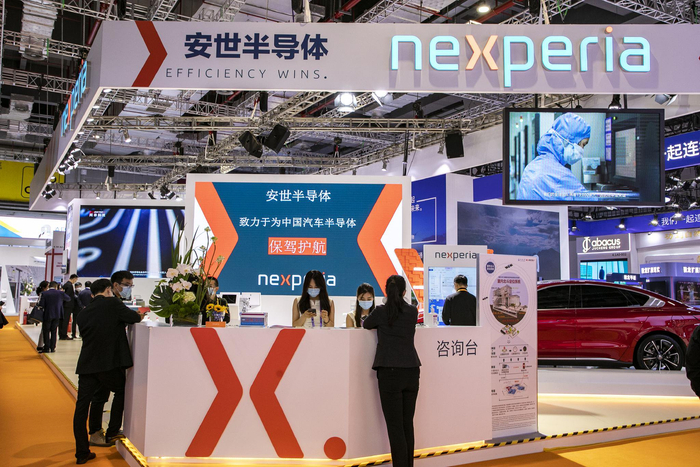
安世之乱:一场撕裂全球芯片命脉的控制权战争
Zhong Guo Jing Ying Bao· 2025-11-28 21:12
Core Viewpoint - The semiconductor supply chain crisis, triggered by a power struggle within a Chinese-controlled semiconductor company, has led to significant production disruptions for major automotive manufacturers like Volkswagen, BMW, and Ford, highlighting the vulnerability of global supply chains to geopolitical interventions [2][3][4]. Summary by Sections 1. Event Overview - The crisis began with a governance dispute at Nexperia (安世半导体), a semiconductor company acquired by a Chinese consortium in 2017, which has become a key supplier for the automotive industry [3][4]. - The U.S. imposed new export controls in September 2025, leading to the Dutch government freezing Nexperia's global assets under the pretext of national security, which resulted in a near collapse of the global automotive chip supply chain [5][6]. 2. Impact on Automotive Industry - Major automakers, including Volkswagen, BMW, and Honda, issued production warnings, with the European Automobile Manufacturers Association predicting a potential 15% reduction in European automotive production capacity within weeks if the supply issue is not resolved [7][8]. - The automotive industry relies heavily on specific components produced by Nexperia, and the lack of these components could halt production lines, as seen with Volkswagen reporting its first quarterly loss in five years [6][7]. 3. Geopolitical Context - The incident illustrates the intersection of geopolitics and high-tech industries, revealing the fragility of global supply chains under political pressure [3][9]. - The U.S. strategy to curb China's technological advancements has been implemented through European allies, as evidenced by the timing of the Dutch government's actions following U.S. directives [9][10]. 4. Corporate Governance Issues - The governance conflict within Nexperia escalated when the Dutch court intervened, leading to the removal of the Chinese CEO and the appointment of a temporary Dutch CEO, which was perceived as a politically motivated takeover [5][6]. - The internal governance issues at Nexperia, including differing strategic priorities between Chinese and European management, contributed to the crisis [11][12]. 5. Future Implications - The semiconductor crisis signals a shift in the global semiconductor landscape from an "efficiency-first" model to a "security-first" approach, prompting companies to reassess their supply chain strategies [15][16]. - The event serves as a wake-up call for Chinese companies regarding the importance of political risk assessment and the need for a more resilient and localized supply chain strategy [15][19].