OLED发光材料

Search documents
中篇・实战篇:十大核心新材料赛道产业化全景拆解
材料汇· 2026-03-23 14:00
Core Insights - The article discusses the development trends and industrialization progress of key new materials in China, focusing on three main categories: fortress materials, sovereign materials, and fusion materials [2][4]. Fortress Materials Track - Fortress materials are essential for national security, supporting major strategic projects and defense applications, with a focus on reliability and performance under extreme conditions [9]. - High-temperature alloys are critical for aerospace engines, with a global market expected to reach $12.44 billion by 2024 and $19.11 billion by 2031, reflecting a CAGR of 6.4%. The Chinese market is projected to grow from 28 billion yuan in 2024 to 54.4 billion yuan by 2031, with a CAGR of around 10% [12]. - The domestic high-temperature alloy market is currently 40% reliant on imports, with a supply gap exceeding 30,000 tons. The aerospace sector accounts for 55% of downstream applications [12][13]. - The global market for ceramic matrix composites (CMC) is expected to exceed $4 billion by 2025 and reach $25 billion by 2031, with a CAGR of 11% from 2021 to 2031 [21]. - The SiC fiber market is projected to grow from $250 million in 2017 to $3.587 billion by 2026, with a CAGR of 34.4% [22]. Sovereign Materials Track - Sovereign materials are crucial for high-end manufacturing and reducing dependency on foreign technology, characterized by high technical barriers and significant potential for domestic substitution [33]. - The global semiconductor photoresist market is expected to grow from $10.8 billion in 2024 to $11.4 billion in 2025, with a semiconductor photoresist market of approximately $2.4 billion [36]. - The domestic market for OLED organic materials is projected to reach approximately 5.7 billion yuan in 2024, with a year-on-year growth of 31% [48]. - The domestic market share of OLED terminal materials has increased from 1% in 2022 to 11% in 2024, indicating strong growth [50]. Fusion Materials Track - Fusion materials represent future industrial high points, with applications in humanoid robots and other advanced technologies [6]. - Diamond-copper composite materials are essential for AI chip cooling, with the global market expected to reach $160 million by 2024 and $350 million by 2031, reflecting a CAGR of 12% [68]. - The domestic market for diamond-copper composites is projected to grow from 1.28 billion yuan in 2024 to 1.41 billion yuan in 2025 [68].


中篇・实战篇:十大核心新材料赛道产业化全景拆解
材料汇· 2026-03-19 15:45
Core Insights - The article discusses the development trends and industrialization progress of ten core tracks in the new materials industry, emphasizing the importance of "fortress materials," "sovereign materials," and "fusion materials" as strategic areas for China [2][4]. Fortress Materials Track - Fortress materials are critical for national security, supporting major strategic projects and defense applications, with a focus on reliability and performance under extreme conditions [7]. - High-temperature alloys are essential for aerospace engines, with a global market projected to reach $12.44 billion by 2024 and $19.11 billion by 2031, reflecting a CAGR of 6.4%. The Chinese market is expected to grow from 28 billion yuan in 2024 to 54.4 billion yuan by 2031, with a CAGR of around 10% [10]. - The domestic high-temperature alloy market is currently 40% reliant on imports, with a supply gap exceeding 30,000 tons. The aerospace sector accounts for 55% of downstream applications [11][12]. - The market is dominated by a few key players, with Precision Castparts Corporation holding 32% of the aerospace market share [12]. - Future trends include increased demand driven by domestic military aircraft and advancements in single crystal and powder metallurgy high-temperature alloys, with a goal to reduce import dependency to below 20% in the next five years [14]. Sovereign Materials Track - Sovereign materials are vital for high-end manufacturing, enabling China to achieve self-sufficiency in critical industries and reduce reliance on foreign technology [30]. - The semiconductor photoresist market is projected to grow from $10.8 billion in 2024 to $11.4 billion in 2025, with a CAGR of 4%. The market is dominated by Japanese and American companies, which hold 85% of the global market share [33][40]. - Domestic companies have made progress in photoresist production, with g/i-line photoresists achieving a 10% localization rate, while KrF and ArF photoresists are at 1% [40]. - OLED organic materials are expected to grow from $2 billion in 2024 to over $3 billion in 2025, with a significant increase in domestic market share from 1% in 2022 to 11% in 2024 [45][48]. Fusion Materials Track - Fusion materials represent future industrial high ground, with applications in humanoid robots and AI infrastructure [5]. - The diamond-copper composite material market is projected to reach $160 million in 2024, with a CAGR of 12% expected until 2031. The Chinese market is anticipated to grow from 1.28 billion yuan in 2024 to 1.41 billion yuan in 2025 [65]. - The global market is dominated by Japanese companies, with domestic firms achieving significant technological advancements and cost reductions of 30-40% compared to imports [68].

上篇|定调篇・中国新材料的全球格局与三大核心战线
材料汇· 2026-03-17 18:34
Core Insights - The article emphasizes that materials are the foundation of technological advancements and industrial strength, asserting that strong materials lead to strong industries and new technologies [7][10] - It outlines the competitive landscape of the global new materials industry, China's current position, and the core challenges it faces, along with a strategic framework for future development [8][27] Group 1: New Materials Overview - New materials are defined as recently developed or under-research materials with superior performance compared to traditional materials, characterized by breakthroughs in technology, processes, and market applications [13] - The classification of new materials includes categories based on material properties, national strategic planning, and performance characteristics [15][16][18] Group 2: Global Competitive Landscape - The global new materials market is projected to reach $4.6 trillion by 2025, with a compound annual growth rate (CAGR) of 11% from 2015 to 2025, and expected to grow to $8.2 trillion by 2030 with a CAGR of 12% [20] - The competitive landscape is divided into three tiers: the first tier includes the US, Europe, and Japan, which dominate high-end products; the second tier includes Russia, South Korea, and China, which are rapidly developing; and the third tier consists of developing countries like Brazil and India [22][23] Group 3: China's New Materials Industry - China's new materials industry has grown significantly, with total output increasing from 2 trillion yuan to 10 trillion yuan by 2025, representing a CAGR of 17.5% from 2015 to 2025 [29] - By 2030, the industry is expected to reach 23 trillion yuan, capturing 40% of the global market share, with a CAGR of 18.1% from 2025 to 2030 [30] - The industry has developed a comprehensive system covering the entire supply chain, from basic materials to high-end functional materials, positioning China as a core growth engine in the global market [31] Group 4: Policy Evolution - The policy framework for China's new materials industry has evolved from establishing a system to enhancing capabilities and focusing on high-end, safe, and green development [32] - The "14th Five-Year Plan" emphasizes guiding the industry towards high-end and green development, with innovation as the primary principle [35] Group 5: Core Challenges - Despite progress, China's new materials industry still faces high dependency on imports for high-end materials, with 32% of key strategic materials being completely absent domestically and 52% reliant on imports [42][43] - There is a disconnect between research and market needs, with long development cycles and insufficient understanding of market demands hindering the commercialization of new materials [44] - The industry struggles with insufficient industrialization capabilities, leading to challenges in achieving consistent quality and stability in mass production [46] Group 6: Demand Drivers - Emerging industries such as AI, commercial aerospace, and humanoid robotics are driving unprecedented demands for material performance, presenting significant growth opportunities for China's new materials sector [50] - Specific material requirements include high-performance thermal management materials for AI, advanced semiconductor materials for the semiconductor industry, and lightweight, high-strength composite materials for commercial aerospace [51] Group 7: Strategic Framework for Development - The article proposes a strategic framework consisting of three core battlefronts: fortress materials for national security, sovereign materials for key industry autonomy, and fusion materials for future competitive advantages [52][73] - Fortress materials are critical for national strategic projects and defense, requiring high reliability and performance under extreme conditions [55][56] - Sovereign materials focus on achieving autonomy in key supply chains, particularly in semiconductor, display, and new energy materials [73][75]
奥来德(688378):公告点评:费用提升25年业绩小幅下降,26年高世代蒸发源订单进入确认期
EBSCN· 2026-03-02 08:07
Investment Rating - The report maintains a "Buy" rating for the company [1] Core Views - The company reported a slight decline in performance for 2025 due to increased expenses, but significant revenue and profit growth is expected in Q4 2025 and Q1 2026 driven by successful order confirmations and material business growth [5][6][7] - The company is set to enhance its OLED material supply capabilities with a planned fundraising of 276 million yuan for the construction of a PSPI material production base [8][11] - A strategic cooperation framework has been established with BOE Technology Group, focusing on comprehensive collaboration in equipment and materials, which is expected to drive significant performance growth [10][11] Summary by Sections Financial Performance - In 2025, the company achieved revenue of 577 million yuan, a year-on-year increase of 8.27%, while net profit attributable to shareholders was 80.41 million yuan, a decrease of 11.09% [5] - For Q4 2025, the company reported a revenue of 188 million yuan, a year-on-year increase of 172.20%, and a net profit of 49.05 million yuan, marking a significant turnaround [5][6] - The company expects Q1 2026 net profit to be between 70 million and 85 million yuan, representing a year-on-year increase of 175% to 234% [5] Orders and Projects - High-generation evaporation source orders for 2026 are entering the confirmation phase, with expectations of revenue recognition from BOE's 8.6 generation AMOLED production line [7] - The company has begun confirming orders for high-generation linear evaporation sources, which are anticipated to contribute positively to revenue in 2026 [7] Strategic Developments - The company signed a strategic cooperation framework with BOE, focusing on the development and supply of OLED materials and equipment, which is expected to enhance business growth and performance [10] - The planned PSPI material production base is projected to significantly increase production capacity, with an expected annual output value of 1 billion yuan upon completion [8][11] Profit Forecast and Valuation - The profit forecast for 2025-2027 has been adjusted, with net profits expected to be 80 million, 315 million, and 417 million yuan respectively [11][12] - The company’s revenue growth rate is projected to accelerate significantly in 2026, with a forecasted growth of 100.05% [12]

“四轮驱动”,高质量发展动能澎湃——陕西大力发展县域经济、民营经济、开放型经济、数字经济
Xin Lang Cai Jing· 2026-01-31 02:58
Core Viewpoint - Shaanxi province is focusing on developing county economies, private economies, open economies, and digital economies to enhance its economic resilience and quality, aiming for a significant leap in economic transformation during the "14th Five-Year Plan" period [1][2] Economic Growth and Development - The total economic output of Shaanxi is projected to reach 3.65 trillion yuan by 2025, with an average annual growth rate of 5.2% [1] - The province's import and export scale and key indicators of the China-Europe Railway Express (Xi'an) are expected to hit historical highs by 2025 [1] - The contribution of the private economy to the GDP is anticipated to rise to 50.3% by 2025 [1] Industry and Innovation - Shaanxi is prioritizing the cultivation of key industries to enhance county economic growth and improve the business environment to stimulate private sector vitality [1] - The province has maintained the highest R&D investment intensity in Western China, with 46,000 technology achievements transferred and transformed [1] - The strategic emerging industries are expected to grow at an annual rate of 8%, with sectors like new energy vehicles and semiconductors leading the national rankings [1] Infrastructure and Connectivity - The China-Europe Railway Express (Xi'an) is projected to operate over 6,000 trains by 2025, facilitating participation from over 20,000 enterprises in global industrial division [1] - More than 90 countries and regions have established foreign enterprises in Shaanxi, with over 8,800 foreign-funded companies, including more than 200 Fortune 500 companies [1] Policy and Future Directions - The province aims to accelerate the construction of a county economic system centered around county towns and small towns, while implementing new measures to support the private economy [2] - Shaanxi is committed to deepening integration into the Belt and Road Initiative and enhancing its open economic development space [1][2]
面板产业链近期核心看点分析
2026-01-26 02:49
Summary of Panel Industry Chain Conference Call Industry Overview - The panel industry chain is experiencing price increases driven by rising costs of upstream materials such as films, which directly impacts panel prices [1][3] - The competitive landscape within the panel industry is improving, with tightening capacity further solidifying the upward price trend, potentially enhancing the gross margins of related companies [1] Core Insights - If polarizer manufacturers can successfully implement price increases, it will significantly improve their operational conditions and profitability [1][4] - Panel manufacturers can leverage the price increases from upstream materials to raise prices downstream, thereby enhancing their own profitability [1][4] - Key areas to focus on during the current price increase include segments with favorable competitive dynamics and low domestic substitution rates, such as panels themselves, TAEG膜, and OLED materials, which are expected to benefit from both price increases and domestic substitution [1][5] Future Development Directions - The future development of the panel industry chain is centered on two main areas: glass substrate packaging technology and solar wing battery technology for commercial aerospace [1][6] - Companies like Innolux and TSMC have begun mass shipments of glass-based chip packaging, while BOE is focusing on perovskite solar wing battery technology [1][6] Capital Expenditure Insights - New emerging businesses such as glass-based chip packaging and solar wing batteries require relatively low capital expenditures compared to traditional panel businesses [1][7] - These new ventures can utilize existing production lines and processes, leading to a higher return on investment, as evidenced by Innolux's successful mass production with significantly lower capital expenditures than traditional large-scale investment projects [1][7] Key Factors for 2026 - In 2026, the panel industry chain is worth monitoring due to several factors: - A favorable competitive landscape with various catalysts driving product price increases [2][8] - Upstream segments with low domestic substitution rates, such as TAEG膜 and OLED materials, are expected to benefit from accelerated domestic substitution [2][8] - New technological expansions in areas like glass-based chip packaging and commercial aerospace solar wing batteries will provide new growth trajectories for the industry [2][8]
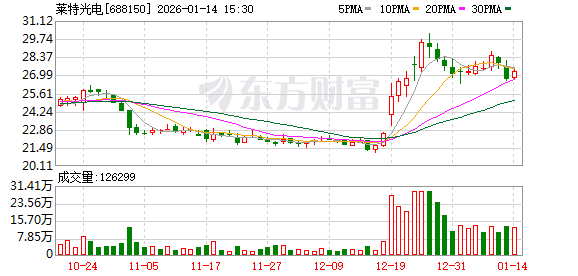
莱特光电:京东方8.6代线已于2025年12月30日成功提前5个月点亮
Zheng Quan Ri Bao· 2026-01-14 12:36
Core Viewpoint - The successful early activation of BOE's 8.6-generation line is a significant advancement for the domestic display industry, enhancing the production of high-end touch OLED displays for smart terminals like laptops and tablets [2] Group 1: Industry Developments - The 8.6-generation line, activated five months ahead of schedule, is crucial for the domestic display industry's breakthrough into mid-size, high-quality OLED sectors [2] - This advancement will improve the supply capability from small to mid-size products and reduce unit costs through scaled production, accelerating the penetration of OLED technology in various high-end applications [2] Group 2: Company Opportunities - The 8.6-generation line's substrate area is 2.16 times larger than that of the 6th generation line, which, combined with the application of Tandem stacking technology, is expected to significantly increase the demand for OLED emitting materials, creating a market potential exceeding 10 billion [2] - The rapid penetration into the mid-size sector will provide the company with extensive application scenarios for its products [2] - The company has proactively positioned itself in the relevant emitting materials and is currently collaborating with clients on validation work, laying a solid foundation for long-term business growth [2]


全球4000+企业齐聚CES 2026,OLED显示相关概念股有这些
Zheng Quan Shi Bao Wang· 2026-01-12 13:45
Group 1: CES 2026 Highlights - CES 2026, known as the "Spring Festival Gala" of the tech industry, commenced on January 6, 2026, in Las Vegas, attracting over 4,000 global companies, with nearly 1,000 from China, showcasing China's technological strength [1] - BOE (京东方), a global leader in displays, showcased over 60 cutting-edge technologies and solutions, reinforcing its core position in the industry through ecological empowerment and innovation breakthroughs [1] - BOE's strategy as a "screen IoT" practitioner emphasizes technological innovation across multiple fields, solidifying its global leadership in the display industry while seizing opportunities in new sectors like smart cockpits [1] Group 2: OLED Market Insights - The global OLED display materials market is projected to reach $3.119 billion by 2025 and $9.283 billion by 2032, with a compound annual growth rate (CAGR) of 16.86% from 2025 to 2032 [2] - Lite-On Optoelectronics is a leading domestic player in the OLED upstream light-emitting materials sector, achieving breakthroughs in domestic OLED terminal materials and maintaining a leading position in production capacity and shipment volume [2] - New Fiber New Materials has developed OLED flexible packaging films for foldable smartphones and automotive displays, reducing moisture penetration risks [2] Group 3: Equipment and Components for OLED - Jingce Electronics (精测电子) provides OLED panel testing equipment, covering screen brightness and color calibration, potentially supporting dual-layer OLED production lines [3] - Linde Equipment (联得装备) specializes in panel assembly equipment, involved in OLED screen lamination and packaging processes, possibly participating in manufacturing [3] - Dongshan Precision (东山精密) supplies flexible circuit boards (FPC) and precision components, likely providing supporting components for screen modules [3] - Northern Huachuang (北方华创) indirectly invests in semiconductor equipment through its stake in ChipSource, which develops and produces equipment applicable in OLED manufacturing [3]
高盟新材:投资参股多家光刻胶领域优秀企业
Xin Lang Cai Jing· 2025-12-24 05:06
Group 1 - The company has invested in several outstanding enterprises in the photoresist field, holding a 3.6705% stake in Beijing Kehua Microelectronics Materials Co., Ltd. and a 1.3853% stake in Beijing Dingcai Technology Co., Ltd. [1] - Beijing Kehua is a leading enterprise in the domestic semiconductor photoresist sector, while Beijing Dingcai is recognized for its OLED luminescent materials and panel display photoresists. [1]

营收10.05亿元,OLED材料龙头UDC公布三季报
WitsView睿智显示· 2025-11-11 09:40
Core Viewpoint - Universal Display Corporation (UDC) reported a decline in revenue and profit for Q3 2025 compared to the same period last year, primarily due to customer shipment schedule adjustments and one-time accounting changes, but overall operations remain robust [1][5]. Financial Performance Summary - UDC's total revenue for Q3 2025 was $139.613 million (approximately ¥1.005 billion), a decrease of about 14% from $161.627 million in Q3 2024 [2][5]. - Material sales revenue was $82.634 million, nearly flat compared to $83.428 million in the previous year [4][5]. - Royalty and license fees dropped to $53.317 million from $74.590 million, largely due to changes in customer structure and a one-time adjustment of approximately $9.5 million [4][5]. - Gross margin for material sales was 60%, consistent with the previous year, while overall gross margin was 75%, slightly down from 78% year-on-year [4][5]. Year-to-Date Performance - For the first three quarters of 2025, UDC's cumulative revenue reached $477.684 million (approximately ¥3.44 billion), a slight decline from $485.391 million in the same period of 2024 [6][7]. - Material sales for the nine months totaled $257.439 million, down from $272.154 million, while royalty and license fees were $202.553 million, slightly up from $202.409 million [6][7]. - The net profit for the first three quarters was $175.7 million, with diluted earnings per share at $3.68, remaining stable compared to the previous year [7]. Future Outlook - UDC anticipates total revenue for 2025 to be at the lower end of its previous guidance, around $650 million, reflecting changes in customer purchasing patterns and market demand fluctuations [8]. - The company remains optimistic about future growth prospects, driven by the promotion of next-generation efficient OLED materials and the expansion of new application markets [8]. - UDC announced the acquisition of over 300 OLED-related patent assets from Merck Group to strengthen its technological leadership in high-efficiency OLED devices [8].