ROBOT PHONE

Search documents
对话荣耀方飞:为什么荣耀要做Pro Air和“机器人手机”?
Xin Lang Cai Jing· 2026-02-24 06:57
Core Insights - The iPhone Air, released in October 2025, has faced significant market challenges due to its design sacrifices in battery life and imaging capabilities, leading to a production line reduction by Foxconn and a substantial price cut from 7999 to 5999 yuan [1][2] - Honor's Magic8 Pro Air, launched at a starting price of 4999 yuan, has reportedly surpassed iPhone Air's first-day sales, despite facing criticism over its pricing strategy [2][3] - The market's perception of the Air category is shifting, with analysts noting that ultra-thin designs often compromise essential features like battery life and camera quality, making it difficult to attract flagship consumers [3][4] Company Strategies - Honor continues to push forward with the Magic8 Pro Air project, emphasizing its engineering capabilities to create a more comprehensive product compared to Apple [3][4] - The pricing strategy for the Magic8 Pro Air is influenced by its high-end positioning and rising component costs, with recent adjustments bringing its price down to 4699 yuan [5][4] - Honor is also exploring future terminal forms with the introduction of the ROBOT PHONE, which integrates AI and advanced camera functionalities, aiming to redefine the smartphone experience [6][7] Market Dynamics - The significant price drop of the iPhone Air has created competitive pressure for Honor, but the company remains confident in its market segmentation and product differentiation [5][6] - The ROBOT PHONE is positioned as a forward-looking product that explores the boundaries of smartphone technology, with a focus on integrating AI capabilities and enhancing user interaction [6][7][8] - Honor's approach emphasizes the importance of scene-based experiences over mere technical specifications, aiming to carve out a unique market position through innovative imaging and user engagement strategies [8]

国产手机海外角逐
2 1 Shi Ji Jing Ji Bao Dao· 2026-01-21 23:11
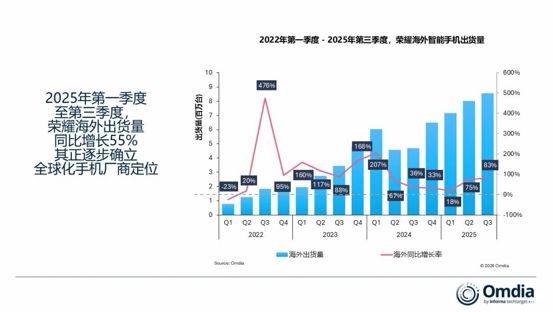
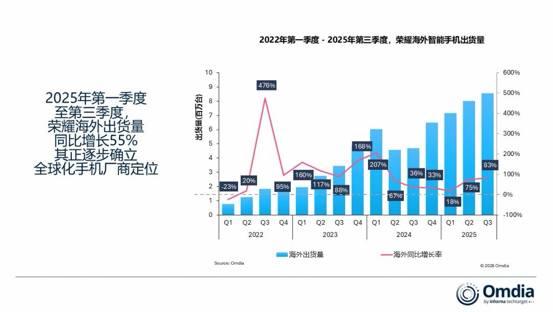
Core Insights - The global smartphone market is projected to grow in 2025, with an expected shipment volume of 1.26 billion units, reflecting a year-on-year increase of 1.9% [1] - Chinese smartphone manufacturers have established a significant presence in the global market, capturing approximately 60% of global shipments, with brands like OPPO, vivo, Xiaomi, and Honor leading the way [1] - Honor is expected to see rapid growth in overseas shipments, with a projected year-on-year increase of about 55% in the first three quarters of 2025 [1][2] Industry Trends - Chinese companies are adopting two main strategies for overseas markets: full AI integration and brand premiumization, with a focus on "Glocal" strategies that combine global thinking with local actions [2] - Honor's international business has undergone a structural transformation, with overseas shipments rising from less than 10% of total shipments in early 2021 to nearly 50% by the third quarter of 2025 [2] - The competition in emerging overseas markets is intense, particularly in the entry-level segment priced below $200, which remains a primary focus for many manufacturers despite profit pressures [2] Market Positioning - Increasingly, Chinese smartphone manufacturers are shifting towards the mid-to-high-end market to balance scale and profitability, with Honor targeting the $300-$500 price range, which accounted for approximately 23% of its overseas shipments in the first three quarters of 2025 [3] - The high-end market, particularly in Europe, is becoming a battleground for Chinese manufacturers, who are transitioning from a scale competition to a capability competition, emphasizing high-end product offerings [4] Product Innovation - To penetrate the high-end market, product capability is essential, with manufacturers upgrading their high-end product lines, such as Honor's Magic8 series and Huawei's Mate80Pro [5] - Honor is set to showcase its ROBOT PHONE, a unique product that integrates AI capabilities, at the 2026 International Consumer Electronics Show (CES) [5] AI Integration - Since 2025, there have been significant advancements in AI capabilities for consumer applications, with Honor achieving breakthroughs in on-device AI technologies that enhance real-time processing and user experience [6] - Huawei's strengths lie in its foundational system capabilities, with HarmonyOS 6 enabling multi-device AI computing, enhancing the processing of complex tasks [6] Future Outlook - The market is expected to continue evolving, with two prominent trends: premiumization and globalization, driven by improvements in AI capabilities and a focus on high-end user experiences [6] - Globalization is a core theme for Chinese companies, emphasizing the need to not only expand internationally but also to enhance their global presence and competitiveness [6]
中国手机厂商开始反击三星苹果们
2 1 Shi Ji Jing Ji Bao Dao· 2026-01-21 06:37
Core Insights - The global smartphone market is expected to grow in 2025, with an annual shipment volume reaching 1.26 billion units, representing a year-on-year increase of 1.9% [1] - Chinese smartphone manufacturers are increasingly focusing on both domestic and overseas markets, with significant growth in international shipments, particularly for Honor [1][4] Group 1: Market Trends - The Chinese smartphone market is evolving, with Honor launching three new models in January 2025, indicating a strategic push in product offerings [1] - Chinese manufacturers account for approximately 60% of global smartphone shipments, with Honor experiencing a notable 55% year-on-year increase in overseas shipments from Q1 to Q3 of 2025 [1][4] Group 2: Strategic Approaches - Chinese companies are adopting two main strategies for overseas expansion: full AI integration and brand premiumization, with a focus on "Glocal" strategies that combine global thinking with local actions [4] - Honor's international business has undergone a structural transformation, with overseas shipments rising from less than 10% of total shipments in early 2021 to nearly 50% by Q3 2025, marking a significant strategic shift [4] Group 3: High-End Market Focus - Honor is positioning itself in the mid-to-high-end market segment, with 23% of its overseas shipments falling within the $300–500 price range during the first three quarters of 2025 [5] - The European market is critical for high-end consumer electronics, and Honor aims to strengthen its presence there, maintaining a top-five market position in key Western European countries [7] Group 4: Product Innovation - Honor has enhanced its product lineup with advanced features, such as the ultra-thin Magic8 Pro Air, which weighs only 155g and is 6.1mm thick while maintaining high performance [10] - The introduction of the ROBOT PHONE, a smartphone integrated with AI capabilities, showcases the innovative direction of Chinese manufacturers [10] Group 5: AI and Technology Advancements - Since 2025, there have been significant advancements in AI capabilities for consumer smartphones, with Honor achieving breakthroughs in on-device AI processing [11] - Huawei's strengths lie in its underlying system capabilities, with the HarmonyOS 6 supporting multi-device AI computing, enhancing the overall user experience [11] Group 6: Future Outlook - 2025 marks a pivotal year for Honor as it transitions from a smartphone manufacturer to a leading AI terminal ecosystem company, with global shipments surpassing 71 million units [12] - The balance between scale expansion, AI capability implementation, and profitability will be crucial for Honor's position in the competitive landscape of smartphones and AI terminals [12]

中国手机厂商开始反击三星苹果们
21世纪经济报道· 2026-01-21 06:27
Core Viewpoint - The global smartphone market is expected to grow, with shipments reaching 1.26 billion units in 2025, reflecting a year-on-year increase of 1.9%. Despite this recovery, the industry faces long-term challenges [1]. Group 1: Market Dynamics - Chinese smartphone manufacturers have established a significant presence in the global market, capturing approximately 60% of global shipments, with brands like OPPO, vivo, Xiaomi, and Honor leading the charge [1]. - Honor has experienced rapid growth, with a reported 55% year-on-year increase in overseas smartphone shipments from Q1 to Q3 of 2025, marking it as the fastest-growing brand among the top ten global smartphone manufacturers [1][4]. Group 2: Strategic Approaches - Chinese companies are adopting two core strategies for international expansion: comprehensive AI integration and high-end branding. This includes a "Glocal" strategy, which combines global thinking with local action [4]. - Honor's international business has undergone a structural transformation, with overseas shipments rising from less than 10% of total shipments in early 2021 to nearly 50% by Q3 2025, indicating a strategic pivot towards international markets [4]. Group 3: Market Segmentation - Historically, Chinese manufacturers dominated the global mid-to-low-end market, but now they are increasingly focusing on the mid-to-high-end segments to balance scale and profitability. Honor is positioning itself in the $300-$500 price range, which accounted for approximately 23% of its overseas shipments in the first three quarters of 2025 [5]. - The high-end market, particularly in Europe, is a critical battleground for consumer electronics, with Honor maintaining a top-five market position in key Western European markets and achieving a 15% year-on-year growth in Central and Eastern Europe [7]. Group 4: Product Innovation - To penetrate the high-end market, product capability is essential. Honor has launched advanced products like the Magic8 series, which features AI-driven capabilities and innovative designs [9]. - The introduction of the ROBOT PHONE, a smartphone integrated with AI and robotics, showcases the innovative direction of Chinese manufacturers, with plans for further details to be revealed at major tech events [10]. Group 5: Future Outlook - The trends of high-end positioning and globalization are expected to continue, with a focus on enhancing product capabilities and user experiences through AI advancements [11]. - For Honor, 2025 marks a pivotal year in its transformation from a smartphone manufacturer to a leading AI terminal ecosystem company, with a global shipment target of over 71 million units and the fastest growth rate among the top ten brands [11][12].

中国手机厂商加码海外高端市场 荣耀结构性转变
2 1 Shi Ji Jing Ji Bao Dao· 2026-01-21 03:55
Core Insights - The global smartphone market is projected to grow in 2025, with an expected shipment volume of 1.26 billion units, reflecting a year-on-year increase of 1.9% [1] - Chinese smartphone manufacturers are increasingly focusing on both domestic and overseas markets, with significant growth in international shipments, particularly for Honor [1][3] Industry Overview - The smartphone industry is experiencing a recovery phase, but it still faces long-term challenges [1] - Chinese manufacturers hold approximately 60% of the global smartphone shipment share, with brands like OPPO, vivo, Xiaomi, and Honor leading the market [1] - Honor's overseas smartphone shipments are expected to grow by about 55% year-on-year in the first three quarters of 2025, marking significant international expansion [1][3] Strategic Shifts - Chinese companies are adopting two main strategies for overseas markets: full AI integration and brand premiumization [3] - Honor's international business has undergone a structural transformation, with overseas shipments rising from less than 10% of total shipments in early 2021 to nearly 50% by the third quarter of 2025 [3] - The competition is shifting from a focus on scale to a focus on stability and capability, with high-end positioning becoming essential for profit restructuring and brand recognition [6][9] Market Positioning - Honor is targeting the mid-to-high-end market segment, with 23% of its overseas shipments in the $300–500 price range during the first three quarters of 2025 [4] - Europe is a critical battleground for high-end consumer electronics, and Honor aims to solidify its position in key Western European markets [6] - Latin America and the Middle East and Africa are emerging as core regions for Honor's overseas shipment growth [6] Product Development - Product strength is crucial for penetrating the high-end market, with manufacturers enhancing their high-end offerings [7] - Honor has introduced innovative products like the Magic8 series and the ROBOT PHONE, which integrates AI capabilities and advanced imaging [7][8] - The AI capabilities of Chinese manufacturers are becoming a competitive advantage, with advancements in localized AI applications enhancing user experience [8][9] Future Outlook - The trends of high-end positioning and globalization are expected to continue shaping the market landscape [8][9] - Honor's "Alpha Strategy," launched in March 2025, signifies its transition from a smartphone manufacturer to a leading AI terminal ecosystem company, with global shipments projected to exceed 71 million units [9] - The new management team faces the challenge of balancing scale expansion, AI capability implementation, and profitability to maintain a leading position in the competitive landscape [9]
CES还是消费电子展吗?中企给出正确答案
Guan Cha Zhe Wang· 2026-01-17 01:40
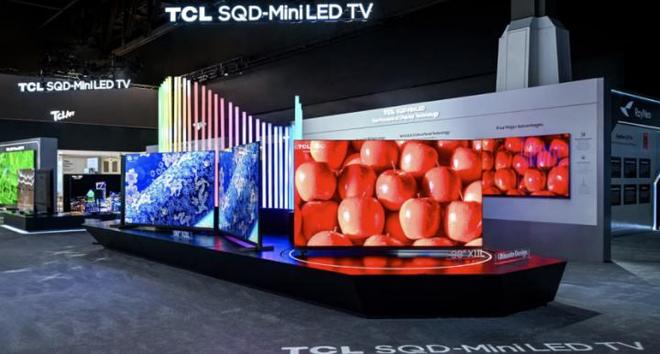
Core Insights - The CES 2026 has shifted from a consumer electronics showcase to a platform dominated by discussions on data centers and AI, primarily led by American tech giants like Nvidia and AMD, while Chinese companies focus on consumer-oriented products [1][2][13] - Nvidia's data center revenue reached $51.25 billion in Q3 2025, a 66% year-over-year increase, highlighting a structural imbalance in focus away from consumer needs [1][15] - Chinese companies like TCL and Hisense showcased tangible consumer products, emphasizing practical applications and user-friendly technology, contrasting with the abstract discussions of their American counterparts [3][4][6][15] Group 1: Industry Trends - The trend of "edge computing" is emphasized by Chinese firms, focusing on local processing power rather than cloud dependency, reflecting a deep understanding of consumer needs [13][14] - The evolution of product forms is evident, with innovations like the Honor ROBOT PHONE and the Stone G-Rover, which address real-life consumer challenges [13][14] - Chinese companies are showcasing products that are ready for mass production and purchase, unlike many Western firms that present conceptual prototypes [14][15] Group 2: Consumer Focus - Chinese enterprises are prioritizing consumer needs, as seen in TCL's and Hisense's product offerings that are accessible and understandable to the average user [3][4][6] - The consumer response to AI PCs has been lukewarm, with many users expressing confusion rather than excitement, indicating a disconnect between tech advancements and consumer expectations [2][12] - The success of products like the Stone G-Rover and the Lenovo Qira demonstrates a shift towards practical, user-friendly technology that resonates with everyday consumers [8][12][15] Group 3: Competitive Landscape - The disparity in focus between American and Chinese companies is evident, with the former leaning towards high-performance computing and the latter addressing everyday consumer problems [1][15] - The CES 2026 highlighted a potential future where American tech firms continue to dominate technical discussions while Chinese companies redefine consumer electronics with practical products [16][17] - The ongoing competition suggests that understanding consumer needs will be crucial for success in the evolving tech landscape, with Chinese firms currently leading in this regard [16][17]




6大趋势详解:谁说手机行业没有新东西了?
3 6 Ke· 2026-01-14 07:14
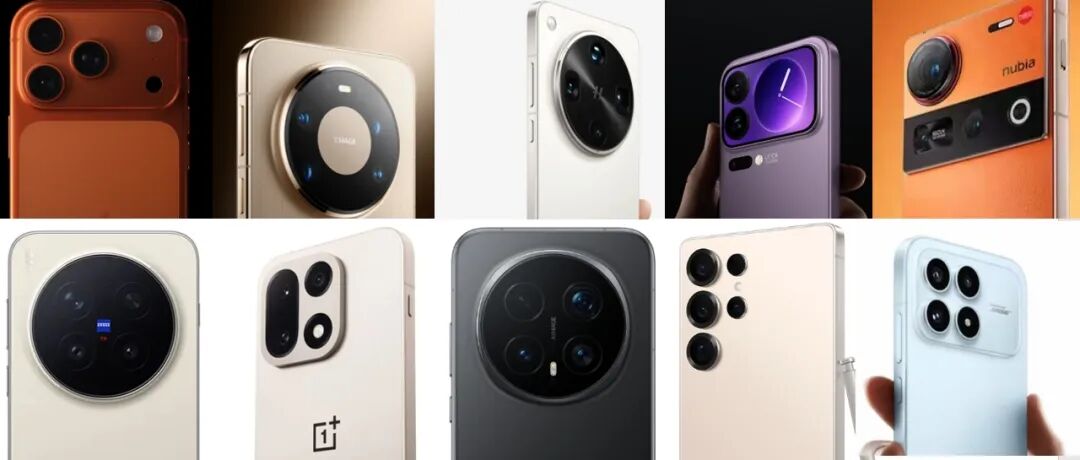
Group 1 - The core message of the articles highlights the ongoing transformation in the smartphone industry, driven by AI and new technologies, which poses a challenge to traditional smartphone growth as major companies shift focus towards AI-integrated devices [2][4][5] - Major brands like Honor, Samsung, and Infinix are introducing innovative products such as the AI-integrated ROBOT PHONE, a foldable OLED panel, and a smartphone with global satellite communication capabilities, respectively [2][4] - The global smartphone market is experiencing sluggish growth, with Apple, Samsung, and Xiaomi maintaining the top three positions, while Apple shows a strong recovery, surpassing Samsung for the first time in 14 years [5][7][8] Group 2 - Apple's resurgence is attributed to competitive product offerings and pricing strategies, with the iPhone 16e and iPhone 17 series performing well in the market, particularly in China where sales surged by 37% in October [7][8] - Samsung's stability is also linked to its pricing strategy, with a 7% decrease in average selling price and the introduction of high-value A-series products [10] - The Chinese smartphone market is characterized by volatility, with frequent shifts among the top five brands, and a notable decline in overall shipment volumes in the second quarter [13][15] Group 3 - The mid-range smartphone market is expanding, driven by consumer demand for high-quality, cost-effective products, with significant sales reported for models priced between 2000-2999 yuan [16][18] - High-end smartphones face challenges due to innovation stagnation, leading to a focus on system development and unique user experiences, with brands like Huawei and Xiaomi investing in proprietary operating systems [22][24] - AI is becoming a critical component in high-end smartphones, with brands leveraging AI to enhance ecosystem connectivity and user experience, as seen in Huawei's HarmonyOS and OPPO's AI features [27][30] Group 4 - Marketing strategies in the smartphone industry are evolving, with brands facing challenges in traditional marketing approaches, leading to a shift towards more relatable and engaging campaigns [33][36] - Instant retail is gaining traction, with brands like Apple and others adopting rapid delivery services to meet consumer demand for immediate gratification, significantly impacting sales during major shopping events [40][41] - The smartphone industry is undergoing significant changes, with AI, self-developed systems, and innovative marketing strategies driving a more dynamic and competitive landscape [45]


PORTABLE 100 瓦折叠便携太阳能板
Xin Lang Cai Jing· 2026-01-08 08:26
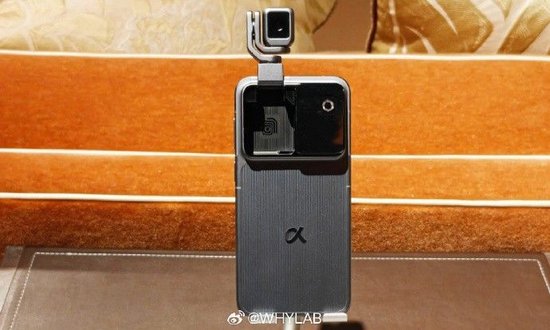
Core Viewpoint - The launch of the ROBOT PHONE at CES 2026 marks the introduction of the world's first robotic smartphone, showcasing innovative features and a new direction for smart devices [1][4]. Group 1: Product Features - The most notable design feature of the ROBOT PHONE is its integrated hidden three-axis mechanical arm gimbal, which allows for flexible rotation, intelligent tracking, and professional-grade stabilization [3][7]. - This mechanical gimbal solution offers greater physical compensation angles compared to traditional optical image stabilization (OIS) or electronic image stabilization (EIS), effectively reducing image shake in dynamic shooting scenarios without sacrificing image quality [3][7]. - The ROBOT PHONE is equipped with Honor's self-developed edge-side large model, YOYO, which possesses emotional perception and proactive service capabilities, enabling the system to recognize user emotions, habits, and environmental conditions through multi-modal sensors [3][7]. Group 2: Production and Strategic Importance - Although the current displayed model of the ROBOT PHONE is still an engineering prototype, it is close to its final production form, with plans for mass production set for the first half of 2026 [4][7]. - As a core project of Honor's Alpha strategy, the ROBOT PHONE is perceived as a new intelligent entity that retains traditional smartphone usage habits while incorporating capabilities that allow it to "move," "see," and "think," thus gently envisioning the future of smart terminals [4][7].

荣耀发布2026新年致辞:手机出货突破7100万台,海外占比首次过半
Feng Huang Wang· 2025-12-31 14:43
Group 1 - The core message of the New Year address by Honor's EMT management team emphasizes the company's achievements in 2025 and outlines its strategic direction for 2026 [1] - Honor's global smartphone shipments surpassed 71 million units in 2025, marking a 9% year-on-year increase, with overseas market sales growing by 47% and accounting for over 50% of total revenue [1] - In regional performance, Honor's shipments in Latin America and the Middle East and Africa exceeded 10 million units, achieving over 10% market share in 17 key countries [1] - Honor's high-end product line, particularly the Magic V5, has captured a 34% market share in the European foldable smartphone market [1] - The global shipment of Honor's 400 series has surpassed 6 million units, and the newly launched WIN series for esports has shown promising initial sales [1] - Honor plans to officially launch the "ROBOT PHONE," an alpha mobile robot, next year, indicating a diversification beyond traditional smartphone categories [1] Group 2 - For 2026, Honor aims to advance its "Alpha Strategy" to transform into a leading global AI terminal ecosystem company [2] - The company will establish Alpha Labs to focus on key technological innovations, laying the groundwork for N+2 technology advancements [2] - Honor emphasizes its "1x3xN" ecological strategy and has formed comprehensive strategic partnerships with companies like Alibaba, BYD, Google, and Qualcomm [2] - The management acknowledges challenges in the industry, including global memory supply and demand pressures and significant price increases, and plans to drive a user-centric transformation [2] - Organizational revitalization will be pursued through initiatives like the "Eagle Plan" and "Sailing Plan" [2]
吴晓波:“AI闪耀中国”2025(年度演讲全文)
Xin Lang Cai Jing· 2025-12-29 03:18
Group 1 - The AI revolution is a significant competition that impacts national fortunes, with China and the US as the main players [1][13][32] - The development of AI has evolved through key milestones, starting from Turing's question in 1950 to the emergence of GPT-3.5 in 2022, marking a pivotal moment in AI's integration into daily life [10][24][30] - The AI infrastructure investment in the US is projected to exceed $350 billion by 2025, while China's investment is expected to reach 630 billion RMB, indicating a massive scale of infrastructure development in both countries [24][26] Group 2 - The competition between the US and China in AI is characterized by different approaches: the US focuses on AI chips and closed-source models, while China leverages its manufacturing capabilities and open-source models [30][28] - By 2025, the majority of large AI models will be concentrated in the US and China, with both countries accounting for over 80% of the global total [26][28] - The AI industry is witnessing a surge in applications across various sectors, including finance, healthcare, and manufacturing, with companies like Shanghai Bank and Xiamen Guomao leading the way in AI integration [44][50][57] Group 3 - The emergence of multi-modal technologies is revolutionizing content production, allowing non-technical users to create high-quality content easily [34][36] - The AI animation industry has seen a dramatic increase in production and efficiency, with a reported 600% growth in output and a significant reduction in production costs [38][39] - Companies are increasingly adopting AI to innovate their business models, as seen in the case of Jinpai Home, which utilizes AI for home renovation services [53][57] Group 4 - The robotics sector is rapidly evolving, with a new generation of companies emerging to develop intelligent robots capable of performing complex tasks [72][74] - The market for embodied intelligent robots is expected to become a significant part of China's economy, with predictions of four trillion-yuan markets emerging in various sectors [80][82] - Innovations in AI-driven products, such as the ROBOT PHONE by Honor, highlight the integration of AI into consumer electronics, showcasing the potential for new market opportunities [84][85]