
SATA SSD

Search documents
江波龙:公司目前未和英伟达有直接合作
Xin Lang Cai Jing· 2026-03-27 03:53
Core Viewpoint - The company has not established direct cooperation with Nvidia but is actively developing AI-related storage products for various applications [1] Group 1: Product Development - The company has launched enterprise-level storage products including SATA SSD, PCIe SSD, and RDIMM, focusing on AI large model application scenarios [1] - New high-performance storage products such as MRDIMM and CXL2.0 memory expansion modules have been introduced [1] - The product offerings cater to a diverse clientele, including telecom operators, internet companies, and server manufacturers [1]

佰维存储:AI存力时代,站在需求、产品和封装的交汇点上
市值风云· 2026-03-22 07:15
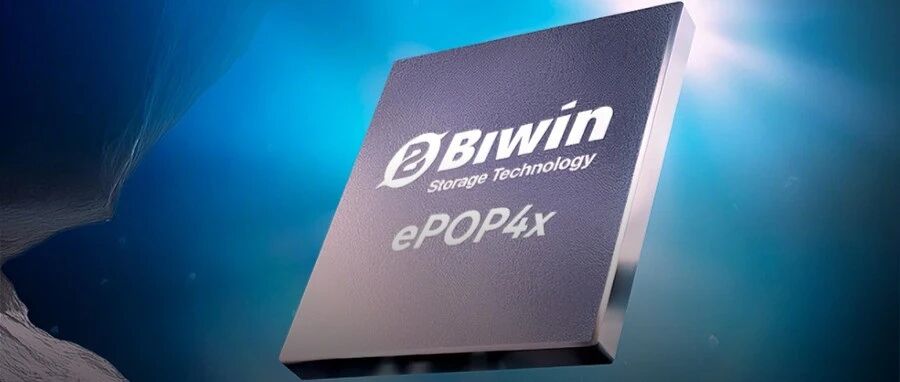
Core Viewpoint - The article emphasizes the transition of the storage industry from being labeled as a "cyclical stock" to evolving into high-value system-level comprehensive storage solution providers, driven by the increasing importance of storage in AI applications [1][3]. Industry Overview - The storage sector has shown strong performance recently, with Micron announcing the mass production of HBM4 for NVIDIA's Vera Rubin platform, and TrendForce revising upward its price expectations for DRAM and NAND in Q1 2026, indicating a robust market outlook [4][8]. - The storage industry is entering a high prosperity cycle in 2026, driven by AI computing power and domestic substitution, leading to continuous price increases for DRAM and NAND due to supply shortages [7][18]. Company Performance - Baiwei Storage (688525.SH) reported a significant increase in revenue and profit for 2025, with operating income reaching 11.3 billion yuan, a year-on-year growth of 68.8%, and net profit attributable to shareholders of 850 million yuan, up 429.1% [5][6]. - For the beginning of 2026, Baiwei expects to achieve operating income between 4.0 billion to 4.5 billion yuan, representing a year-on-year growth of 340.0% to 395.0%, and net profit between 1.5 billion to 1.8 billion yuan, an increase of 921.8% to 1086.1% [5][6]. Product and Market Strategy - Baiwei is not only benefiting from price increases but also from product structure optimization, with emerging AI-related products contributing significantly to revenue [7][12]. - The company has positioned itself in the AI edge market, with its ePOP series products being utilized by major companies like Meta, Google, and Xiaomi for AI/AR glasses and smart wearables [12][14]. - Baiwei's strategy includes expanding its presence across multiple sectors, including mobile, PC, enterprise storage, and smart automotive, indicating a broad market approach rather than focusing solely on edge applications [16][17]. Future Outlook - The company is investing in advanced packaging and testing capabilities, aiming to integrate storage solutions with advanced packaging to enhance its competitive position in the AI era [22][24]. - The shift from standalone storage devices to integrated system components is highlighted as a key trend, with companies that can effectively combine storage and computing likely to gain a competitive edge in AI applications [25][26]. - Baiwei's growth narrative is evolving from merely capitalizing on cyclical market trends to establishing itself as a comprehensive storage solution provider that understands both product and integration needs in the AI landscape [32].

【IPO前哨】A股年内飙111%!佰维存储赴港,能否获青睐?
Sou Hu Cai Jing· 2025-11-03 02:56
Core Viewpoint - The storage chip prices have started to rise since September, accelerating in Q4 due to increased demand from downstream manufacturers, leading to a supply shortage and significant stock price increases for companies like Bawei Storage [2][3]. Group 1: Company Overview - Bawei Storage is a leading independent semiconductor storage solution provider, focusing on AI applications and possessing unique full-stack technology capabilities [3][7]. - The company has established partnerships with major global clients, including Meta, Xiaomi, and OPPO, across various applications such as smart mobile devices and AI [3][4]. Group 2: Financial Performance - Bawei Storage's revenue for 2022, 2023, and projected for 2024 is approximately 2.986 billion, 3.591 billion, and 6.695 billion RMB, respectively, with profits showing fluctuations [8][9]. - In the first half of 2025, the company reported a revenue increase of 13.70% year-on-year, reaching 3.912 billion RMB, despite a net loss of 241 million RMB [8][10]. Group 3: Product Segmentation - The revenue distribution for the first half of 2025 shows that smart mobile and AI applications accounted for 43.0%, PC and enterprise storage for 34.9%, and smart automotive and other applications for 20.0%, indicating a balanced revenue structure [12][14]. Group 4: Market Position and Strategy - Bawei Storage plans to use the funds raised from its Hong Kong IPO to enhance R&D capabilities, expand globally, and explore strategic investments and partnerships [2][3]. - The company is the only independent storage solution provider globally with wafer-level packaging capabilities and is projected to be the largest independent storage manufacturer by revenue in 2024 [7][8]. Group 5: Inventory and Cash Flow - The company has maintained high inventory levels, with figures reaching 4.382 billion RMB in the first half of 2025, which poses potential risks of impairment [15]. - Bawei Storage has recorded negative operating cash flow in recent years, with a net cash outflow of 701 million RMB in the first half of 2025 [14][15].
德明利eSSD亮相2025阿里云栖大会,谋局AI存储新赛道
半导体行业观察· 2025-09-30 03:31
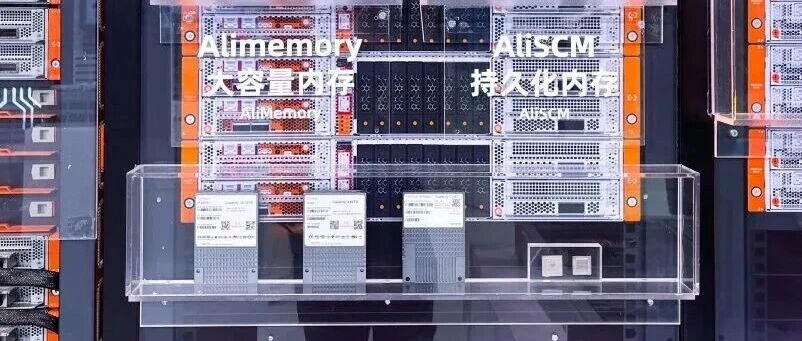
Core Insights - The annual Alibaba Cloud Summit showcased the new generation of AI servers, highlighting the importance of both computing power and storage capacity in AI infrastructure [1][4] - The eSSD market is projected to grow at a rate of 35% annually, driven by the increasing demand for efficient and reliable storage solutions in AI applications [3][5] Group 1: AI Infrastructure and Market Trends - The global storage market is experiencing explosive growth due to the investment in AI infrastructure, with Alibaba predicting over 380 billion yuan in investments over the next three years [4] - Major tech companies like Meta, Amazon, and Google are significantly increasing their capital expenditures, indicating a robust demand for AI servers and storage solutions [4] - The traditional HDDs are becoming less viable for AI workloads due to their limitations in high concurrency and low latency requirements, leading to a shift towards enterprise SSDs (eSSD) [4] Group 2: Domestic eSSD Development - Domestic company Demingli is strategically positioning itself in the eSSD market, launching a range of products tailored for AI applications starting in 2024 [10][11] - The eSSD market in China is expected to reach $6.25 billion in 2024, with a year-on-year growth of 187.9%, indicating a significant opportunity for domestic manufacturers [11] - Demingli's focus on high-performance and customized solutions is aimed at meeting the stringent requirements of enterprise-level SSDs, which are more demanding than consumer-grade SSDs [12][11] Group 3: Technological Advancements and Customization - Demingli is enhancing its R&D capabilities across multiple cities to develop eSSD solutions that meet the needs of AI computing and data centers [10][18] - The company is implementing a full-chain customization strategy, allowing it to enter the supply chains of leading cloud service providers [10][11] - The integration of advanced technologies such as PCIe 5.0 SSDs and QLC flash memory is crucial for meeting the growing storage demands in AI scenarios [14][16] Group 4: Future Directions and Industry Positioning - The focus of the eSSD industry is shifting towards better alignment with customer needs, emphasizing collaboration and innovation in technology [21] - Demingli aims to enhance data throughput for high-performance computing and AI applications while providing differentiated value through deep customization [21][22] - The company is positioned as a significant player in the AI storage market, leveraging its technological capabilities and supply chain resilience to compete effectively against international giants [22][19]
存储行业的好日子回来了?国产厂商想讲“新故事”
Jing Ji Guan Cha Wang· 2025-09-25 15:52
Core Viewpoint - The storage chip sector in the A-share market has shown strong performance despite increased volatility in the overall market, driven by price hikes from international giants and positive forecasts for NAND Flash prices [2][3]. Group 1: Market Performance - From September 4 to September 25, the stock prices of Demingli (001309.SZ) and Jiangbolong (301308.SZ) surged from approximately 86 yuan to 177 yuan and 144 yuan respectively, reaching historical highs [2]. - The price increase expectations were ignited by SanDisk's announcement of a price hike of over 10% for some products, marking the second price increase this year [2]. - Morgan Stanley's report suggests that NAND Flash prices may continue to rise into Q4 2025 and persist into 2026, with CFM forecasting a comprehensive price increase in the storage market during that period [2]. Group 2: Financial Performance of Major Players - Micron's Q4 2025 revenue reached $11.32 billion, a 46% year-on-year increase, with net profit soaring 158% to $3.47 billion [3]. - For the entire fiscal year 2025, Micron's revenue hit a record $37.4 billion, up nearly 50% year-on-year, primarily driven by demand from data centers and AI servers [3]. - Micron's high-value business segments, including HBM and high-capacity DIMM, generated $10 billion in revenue, five times that of the previous fiscal year [3][4]. Group 3: Domestic Manufacturers' Challenges and Strategies - Domestic storage manufacturers like Baiwei Storage and Demingli reported negative net profits in the first half of 2025, reflecting the lingering effects of the previous downturn [6]. - The traditional business model of relying on purchasing storage wafers from international suppliers has limited profit margins for domestic firms [6]. - Domestic manufacturers are shifting focus towards upstream technology to capture higher value, particularly through the development of proprietary controller chips [6][7]. Group 4: Technological Advancements - Jiangbolong has shipped over 80 million units of its self-developed controller chips, with its UFS 4.1 products outperforming market standards [7]. - Baiwei Storage has successfully mass-produced its first domestic eMMC controller chip and is developing UFS controller chips, expected to be ready for production in 2025 [7]. - Demingli has also achieved mass production of its SATA SSD controller chip, which is the first in China to utilize RISC-V architecture [7]. Group 5: Investment and Market Expansion - Baiwei Storage raised 1.871 billion yuan for expanding its advanced packaging and manufacturing facilities, indicating a strategic shift towards higher-value manufacturing [9]. - Domestic firms are targeting enterprise markets, such as data centers and AI servers, where profit margins are higher and customers prioritize reliability over price [10]. - Jiangbolong's enterprise storage revenue reached 693 million yuan in the first half of 2025, a 138.66% increase, while Baiwei Storage has secured core supplier status with major AI server manufacturers [10].


江波龙(301308):25Q2营收59亿元创历史新高,毛利率14.8%环比显著提升
Shenwan Hongyuan Securities· 2025-08-25 14:45
Investment Rating - The report maintains a "Buy" rating for the company [7] Core Insights - The company achieved a record high revenue of 5.9 billion yuan in Q2 2025, with a significant increase in gross margin to 14.8%, up 4.4 percentage points from the previous quarter [7] - The company is the second largest independent storage manufacturer globally and the largest in China, with three major storage brands: FORESEE, Zilia, and Lexar [7] - The company is experiencing rapid growth in enterprise storage, with a projected revenue of 9.22 billion yuan in 2024, representing a year-on-year increase of 666.3% [7] - The company has successfully completed compatibility adaptations for its PCIe SSD and SATA SSD product lines with multiple domestic CPU platforms [7] Financial Data and Profit Forecast - Total revenue projections for the company are as follows: - 2024: 17.464 billion yuan - 2025: 20.311 billion yuan - 2026: 23.440 billion yuan - 2027: 25.025 billion yuan - The company expects a net profit of 0.615 billion yuan in 2025, with a year-on-year growth rate of 23.4% [2][8] - The gross margin is projected to be 17.0% in 2025, with a return on equity (ROE) of 8.7% [2][8] Market Data - The closing price of the company's stock is 96.73 yuan, with a market capitalization of 26.543 billion yuan [3] - The company has a price-to-earnings (P/E) ratio of 66 for 2025 [2][3] Product Development - The company has expanded its automotive-grade storage product matrix, with successful product verification and mass production of UFS2.1 and UFS3.1 products [7] - The company has shipped over 50 million SLC NAND chips and over 80 million self-developed controller chips [7]