企业级固态硬盘(eSSD)

Search documents
内存条价格跳水,内存股集体下跌,内存超级周期见顶了?
华尔街见闻· 2026-03-30 06:43
Core Viewpoint - The memory price decline raises concerns about the peak of the memory cycle, with significant price drops observed in both the U.S. and domestic markets, leading to a divergence in market outlook regarding the memory industry's future [4][5][9]. Group 1: Price Trends and Market Reactions - In the U.S. market, DDR5 memory prices have dropped significantly, with some models seeing reductions of up to $100, such as the Corsair VENGEANCE series [4]. - Domestic markets are experiencing similar price declines, with reports of mainstream 16GB memory prices dropping over 100 yuan in a single day, reflecting a drastic fall from previous highs [5]. - The price surge in memory products has led to a 60% drop in sales volume compared to the previous year, as consumers are now hesitant to purchase non-essential items [6]. Group 2: Impact of Technological Developments - Google's new compression algorithm "TurboQuant" is expected to reduce memory usage for large language models by at least 60%, leading to a perceived decrease in memory demand and a subsequent drop in stock prices for major memory companies [7][19]. - The market reacted negatively, with Micron Technology's stock falling over 24% and Western Digital dropping nearly 21% from recent highs, resulting in a loss of nearly $100 billion in market capitalization for the memory chip sector [7][9]. Group 3: Diverging Market Perspectives - Some investors believe the traditional memory "pig cycle" has peaked, while others, including HSBC, argue that current concerns are overstated and that the market is in the middle of an AI-driven memory supercycle [9][19]. - Analysts highlight that the recent price drops are not solely due to Google's algorithm but also because certain smartphone memory chip prices have stopped rising, indicating a potential market peak [10][11]. Group 4: Structural Changes in the Memory Industry - The memory industry is undergoing a transformation, with major companies like Samsung and SK Hynix shifting towards a more restrained capacity expansion model, focusing on securing advance payments and long-term demand visibility [16][19]. - Analysts suggest that the operational strategies of memory companies are evolving, moving away from blind capacity expansion to a more calculated approach to production [16][19]. Group 5: Long-term Outlook and Investment Sentiment - Investment banks maintain a positive long-term outlook for the memory industry, asserting that current market fears are exaggerated and that the AI-driven supercycle will continue to support demand for memory products [19][21]. - The report anticipates a significant increase in AI server shipments by 28% year-on-year by 2026, with enterprise SSDs expected to capture a growing share of NAND demand, driven by AI applications [20][22].

飙涨1700%,又一“AI宠儿”诞生
3 6 Ke· 2026-02-03 08:11
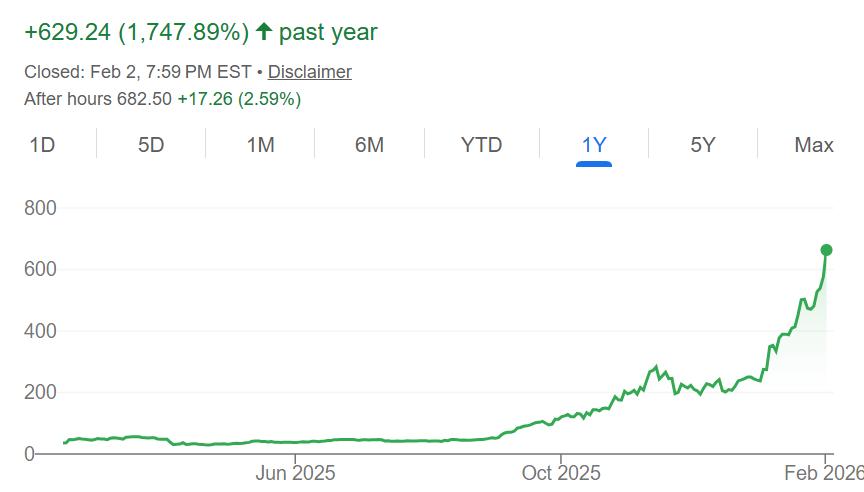
Core Viewpoint - The strong performance of NAND giant SanDisk, which saw a significant stock price increase following impressive earnings and outlook reports, has attracted considerable attention from Wall Street analysts, leading to substantial upward revisions in future earnings and stock price expectations. Group 1: Stock Performance - SanDisk's stock surged by 15.44%, making it the top performer in the market amid ongoing panic from precious metal sell-offs [1] - Over the past year, SanDisk's stock has skyrocketed by 1747.89% [4] Group 2: Earnings Report - SanDisk reported Q2 revenue of $3.03 billion, a 31% quarter-over-quarter increase, exceeding market expectations of $2.64 billion [4] - Adjusted earnings per share (EPS) reached $6.20, nearly double the market expectation of $3.33 [4] - Net profit under GAAP soared to $803 million, a 672% increase from $104 million year-over-year [4] - Gross margin improved to 51.1%, reflecting better pricing and a favorable product mix [4] - Free cash flow increased by over 1000% year-over-year [4] Group 3: Future Guidance - For Q3, SanDisk expects revenue between $4.4 billion and $4.8 billion, with non-GAAP EPS projected at $12 to $14, significantly above market expectations [4] - Non-GAAP gross margin is anticipated to rise further to 65% to 67%, indicating strong pricing power and cost efficiency [4] Group 4: Analyst Upgrades - Analysts have raised their price targets for SanDisk significantly, with Bernstein setting a target of $1,000, implying over 50% upside from the current price of $665 [1][4] - Goldman Sachs raised its target from $320 to $700, while other firms like Barclays and Citigroup set targets at $750 [5][10] - The optimistic outlook is supported by expectations of a structural increase in NAND flash memory prices and a projected profit margin of 75% by 2027 [6][12] Group 5: Market Dynamics - The demand for data center storage is expected to grow by over 60% by 2026, contributing to sustained pricing power for SanDisk [5] - Supply constraints in the NAND flash market are anticipated to persist, further enhancing profit margins [10] - SanDisk's leadership in the enterprise solid-state drive (eSSD) market is expected to strengthen, with new certifications from major data center clients [10]
SK海力士2025年营收97.1万亿韩元创新高,净利润翻倍增长
Sou Hu Cai Jing· 2026-01-28 08:09
Core Insights - SK Hynix reported record-breaking financial results for the fiscal year 2025, with revenue exceeding 97.1467 trillion KRW (approximately 467.47 billion RMB), a year-on-year increase of 47% [4] - Operating profit reached 47.2063 trillion KRW (approximately 227.16 billion RMB), marking a 101% increase year-on-year, with an operating margin of 49% [4] - Net profit was 42.9479 trillion KRW (approximately 206.67 billion RMB), reflecting a 117% year-on-year growth [4] Financial Performance - For the fourth quarter of fiscal year 2025, revenue was 32.8267 trillion KRW (approximately 157.96 billion RMB), a quarter-on-quarter increase of 34% [6] - Operating profit for the fourth quarter was 19.1696 trillion KRW (approximately 922.44 billion RMB), up 68% from the previous quarter, with an operating margin of 58% [6] - Net profit for the fourth quarter was 15.2460 trillion KRW (approximately 73.36 billion RMB), a 21% increase quarter-on-quarter [6] Business Segments - In the DRAM sector, sales of High Bandwidth Memory (HBM) more than doubled year-on-year, driving record performance [3] - The company has commenced mass production of the sixth generation 10nm-class (1c) DDR5 DRAM and developed a 256GB server DDR5 RDIMM module, the highest capacity in the industry [3] - In the NAND flash memory segment, SK Hynix achieved record annual sales by completing the development of 321-layer QLC products and addressing enterprise SSD demand [3] Strategic Initiatives - The company announced a significant shareholder return policy, including an additional dividend of 1,500 KRW per share (approximately 7.2 RMB), totaling 1 trillion KRW [3] - The total dividend for fiscal year 2025 will amount to 3,000 KRW per share, with a total return scale of 2.1 trillion KRW [3] - SK Hynix plans to cancel 15.3 million treasury shares, representing 2.1% of total shares, to enhance per-share value and demonstrate a long-term commitment to shareholder value [5] Market Outlook - The company anticipates continued growth in demand for high-performance memory products, particularly as the AI market transitions from training to inference, highlighting the increasing importance of memory solutions [3]
暴涨超100%!芯片,重大利好!
券商中国· 2026-01-25 05:12
Core Viewpoint - The storage chip market is experiencing a significant price surge, driven by the demand from AI infrastructure and a supply-demand imbalance, with major players like Samsung and SK Hynix implementing aggressive pricing strategies [2][4][9]. Price Surge - Samsung Electronics has raised the price of NAND flash memory by over 100% in the first quarter of this year, exceeding market expectations and highlighting a severe supply-demand imbalance in the storage chip market [3][4]. - Market research firm TrendForce previously predicted a price increase of 33% to 38% for NAND by the fourth quarter of 2025, but the current situation indicates a much sharper rise [3]. - Samsung is currently negotiating new NAND prices for the second quarter, with expectations of continued price increases [3][4]. Demand and Supply Dynamics - The aggressive pricing reflects strong demand for high-performance storage devices driven by AI infrastructure, with enterprise SSD demand surging due to data center expansions [4][5]. - The supply side has not kept pace with demand, leading to a situation where there is a lack of available products despite high prices [4][5]. - Other major players, including SK Hynix and SanDisk, are also planning significant price increases, indicating a trend of widespread price hikes across the industry [4][5]. Future Outlook - The semiconductor industry's long capacity construction cycle means that increasing supply to stabilize prices is not feasible in the short term, leading to inevitable price transmission to consumers [5][8]. - Industry experts predict that the supply tightness in the NAND flash market will persist for at least the next two years, influenced by AI-related investments [8]. - Analysts from Citigroup and other financial institutions believe that the current "storage chip super cycle" driven by AI will be more intense and longer-lasting than the previous cycle during the cloud computing era [9].
存储价格又涨疯了?
傅里叶的猫· 2026-01-20 16:00
Core Viewpoint - The article discusses the significant price increase in DRAM and NAND memory, driven by the rising demand from AI applications, particularly in the context of high bandwidth memory requirements for AI inference tasks [2][7][8]. Group 1: Price Trends - DRAM prices have nearly doubled since New Year's, causing distress among server distributors, with DDR4 32G rising from approximately 2500 to around 4500, and DDR4 64G increasing from about 6500 to 12000 [2]. - A report from Morgan Stanley indicates that DRAM, high bandwidth memory (HBM), NAND, and traditional storage categories are entering a steep upward price cycle [7]. Group 2: Supply and Demand Dynamics - The article highlights the bottleneck in storage due to the increasing demand for high bandwidth memory driven by AI applications, which is forcing the industry to optimize storage efficiency at both architectural and software levels [8]. - The shift in focus from computational power to storage capacity in AI hardware competition is emphasized, as storage becomes a critical constraint for scaling AI systems [8][9]. Group 3: Technological Innovations - NVIDIA's introduction of a context storage platform at CES 2026 aims to enhance inference tasks by integrating enterprise-level SSDs for KV Cache data management, significantly improving storage performance [10]. - The Engram technology aims to separate memory tasks from complex reasoning tasks in large language models, optimizing DRAM utilization and potentially increasing DRAM demand by a factor of three for every unit of storage efficiency gained [11][12]. Group 4: Market Outlook - The transition to Agentic AI is expected to drive massive demand for DRAM and NAND storage, as the industry moves towards more autonomous and sustainable learning systems, leading to a structural growth in storage needs [9][12]. - The ongoing production adjustments by major players like Samsung and Hynix are attributed to process transitions rather than profit maximization, indicating potential short-term supply constraints [14][15].


大摩调研:内存价格飙升,安卓和PC都遇冲击,但苹果今年不涨价
Hua Er Jie Jian Wen· 2026-01-07 05:38
Core Insights - A "cost storm" in the hardware industry is being driven by a surge in memory prices, with DRAM contract prices expected to rise by 40-70% and NAND prices by 30-35% in Q1 2026, significantly exceeding previous forecasts [1][2] - Most OEM manufacturers, except Apple, are expected to raise prices substantially in the first half of 2026, potentially leading to a decline in shipments of Android smartphones and Windows PCs throughout the year [1][3] - Apple has locked in favorable memory prices and plans to maintain product pricing, which may allow it to gain market share in the iPhone and Mac segments in 2026 [1][4] Memory Price Surge - TrendForce predicts DRAM contract prices will increase by 40-70% in Q1 2026, compared to an earlier estimate of 15-23%, while NAND prices are expected to rise by 30-35%, up from 15-25% [2] OEM Manufacturer Strategies - The anticipated price increases are prompting customers to place orders early, leading to strong performance in Q4 2025 and Q1 2026, but demand is expected to weaken in the second half of 2026 [3] - Server OEMs are likely to see a 5% increase in general server shipments in Q1 2026, contrary to the typical seasonal decline of 10-15% [3] - Dell and HP may initiate significant layoffs to protect operating margins due to rising cost pressures [8] Apple’s Market Position - Apple is maintaining stable product prices despite rising memory costs, which is expected to help it achieve growth in iPhone and Mac shipments in 2026 [4][5] - Apple plans to launch a low-cost MacBook priced at $599 in the first half of 2026, which could further enhance its market share in the PC segment [5] HDD Supply Crisis - The HDD supply shortage is worsening, with a projected shortfall of 200EB over the next 12 months, up from a previous estimate of 100-150EB [6] - HDD manufacturers are reallocating production capacity from consumer-grade to cloud storage applications to meet increasing demand [7] AI Server Market Dynamics - The demand for AI servers is strong, but profit margins remain low, with major OEMs facing ongoing price competition [10]

闪迪:NAND将进入超级周期
半导体芯闻· 2025-11-12 10:19
Group 1 - The importance of NAND products in the AI memory market is rapidly increasing, with demand for data center NAND flash expected to surpass mobile applications for the first time next year [2] - Major NAND suppliers, including Samsung and SK Hynix, have reported that customer demand will exceed production capacity, leading to a significant supply shortage [2] - The price of NAND flash products has risen sharply, with the fixed trading price of 128Gb MLC NAND flash increasing by 10.6% in September and 14.9% in October, marking the largest increase in a decade [2] Group 2 - The next-generation memory "HBF" is being developed to combine the advantages of high bandwidth memory (HBM) with NAND characteristics, aiming for mass production in 2027 [3]
德明利eSSD亮相2025阿里云栖大会,谋局AI存储新赛道
半导体行业观察· 2025-09-30 03:31
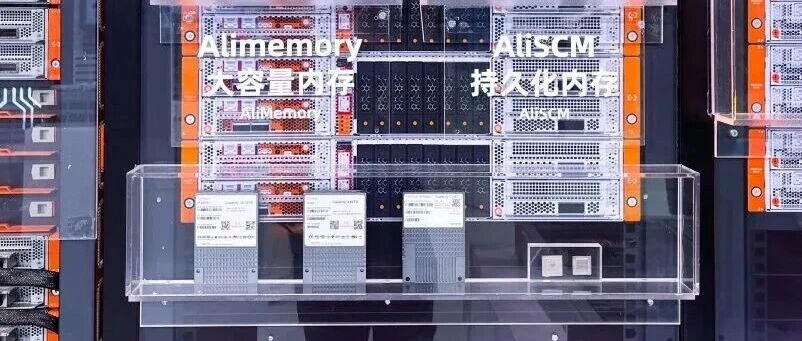
Core Insights - The annual Alibaba Cloud Summit showcased the new generation of AI servers, highlighting the importance of both computing power and storage capacity in AI infrastructure [1][4] - The eSSD market is projected to grow at a rate of 35% annually, driven by the increasing demand for efficient and reliable storage solutions in AI applications [3][5] Group 1: AI Infrastructure and Market Trends - The global storage market is experiencing explosive growth due to the investment in AI infrastructure, with Alibaba predicting over 380 billion yuan in investments over the next three years [4] - Major tech companies like Meta, Amazon, and Google are significantly increasing their capital expenditures, indicating a robust demand for AI servers and storage solutions [4] - The traditional HDDs are becoming less viable for AI workloads due to their limitations in high concurrency and low latency requirements, leading to a shift towards enterprise SSDs (eSSD) [4] Group 2: Domestic eSSD Development - Domestic company Demingli is strategically positioning itself in the eSSD market, launching a range of products tailored for AI applications starting in 2024 [10][11] - The eSSD market in China is expected to reach $6.25 billion in 2024, with a year-on-year growth of 187.9%, indicating a significant opportunity for domestic manufacturers [11] - Demingli's focus on high-performance and customized solutions is aimed at meeting the stringent requirements of enterprise-level SSDs, which are more demanding than consumer-grade SSDs [12][11] Group 3: Technological Advancements and Customization - Demingli is enhancing its R&D capabilities across multiple cities to develop eSSD solutions that meet the needs of AI computing and data centers [10][18] - The company is implementing a full-chain customization strategy, allowing it to enter the supply chains of leading cloud service providers [10][11] - The integration of advanced technologies such as PCIe 5.0 SSDs and QLC flash memory is crucial for meeting the growing storage demands in AI scenarios [14][16] Group 4: Future Directions and Industry Positioning - The focus of the eSSD industry is shifting towards better alignment with customer needs, emphasizing collaboration and innovation in technology [21] - Demingli aims to enhance data throughput for high-performance computing and AI applications while providing differentiated value through deep customization [21][22] - The company is positioned as a significant player in the AI storage market, leveraging its technological capabilities and supply chain resilience to compete effectively against international giants [22][19]
存储芯片:“饥饿游戏”开启,一场为期四年的上行周期
Hua Er Jie Jian Wen· 2025-09-26 02:27
Core Insights - The global storage chip market is entering an unprecedented "hunger game" driven by AI demand, leading to structural growth in the industry [1] - The report from JPMorgan highlights that the "memory hunger" trend, led by cloud service providers, is pushing the entire industry into a growth phase [1] Group 1: Market Dynamics - AI computing is the primary driver of demand for high-performance memory, impacting not only high-bandwidth memory (HBM) but also traditional DRAM and NAND flash [1] - There is a potential supply shortage in the next 12 months, which is expected to support rising prices across the market [1] - The NAND flash market is experiencing a strong rebound, partly due to a severe shortage of hard disk drives (HDD), prompting customers to shift towards enterprise solid-state drives (eSSD) [1][4] Group 2: Market Forecasts - JPMorgan has raised its forecast for the global storage market, predicting a 6% to 24% increase in the total addressable market (TAM) for 2025 to 2026, with an expected market size of nearly $300 billion by 2027 [1][3] - By 2027, AI-related applications are projected to account for 53% of the DRAM market TAM [3] Group 3: DRAM and HBM Insights - The DRAM market is entering an unprecedented four-year pricing upcycle from 2024 to 2027, driven by HBM's stability [2] - HBM is expected to account for 43% of the total value in the DRAM market by 2027, smoothing out traditional DRAM price fluctuations [2] - SK Hynix is positioned to lead in the HBM4 race, potentially capturing over 60% of the market share [2] Group 4: NAND Market Recovery - The NAND flash market is experiencing a strong pricing recovery after two years of underinvestment, driven by increased demand for eSSD [5] - The shortage of traditional HDDs, with delivery cycles extending up to 52 weeks, is pushing the nearline storage market to adopt eSSD as a replacement [5] - NAND prices are expected to continue rising, with a projected 7% increase in average selling prices for the 2026 fiscal year [5]
芯片狂潮向存储蔓延,大摩:NAND好于DRAM,存在显著上涨潜力
Hua Er Jie Jian Wen· 2025-09-24 07:26
Core Viewpoint - The chip frenzy driven by AI is rapidly spreading from GPUs to storage chips, particularly NAND flash, which is in the early stages of a sustained upward cycle according to Morgan Stanley [1][2] Group 1: Market Dynamics - The storage market, especially NAND flash, is experiencing strong demand driven by AI data centers, leading to significant price increases, with DRAM prices rising by up to 30% [1] - Morgan Stanley's report indicates that the current market is at a critical turning point, with expectations of a recovery cycle for storage prices by 2026 after a double bottom [1][12] - The supply-demand dynamics for flash memory are showing a more pronounced upward potential compared to DRAM and mechanical hard drives due to a sharp shift in supply-demand balance [1][12] Group 2: Price Trends - The report predicts that storage chip pricing may face a "double bottom" scenario, with a rebound followed by a potential decline before entering a sustained upward trend [14] - Contract prices for DRAM and flash memory are expected to rise by 3-8% in Q2 2025, although some categories may see flat or slight declines in Q4 2025 before stronger increases in 2026 [15][18] - Flash memory prices are projected to increase by 15-20% in the first half of 2026 following a near double-digit increase in Q4 2025 [22] Group 3: Demand Drivers - Cloud service providers (CSPs) are placing unprecedented orders for enterprise solid-state drives (eSSD) due to AI inference business and limited mechanical hard drive supply, creating a significant supply gap [18] - Major clients have already placed orders for approximately 200 exabytes (EB) of NL eSSD, with an additional 150 EB related to AI demand, indicating a strong market outlook [19][22] Group 4: Investment Opportunities - Investors are advised to focus on pure flash manufacturers like KIOXIA and SanDisk, as well as major players like Samsung and SK Hynix, which are expected to benefit from the overall strengthening of the storage commodity cycle [1][27][29] - KIOXIA is positioned well in the eSSD market due to its advanced BiCS-8 technology, while SanDisk is expected to benefit significantly from the overall price increases in flash memory [27][28] - Module manufacturers such as Longsys and Phison are also likely to gain from rising flash commodity prices [30]