SeedDance 2.0

Search documents
中国大模型,正在成为全球的“默认选项”
Guan Cha Zhe Wang· 2026-02-14 09:49
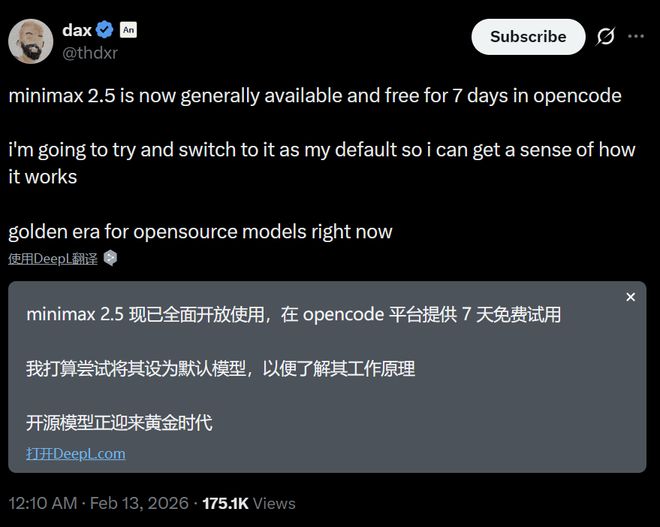
Core Insights - The article highlights a significant shift in the perception and adoption of Chinese AI models among overseas developers, moving from being seen as alternatives to becoming the default choice due to their superior performance and cost-effectiveness. Group 1: Adoption of Chinese AI Models - Overseas developers are actively integrating Chinese AI models into their core toolchains, replacing previously dominant models like GPT and Claude with Chinese alternatives as the default options [1][2][16] - The release of MiniMax M2.5 has particularly resonated within the open-source community, with notable endorsements from influential developers who have made it the default model in their projects [2][4] Group 2: Performance Metrics - MiniMax M2.5 achieved an 80.2% score on the SWE-BenchVerified leaderboard, closely trailing Anthropic's Opus4.6 at 80.8% and surpassing GPT-5.2 at 80.0% [8] - The model boasts a native inference speed of 100 TPS, nearly double that of other leading models, and is 37% faster than its predecessor, M2.1, making it highly suitable for long-running agent tasks [8] Group 3: Competitive Pricing - The cost of using MiniMax M2.5 for daily programming tasks is approximately $0.15, compared to $3 for Opus 4.6, highlighting a 20-fold price difference that enhances its attractiveness [16] - The combination of superior performance and significantly lower costs is driving widespread adoption and commercial viability of Chinese AI models in the overseas market [16][18] Group 4: Market Impact and Trends - The recent surge in popularity of Chinese AI models has led to a phenomenon of "reverse purchasing," where overseas users seek ways to access these models, including using VPNs and Chinese phone numbers for subscriptions [17][18] - Following the release of new models, companies like Zhiyu and MiniMax have seen their stock prices soar, with MiniMax's market capitalization exceeding HKD 200 billion, indicating strong investor confidence in the commercial potential of these AI technologies [18]

国资委成立央企“AI+”具身智能产业共同体,AI应用加速进入成熟期
Huan Qiu Wang· 2026-02-14 01:10
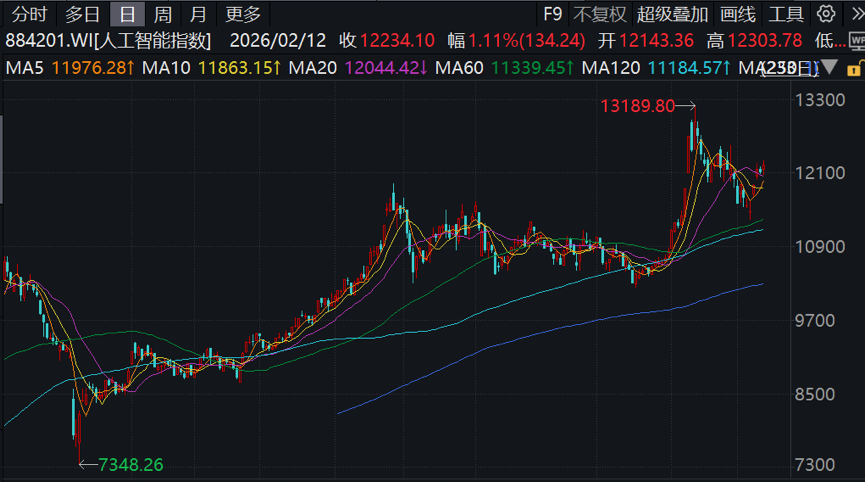
Group 1 - The State-owned Assets Supervision and Administration Commission (SASAC) has established a central enterprise "AI+" embodied intelligence industry community, focusing on building credible data spaces across 11 key industries, including energy, manufacturing, and communications, aiming to create over 1,000 application scenarios and more than 100,000 industry intelligent applications to empower high-quality industry development [1] - According to Huayuan Securities, in 2023, the demand for logic chips and storage chips is expected to grow significantly due to strong demand for AI applications and data center infrastructure [1] - The global semiconductor revenue is projected to continue rising quarter-on-quarter starting from Q2 2025, with an expected year-on-year growth of 22.5% to reach $772 billion in 2025, and the sales may approach $1 trillion in 2026 [1] Group 2 - Market conditions since mid-January 2026 have shown a continuous pullback in the AI industry chain due to uncertainties in AI application business models and real demand [2] - Major domestic companies are expected to release significant updates to their large models around the Spring Festival, which may catalyze a rebound in AI applications following a period of low sentiment and negative news [2] - Historical data indicates that significant events in the global AI industry during the Spring Festival period have previously led to heightened public interest and subsequent increases in technology stock performance [4]
大模型迎密集上新“春节档”,科创创业人工智能ETF华泰柏瑞(159139)关注度升温,助力一键布局AI产业链
Xin Lang Cai Jing· 2026-02-09 06:48
Group 1 - The AI industry chain has experienced a continuous pullback since mid-January 2026 due to high uncertainty regarding the commercial models and real demand for AI applications, yet related products have seen an increase in funding attention, with the Huatai-PB AI ETF (159139) receiving a net inflow of over 94 million yuan over six consecutive trading days from January 30 to February 6, 2026, leading to a growth in its shares and scale to 420 million shares and 456 million yuan respectively, indicating confidence in the long-term development logic of the sector [1][3] - Major domestic companies are expected to launch significant updates to their large models around the Spring Festival, which could catalyze the development of the AI industry chain. ByteDance plans to release three new AI models in February: Doubao 2.0 (next-generation flagship large language model), Seedream 5.0 (image generation model), and SeedDance 2.0 (video generation model), while the new flagship AI model Qwen 3.5 is also set to be released during the Spring Festival [1][3] - The iteration and upgrade of large models are anticipated to generate more demand and industrial opportunities, driving the development and upgrade of the upstream and downstream ecosystems of the AI industry chain [1][3] Group 2 - The Huatai-PB AI ETF (159139) closely tracks the CSI Sci-Tech Innovation and Entrepreneurship AI Index, which is the first AI-themed index that selects stocks across both "Sci-Tech Innovation" and "Entrepreneurship" sectors, integrating the hard technology strength of the Sci-Tech Innovation Board with the high growth potential and application vitality of the Entrepreneurship Board, facilitating investors to easily invest in a cluster of AI companies with distinct technological innovation attributes and growth potential in the A-share market [2][4] - The fund manager of the Huatai-PB AI ETF, Huatai-PB Fund, is one of the first ETF managers in China, with a strong background in managing not only industry ETFs but also broad-based and dividend-themed indices. The "Dividend Family" series includes several ETFs, which may serve as ideal defensive options in a "barbell strategy" [2][4]

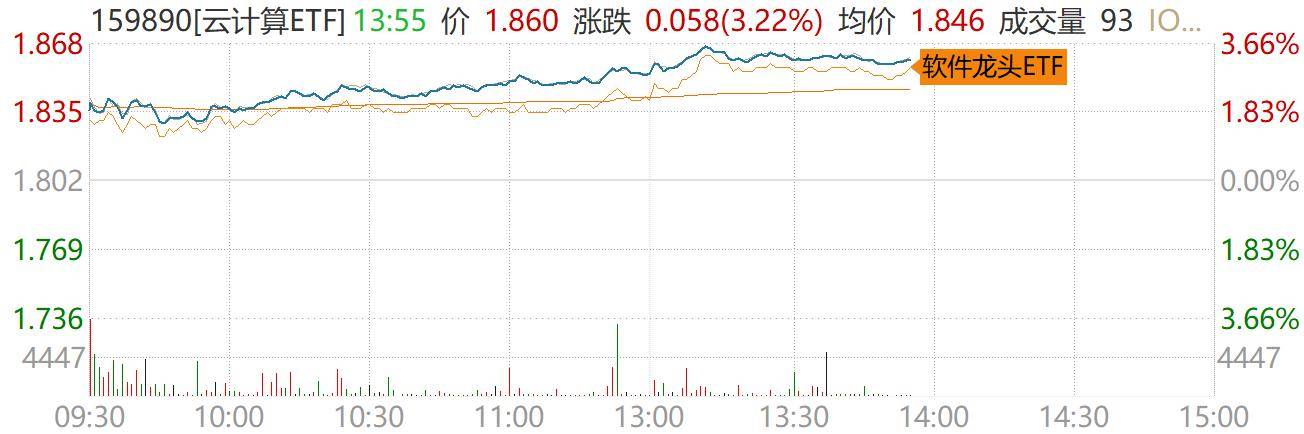
政策力推算力互联互通!AI算力应用持续上攻,云计算ETF(159890)、软件龙头ETF(159899)涨超3%
Sou Hu Cai Jing· 2026-02-09 06:17
Core Viewpoint - The article highlights the significant growth in the AI computing sector, driven by advancements in domestic models and government initiatives aimed at enhancing computing resource efficiency and service levels [3][4]. Group 1: Market Performance - Major indices saw an increase, with AI computing and application sectors leading the gains [1]. - Cloud computing ETFs (159890) and software leader ETFs (159899) both rose over 3% during trading [1]. - Notable stock performances included 360 Technology hitting the daily limit, and Oriental Guoxin rising over 18% [1]. Group 2: Government Initiatives - A recent government notification aims to promote the "1+M+N" national computing interconnection node system, which is expected to enhance the quality of the computing industry and improve the efficiency of public computing resource usage [3]. - The total number of operational computing center racks in the country has increased from 5.2 million to 12.5 million over the past five years, with an annual growth rate of 30% [3]. Group 3: Model Development and Investment - The period leading up to the Spring Festival has seen a surge in the release of domestic AI models, including significant updates from companies like DeepSeek, Alibaba, and Baidu [4]. - ByteDance plans to invest 160 billion yuan in capital expenditures by 2026, while Alibaba is advancing a 3-year plan for 380 billion yuan in AI infrastructure [4]. - The acceleration in model iteration is expected to drive rapid growth in demand for inference-side computing power, with 2026 anticipated to be a pivotal year for domestic super node deployment [5]. Group 4: Industry Outlook - The rapid iteration of domestic models is likely to significantly increase demand for inference-side computing power, benefiting the domestic computing industry [5]. - The cloud computing ETF (159890) tracks major players in the AI infrastructure and application sectors, while the software leader ETF (159899) focuses on key software development companies, both expected to benefit from the ongoing industry trends [5].


一切为了Agent:千问、阶跃、Gemini打响“3.5模型大战”,春节将成关键节点?
3 6 Ke· 2026-02-06 10:15
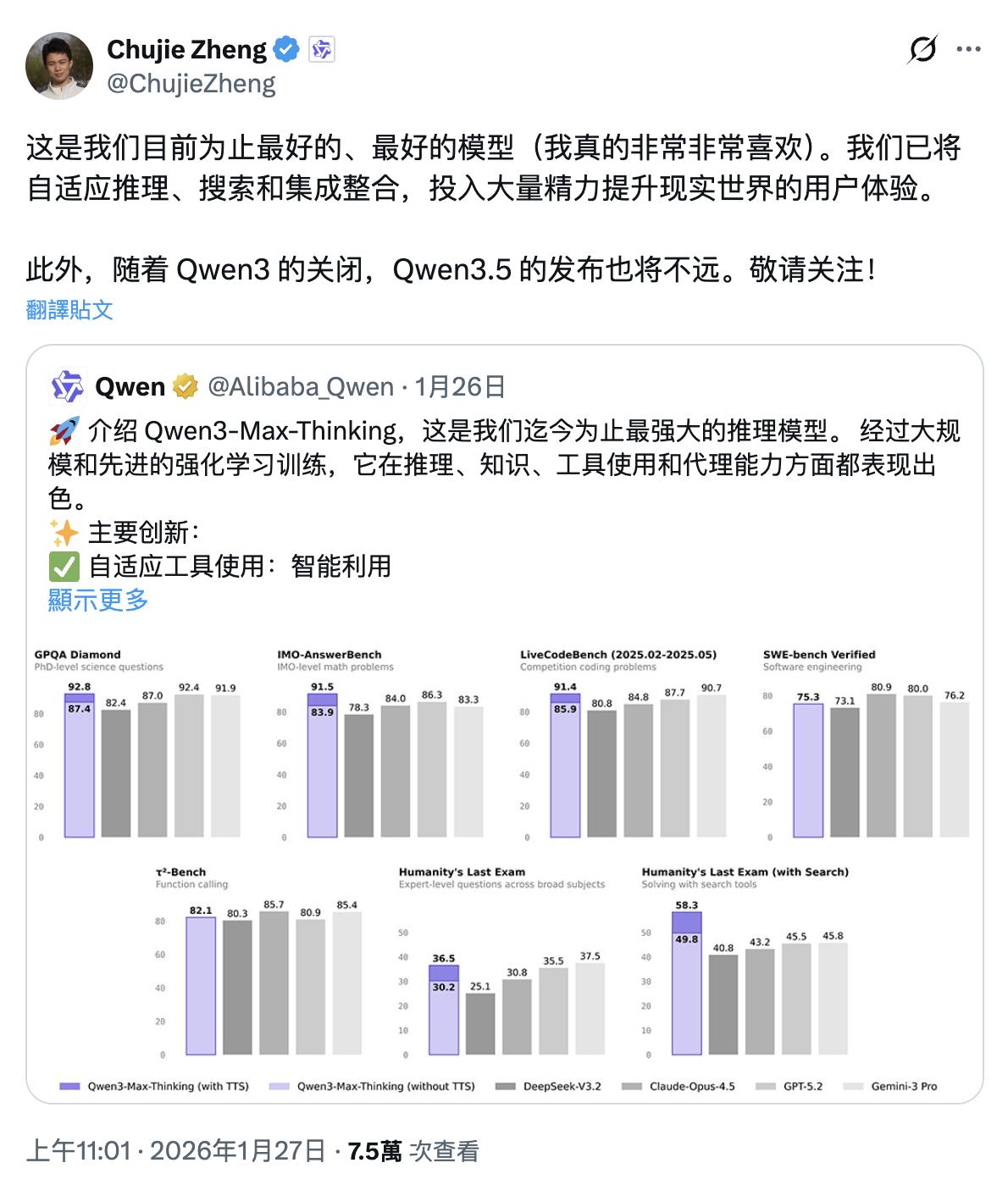
Core Insights - The AI model competition is heating up with multiple new releases expected around the Chinese New Year in early 2026, including significant updates from major players like OpenAI, Anthropic, and domestic companies such as Qwen and DeepSeek [1][2][20]. Group 1: Upcoming Model Releases - Major updates are anticipated from Qwen, with Qwen3-Max-Thinking being highlighted as the best model to date, and Qwen 3.5 expected soon [2][4]. - Other companies like ByteDance are also set to release new models, including Doubao 2.0 and Seedream 5.0, in March [5]. - The upcoming releases are not just limited to minor iterations but represent a broader trend of simultaneous major updates across the industry [7][21]. Group 2: Shift in Model Capabilities - The focus of the new generation of models is shifting from merely larger and stronger models to practical applications and enhanced reasoning capabilities [8][23]. - Reinforcement learning is being reintroduced, and reasoning is becoming a default capability rather than a unique selling point [9][10]. - Long context handling is emphasized as a core upgrade, with models like GLM-5 and Gemini 3.5 designed for real-world applications rather than just performance metrics [14][16]. Group 3: The Role of Agents - Agents are evolving from demonstration tools to central components of AI systems, with a focus on completing complex tasks with minimal human intervention [17][19]. - New models are being designed to enhance multi-agent collaboration and maintain context over long tasks, indicating a shift towards more integrated AI solutions [17][19]. - The success of these models will depend on their ability to be embedded into various systems, transforming them from simple assistants to essential engines of operation [19][25]. Group 4: Competitive Landscape and Market Dynamics - The timing of these releases is strategic, capitalizing on the heightened attention around the Chinese New Year, which previously saw significant developments in the AI sector [20][21]. - The upcoming model releases are expected to lead to rapid comparisons in real-world applications, with developers and users able to test capabilities almost immediately [22][23]. - The true measure of success will not be the initial release but rather the ability to integrate these models into everyday tools and systems, influencing the competitive landscape for the year ahead [25][26].
国产算力专题报告(一):模型密集发布,国产算力需求有望加速
CAITONG SECURITIES· 2026-02-03 07:25
Investment Rating - The industry investment rating is "Positive" (maintained) [1] Core Insights - The domestic model release period is intensifying, with significant models such as DeepSeek's open-source OCR2, Kimi's K2.5, Alibaba's Qwen3-Max-Thinking, and Baidu's Wenxin 5.0 being launched recently. ByteDance plans to release three new AI models in February, indicating a rapid acceleration in model commercialization [5] - Domestic cloud vendors are maintaining high capital expenditures, with ByteDance planning 160 billion yuan for 2026, up from approximately 150 billion yuan in 2025. Alibaba is also advancing a 3-year plan for 380 billion yuan in AI infrastructure [5] - The rapid iteration of domestic models is expected to significantly increase demand for inference-side computing power, with 2026 being a pivotal year for the deployment of domestic supernodes. Major companies like Huawei and Alibaba are launching new supernode solutions [5] - Investment suggestions highlight that the acceleration of domestic model iterations and improvements in inference-side performance will benefit the domestic computing power industry chain, with a focus on companies like Chipone Technology, Huafeng Technology, and Weicai Technology [5] Summary by Sections Recent Market Performance - The report notes a recent market performance with fluctuations, including a -13% change in one segment and a 67% increase in another [2] Key Company Ratings - Chipone Technology: Market cap of 109.3 billion yuan, with a rating of "Increase" [4] - Huafeng Technology: Market cap of 42.1 billion yuan, with a rating of "Increase" [4] - Weicai Technology: Market cap of 17.9 billion yuan, with no specific rating provided [4]


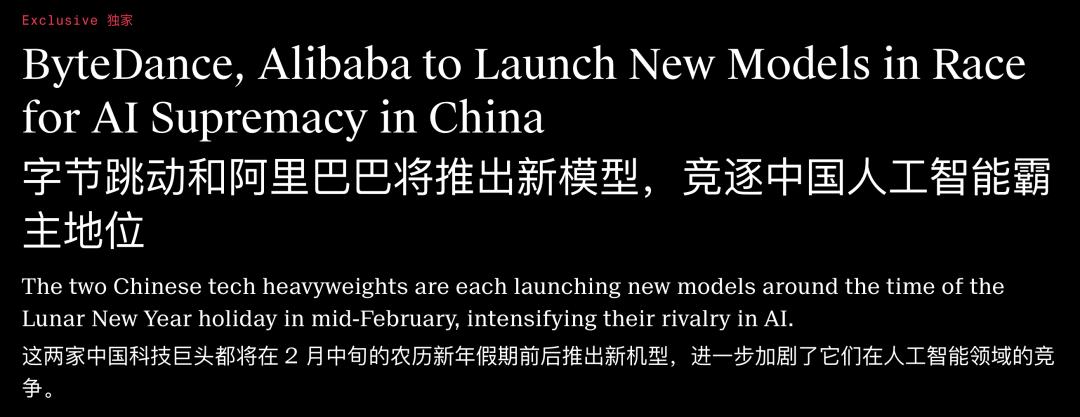
字节阿里DeepSeek决战春节:一场关乎14亿人的重磅AI大战
3 6 Ke· 2026-01-30 11:01
Core Insights - The upcoming Spring Festival marks a critical moment for AI in China, with major companies like ByteDance, Alibaba, and DeepSeek preparing to launch significant AI models, indicating a fierce competition for user engagement and future internet order [1][18]. ByteDance - ByteDance plans to release three flagship models during the Spring Festival: Doubao 2.0 (language model), Seedream 5.0 (image generation model), and SeedDance 2.0 (video generation model) [2]. - Doubao 2.0 has reached 155 million weekly active users, and the company aims to integrate AI into its ecosystem, particularly within Douyin, to maintain its dominance in content creation [3][4]. - The new models are expected to enhance ByteDance's cloud business, positioning it to compete more effectively with Alibaba Cloud [4]. Alibaba - Alibaba is set to launch its flagship model Qwen 3.5, focusing on enhancing user experience and capabilities in mathematics and coding [5][6]. - The Qwen app is evolving into a multifunctional assistant, integrating services like food delivery and travel booking, aiming to capture users' daily life services [7]. - Alibaba's strategy includes a goal to deeply integrate all its services with the Qwen app by 2026, with the app's monthly active users surpassing 100 million [8]. DeepSeek - DeepSeek plans to unveil its new model, V4, which is expected to excel in coding and long-context processing, potentially surpassing competitors like OpenAI's GPT and Google's Gemini [9][10]. - The V4 model is designed to handle extensive code prompts and maintain data integrity during training, crucial for developing complex software systems [10]. - DeepSeek's unique training architecture allows for larger models without proportionally increasing chip numbers, showcasing its capability in logical reasoning and code generation [13]. Industry Implications - The competition among these tech giants is not solely about financial gains but about establishing a dominant entry point in the AI era, which will define the internet landscape for the next decade [17][18]. - The integration of AI into everyday life is anticipated to transform user interactions, from generating festive videos to planning family trips and writing complex code [16].