UWB芯片

Search documents
又一家车规芯片“隐形冠军”冲刺A股!
是说芯语· 2026-03-08 12:42
Core Viewpoint - The article emphasizes the significance of automotive-grade chips in the rapidly growing intelligent connected vehicle industry, highlighting Gateron Microelectronics as a leading player in the automotive-grade wireless perception and communication chip sector, which has recently initiated its IPO process [1]. Company Overview - Gateron Microelectronics, established in 2014, is registered in the Shanghai Free Trade Zone with a registered capital of 25.005914 million yuan. The largest shareholder is Nanchang Xichuang Enterprise Management Partnership, holding 20.8730% of the shares. The company has developed a full-chain capability from chip design to mass production, focusing on automotive-grade millimeter-wave radar SoC and UWB chip research, design, and sales. Cumulative shipments of millimeter-wave radar chips have exceeded 19 million units, serving over 30 domestic automotive brands and more than 300 vehicle models. The expected annual shipment volume for 2025 is projected to reach 16 million units, with a domestic market share potentially exceeding one-third [2]. Product Matrix - Gateron has established a diversified product matrix covering millimeter-wave radar SoC and UWB chips, primarily focusing on automotive applications. The products support L2/L2+ and higher-level ADAS systems, with extensions into industrial automation and consumer electronics. The millimeter-wave radar SoC products cover two core frequency bands: 57–62GHz and 76–81GHz, with multiple models like Andes and Alps-Pro, catering to various automotive radar needs. The UWB chip, as a second growth curve, is the world's first automotive-grade UWB SoC Dubhe series compliant with the IEEE 802.15.4ab standard, integrating communication and perception capabilities for applications like digital car keys and kick-sensor tailgates [3]. Core Technical Advantages - Gateron's success in the global automotive chip market is attributed to four core technical advantages: 1. Full-process development capability for automotive-grade wireless SoC, with continuous upgrades in CMOS millimeter-wave radar SoC technology and packaging techniques [5]. 2. Innovation-driven approach, launching several globally pioneering products and actively participating in UWB international standard formulation [5]. 3. Aiming for "zero defects," the company has established a comprehensive quality management system and is the first semiconductor company in China to obtain ASIL B certification for complete products [5]. 4. Proprietary radar chip algorithm "Super Engine," which enhances product performance while reducing customer development costs through deep collaboration between chips and algorithms [5]. Market Dynamics - The global automotive-grade millimeter-wave radar chip market is currently dominated by international giants like ADI, Infineon, and NXP, which hold significant market shares but face challenges such as high prices and insufficient localized services. The domestic market is experiencing an acceleration in domestic substitution, with few companies in the field and a concentration of leading players. Gateron, with its first-mover advantage, technical strength, and large-scale production capabilities, has become a representative of the first tier of domestic companies, being one of the earliest to achieve mass production of automotive-grade millimeter-wave radar SoCs and leading in product frequency coverage and application scenarios [7]. Acceleration of Domestic Substitution - Gateron's rapid development reflects the acceleration of domestic substitution in the automotive-grade millimeter-wave radar chip sector, supported by favorable policies, market conditions, technology advancements, and industry chain dynamics. The government has introduced multiple measures to support the integration of the integrated circuit and automotive industries, designating automotive-grade chips as a key area for tackling "bottleneck" technologies, providing policy and financial support for domestic companies. The rising sales of domestic new energy and intelligent connected vehicles, along with the rapid increase in ADAS system penetration, have led to a surge in millimeter-wave radar demand, prompting automakers to enhance the validation and adoption of domestic chips [8].


1400万出货量,中国车规芯片实现从量产到标准引领
Jing Ji Wang· 2026-01-22 08:03
Core Insights - The article highlights the transition of Chinese chip companies, particularly Gateron, from technology followers to standard setters in the UWB (Ultra-Wideband) joint ranging solution based on the IEEE 802.15.4ab standard [1] - This development reflects a structural upgrade in China's smart automotive industry, moving from reliance on imports to self-innovation in the automotive chip sector [1] Industry Trends - The demand for high-precision perception chips is continuously rising as the automotive intelligence process advances [1] - Third-party data indicates that global UWB device shipments are expected to exceed 1 billion units by 2029, with a compound annual growth rate (CAGR) of 34% in the automotive sector [1] - The millimeter-wave radar market is also experiencing growth, with estimates suggesting that the Chinese automotive radar chip market will surpass 40 million units by 2025, increasing the domestic production rate from 20% in 2024 to 33% [1] Company Developments - Gateron has achieved a milestone of shipping 14 million millimeter-wave radar chips in 2025, accounting for approximately one-third of the domestic market, with a cumulative total exceeding 20 million units [2] - The company has validated its technical capabilities in the European market, with the first luxury model equipped with the Alps-Pro chip entering mass production and delivery in 2025 [2] - In the UWB sector, Gateron has launched next-generation standard-compliant chip products and is advancing the industrialization process through joint testing, enabling Chinese companies to participate in defining technology standards [2] - Automotive chip companies are emphasizing quality system construction, including certifications such as ISO 26262 ASIL B for functional safety, TMMi 4 for software testing maturity, and TISAX AL3 for information security, facilitating entry into international markets [2]
从北斗应用到零碳园区:解码湖南金融赋能新质生产力的实践样本
Zhong Guo Jin Rong Xin Xi Wang· 2025-11-11 03:21
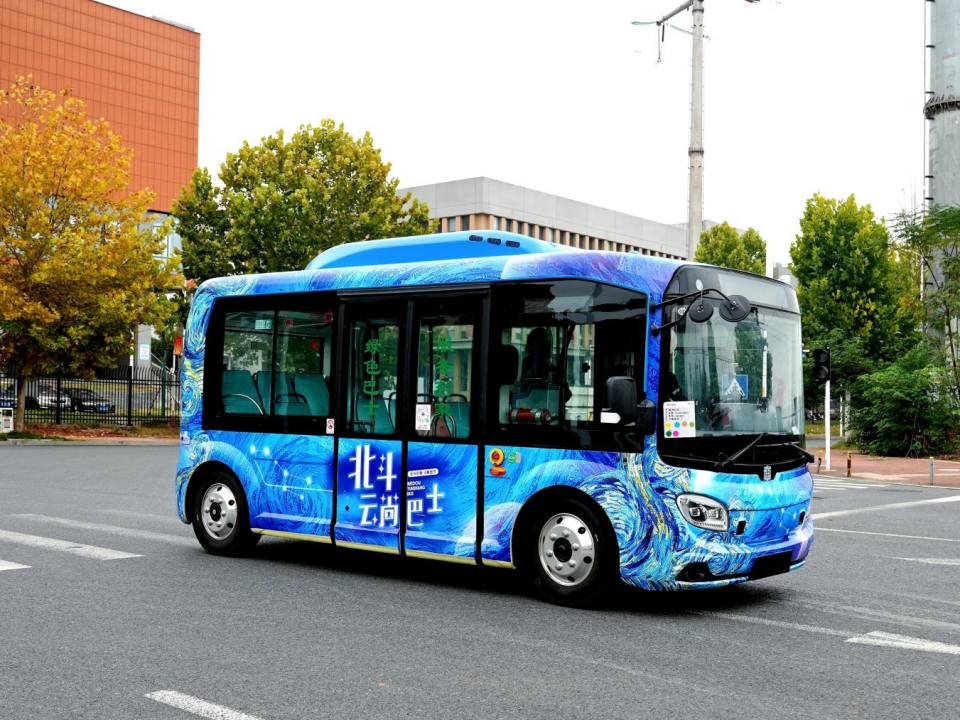
Group 1: Financial Empowerment in Technological Innovation - Hunan's financial system is increasingly acting as a "strategic partner" in supporting technological innovation and industrial upgrades through a service ecosystem tailored to these needs [1][2] - Agricultural Bank of China in Zhuzhou completed a credit approval of 1.97 billion yuan in just 20 days during the initial phase of the Beidou Industrial Park, marking a historical high for the bank [2] - China Railway Construction Heavy Industry Group received 3.88 billion yuan in loans from the National Development Bank to tackle key technologies in high-end tunnel boring machines (TBM), maintaining a leading market share in China [5] Group 2: Innovations in Transportation and Energy - The North Cloud Bus developed by CRRC Times Electric Co., Ltd. utilizes the Beidou system for real-time positioning and intelligent scheduling, showcasing significant technological advantages [4] - Hunan's financial institutions are supporting projects like the Dazeh Lake low-carbon demonstration park, which aims to create a clean energy system through geothermal energy [7][9] - Hunan Junxin Environmental Protection Co., Ltd. has built a leading environmental park with support from China Merchants Bank, processing nearly 10,000 tons of waste daily and achieving significant carbon reduction [10] Group 3: Support for Traditional Industries and Sustainable Development - The Chang-Zhu-Tan logistics hub project is a key national initiative aimed at transforming traditional logistics into a smart and low-carbon model, with a credit line of 1.45 billion yuan from the Bank of Communications [11] - Long-term partnerships between banks and companies, such as the 20-year collaboration between Changsha Bank and Salted Snack Manufacturer, illustrate the role of financial support in transitioning from traditional to smart manufacturing [13] - Hunan Liyu Environmental Energy Co., Ltd. has received 576 million yuan in loans since 2019, enabling it to provide approximately 11.9 billion kWh of green electricity annually and expand into international markets [10]
北路智控:公司已于2025年初投资入股北京瀚巍创芯电子技术有限公司
Zheng Quan Ri Bao Zhi Sheng· 2025-10-10 10:39
Core Viewpoint - The company has invested in Beijing Hanwei Chuangxin Electronics Technology Co., Ltd., acquiring a 4.97% stake, which is expected to enhance its product competitiveness through customized UWB chip designs for specific industrial applications [1] Group 1 - The company announced its investment in Beijing Hanwei Chuangxin Electronics Technology Co., Ltd. on October 10, 2023 [1] - The investment was made in early 2025, indicating a forward-looking strategy [1] - The UWB chips designed for special working conditions, such as mining, offer energy efficiency and performance customization, which are considered rare advantages [1]
卓胜微上半年营收17.03亿元 射频前端突破与产线优化助力长期发展
Zheng Quan Shi Bao Wang· 2025-08-29 11:54
Core Viewpoint - The company reported a revenue of 1.703 billion yuan and a net profit attributable to shareholders of -147 million yuan for the first half of 2025, indicating short-term performance pressure due to global economic challenges, but it is focusing on product structure optimization, technological breakthroughs, and production line construction to lay a solid foundation for future profitability recovery [1] Group 1: Revenue and Product Performance - The revenue from RF modules increased to 44.35% of total revenue in the first half of 2025, up from 36.34% in the same period last year, demonstrating the company's enhanced competitiveness in integrated and modular products [2] - The L-PAMiD product, which is the highest integration RF front-end module, has entered mass production and delivery, marking a breakthrough in the company's capabilities in the high-end RF front-end sector [2] - The company has established two new growth areas beyond the traditional mobile phone market: large-scale production of WiFi7 front-end modules and successful client validation of Bluetooth front-end modules and UWB chips, positioning itself in the IoT precise positioning market [2] Group 2: Production and R&D Investment - The company is advancing its production line construction and R&D investment, with a monthly capacity of 5,000 wafers for the 12-inch production line and high product yield rates [3] - R&D investment for the first half of 2025 was 407 million yuan, maintaining a high intensity despite a year-on-year decline, with a total of 200 patents obtained, including 198 domestic patents [3] - The company reported a debt-to-asset ratio of 30% and a net cash flow from operating activities of approximately 257 million yuan, providing strong support for future R&D and capacity expansion [3]
南京宇都通讯领军高精度定位芯片自主化浪潮,UWB芯片国产替代正当时
Zhong Jin Zai Xian· 2025-08-06 09:05
Core Viewpoint - UWB (Ultra-Wideband) technology is becoming a core breakthrough in wireless communication, driven by advancements in IoT, smart driving, and Industry 4.0, with domestic companies like Nanjing Yudu Communications leading the charge in domestic chip development [1][2]. Group 1: UWB Technology and Market Dynamics - UWB technology is characterized by centimeter-level positioning accuracy and low power consumption, making it widely applicable in smartphones, smart homes, and automotive sectors [2]. - The UWB chip market has been dominated by international giants such as NXP, Apple, and Qorvo, leading to high procurement costs and hindering domestic industry development [2]. - Accelerating the process of UWB technology localization and promoting domestic alternatives has become a consensus in the industry [2]. Group 2: Nanjing Yudu Communications' Achievements - Nanjing Yudu Communications, led by Dr. Wang Junfeng, has successfully developed the first domestic automotive-grade UWB chip, YD9605, which directly competes with NXP's flagship chip [2][3]. - The company has a strong R&D team with over 70% of its personnel dedicated to chip design, including high-level talents with significant contributions to industry standards [3]. - Key milestones include the launch of the first domestically produced wired RF broadband standard chip in 2018 and the successful tape-out of the YD9605 chip within a year [3]. Group 3: Future Prospects and Applications - UWB technology is seen as a core infrastructure for future interconnected devices, with a goal to enhance China's UWB industry chain and global competitiveness [4]. - The demand for high-precision positioning technology is rapidly increasing, driven by policies such as the "14th Five-Year Plan" for digital economy development [4]. - Yudu Communications is developing a diversified application ecosystem centered around UWB technology, including applications in low-altitude economy, humanoid robots, and sleep monitoring [4][5]. Group 4: Strategic Collaborations - Yudu Communications is collaborating with state-owned enterprises to develop drone control systems, leveraging UWB technology for precise positioning [4]. - The company has signed a strategic cooperation agreement with a humanoid robot innovation incubator to advance UWB technology in the robotics field [5]. - Yudu's innovative UWB + AI SoC solution for sleep monitoring aims to provide non-contact monitoring capabilities, shifting health management from reactive to proactive [5]. Group 5: Conclusion - Nanjing Yudu Communications is positioning itself as a significant player in the global UWB chip market, driven by innovation and a mission for self-sufficiency, potentially leading the UWB industry from a follower to a leader [6].
又有两家UWB厂商完成融资!
Sou Hu Cai Jing· 2025-07-03 07:45
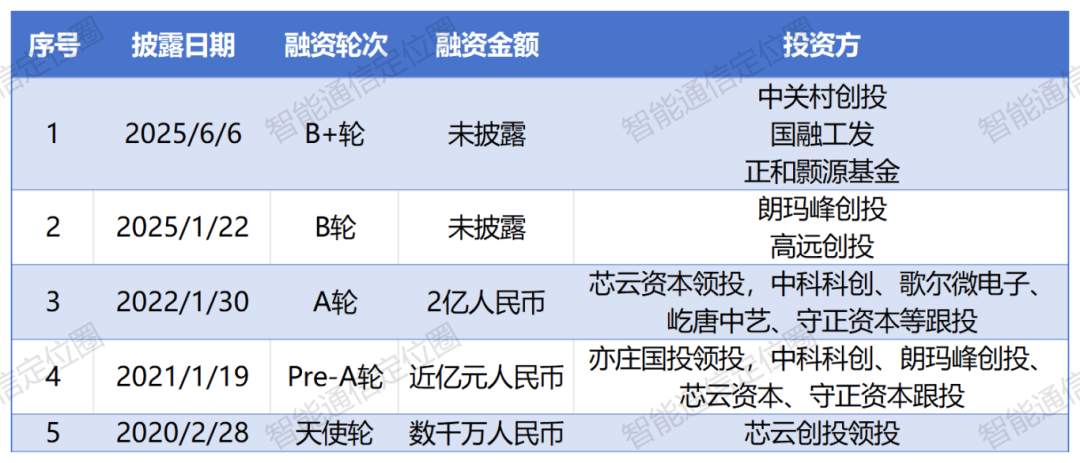
Group 1: Company Overview - Shenzhen Nuri Chip Technology Co., Ltd. (Nuri Chip) has successfully completed a B+ round of financing, with the amount undisclosed, backed by investors including Zhenghe Haoyuan, Zhongguancun Venture Capital, and Beigong Investment [1][3] - Beijing Quanji Technology Co., Ltd. (Quanji Technology) has completed a C round financing of several million yuan, with Wuhu Construction Investment as the investor and Wanchuang Investment Bank serving as the financial advisor [2][11] Group 2: Nuri Chip's Achievements - Nuri Chip specializes in the design and development of wireless communication system chips, offering a full range of high-performance products, including the self-developed Ursa Major series UWB positioning communication system chips [3][5] - Since its establishment in 2016, Nuri Chip has achieved multiple "firsts," including being one of the earliest manufacturers to launch UWB chips in China, with eight UWB chips mass-produced across three major series [5][10] - In the smartphone sector, Nuri Chip's UWB chips are set to be mass-produced in flagship models of leading domestic manufacturers by the second half of 2024, with significant adoption in the automotive market, achieving over 80% coverage [7][8] Group 3: Quanji Technology's Innovations - Quanji Technology is recognized as a pioneer in high-precision positioning perception using UWB technology, having created a new category of UWB-AOA single base station positioning, significantly reducing costs [11][12] - The company has established a broad application of its products across various industries, including automotive, energy, and aviation, with notable clients such as JD.com, Bosch, and Huawei [11][12] - In May, Quanji Technology launched a child detection product in collaboration with Junlian Zhixing, utilizing advanced UWB CPD algorithms for comprehensive monitoring and intervention [11][12]