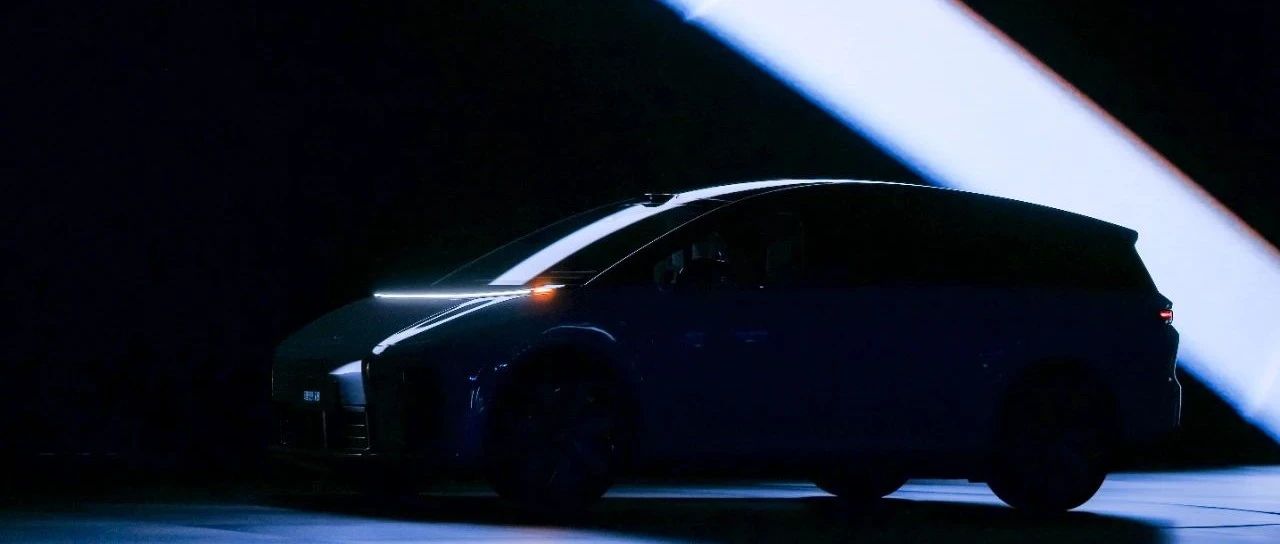
VLA辅助驾驶系统

Search documents
从AI眼镜到高阶智驾:CES释放电子产业链多终端进化信号
Ge Long Hui· 2026-01-13 08:47
Group 1: Wearable Devices and IoT - AI glasses and camera headphones remain the focus of wearable devices, with over 50 companies participating, primarily from mainland China, emphasizing aesthetics, lightweight design, all-day wear, multimodal interaction, and multi-chip solutions [1] - The innovation in headphones has shifted from single audio performance to a comprehensive evolution of sound quality, AI, and multimodal capabilities, with some products integrating cameras and environmental sensing [1] - New IoT categories such as smart imaging devices, 3D printers, and NAS are gaining attention, with many startups entering the market, alongside creative new products in AI home, AI recording cards, and AI displays [1] Group 2: Automotive Industry - AI is driving the intelligent upgrade of the entire automotive chain, with high-level autonomous driving expected to achieve large-scale implementation [2] - Chip manufacturers like NVIDIA are releasing open-source AI models to accelerate technology penetration and commercialization in the autonomous driving sector [2] - Domestic automakers such as Geely and Great Wall are showcasing their AI systems, while international companies like Mercedes and Jaguar Land Rover are partnering with AI giants to enhance their capabilities [2] Group 3: Robotics - Home and service robots are continuously upgrading, with traditional vacuum robots evolving to cover more cleaning scenarios and showcasing new intelligent models [3] - Humanoid robots remain a focal point, with companies demonstrating robots capable of complex movements and interactions [3] - The participation of domestic electronic industry companies in showcasing robotic components and manufacturing products has increased significantly [3] Group 4: PCs and Smartphones - Lenovo has introduced a cross-device super intelligent entity, Lenovo Qira, and partnered with NVIDIA for a new AI cloud super factory initiative, showcasing a range of AI-integrated devices [4] - Chip companies are upgrading edge chips to enhance the PC experience, with major players like Intel, Qualcomm, and AMD leading the advancements [4]



中国科技闪耀国际消费电子展
Sou Hu Cai Jing· 2026-01-09 21:23
Group 1 - The CES 2026 showcased a transformation in the Chinese tech industry, highlighting a shift from traditional home appliance giants to a diverse representation of both established and emerging companies, reflecting the industry's ecological vitality and innovative resilience [2][3][4] - Major Chinese companies like Hisense and TCL are focusing on technological breakthroughs to redefine industry standards, with Hisense launching a new RGB-Mini LED display technology, predicting a shipment of 500,000 units by 2026 [2] - Companies are moving from showcasing individual products to demonstrating systematic capabilities, with firms like Lens Technology and Guangdong Lingyi demonstrating comprehensive AI hardware ecosystems [4] Group 2 - The integration of AI with hardware is a key highlight, with numerous humanoid robot companies participating, indicating a significant advancement in the execution capabilities of robots, which is expected to drive commercialization in this sector [5] - The CES 2026 featured 23 AI glasses booths, with 16 from Chinese brands, showcasing their innovation in AR/VR hardware and interaction experiences [5] - Chinese companies are pursuing deep localization and compliance in their global operations, moving away from a simplistic export model to a more integrated approach, as seen with Aiper's strategy of local R&D and distribution [6] Group 3 - The competition in the AI sector is intensifying, with a focus on practical applications and the efficiency of chips, as companies like NVIDIA, Intel, AMD, and Qualcomm compete for advancements in AI computing [7][8] - The emergence of embodied intelligence is reshaping the participation landscape, with a significant presence of humanoid robot companies at CES, indicating a structural change in the representation of Chinese enterprises [8] - The CES serves as a platform for showcasing the future of technology, where the integration of AI with physical products is expected to drive growth engines for the next decade [8]

通向L3的正确范式?理想i8全球首发VLA高阶辅助驾驶,我们帮你试了试
机器之心· 2025-08-02 04:43
Core Viewpoint - The article discusses the launch of the Li Auto i8, which features the new VLA driver model that significantly enhances its assisted driving capabilities through advanced technologies such as the Vision-Language-Action model and NVIDIA's Thor-U chip [2][20]. Group 1: VLA Driver Model Development - The VLA driver model represents a paradigm shift in assisted driving, moving from traditional methods to a more integrated approach that combines visual, language, and behavioral understanding [2][6]. - Li Auto's assisted driving technology has evolved significantly, with the MPI (Mile Per Intervention) level improving from a few kilometers to 100 kilometers within a year, indicating a tenfold increase in performance [5][24]. - The company has implemented "super alignment" techniques to enhance model output and has improved data selection standards, resulting in a twofold increase in model performance from March to May [5][24]. Group 2: Technical Enhancements - The VLA model incorporates reasoning capabilities, allowing for better decision-making and understanding of driving scenarios, which was a limitation in previous models [6][11]. - The system can now process environmental data at a speed of 10Hz, translating sensor inputs into actionable driving decisions [11][13]. - The driving style has shifted from imitating "experienced drivers" to a more stable approach akin to "chauffeur drivers," which is expected to be more appealing to users [15][20]. Group 3: User Interaction and Experience - The VLA model allows for natural language interaction, enabling users to give commands directly to the vehicle, enhancing the overall user experience [9][17]. - The system's memory capabilities allow it to remember user preferences for specific routes, improving personalization [17][20]. - The VLA model has learned defensive driving techniques, enabling it to anticipate potential hazards and react accordingly, which enhances safety [20][21]. Group 4: Data and Simulation - Li Auto has accumulated 4.3 billion kilometers of user driving data, with 1.2 billion kilometers of effective data collected by July this year, which is crucial for training the VLA model [24][25]. - The company employs data synthesis techniques to create balanced datasets for rare driving scenarios, improving the model's performance in complex situations [25][26]. - The use of simulation environments has drastically reduced testing costs and time, allowing for rapid iteration and improvement of the assisted driving system [28][29]. Group 5: Future Prospects - Li Auto aims to provide a "personal driver" experience to a broader user base, with expectations of achieving a 1000 km MPI in the near future [20][32]. - The company has established a fully simulated environment at its headquarters to enhance training efficiency, indicating a commitment to advancing its technology [32][34].